NTU’s new course aims to harness technology as a force for good
With the launch of the Tech-for-Good service learning course in 2026, more NTU students will be empowered to build with purpose and create greater social impact
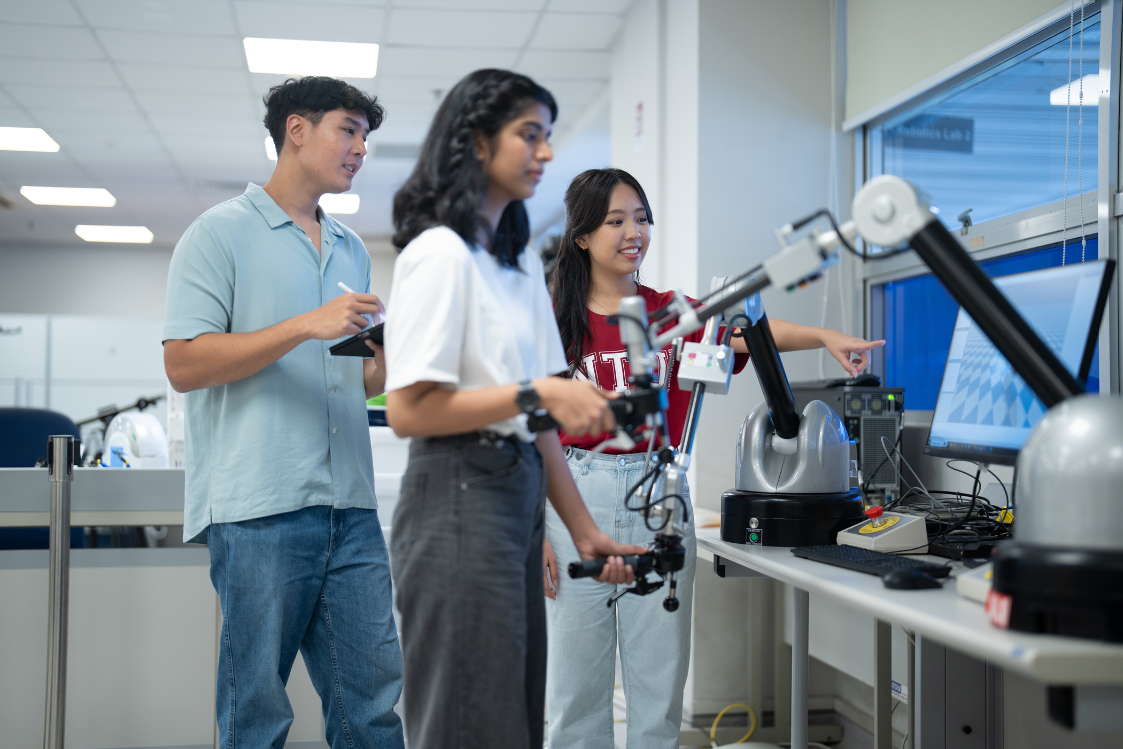
An automated scrubber chair that enables the elderly to bathe independently. A smart cap that monitors drivers’ brain activity to detect drowsiness. A computer game that allows players to step into the shoes of individuals on the autism spectrum.
These are just some of the inventive ideas from NTU Singapore scholars – each leveraging technology and engineering to address real-world challenges.
And with the launch of the Tech-for-Good service learning course this year, more NTU students will be empowered to build with purpose and create greater social impact.

One such student is Winston Ng, a first-year NTU Honours College undergraduate who will be taking part in Tech-for-Good.
Winston is no stranger to working with technology. At just 18, he founded his own company, Finute, which develops educational games. Today, he collaborates with Singapore government agencies like the Ministry of Defence, the Singapore Police Force and the Singapore Civil Defence Force, using interactive games to teach users about public preparedness, crisis response and scam awareness.
“I’ve seen firsthand how gamification can make public education more fun and engaging,” the business undergraduate says. “I’m excited to see how the Tech-for-Good course will challenge me to think beyond education and spark new ideas on how technology can serve society.”

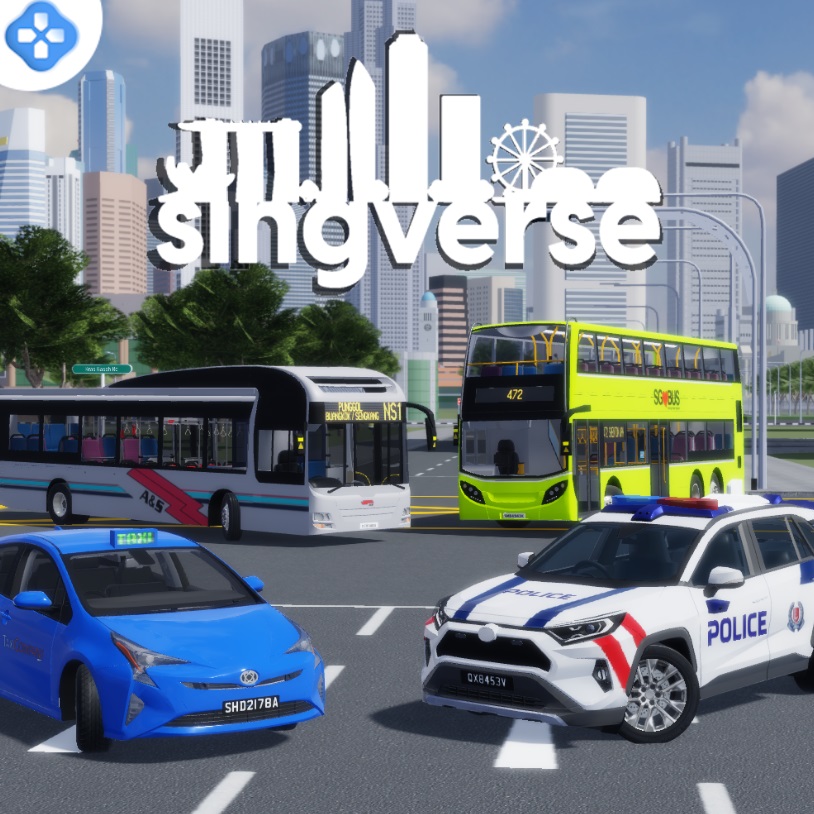
Winston giving a live demonstration of Singverse, a game created by his startup. Players get to explore a digital version of Singapore and learn important public preparedness skills.
Tech-for-Good is a signature offering of the NTU Honours College, which was recently set up to nurture the next generation of leaders and changemakers. The College blends academic rigour with real-world impact. Through hands-on projects and service learning, students will develop an innovation-driven mindset alongside key leadership and entrepreneurship skills.
At the core of the Honours College lies a spirit of service and the belief that technology can, and should be, a force for good.
“Knowledge and skills create the greatest impact when guided by a clear purpose.” shares Prof Gan Chee Lip, NTU’s Vice Provost (Undergraduate Education) and Dean of the Honours College. “Beyond academic and technical proficiency, we want our students first to be leaders with heart – individuals who use their talents and skills to make the world a better place.”
Tech-for-Good leads students through the full process of designing impactful innovations. Students will start off with workshops covering design thinking, stakeholder engagement and project management. Working in interdisciplinary teams, they go on to create solutions that leverage data, digital platforms or emerging technologies to address societal challenges.
At the end of the course, students will present their solutions at a final showcase, where selected teams will receive up to $20,000 in scale-up support to turn their projects into reality.
One of the most exciting parts of Tech-for-Good for Winston is the opportunity to collaborate across disciplines. The course brings students from different domains together to look at issues afresh and tackle issues holistically.
“This course is about more than just coding or building features. It’s about learning to design solutions that are people-centric and innovative.” Winston shares. “For that, we need many different perspectives, working together to create a solution that’s truly inclusive.”
Agreeing, fellow first-year Honours College student Jagpreet Kaur Rikhraj adds: “As a biological science student, I may not be the most familiar with emerging technologies, which is why I’m looking forward to learning from and sharing my own knowledge with my classmates.”
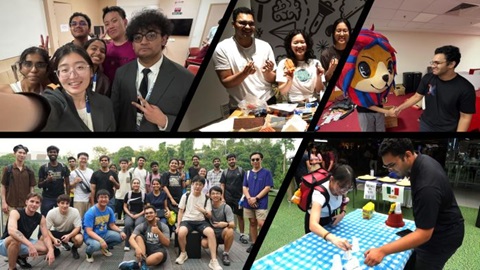
 Jagpreet (first row, second from left) with her Honours College batchmates.
For Jagpreet, what also sets Tech-for-Good apart from other modules at NTU is its practical service learning component. As part of the course, students will complete 60 to 80 hours of community service, giving them first-hand insight into the groups they hope to support.
“I like that we’re not just developing hypothetical solutions in a classroom. These volunteering experiences will shape the ideas we come up with, ensuring that they truly leave an impact.” Jagpreet explains. “The course will take us beyond the classroom, putting what we have learned in school to the test, and showing us how our education can be purposed for something bigger – to help others.”
She also believes that community service can be a form of education in itself.
“I’ve volunteered in many settings – from befriending the elderly, packing food for the needy, to organising activities for students on the autism spectrum.” Jagpreet shares. “Each experience has taught me important qualities like adaptability, openness, persistence and most importantly, empathy. It’s made me more outward-looking and attuned to the many needs around me.”
“Technology is so prevalent in our world today. Instead of using it to only create efficiency and convenience for ourselves, imagine the kind of change we could create if we used it to help others in need.”

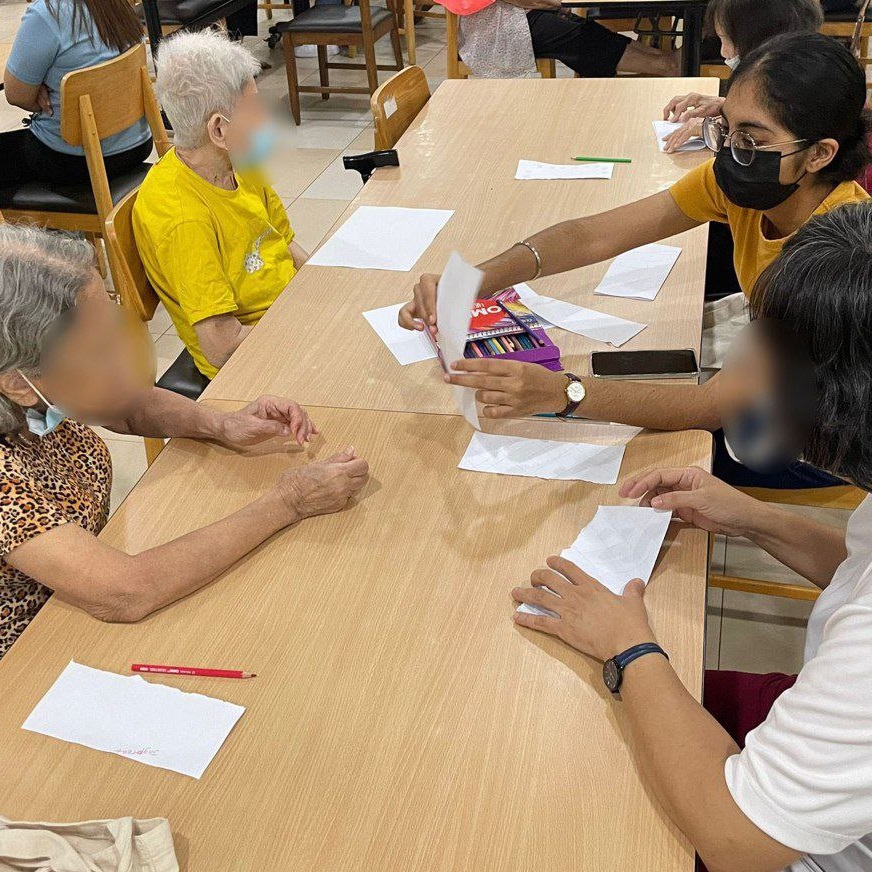
Jagpreet alongside fellow volunteers, packing food rations for low-income families (left), and doing arts and crafts with senior citizens (right).
Learn more about the NTU Honours College and its mission to develop the next generation of change-makers here.