Five minutes with the chief editor
HEY! has bagged more than 40 communication awards for its creative storytelling and innovativeness in over a decade. We chat with the founding Chief Editor, Dr Vivien Chiong, about the highlights of the magazine’s evolution
by Eileen Tan / Photos and videos by Vivian Lim
What made you start HEY!?
Dr Vivien Chiong: When I first joined NTU, I was constantly fascinated by the stories I heard about the students, professors and alumni. So I wanted a platform to tell these stories – to entertain, inspire and touch others, and to document the amazing stories. Back then, having an iPad publication was still novel. So in 2011, we created HEY! as a print and iPad publication. We also started NTU accounts for YouTube and Facebook and used these platforms – then known as “new media” – to cross-promote HEY! content. HEY! also became a good tool for pitching NTU stories to the news media.
HEY!’s editorial style is unlike that of other university magazines. What was the thinking?
V: Almost every university has a campus magazine. We wanted HEY! to be a different type of magazine, like a lifestyle magazine you would pick up from a newsstand – not a corporate publication and definitely not a newsletter. It had to attract young readers like all our students. So we went with big photos, catchy headlines and a breezy editorial style. No corporate speak, no high-falutin content. The stories have to make you go: Hey! I didn’t know that. That’s why the magazine is named HEY!.
HEY! is known for its bold experimentation – augmented reality (AR), 3D models, smartphone photography, and now artificial intelligence (AI). What drives all these and the creation of Hailey?
V: One of the joys of working in a university is the culture of experimentation. We have licence to explore the unknown – just as scientists do in their research. For me, that meant constantly pushing the boundaries in communication with various emerging technologies.
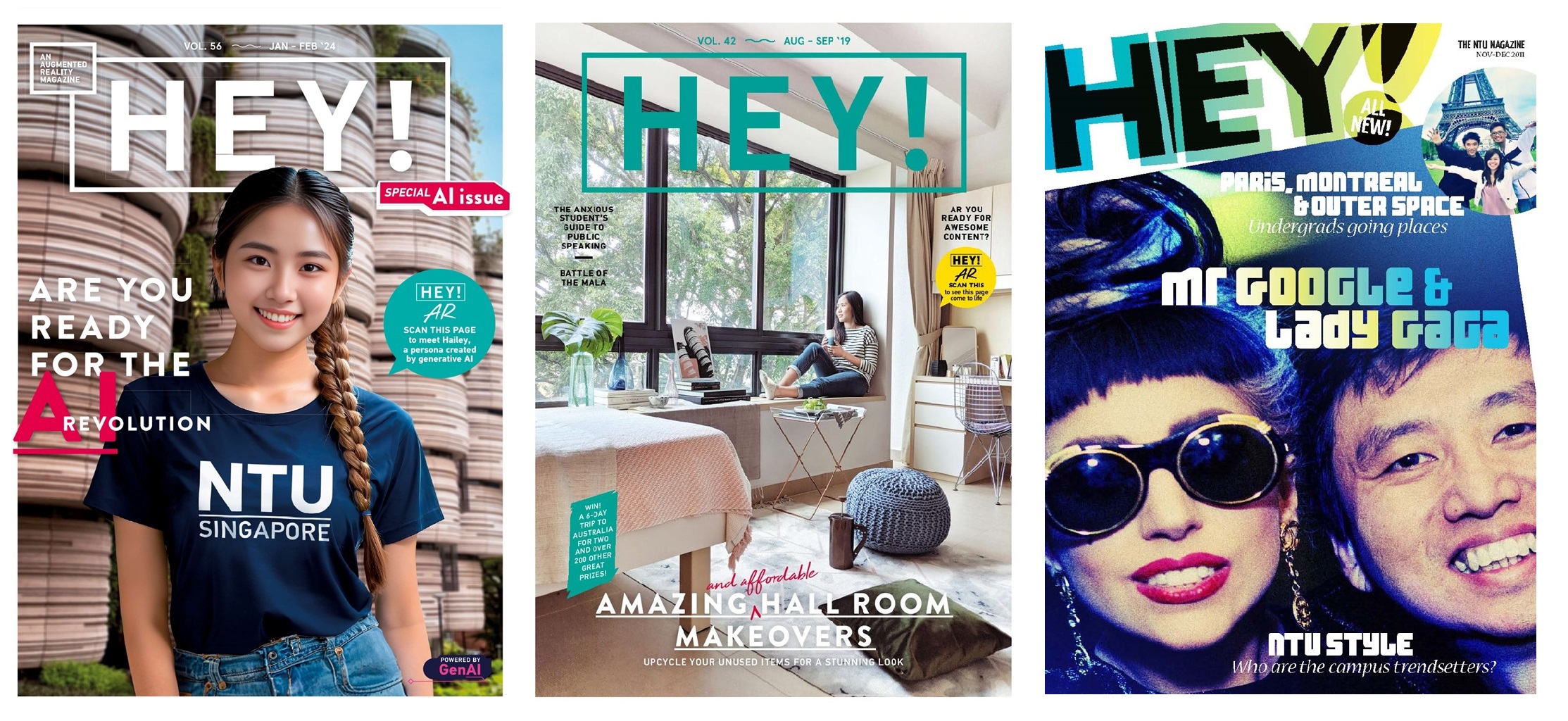
We moved from a print-plus-iPad magazine, to covers shot entirely on smartphones so they felt more relatable to students, and then to making those covers come alive with AR through the HEY! AR app. When generative AI (gen AI) technology, nascent then, could let us create a hyper-realistic digital character, we jumped at it. Hailey fit naturally into HEY!’s evolution of experimenting with emerging technologies. She shows how technology can add new layers of depth, playfulness and imagination to NTU’s storytelling.
Do you have a favourite HEY! issue?
V: I think the special AI issue with Hailey on the cover in 2024 is very memorable. At a time when the world was still figuring out gen AI, we created our first digital ambassador using it. We were co-writing stories with ChatGPT, creating an AR cover with Hailey, who transformed from a visual into a video, and even getting Hailey to “interview” a college dean over Zoom. It was an exhilarating time in the Corporate Communications Office. There were many challenges, but they energised the team to find solutions rather than deflating us.
I also like the hall room makeover issue – our first HEY! edition with AR, back in 2019. We started smartphone photography and we conceptualised the AR videos to flow seamlessly from the photos on the printed page. This meant a total change in the magazine production process.
More recently, we featured singer-songwriter Shazza, an NTU student, on the cover. We invited her to compose and perform a song about NTU. When readers scan the cover using the HEY! AR app, she literally pops out in a music video, singing the catchy NTU song she specially wrote for HEY!. That was really nice of her.
Also, the first issue is always unforgettable. It featured Lady Gaga alongside Google’s 107th employee, Tan Chade-Meng, an NTU alumnus and the first Singaporean hired by the tech giant. That debut set the tone for HEY! as an unconventional magazine from day one.
Tell us about some memorable stories about students.
V: I was really inspired and touched by the story of medical student Chua Tze Hean, who started A Good Meal to bring seniors who live alone out for good food and fresh air. We told his story through the eyes of 68-year-old Mdm Lai Ah Loy, who is visually impaired and lives alone. The HEY! team was deeply moved by Tze Hean’s friendship with her. Now isn’t Tze Hean the kind of caring doctor any patient would love to be treated by?
I also liked the scoop from our student writer, Coen Sim, about how an enterprising trio from NTU had seized the moment amid Singapore’s concert frenzy to launch a bus-sharing service to ferry concertgoers home. It shows how NTU is always buzzing with ideas.
Back in 2011, we found out that a female student involved in building a solar car was going to drive it in a competition. As NTU’s first female eco-car driver, her journey captured the spirit of studying at a technological university. As she put it: “For me, it’s cool to drive a prototype.”
How does HEY! make corporate stories about professors readable?
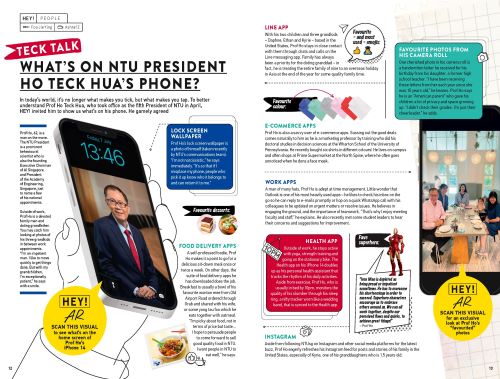
V: When NTU President Prof Ho Teck Hua first joined the University, rather than rewrite his impressive curriculum vitae, we introduced him to students by getting him to talk about the apps on his phone. Through that conversation, we discovered his favourite superhero (Iron Man), his penchant for online shopping, and that he’s usually asleep by 10pm. It turned out to be a fun and very human story.
For the two Presidents before him, we discovered that they shared the same birthday and had crossed paths in Singapore as early as 2006 when they were both part of a national advisory panel chaired by Dr Tony Tan. To convey the leadership transition, we brought the incoming and outgoing Presidents – Prof Subra Suresh and Prof Bertil Andersson – together for a conversation, where they talked about their commonalities. That story went on to win a Gold Quill Award for writing.
This is your swansong issue. Can you tell us how you feel about the more than 40 top honours HEY! has received, including six Golden World Awards, reputed as the “Oscars of PR”?
V: To me, the awards signal that we are producing work recognised by our peers internationally. A former NTU provost once said to me that each of these awards is akin to getting published in a high-impact research journal. We had to outperform large organisations with far bigger budgets. For a small in-house team working with modest resources, these wins are especially meaningful – not only as validation of our creative standards, but also for helping to put NTU on the global map.
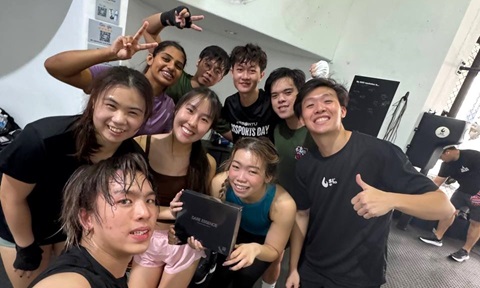
Eileen Tan has worked shoulder to shoulder with Dr Vivien Chiong on HEY! since its inception in 2011.
This story was published in the Jan-Feb 2026 issue of HEY!. To read it and other stories from this issue in print, click here.