First-aiders of the heart
NTU recently set a Singapore record for training the most people in psychological first aid, a way to support those struggling emotionally. Three students who’ve learnt these skills share how they’ve changed the way they show up for others
by Junn Loh
When someone’s injured, we offer first aid, call for help, and keep them safe until help arrives. But what if the wound isn’t something you can see?
Here’s where NTU’s growing community of psychological first aiders come in – students and staff trained to offer calm, compassionate support to those in emotional distress.
The training, developed by NTU’s University Wellbeing Office and the Singapore Red Cross, is delivered through an app that lets students progress at their own pace.
It teaches practical skills like empathy, active listening and how to respond to someone who’s struggling emotionally – helping them feel safe and calm before professional help is available. The app also builds the users’ confidence through simulations driven by artificial intelligence (AI).
When sending a meme says ‘I care’
For Avril Leong, care can be simple. “Sometimes I’ll text a friend with a funny post or say it made me think of them,” she says.
That kind of quiet support means a lot to the NTU student – especially after feeling helpless years ago, when a friend in primary school was struggling emotionally. “Back then, none of us really knew what to do,” she recalls. “Mental health wasn’t talked about. You were expected to keep your feelings to yourself.”
That experience led Avril to join NTU’s community of students and staff who offer peer support and run wellbeing events on campus, and later, take the psychological first aid course.
The communication undergrad likes the simplicity of the “Look, Listen, Link” framework taught. “It makes things less overwhelming,” she says. “You look at the situation, listen actively, and link the person to professional help.”
And it’s not just for crisis moments. “I use it in daily life by being more mindful of how I respond,” she adds. “Instead of saying, ‘That’s great,’ I might say, ‘That must have made you really happy.’ It feels warmer and more human.”
As someone passionate about media and communication, Avril finds the lessons of psychological first aid more relevant than ever.
“Technology connects us, but it also isolates us. Real empathy can’t be replaced by AI or chatbots. Human connection still matters most.”
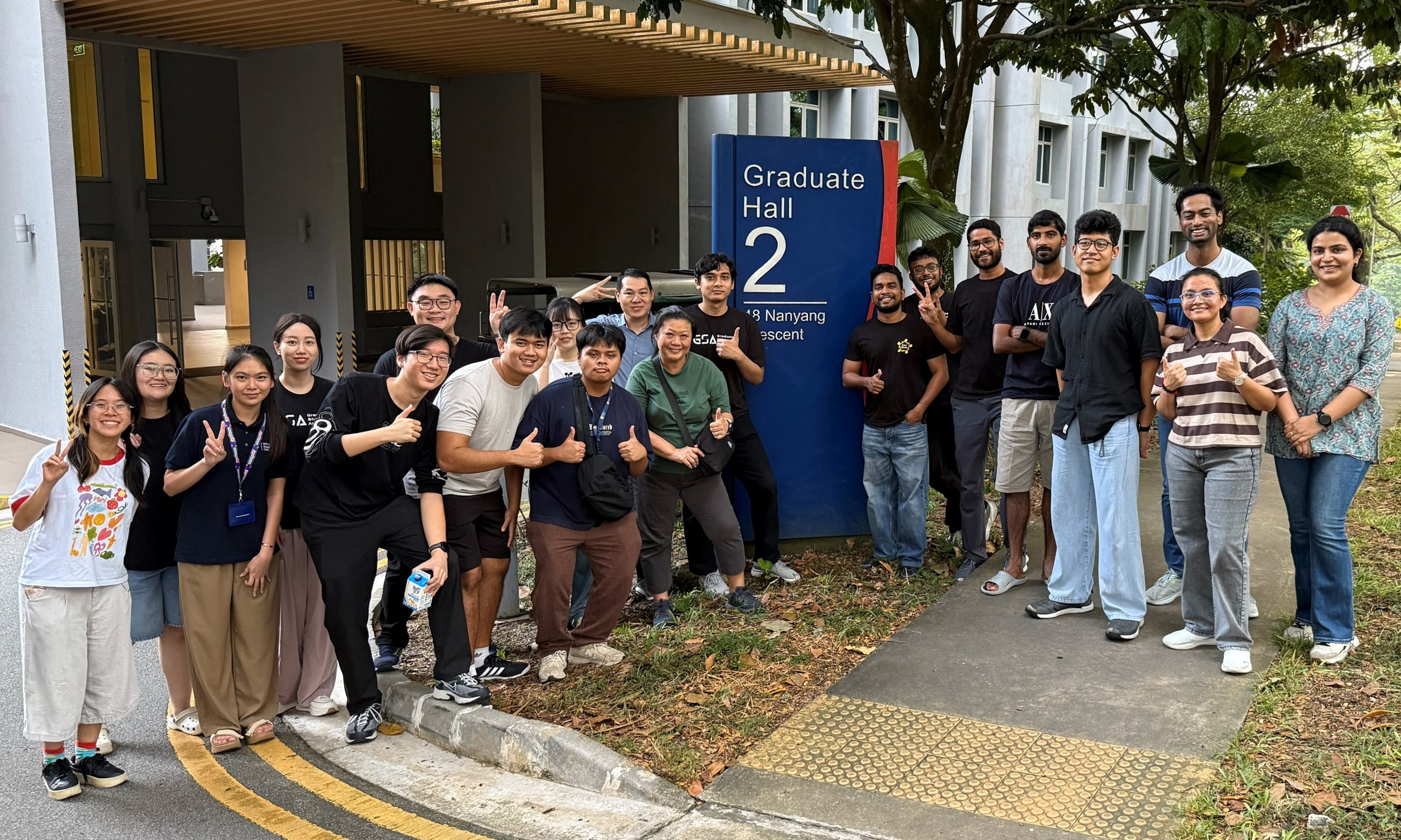
Second-year communication student Avril (second from left) is a wellbeing advocate who supports mental health efforts on campus by checking in on her peers during care walks and other events.
NTU sets national record with AI-powered psychological first aid campaign In October last year, NTU earned a place in the Singapore Book of Records for training the most people in psychological first aid within two months – 232 students and staff, to be exact. Since 2022, more than 4,700 people in the OneNTU community have been trained in psychological first aid. This achievement aligns with NTU’s mission to support student wellbeing through the Okanagan Charter, a global movement to embed health and wellness in every aspect of university life and lead in health promotion and collaboration. NTU is the first university in Singapore to sign the charter. |
Listen first, don’t rush to fix
For Stephen Manickam, a third-year mechanical engineering student, psychological first aid training changed his view of what helping looks like.
“I used to think being a good friend meant giving advice,” he says. “But now, I focus on being present, such as treating a friend to ice cream and just listening. You don’t always have to fix someone’s problem.”
One moment sticks with him: coming across a distressed man who wasn't wearing any pants, in his neighbourhood. He recalls: “I didn’t know what to do, so I helped him home and called the police.”
After completing psychological first aid training, he realised he’d reacted too quickly then.
“I should have asked him what happened and tried to understand the situation before taking any action,” he says. “The app helped me practise this kind of response safely, through simulations that felt surprisingly real.”
Elaborating, he says: “For example, in one simulation, I had a back-and-forth chat with an AI bot role-playing as a foreign student whose parent wasn’t feeling well. At first, I wondered why she didn’t take a flight home. However, after a few open-ended questions, I came to realise that the problems individuals face are often complex and multidimensional. The first step is to listen patiently, without jumping to conclusions.”
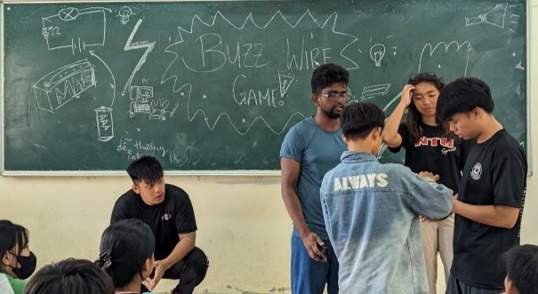
More patient and less reactive after psychological first aid training, mechanical engineering student Stephen now carries a “listen first” mindset into his volunteering – which includes teaching Vietnamese children during an overseas community trip (pictured) and being a befriender at the Institute of Mental Health with peers from NTU’s Welfare Services Club.
Slowing down to really hear someone
Joshua Tay, a second-year medical student, says learning psychological first aid has changed the way he listens and speaks.
“Just asking someone how they’re doing can mean a lot,” he says. “We tend to overthink showing care, but consistency and sincerity are what people remember.”
He trained through the app, which uses turn-based dialogue and gives feedback after each response. “I’m more intentional in how I speak and how I pace a conversation now,” he says.
“I’ve realised that you can’t rush someone into opening up. You have to peel back the layers slowly.”
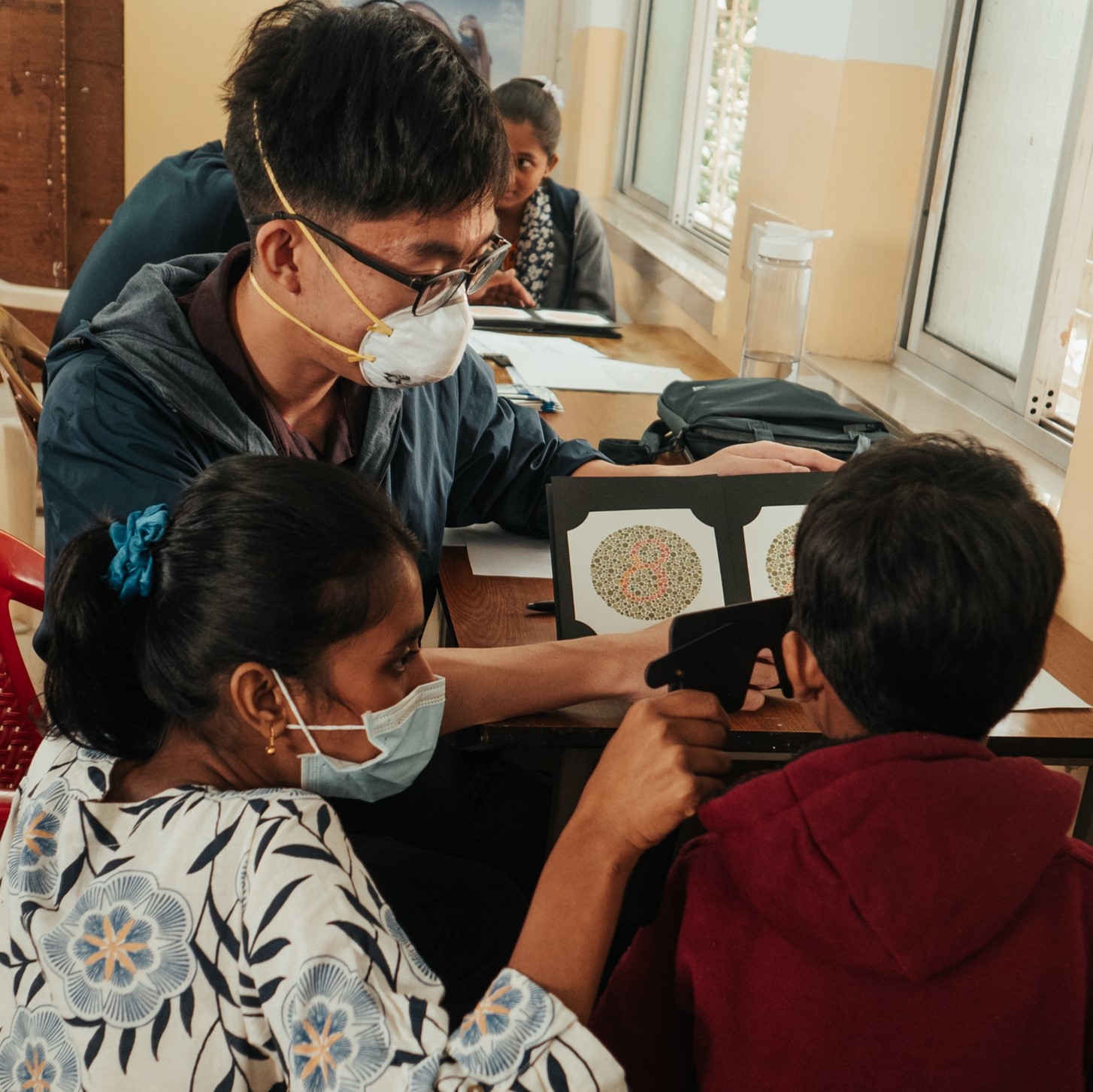
Joshua trained in psychological first aid before leading a team of medical students to Kolkata, India, to run health screenings and workshops for sex-trafficked women and their children.
You are not alone Need someone to talk to? Help’s at hand. You can walk into the University Counselling Centre at the University Health Service Building for counselling and psychological support. To learn more about mental wellbeing, join a workshop, or connect with a supportive peer, visit the University Wellbeing Office website. |
This story was published in the Jan-Feb 2026 issue of HEY!. To read it and other stories from this issue in print, click here.