Singapore has an opportunity to redefine responsible reclamation: Opinion
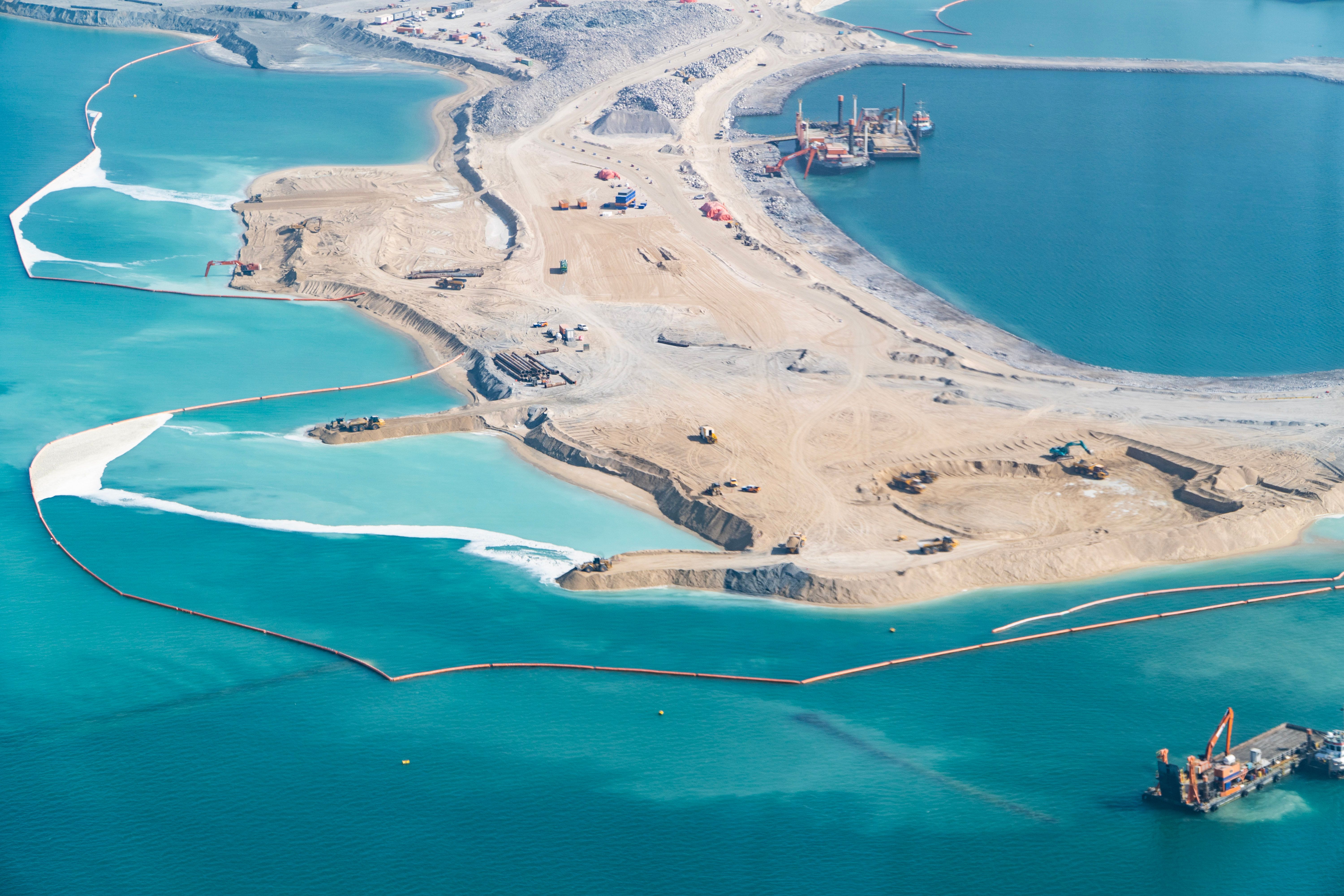 At the recent National Day Rally, Prime Minister Lawrence Wong outlined long-term plans to merge several islands in a cluster south of Jurong Island into one larger western island. The cluster includes Semakau, Bukom, Pulau Sudong and a few smaller islands. Like Jurong Island before it, the undertaking would involve reclaiming the sea between existing islands.
The plans are still being studied, but the new island could eventually provide space for Singapore’s future energy, economic and defence needs. Reclamation on this scale, however, raises understandable concerns about what may be lost: marine habitats, biodiversity and natural coastlines that cannot simply be recreated elsewhere.
These concerns should not be seen as obstacles to engineering. They should be part of the engineering brief.
As a civil engineer who works on land reclamation and coastal protection, I believe the question is not simply whether we can create more land. It is whether we can do so in a way that respects ecological limits, uses resources responsibly, prepares for climate change and preserves choices for future generations.
That requires a different model of reclamation: one that considers ecology, materials and long-term resilience together from the beginning.
Avoid before we mitigate
No engineering solution can fully reproduce an established natural ecosystem. The first principle must therefore be to avoid harm.
Before settling the island’s eventual shape and footprint, detailed studies should identify sensitive habitats, species and ecological connections so that areas of high ecological value can be avoided wherever possible.
This may mean accepting a less regular footprint. Rather than reclaiming every gap between the existing islands, the design could curve around sensitive habitats, retain important tidal channels or leave some areas unconnected where the ecological cost would be too great. A neat outline should not take precedence over a functioning ecosystem.
Where effects cannot be avoided, they should be minimised through decisions about the project's location, configuration, construction methods and timing. Restoration and habitat creation should be considered only after avoidance and minimisation – not used to justify preventable loss.
Replace hard boundaries with living edges
Traditional coastal protection often relies on concrete seawalls. While these provide a strong barrier against waves, they can create an abrupt divide between land and sea, leaving little room for coastal habitats to survive. Where such structures are necessary, however, they can incorporate intertidal zones or modified surfaces on which corals can grow.
Not every stretch of coastline requires the same solution. Where conditions permit, hard structures can also be complemented by gentler, nature-based approaches that help the coastline blend into its surroundings and support marine ecosystems.
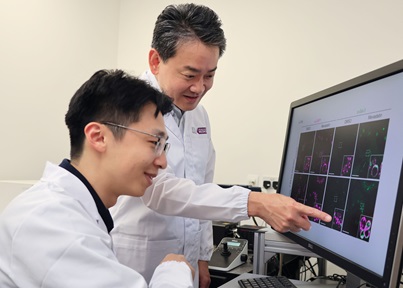
At Nanyang Technological University (NTU), my team at the School of Civil and Environmental Engineering is studying barriers made from natural fibres and sustainable cementing materials. These structures are intended to reduce erosion while allowing sediment to accumulate gradually, helping beaches rise naturally and creating conditions in which coastal vegetation may become established. A related biocement solution has been tested in a pilot project at East Coast Park.
Such approaches are not suitable everywhere, and they cannot eliminate environmental trade-offs. But they illustrate a broader principle: coastal infrastructure need not always work against natural processes. It can be designed to work with them.
The proposed island could therefore have a variety of coastal edges rather than a continuous wall, combining conventional protection with tidal habitats, textured surfaces and nature-based features where scientifically appropriate.
Build with less, and build to last
Creating land and the infrastructure upon it requires vast quantities of fill and cement. Singapore cannot assume that suitable fill materials can always be imported. We must therefore expand the reuse of excavated material and develop technologies that convert waste and industrial by-products into construction resources. This would reduce our dependence on imported materials while supporting Singapore's zero-waste ambitions.
This is one of the areas being explored by TREASURES, a research centre recently established by NTU and the National Environment Agency to develop ways of turning waste into resources, including materials that could be used in reclamation.
We should also question whether creating usable space must always mean filling the sea with sand. One possibility is to construct underground spaces upwards from the seabed once the necessary coastal defences are in place, rather than first reclaiming land and subsequently excavating it. In suitable locations, this could reduce the amount of fill required. The approach would be technically complex and would not work everywhere, but it illustrates the fundamental rethink that a project of this scale should encourage.
Cement presents another challenge. Large quantities are required not only for seawalls, tunnels and buildings, but also to strengthen soft marine clay before infrastructure can be built upon it. Singapore relies on imported cement, while conventional cement production is carbon-intensive and contributes to global warming.
At NTU, researchers are developing alternatives such as biocement and ecocement made using waste and industrial by-products, including brine from desalination plants and incineration ash. These materials could potentially replace some conventional cement in soil improvement and seawall construction. Researchers are also developing self-healing concrete that could extend the life of coastal structures and reduce maintenance needs.
Design for a changing climate
Any land created today will experience a climate different from the one in which it was designed. Sea levels will rise, rainfall patterns will change and extreme events may become more severe.
The proposed island should therefore not be designed around a single forecast. Its coastal defences, drainage systems and essential infrastructure must be able to adapt as conditions evolve.
Future reclamation should form part of an integrated strategy that addresses multiple challenges at once, including land needs, rising sea levels, urban flooding, water security and the protection of marine ecosystems.
Innovation in coastal engineering could support this approach. One example is a flexible seawall being developed by NTU researchers that can be adjusted as sea levels rise and integrated with roads, parks or coastal reservoirs, allowing one structure to serve several needs while using less material.
Adaptability requires continuous monitoring. Sensors could track settlement, erosion, currents, water quality and the condition of surrounding habitats. Clear thresholds should trigger a review of construction or operating practices when environmental conditions deteriorate.
Measure more than land created
Reclamation will always involve difficult trade-offs. Acknowledging them is a condition for responsible development.
The success of Singapore’s next island, if it materialises, should not be measured only by its size, cost or economic contribution. We should also ask how much sensitive habitat was avoided, whether ecological functions were maintained, how responsibly materials were sourced and whether the island is resilient enough to serve generations not yet born.
Singapore has an opportunity to establish a new standard for creating land in a densely populated, biodiversity-rich and climate-vulnerable region.
The goal should not be to build first and repair nature later, but to plan around nature, resource stewardship and adaptability from the outset. If we can achieve that, Singapore’s next island will create more than physical space. It will show how engineering can support development while recognising that nature, too, is part of our national inheritance.
Chu Jian is Professor and President’s Chair in Civil Engineering at Nanyang Technological University (NTU), where he is also Co-Director of Towards Resource Efficiency and Sustainability for Urban Environments (TREASURES), a research centre.
First published in Chinese on Lianhe Zaobao, 28 Oct 2026.