
UG Curriculum Structure & the ICC
NTU’s undergraduate curriculum combines depth in a chosen discipline with interdisciplinary learning and opportunities to explore wider interests. It comprises three main components: (1) Core and Major Prescribed Electives, which account for approximately 50–60% of the curriculum; (2) the University-Level Core, which makes up approximately 20–25%; and (3) Broadening and Deepening Electives, which constitute about 20%. Together, these components develop students’ disciplinary expertise while preparing them for the demands of work and life.
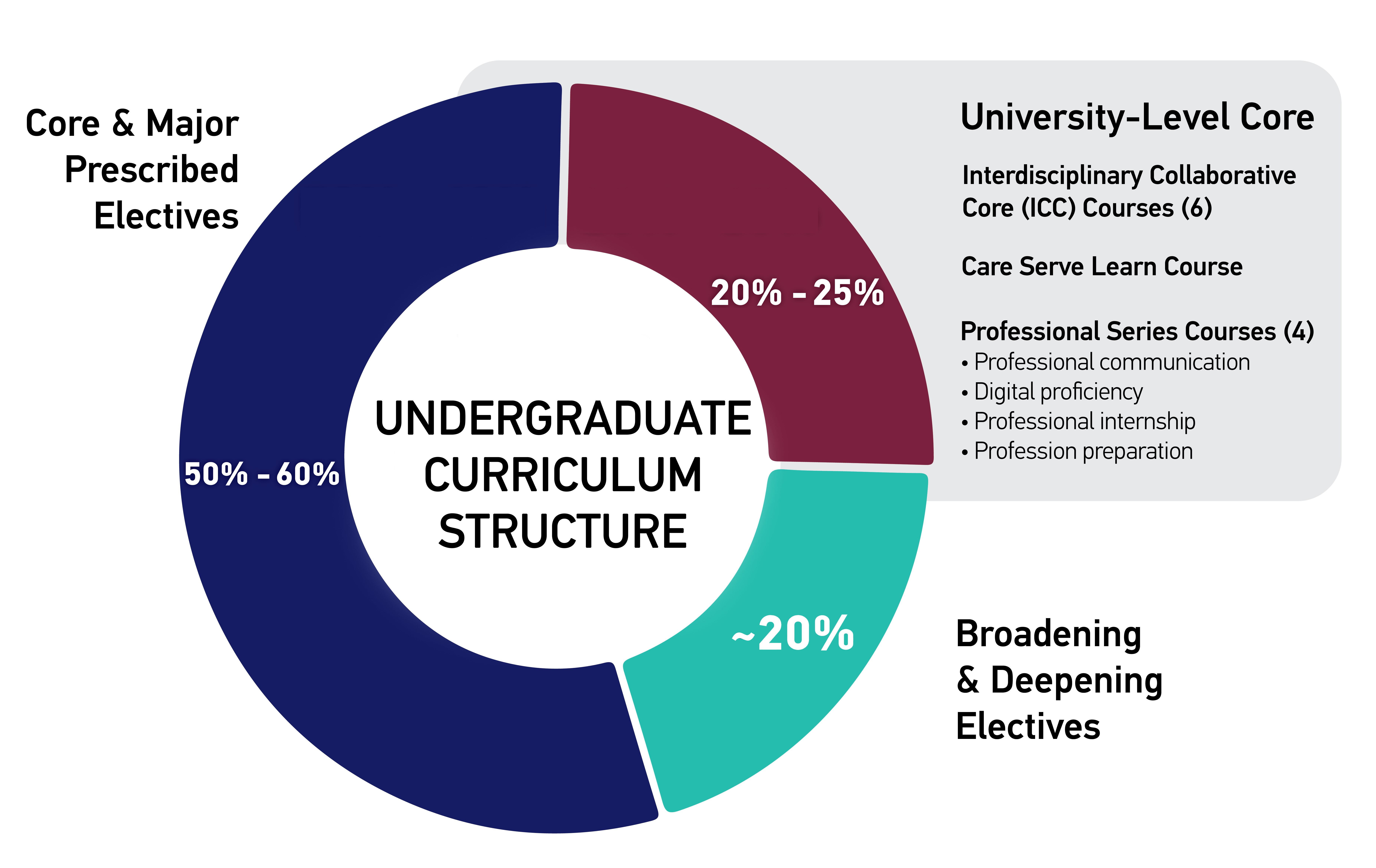
At the heart of the University-Level Core are the Interdisciplinary Collaborative Core (ICC) courses, which are compulsory for all undergraduates and must be completed within the first three years of study. The six ICC courses provide a shared learning foundation across degree programmes, encouraging students to draw connections between disciplines, consider different perspectives and work collaboratively. Through interdisciplinary learning, students strengthen their critical thinking, communication and teamwork skills, equipping them to address complex issues beyond the boundaries of their chosen fields.








/hive34sm.jpg?sfvrsn=2c481a80_3 "HIVE34sm")
Core and Major Prescribed Electives build knowledge and expertise within their disciplines, while Broadening and Deepening Electives offer flexibility to explore other fields or pursue areas of interest in greater depth.