Benefits of the ICC
The ICC curriculum at NTU broadens our undergraduate students’ learning beyond their specialisation, equipping them with knowledge, skills and perspectives that complement their chosen major. Through exploring interconnected issues and learning alongside peers from different fields, students develop the capacity to think critically, collaborate effectively and respond thoughtfully to the challenges they encounter in work and life.
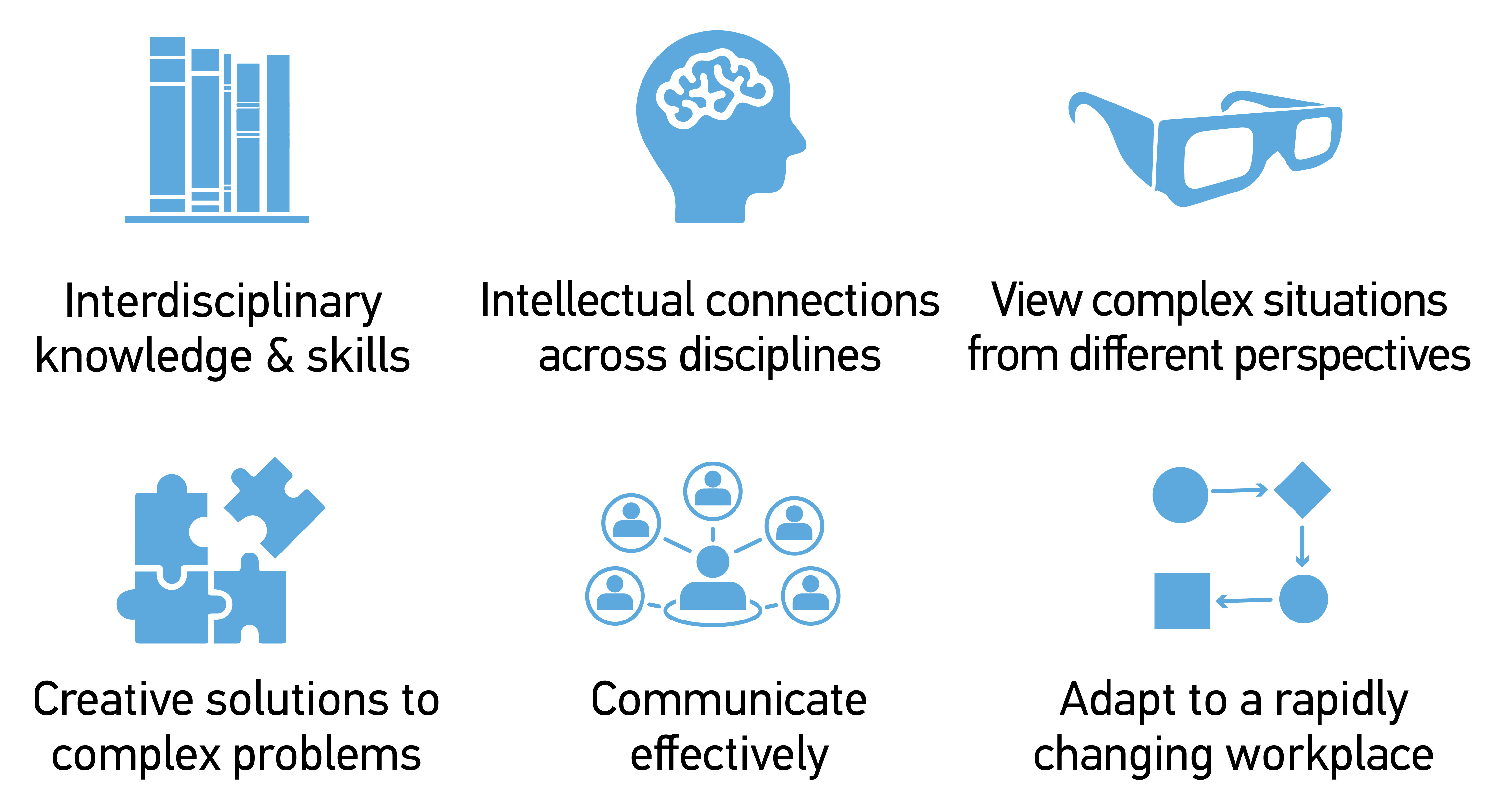
Interdisciplinary Knowledge & Skills
The ICC introduces students to ideas and approaches from different fields, helping them build a broader foundation of knowledge alongside the depth they acquire in their major. By exploring themes such as ethics, sustainability, health and wellbeing, science and technology, communication and career development, students learn to consider the human, social and environmental dimensions of contemporary challenges.
This learning also develops transferable skills in inquiry, critical thinking, collaboration and problem-solving. Though the ICC courses, students practice evaluating evidence, questioning assumptions and applying knowledge in unfamiliar contexts - abilities that support their academic development and remain relevant across professions.
Intellectual Connections Across Disciplines
The ICC encourages students to recognise how ideas from different disciplines relate to and inform one another. They learn to draw connections between concepts, bring together different forms of evidence and understand how an approach from one field can deepen understanding in another.For example, examining a technological development may involve considering its scientific foundations, ethical implications, social impact and environmental consequences. Making these connections helps students develop a more integrated understanding of issues and identify insights that may be less apparent when viewed through a single discipline.
View Complex Situations from Different Perspectives
Many contemporary issues involve competing priorities, diverse experiences and difficult trade-offs. The ICC encourages students to examine these situations from multiple perspectives, considering how different stakeholders understand a problem and may be affected by proposed responses.
Through discussion and reflection, students learn to question their own assumptions, engage respectfully with differing viewpoints and recognise that complex issues may have more than one defensible interpretation. This builds intellectual openness, empathy and the ability to make informed judgements while acknowledging uncertainty and competing needs.Creative Solutions to Complex Problems
The ICC helps students approach problems by combining knowledge and perspectives from different fields. Working with peers from diverse academic backgrounds exposes them to alternative ways of defining a challenge, generating ideas and evaluating possible solutions.
Students learn to explore alternative approaches and refine their ideas through evidence, feedback and discussion. By considering the practicality, ethical implications and wider impact of potential solutions, they develop the ability to see the bigger picture and are better able topropose creative, well-considered responses to problems that span disciplinary boundaries.
Communicate Effectively
The ICC provides opportunities for students to express ideas clearly, support their arguments with evidence and communicate with people who may have different disciplinary knowledge or viewpoints. Through discussions, presentations, written work and collaborative activities, students practise adapting their explanations to their audience and purpose.
Effective communication also involves listening carefully, asking constructive questions and responding respectfully to disagreement. Developing these abilities helps students build shared understanding, contribute meaningfully to teams and explain complex ideas in accessible ways - skills valuable in both professional and everyday settings.
Adapt to a Rapidly Changing Workplace
The ICC supports students in developing the flexibility and confidence to navigate changing roles, technologies and workplace expectations. Exposure to different disciplines encourages them to learn beyond their area of specialisation, approach unfamiliar challenges with curiosity and work effectively with people whose expertise differs from their own.
By strengthening self-awareness, reflective thinking and transferable skills, the ICC helps students recognise their strengths, identify areas for growth and make informed decisions about their development. These abilities provide a foundation for continuous learning and enable students to contribute across roles and teams as their careers evolve.