When our equations whizz overhead
Bringing a daring new aircraft concept to life is one thing. Watching it lift off is another. An NTU team took their electric flyer to Germany’s unpredictable skies – and discovered where curiosity, teamwork and resourcefulness could take them.
by Lester Kok / Photos by Hillary Tan and Lester Kok
Eight electric motors kick in. A deep hum fills the air. Then the aircraft lifts off.
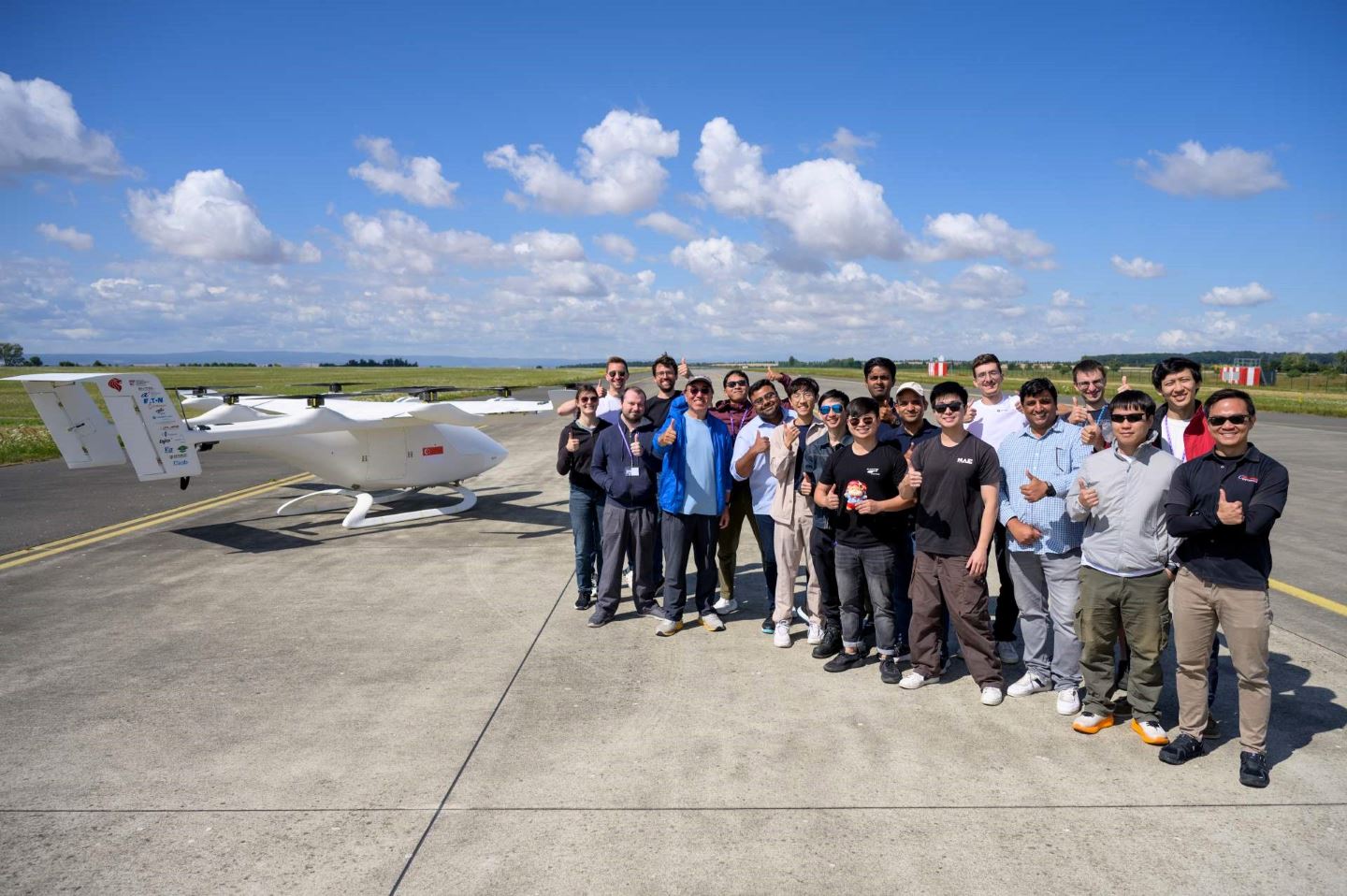
Watching from the ground in Cochstedt, Germany, are the NTU students, alumni and researchers who helped make this moment happen. Three years ago, their aircraft was equations, simulations and small models on a workbench.
Now, the NTU-built machine – Singapore’s first home-grown eVTOL – is climbing to 92 metres, roughly the height of a 30-storey HDB block, with its wings spanning eight metres.
But getting airborne is only part of the story. What happens when a test doesn’t go to plan? That’s where the learning really takes off.
"Engineering is not simply about knowing the theory. It is about learning how to apply it, working with others and having the curiosity to find out what is possible."
– Prof James Wang
Fly and fine-tune
Over a month in Germany, the team’s two prototypes completed close to 40 test flights, with the smaller, three-metre version exceeding 120 km/h.
Their toughest trick? Getting the aircraft to switch between two ways of flying.
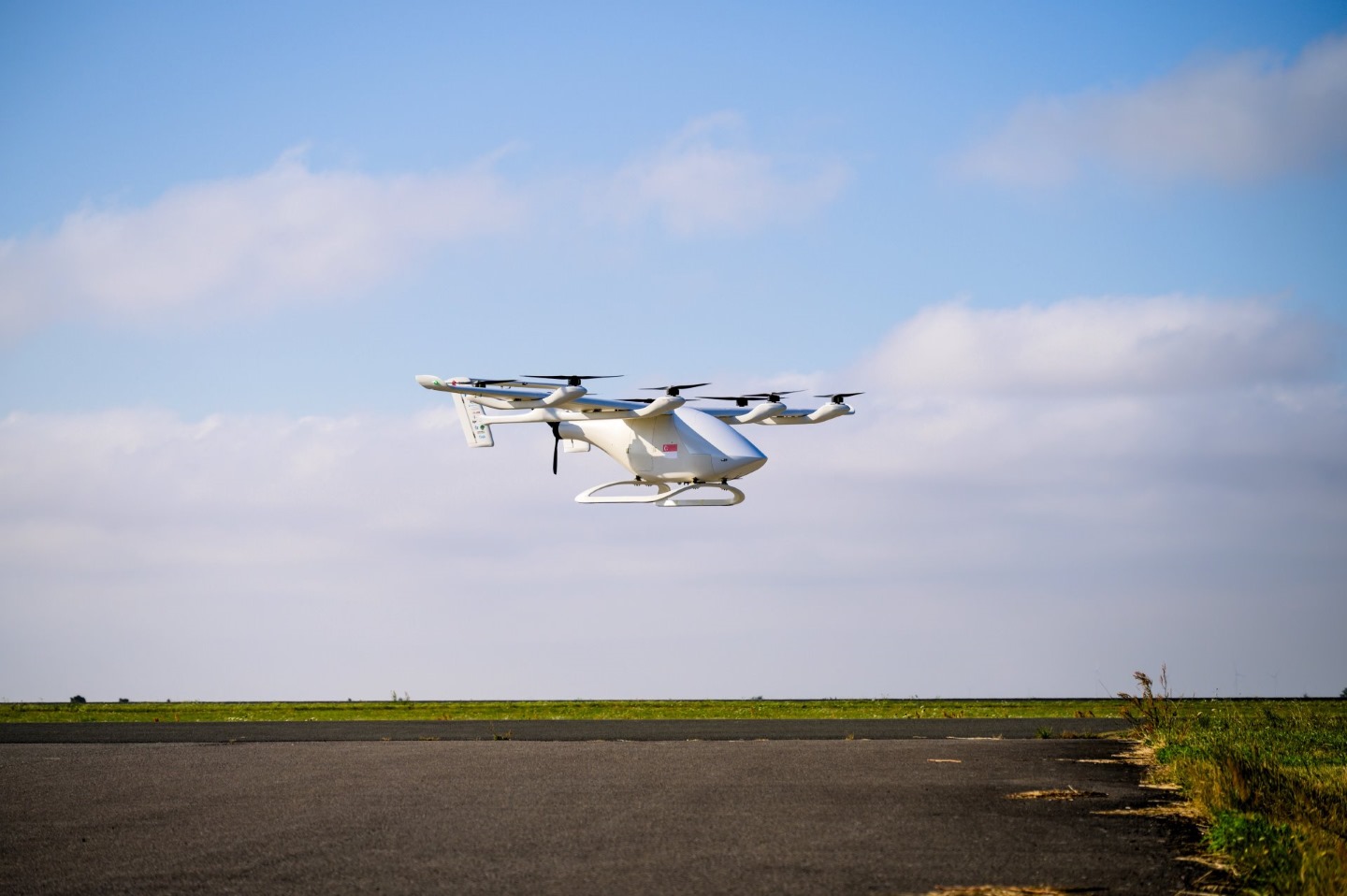
NTU’s electric vertical take-off and landing aircraft, or eVTOL, rises and hovers like a helicopter, powered by eight lift rotors. A rear propeller then pushes it forward. As speed builds, its wings generate enough lift for the eight rotors to switch off, allowing it to fly efficiently like a conventional plane.
Making that handover work is one of the design’s biggest engineering challenges.
Some tests delivered the results the team expected. Others brought unexpected setbacks that called for quick thinking and creative solutions.
Just after one of their longest test flights in Germany, one of the aircraft’s electric motors suddenly failed. To make matters worse, none of the spares they had brought were compatible.
After a day of troubleshooting, the team called on a colleague in Singapore, who did not hesitate to hop on the next available flight with a replacement motor to keep the tests going.
It was all part of the learning process. With each setback, the team made adjustments, refined their procedures and prepared for the next flight.
Chief Engineer John Hoh, who oversaw the entire airframe structure, says the biggest achievement went beyond the flight count.
“Every test, setback and adjustment strengthened our understanding of the aircraft and sharpened how we operated as an integrated team,” says John, who graduated from NTU’s School of Mechanical & Aerospace Engineering with a mechanical engineering degree in 2021.
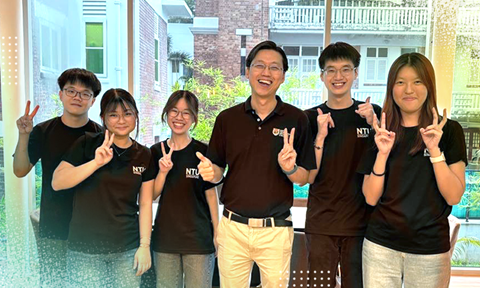
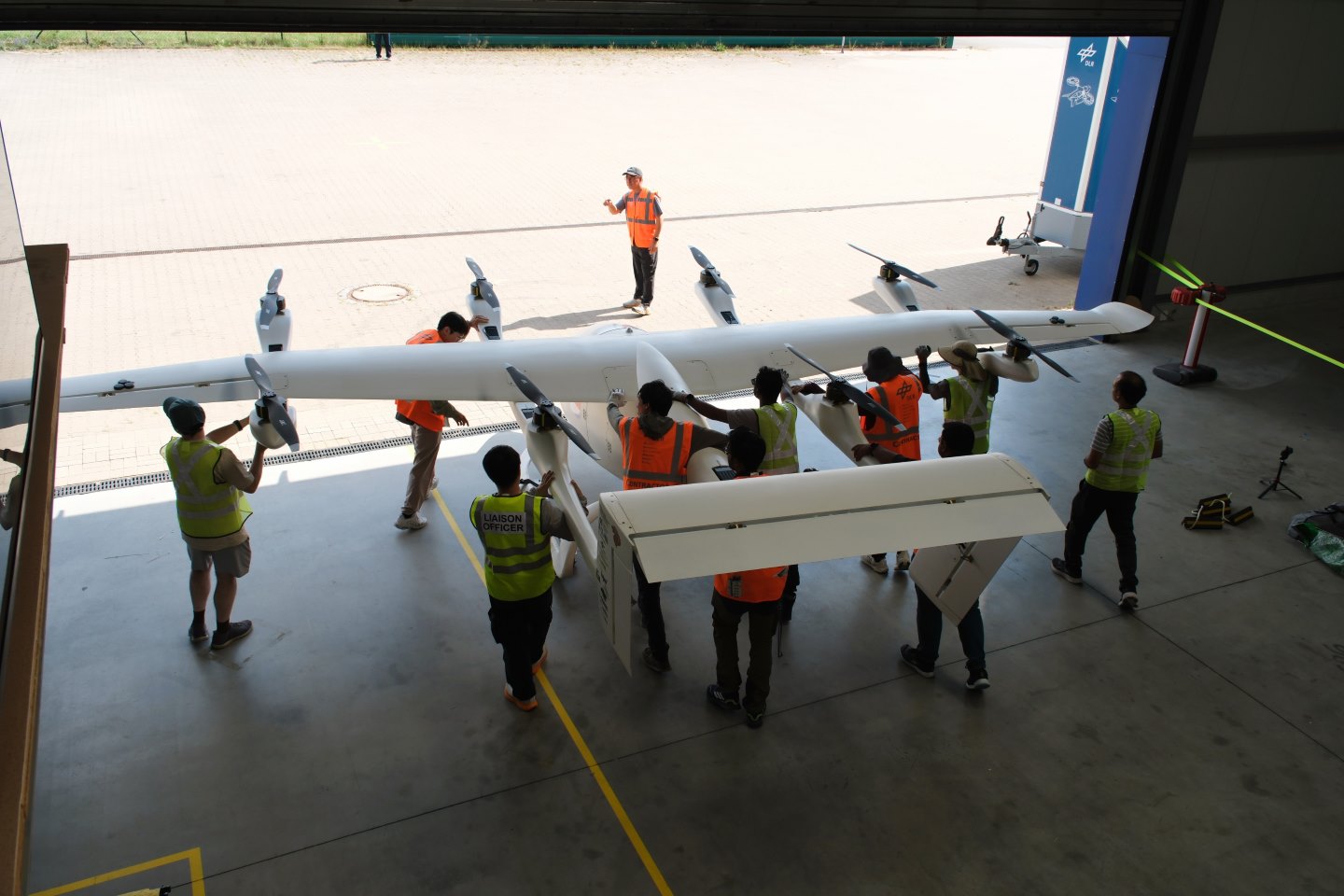
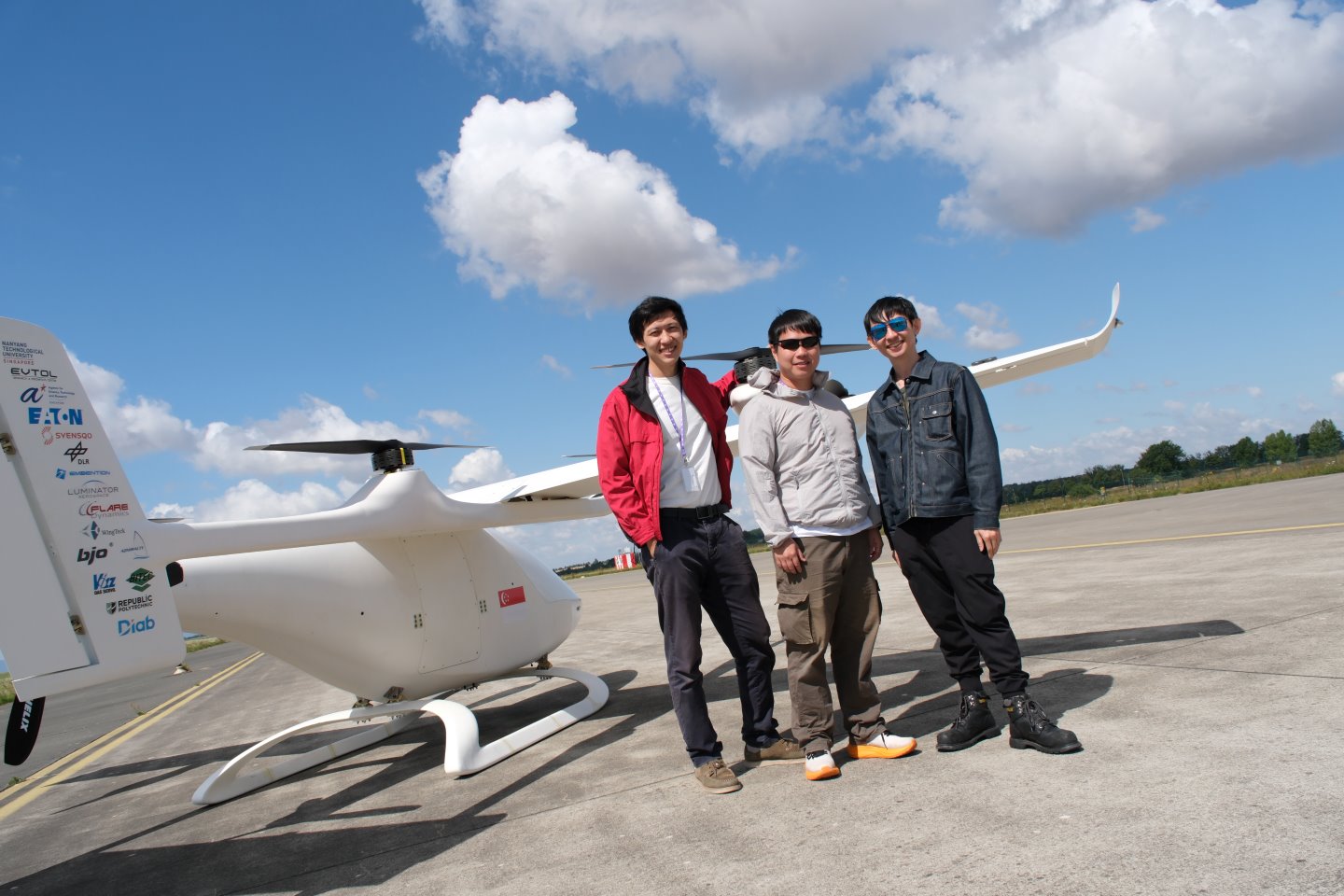 NTU alumnus John Hoh (centre), Chief Engineer, with his NTU teammates. They designed the eVTOL’s airframe – the structure that gives the aircraft its shape and strength.
When the weather calls the shots
As Singapore lacks a safe open-air zone large enough for extensive testing, the country’s first indigenously built eVTOL had to be flown overseas. But testing abroad brought another challenge: unpredictable weather.
For Research Fellow T Thanaraj, who oversaw the aircraft’s electronics and wiring, the cold temperatures and shifting winds complicated flight planning. With limited testing slots, a single setback could ground the aircraft for days.
“Unlike in Singapore, where faults could be fixed and retested quickly, we just had to be resourceful and adapt with what we have here,” says Thanaraj, who completed his aerospace engineering PhD at NTU in 2023.
“More than anything, it builds resilience. When something isn’t working, you stay composed, look for a way forward, and keep the team moving.”
Flight-test team member Philemon Koh helped measure the aircraft’s centre of gravity and track its parts and materials. The 2024 aerospace engineering graduate saw how thorough preparation helped the team respond to unexpected challenges.
“Despite the highly variable weather, careful planning and lessons from earlier test flights allowed us to accomplish most of our objectives,” he says.
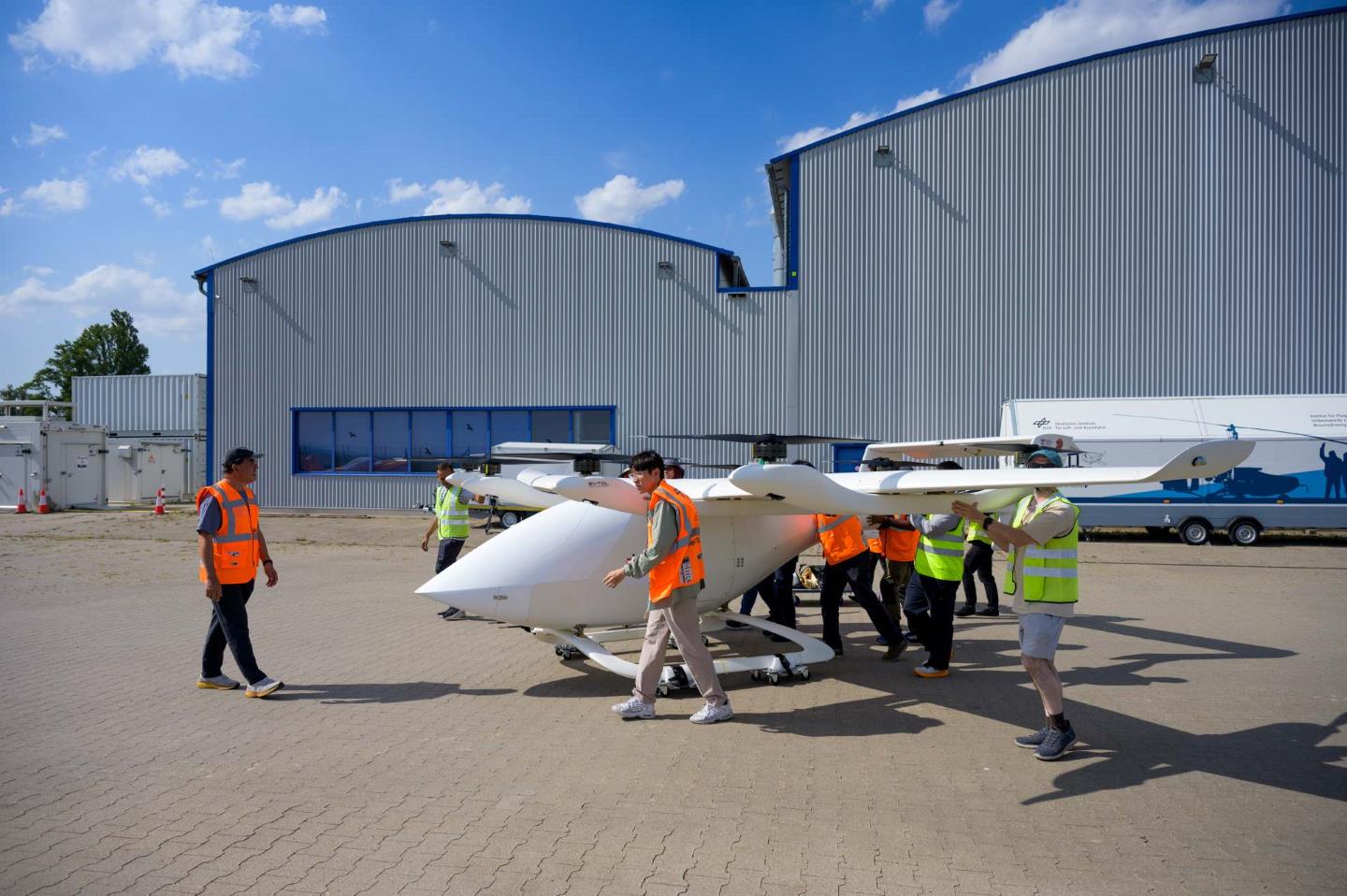
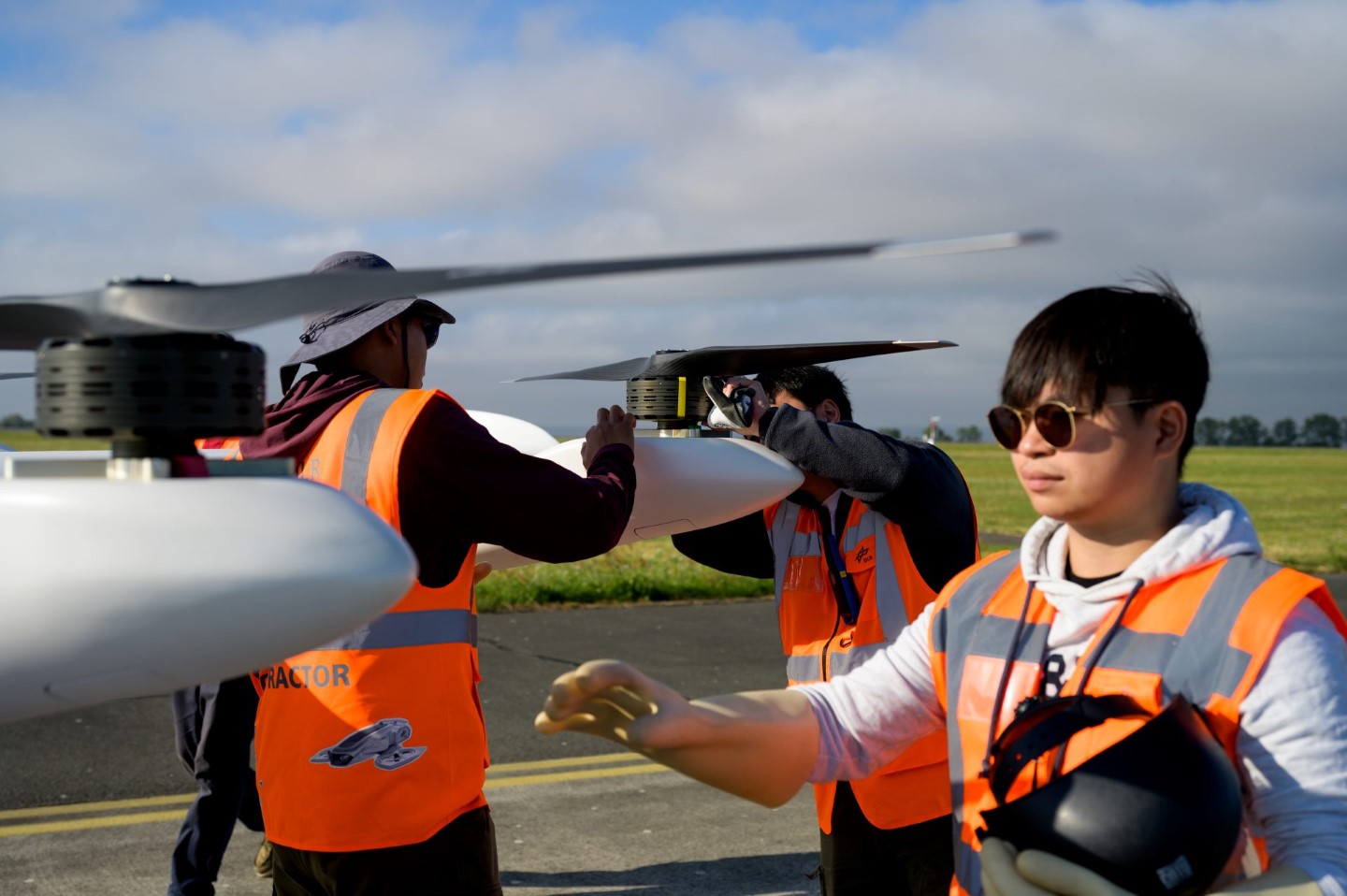
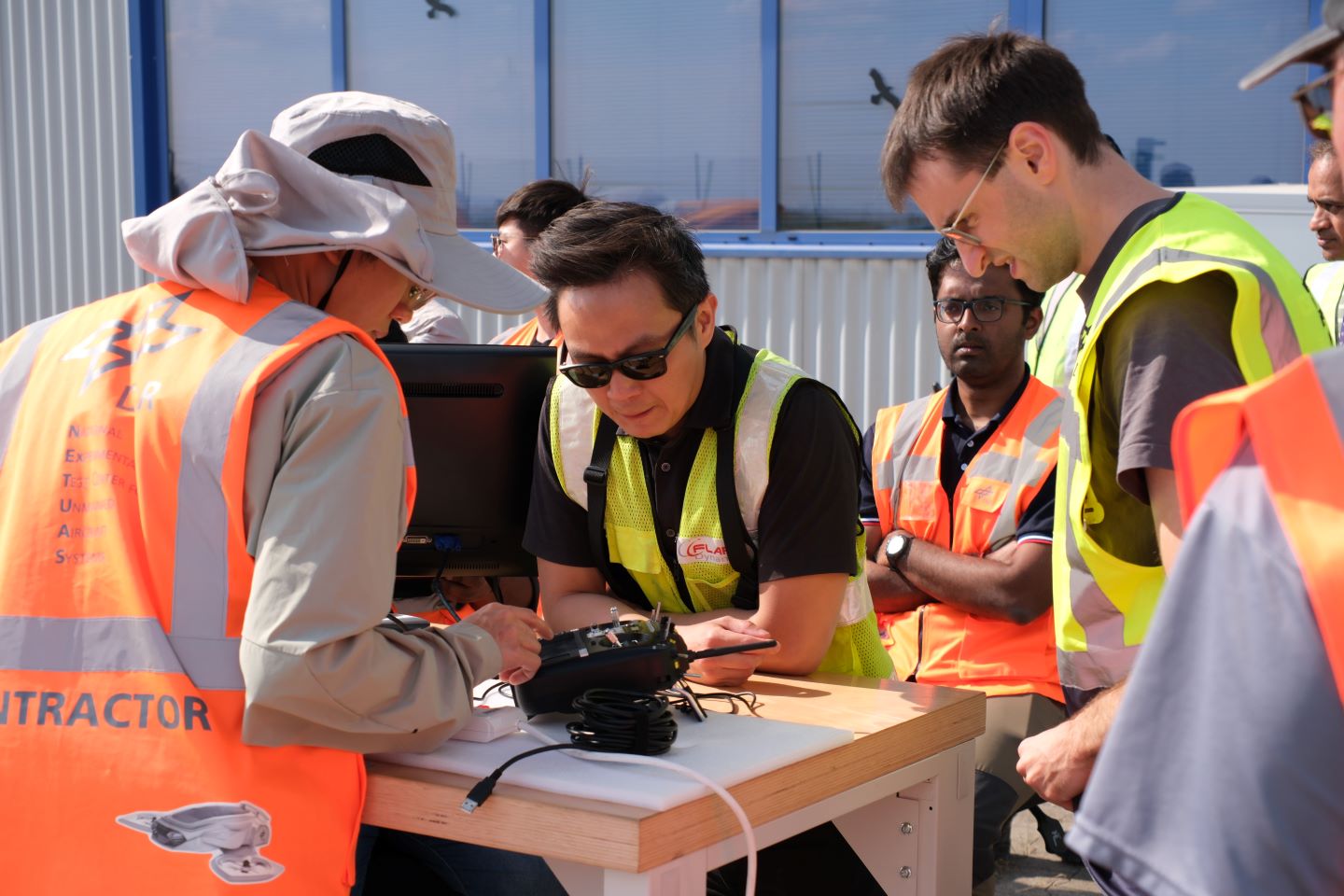 Each flight began with checks, planning and close coordination across the test team.
When massive blades begin to turn
Many of the undergraduates, PhD students and engineers who joined the project had never designed an aircraft before.
As Thanaraj explains: “I first learnt about avionics in a course during my bachelor's degree programme, but it was through integrating and testing various systems on an actual aircraft that I truly understood how different communication protocols and interfaces across various subsystems work together.”
Over three years, they learnt to build hardware, develop flight-control algorithms, connect systems and troubleshoot problems. What they had studied in separate subjects had to come together to make a single machine fly.
For Prof James Wang, Director of NTU’s eVTOL Research and Innovation Centre, that’s the point.
“Engineering comes alive when what you learn in the classroom becomes something you can see, hear and touch,” he says.
“There is a very different feeling between calculating the thrust of a rotor on paper and standing beside the aircraft as those massive blades begin to turn,” he adds.
Room to take off
NTU’s eVTOLs are research aircraft and are not currently designed to carry passengers. They are used to test technologies and collect data for future electric-aircraft research.
For the people behind them, the project was a chance to discover what they could build under the guidance of Prof Wang, who has 30 years of industry experience designing helicopters.
It began with a willingness to tackle something unfamiliar.
“I encourage them to look beyond the textbook, take initiative and be willing to venture into areas where there is no ready-made answer,” says Prof Wang. “Engineering is not simply about knowing the theory. It is about learning how to apply it, working with others and having the curiosity to find out what is possible.”
He adds: “If we can give young people the opportunity, guidance and freedom to explore, they may surprise themselves with what they can build.”