Fishing for answers: He hunts rare species for science
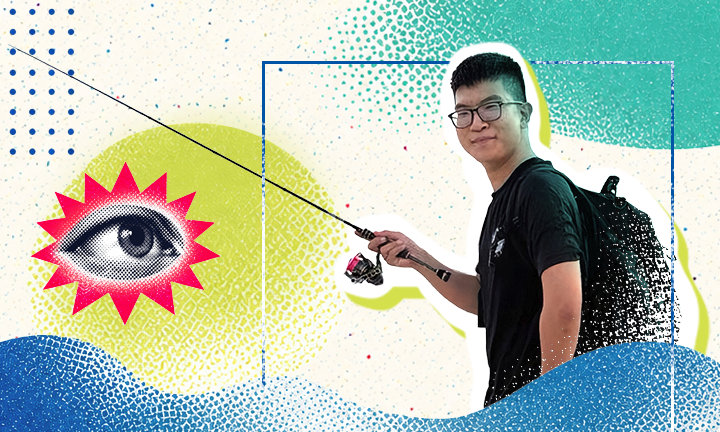
It’s less about the catch and more about the discovery for Lin Jiayuan, who has turned his love for fishing into a quest to uncover Singapore’s unknown species. Some of his catches now sit in a museum’s reference collection.
by Derek Rodriguez / Photos by Lin Jiayuan
When he goes fishing, Lin Jiayuan packs his rod, line and bait. And a pair of binoculars.
“People usually use binoculars for birds, but I use them to look at fish underwater,” says the final-year bioengineering undergrad.
For years, Jiayuan has been exploring Singapore’s shores in search of rare fish. So much so that his finds have helped researchers document more than 25 new fish species in Singapore.
His first steps into nature came as a toddler, while spending time with his grandfather in China.
“He would bring me into the mountains to teach me how to fish and tell me facts about the creatures,” says Jiayuan.
Back in Singapore, he got his own fishing rod when he started primary school. Since then, he has cast his line in waters both near and far.
"I see that bottom-dwelling predators have truncate tails for burst speed. It also makes me wonder about fish that aren’t as well-researched... Why has evolution shaped their fins and jaws this way?"
– Jiayuan
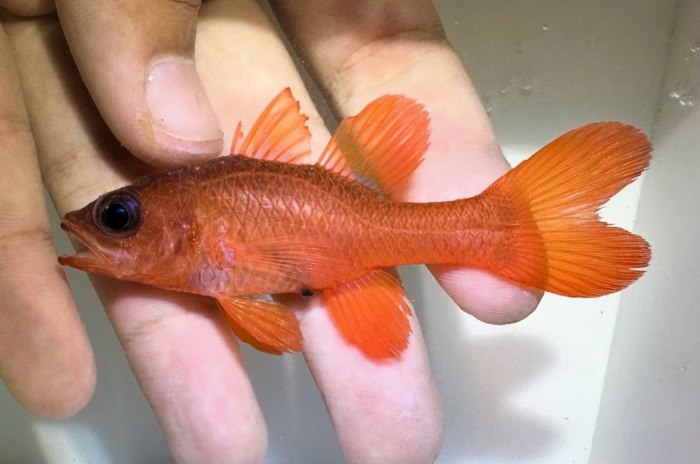
The vibrant Flame Cardinalfish spends most of its time hiding in crevices between corals and rocks, only emerging at night to feed. Jiayuan caught this one in 2023, helping to add the species to Singapore’s records.
Casting for discoveries
Jiayuan chronicles his journey on his Instagram account, sharing his catches and observations.
His posts – on certain species not previously recorded in Singapore waters – caught the attention of researchers at the Lee Kong Chian Natural History Museum.
Some of Jiayuan’s catches now sit in the museum’s reference collection, a repository of specimens for scientists. Knowing which species live here helps researchers track changes in our ecosystems and identify those that may need greater protection.
“Recording our biodiversity is also a way for us to remember what we have, especially if they disappear in future,” he says.
“I observed that Singaporeans like to travel far and wide to admire marine life,” he says.
“But we have more fish species in our shores than larger countries like the UK, because we are close to the Coral Triangle, and we are in a biodiversity hot spot. A lot of our murky water fauna is very rare and not found in places with clear water.”
One of his favourite haunts is Bedok Jetty, which he describes as a “lottery” because of the sheer variety of fish that can turn up there. He also frequents St John’s Island, Lazarus Island, Pulau Ubin and Marina South Pier.
His most memorable catch is a Bigeye Cusk-eel, a fish that lives deep in narrow cracks between rocks. After finding one by accident off Marina South, Jiayuan went back for another look and discovered an entire colony tucked inside the rocky embankment.
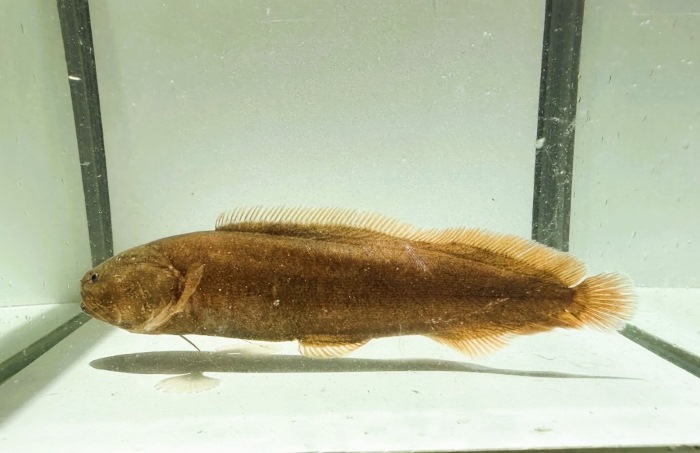
Jiayuan caught this Bigeye Cusk-eel in 2022 and it was officially added to Singapore’s biodiversity list two years later.
His passion for species hunting doesn’t stop at fish.
Jiayuan is just as curious about invertebrates such as insects, centipedes and millipedes. As part of an NTU research team, he sifted through leaf litter in Singapore’s forests and parks to study them.
What did the team find? At least 10 centipede species and seven millipede species never before recorded in Singapore, up to eight of which may be new to science.
More than meets the fin
A bioengineering degree might seem an unlikely fit for the budding taxonomist but learning about topics such as biomechanics furthers his fascination.
“I see that bottom-dwelling predators have truncate tails for burst speed, while some fish have larger pectoral fins to hover. It also makes me wonder about fish that aren’t as well-researched, like bottom dwellers in turbid waters. Why has evolution shaped their fins and jaws this way?”
“Bioengineering also combines physics, maths, chemistry and biology, and I want to learn more about all these sciences,” he adds.
NTU’s interdisciplinary approach gives him room to pursue his passion for biodiversity along with his major.
“One thing I like about NTU is the flexibility to do projects in other schools. Though I’m a bioengineering student, I was able to research on invertebrates at the Asian School of the Environment,” he says.
He also co-founded the Ichthyological Society of Singapore with fellow species hunters to raise awareness of Singapore’s fish biodiversity and bring scientists, policymakers and the public together.
Next, he plans to do a master’s in biodiversity, conservation and sustainability. After that, he hopes to pursue a PhD, potentially in fish or myriapod ecology.
For now, the hunt for new species continues. High on his list is the elusive Richardson’s moray, an eel that dwells in seagrass beds, a habitat that has become increasingly scarce in Singapore.
“I believe it’s here. You just need to look in the right places,” he says.
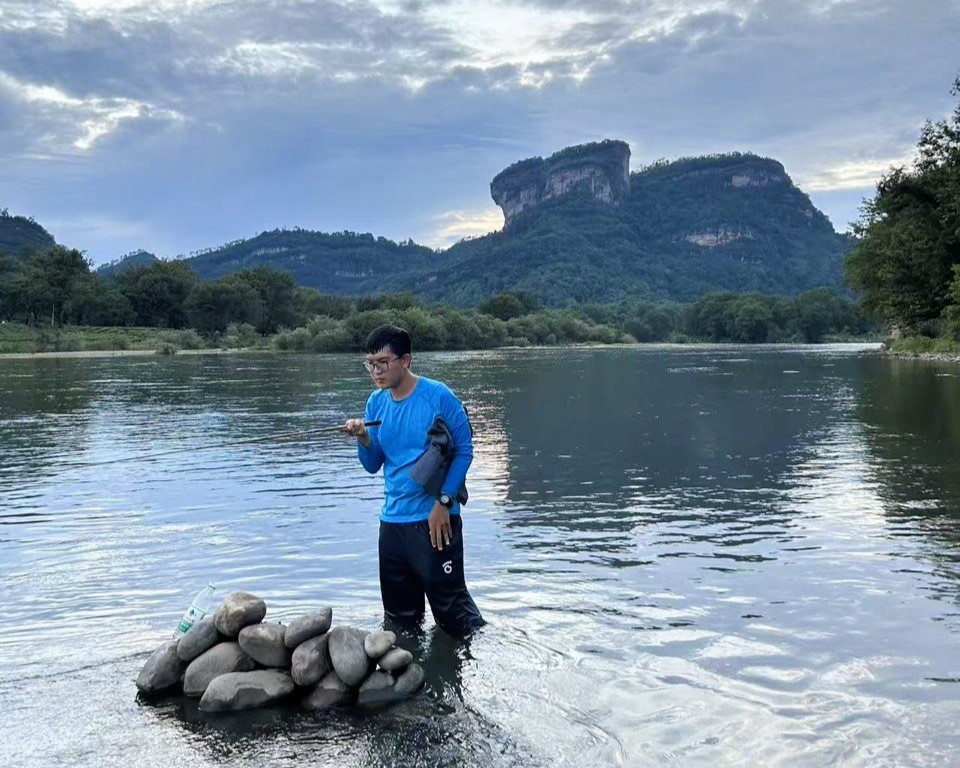
Jiayuan adapts his techniques to different waters, such as those in the mountains of Fujian, China.
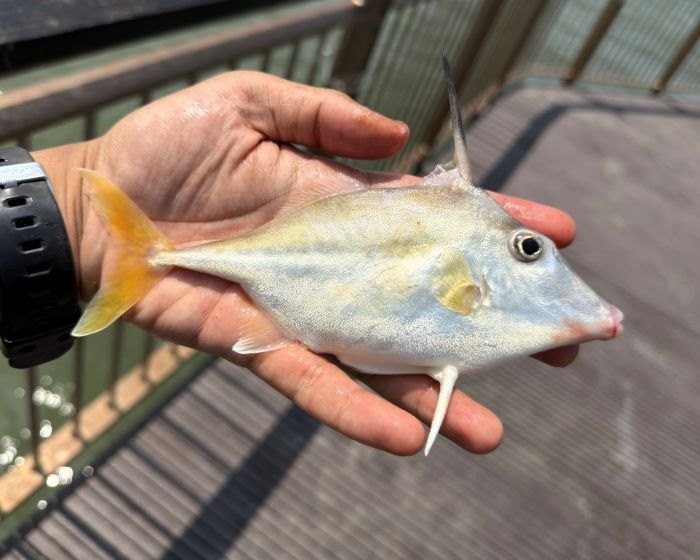
Related to pufferfish, tripodfish get their name from the three long spines on their pelvic and dorsal fins. This Short-tailed Tripodfish, caught by Jiayuan, is one of the rarest species of tripodfish in Singapore.