
Tech x Life
How NTU researchers are harnessing science and technology to unlock new possibilities and transform everyday life
by Lester Kok / Visuals by Vivian Lim + Nano Banana
Smarter healing starts here
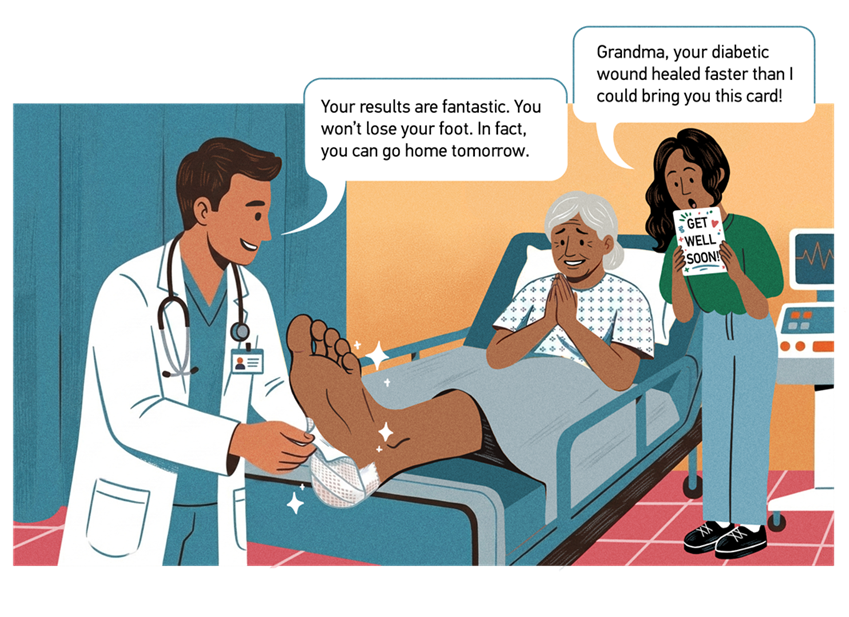
Chronic wounds can take months to heal, especially in patients with diabetes. When bacteria become resistant to antibiotics, healing becomes even harder.
NTU scientists, working with the University of Geneva, have found a new way to tackle this. Instead of killing the bacteria, they target the damaging molecules the bacteria produce.
The team found that a common bacterium in chronic wounds, Enterococcus faecalis, releases hydrogen peroxide that stops skin cells from healing. By adding catalase, a natural enzyme that breaks down hydrogen peroxide, the skin cells were able to recover and move again.
A bold new way to get there
NTU unveiled a new kind of aircraft at the Singapore Airshow 2026 – and it looks like something out of the future.
This type of electric vehicle, known as an eVTOL aircraft, takes off and lands like a helicopter, and flies like a plane. Powered entirely by batteries and using motors designed by NTU scientists, it is quieter and produces fewer emissions than conventional aircraft.
Built for short trips in urban areas, it could one day carry passengers, transport goods, or even serve as an air ambulance in emergencies. The team is also developing systems to help it fly more safely and smoothly.
Its debut marks a step forward in Singapore’s push towards cleaner, more sustainable air travel.
Gut it right: A better method for weight loss

NTU scientists have produced a natural compound that works in the gut to reduce fat absorption. This leads to lower calorie intake and supports safer weight loss.
The compound also helps activate fat-burning processes and improves how the body uses energy without disrupting normal metabolism. It works through the gut, which plays a key role in regulating weight and overall metabolic health.
In early lab studies, mice given the compound absorbed less fat and consumed fewer calories. This suggests it could complement exercise and a healthy diet, without the side effects linked to some existing weight-loss treatments.
This story was published in the Mar-Apr 2026 issue of HEY!. To read it and other stories from this issue in print, click here.





/singlit-thumbnail.tmb-listing.jpg?sfvrsn=b9e3d209_1)