Teaching with hand and heart
Phoebe Tay, NTU’s first deaf PhD student, has built a career in teaching and research that has taken her from Singapore to the US and Australia. As she nears the end of her PhD journey, we catch up with her for a heartfelt chat over WhatsApp
by Vivien Yap
Tell us about your PhD.
My research looks at how deaf instructors who teach Singapore Sign Language see themselves as language teachers. I want to understand their beliefs about language and how these shape their professional identity.
What sparked your interest in teaching, and why did you make it the focus of your research?
Back in Melbourne, I taught deaf children as young as three. When I moved to the US, I taught university students, and now, in Singapore, I teach undergraduates as part of my PhD. So teaching has really shaped who I am. Studying deaf education at Griffith University in Australia also had a big impact – it changed how I see myself as a deaf person. That got me thinking: how does teaching shape the way deaf teachers see themselves? And that’s what sparked my research.
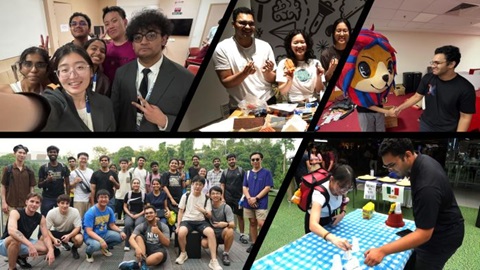
Video: This Is Your Sign! campaign by NTU communication students (Class of 2024)
So… what brought you to NTU for your PhD?
I actually wanted to do my PhD in the UK, but the COVID-19 pandemic hit and I had to change my plans. Looking back, returning to Singapore for my PhD turned out to be the right move, even if it came with unexpected challenges.
What were some of these challenges?
I thought about quitting my PhD in the first two months as I was still adjusting and figuring out how to get the accessibility support I needed in a new academic environment. Thankfully, my thesis supervisor, Assoc Prof Ng Bee Chin, really stepped in and helped me. I was also exhausted from the heavy load of writing, reading and thesis draft revisions. On top of that, my research interviews involved emotionally heavy topics, which took a mental toll as well.
What did you lean on during difficult moments?
My support system kept me going – my thesis committee professors, my friends on campus and my international network. And honestly, I just really love teaching and research. These suit my temperament. Even on days when I felt drained, that love for what I do kept me motivated. Things are better now, thankfully.
Was there a turning point in your PhD journey that led to this positive change?
Yes, and I’m incredibly thankful to Assoc Prof Ng for it. She generously supported my request to attend a week-long retreat for current and prospective deaf PhD students in Norway. That retreat became a turning point for me. I met deaf professors and PhD candidates from around the world, and it inspired me to stay the course on my own PhD journey.
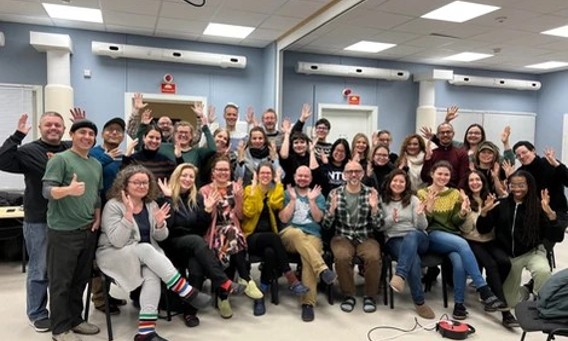
"I felt at home from day one," says Phoebe of the international workshop she attended with fellow deaf researchers in Norway.
What’s your mode of communication with NTU professors who may not know sign language?
I generally communicate with the professors in my thesis committee through email or WhatsApp. I’m also able to attend Zoom calls and in-person meetings, as I can manage one-to-one conversations in quiet places while wearing my hearing aids. For those meetings, I run a transcription app in the background as a backup.
How do you teach undergrads?
When I taught Singapore Sign Language modules to hearing undergrads as part of my PhD requirements, I used a mix of gestures and signs to communicate. I’d write key words on the whiteboard or flash them on the projector when needed. Sometimes, I even acted out scenes to demonstrate certain signs. It made the lessons more interactive and fun for everyone.
How did your students respond to the lessons?
I was pleasantly surprised to see them so engaged and curious, which made teaching really rewarding. Seeing them improve week by week was such a joy. Their positive feedback about my teaching style motivated me to keep getting better.
How many sign languages do you know?
I know three – American, Australian and Singapore Sign Language.
Do you have a message for your students – or anyone keen to learn more about the deaf community?
I hope they come in with the right mindset: to see deaf persons as equals. Sign languages are equal to spoken languages, and being deaf isn’t an impairment, but a different way of experiencing the world.
This story was published in the Jan-Feb 2026 issue of HEY!. To read it and other stories from this issue in print, click here.