
Aesthetic discoveries
From glowing vortex rings to lab-grown kidneys, striking images of hidden worlds by NTU researchers reveal the unexpected beauty of science
by Dr Daphne Ng
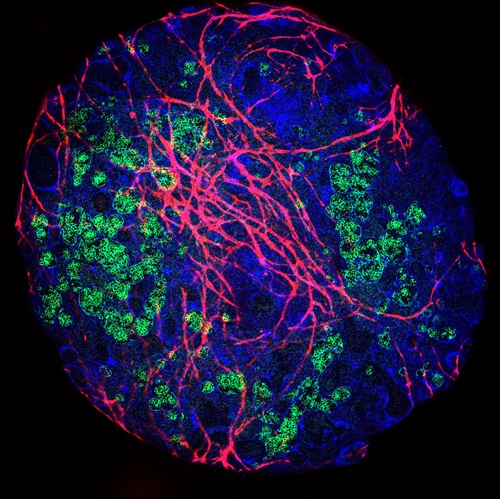 Fluorescence microscopy image: LKCMedicine
A highly magnified view of “mini” lab-grown kidneys which mimic features of real kidneys and allow researchers to study disease development in the lab.
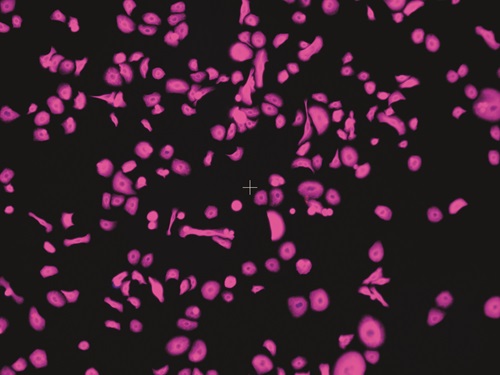 Fluorescence microscopy image: LKCMedicine
Stored in Singapore’s first lung cell bank co-led by the Lee Kong Chian School of Medicine (LKCMedicine), these human lung stem cells are among the types of lung cells being studied by researchers. Scientists are especially interested in these stem cells because they can transform into specialised lung cells and help repair damaged tissue in the lung.
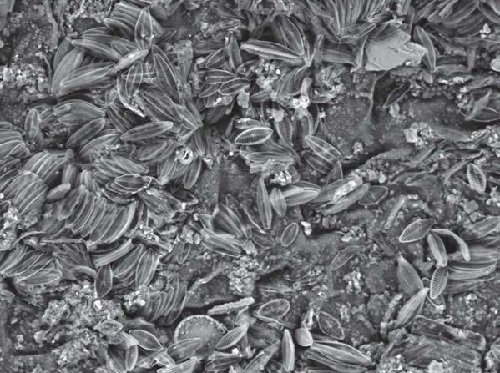 Scanning electron microscopy image: Dr Sujatha Srinivas and Dr Foo Yong Hwee
What’s on a leaf? These microscopic algae growing on a seagrass leaf are part of the microbial communities studied by researchers at the Singapore Centre for Environmental Life Sciences Engineering to better understand how marine ecosystems function.
Fluorescence video: Assoc Prof Daniel New
Reflectiongram or fluid mechanics? Researchers at the School of Mechanical & Aerospace Engineering are studying how vortex rings interact – work that could shed light on phenomena ranging from jellyfish propulsion to the mysteries of the quantum world.
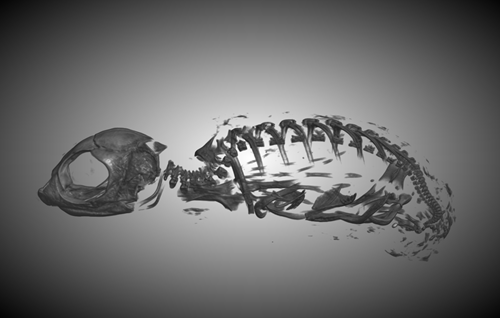 Computed tomography scan: Assoc Prof Kim Hie Lim and Dr Lyndsey Tanabe
Not a woodcut, but a scan used at the Asian School of the Environment to study how genes and environmental factors shape the hidden inner structures of sea turtles – insights that may help protect these endangered animals.
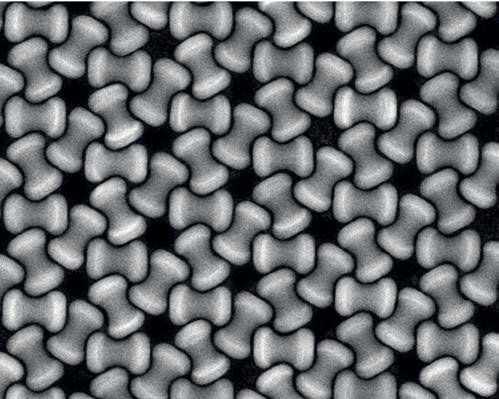 Scanning transmission electron microscopy image: Science
What looks like monochrome artwork is actually a microscopic view of particles developed by scientists at the School of Chemistry, Chemical Engineering & Biotechnology and Fudan University. The particles can self-assemble into highly ordered structures that may inspire the design of strong yet lightweight materials. Around 1,000 of the particles could fit across the width of a human hair.
.jpg?sfvrsn=ad849bc4_1 "Confocal microscopy image Dr Sushanth Gudlur (Miserez Group)") Confocal microscopy image: Dr Sushanth Gudlur (Miserez Group)
Confocal microscopy image: Dr Sushanth Gudlur (Miserez Group)
Inspired by the tiny proteins found in living things, these microscopic droplets engineered at the School of Materials Science & Engineering could someday act as miniature delivery vehicles for drugs and vaccines inside the body.
This story was published in the Jul-Aug 2026 issue of HEY!. To read it and other stories from this issue in print, click here.