Messi or Ronaldo? Your political ideology may play a part
Self-esteem and short-form video news consumption were also associated with player preference
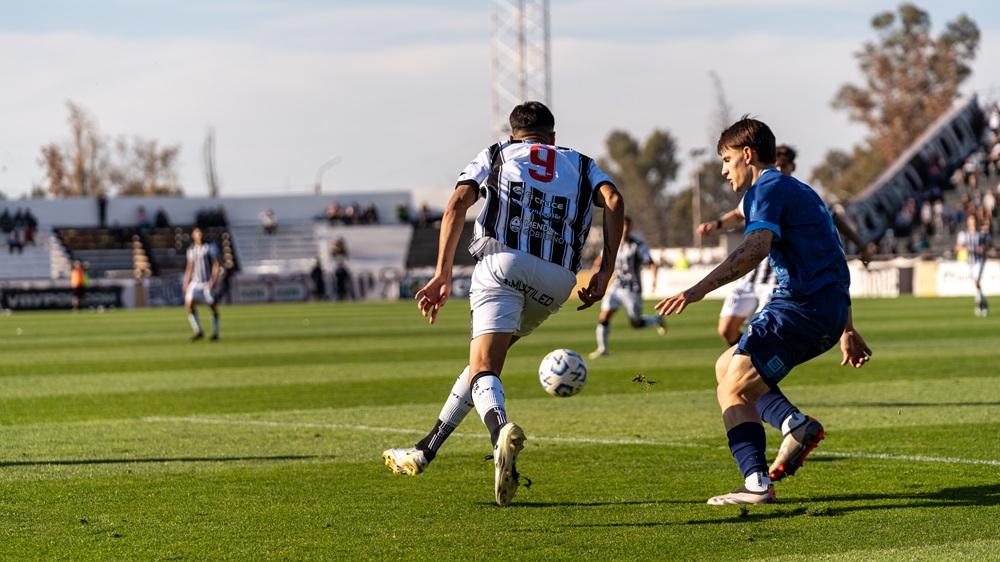
Whether someone prefers Lionel Messi or Cristiano Ronaldo – arguably two of the world’s greatest footballers in the game today – may be associated with their political outlook, according to an international survey led by Nanyang Technological University, Singapore (NTU Singapore).
The online survey of more than 10,000 respondents across 26 countries[1] found that people who identified as more liberal tended to favour Messi, while those who identified as more conservative tended to favour Ronaldo. However, this link is strongest among younger respondents and weakens substantially in older adulthood.
At the country level, respondents in 11 countries, including Singapore, rated Ronaldo more favourably on average. Respondents in eight countries favoured Messi, while seven countries showed no statistically clear preference between the two players (See chart below in Note to Editors for each country’s player preference).
The significance of the findings goes beyond football, said Associate Professor Saifuddin Ahmed of NTU’s Wee Kim Wee School of Communication and Information, who led the study. The results suggest that political identity may be associated with cultural preferences that appear to have little to do with politics.
Assoc Prof Saifuddin said: “Messi and Ronaldo project markedly different public personas. Messi is commonly associated with a quieter, team-oriented image, while Ronaldo is known for openly expressing his ambition and celebrating individual achievement. People may be more drawn to the player whose public image aligns with their broader values.”
He added that the relationship between political identity and cultural preferences has been studied most extensively in the United States, but the survey findings suggest that this pattern may not be confined to the American context. “They offer a starting point for examining how political identity may increasingly intersect with popular culture and everyday choices in different societies,” he said.
Other factors linked to player preference
The researchers also examined whether other personal characteristics and media habits were associated with player preference, including short-form video news consumption and self-esteem.
Respondents who obtained more of their news from short-form video platforms such as TikTok and Instagram also tended to favour Ronaldo. One possible explanation, the researchers said, is Ronaldo’s strong presence on visual social-media platforms, where users may encounter his carefully cultivated public persona more frequently.
Respondents with higher self-esteem were also more likely to favour Ronaldo. The researchers said the finding was consistent with research on self-affirmation. One possible explanation is that people with higher self-esteem may be more inclined to identify with aspirational and dominant public figures whose achievements reinforce their positive view of themselves.
Assoc Prof Saifuddin said: “People may want to present themselves as modest, but that does not mean they identify most strongly with modest public figures. Those with higher self-esteem may instead gravitate towards someone who embodies excellence, confidence and achievement – qualities they may see reflected in themselves.”
Preferences differed across countries
Messi received stronger average ratings in Argentina, several Western European countries, the United States, Canada and South Korea.
South Korea recorded the strongest relative preference for Messi, ahead even of Argentina. However, the difference was driven primarily by comparatively low ratings for Ronaldo rather than unusually high ratings for Messi. South Korea was the only country surveyed in which Ronaldo received an average rating below four on the seven-point scale.
The researchers said this may partly reflect lingering public unhappiness over a 2019 exhibition match in Seoul, in which Ronaldo did not play despite being the event’s main attraction.
Ronaldo received stronger average ratings in several countries across North Africa, the Middle East and Southeast Asia.
The researchers found no association between a country’s FIFA ranking and its respondents’ overall player preference. The country-level results also could not be explained simply by loyalty towards a player from the respondents’ own country.
The researchers plan to investigate further why the relationship between political ideology and player preference varies with age.
The findings on short-form video news use also raise broader questions about how exposure on social media may influence people’s relationships with public figures and how these relationships may intersect with political values, they added.
[1] The 26 countries are Australia, Argentina, Brazil, Canada, China, Egypt, Finland, France, Germany, India, Indonesia, Japan, Malaysia, Mexico, Netherlands, Nigeria, Norway, Philippines, Portugal, Singapore, Spain, South Africa, South Korea, Turkey, United Kingdom, United States. They were selected to span six continents and a range of football cultures, political systems, and economic development.