AI for the real world
As artificial intelligence (AI) transforms how we learn and work, NTU is weaving it into classes in a big way, preparing students not just to learn with the help of AI, but also to create with AI
by Derek Rodriguez
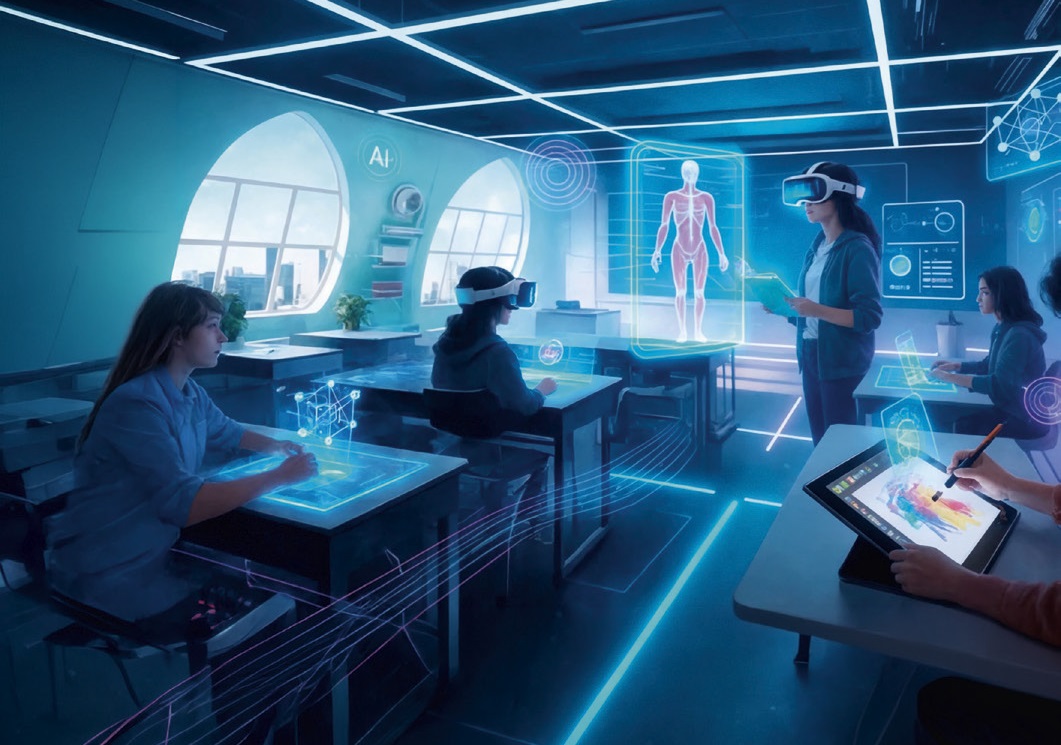 Visual: Freepik
AI isn’t an add-on at NTU. It’s built into the learning experience from day one.
The University plans to integrate AI into 40% of its courses by 2030, giving graduates an edge in an increasingly AI-driven economy. It is the first university in Singapore to adopt AI at this scale.
As part of this ambitious plan, AI literacy lessons will be mandatory for all students starting this August.
Every undergraduate will also get full access to a suite of premium Google AI tools, including Gemini Enterprise, Google AI Studio and Vertex AI. Students will learn to use and apply these tools, such as creating assistants that can be assigned to help in their daily lives or be research aides. Students will also receive computing credits to build and deploy these AI agents, with the ability to continue refining these tools even after graduation.
Says NTU President Prof Ho Teck Hua: “By embedding AI across our curriculum, our graduates will leave NTU with not just a deep understanding of AI, but also a portfolio of AI agents ready to deploy from day one in the workforce.”
The always-on assistant
Even in classes that aren’t focused on AI, it often plays a supporting role.
Through NTU’s AI learning platform, faculty can create course-specific assistants that work around the clock, helping students grasp concepts and get unstuck outside class hours.
One early adopter is Asst Prof Leonard Ng. His chatbot, Leodar – a sassy, Singlish-speaking teaching assistant – made headlines in 2024. It answered student questions in a data science and AI class, and was even allowed in assignments and tests. He has since introduced another chatbot, Captain Thermo, for thermodynamics.
“Students mostly use AI assistants to help them learn and understand the course material. This is especially important in thermodynamics as it’s an extremely abstract subject,” says Asst Prof Ng.
“I have seen students incorporate AI bots into their capstone projects for my data science class, which is really heartening as they are experimenting with state-of-the-art technologies on their own,” he adds.
Over at the Lee Kong Chian School of Medicine, students use Anatbuddy. What’s unique is that it provides verified content from select open-source databases, in response to anatomy questions.
Dr Ranganath Vallabhajosyula, who helped develop the chatbot, says it was designed to address a key issue: inaccurate or misleading AI-generated content.
This story was published in the Mar-Apr 2026 issue of HEY!. To read it and other stories from this issue in print, click here.