What is the ICC?
What does the NTU undergraduate curriculum structure look like?
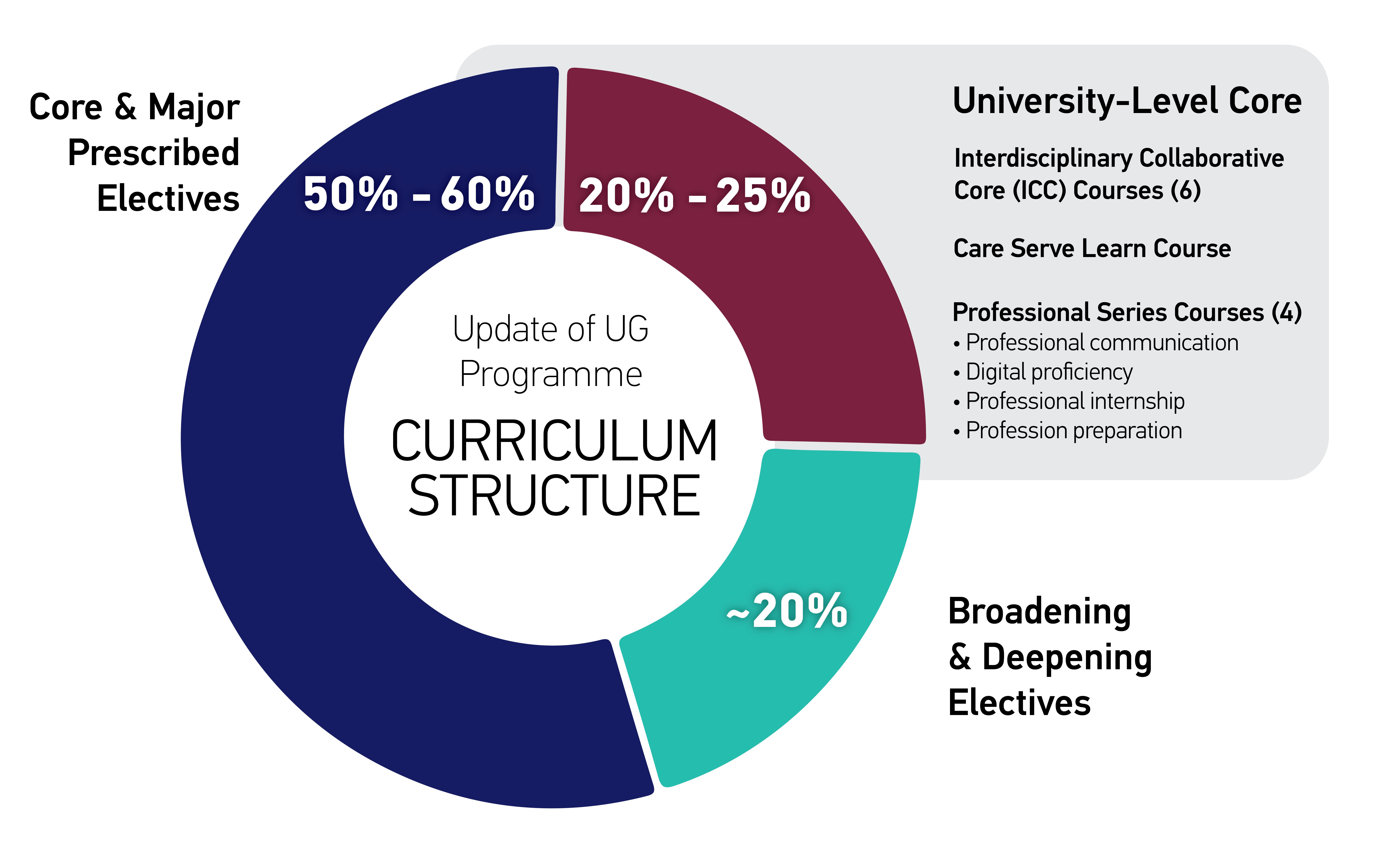
The NTU undergraduate curriculum combines specialised study with interdisciplinary learning and opportunities to explore interests beyond your major. It comprises three main components:
- Core and Major Prescribed Electives: Build foundational and specialised knowledge in your chosen discipline.
- University-level Core Courses, including the six ICC core courses: Develop transferable skills, interdisciplinary thinking and an understanding of global challenges.
- Broadening and Deepening Electives (BDEs): Allow you to explore other fields, pursue your interests or deepen your knowledge in selected areas.
Together, these components provide a holistic education that prepares you for your career and lifelong learning.
What core ICC courses am I required to take?
You will be required to take six core ICC courses in the first 3 years of your undergraduate education at NTU.
How many AUs do the six core ICC courses add up to?
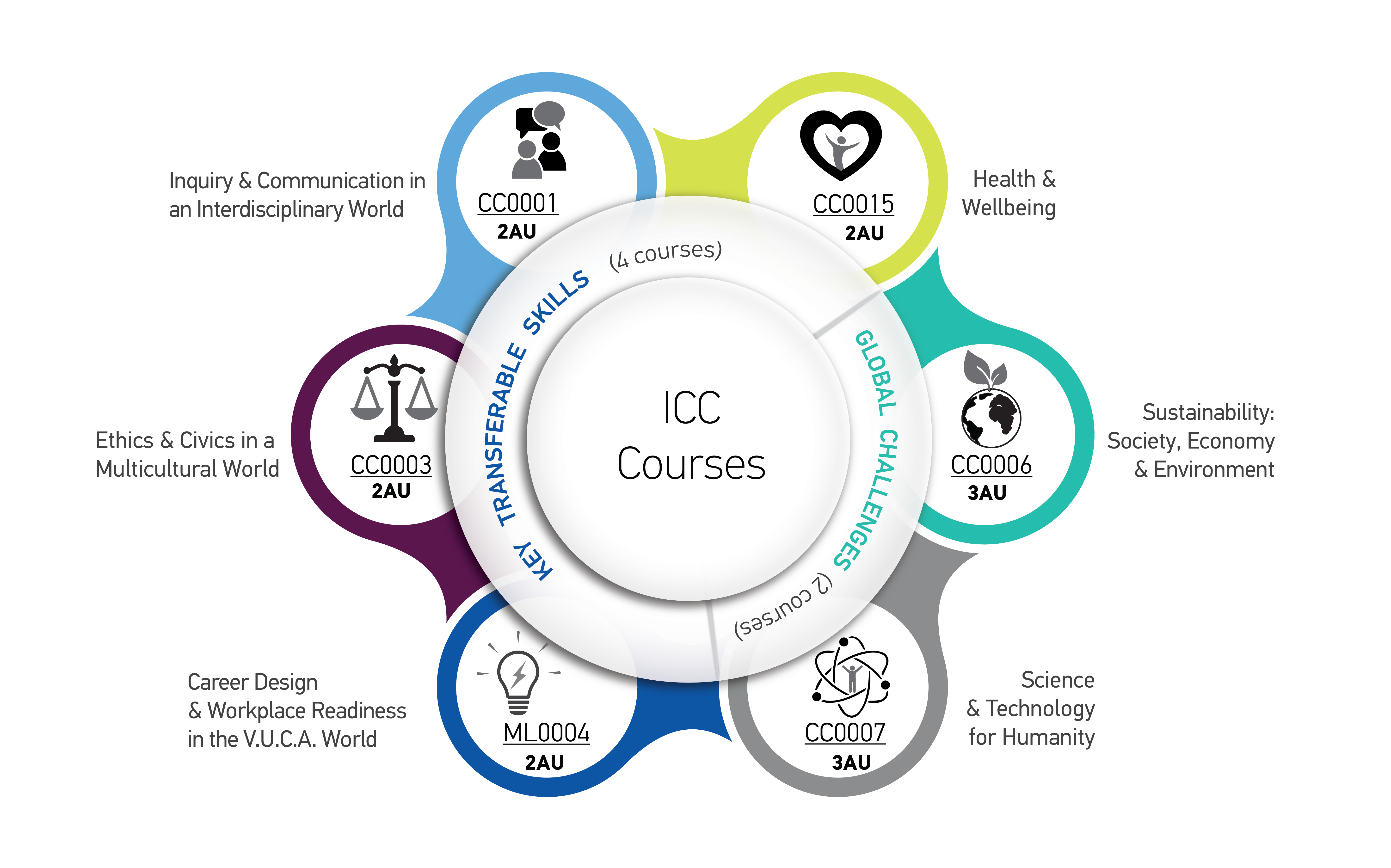
The six core ICC courses are divided into two large categories:
- Four courses cover Key Transferable Skills; and
- Two courses explore the Global Challenges that the world is currently facing.
Together, these six ICC courses add to a total of 14 AUs.
KEY TRANSFERABLE SKILLS
CC0001 - Inquiry and Communication in an Interdisciplinary World (2AU)
CC0003 - Ethics and Civics in a Multicultural World (2AU)
ML0004 - Career Design and Workplace Readiness in a Dynamic World (2AU)
CC0015 - Health and Wellbeing (2AU)
GLOBAL CHALLENGES
CC0006 - Sustainability: Society, Economy and Environment (3AU)
CC0007 - Science and Technology for Humanity (3AU)
Why are the six core ICC courses compulsory?
The six core ICC courses provide a shared educational foundation for all NTU undergraduates, complementing the specialised knowledge gained through their degree programmes. Through interdisciplinary and collaborative learning, the courses develop key transferable skills and engage students with global challenges, connecting theory with practical application.
Making these courses compulsory ensures that every NTU graduate benefits from a holistic education that prepares them to:
- Navigate a changing world with critical thinking, communication and collaboration skills.
- Adapt throughout their careers by acquiring new knowledge and applying their skills in different contexts.
- Embrace lifelong learning and global citizenship by considering diverse perspectives and contributing responsibly to society.
When am I required to take the ICC courses?
When must I complete my ICC courses by?
Most students are expected to complete their ICC courses by the end of their third year of undergraduate study.
Your School will determine the scheduling of ICC courses within your programme’s study plan. Do follow the study plan provided by your School and contact your School’s undergraduate office if you need clarification on when to take or complete a course.
The recommended study year for each of the ICC courses:
STUDY YEAR 1
CC0001 - Inquiry and Communication in an Interdisciplinary World
ML0004 - Career Design and Workplace Readiness in a Dynamic World
CC0007 - Science and Technology for Humanity
STUDY YEAR 2
CC0003 - Ethics and Civics in a Multicultural World
ML0004 - Career Design and Workplace Readiness in a Dynamic World
CC0015 - Health and Wellbeing
STUDY YEAR 3 & 4
CC0006 - Sustainability: Society, Economy and Environment