
It’s a first! Be the first!
This is the first master's degree in the world to teach international cultural programming and creative leadership as a single craft — and the only one where you will learn it from the people who run the global events and institutions you recognise and admire. Be the first to join!
A festival is not a calendar of performances. It is a statement about the values of a place, held together by artistic judgement, careful planning, partnerships, negotiation, and courage. Learning how to make a festival takes two abilities that are almost always taught separately: the hands-on craft of building a coherent live cultural event, and the vision to lead the organisation that will keep it alive for the next generations.
Over one year, you will work through how the world's iconic international cultural events are conceived and financed, how policy is written and how to argue for it, how funders decide, and how AI and digital platforms are changing what audiences choose.
You will be taught in small groups, mentored one to one, gain experience through unique internships, and judged on who you can be rather than what you can memorise. You will leave with a clear plan for a festival of your own, a network across continents, and an inspiring answer to the question of what kind of cultural leader you could become.
Programming and leadership, taught as one
Cultural programming is the art and science of building a live event: the concept, the artists, the budget, the logistics, the audience, the impact. Creative leadership is the capacity for vision, mission, and action: deciding what a cultural organisation is for, forging the partnerships that sustain it, and building a legacy that will endure beyond a single season. A programmer without leadership abilities cannot sustain a direction. A leader without programming skills cannot judge whether one is achievable. You need both, so we teach both.
Why study this here
Learn from people who lead culture
Renowned festival presidents, artistic directors and cultural diplomats teach alongside our faculty — in seminars, over case studies, and in one-to-one mentorship you would normally wait a decade for. This is experiential, hands-on learning at its finest!
Festivals, taken seriously
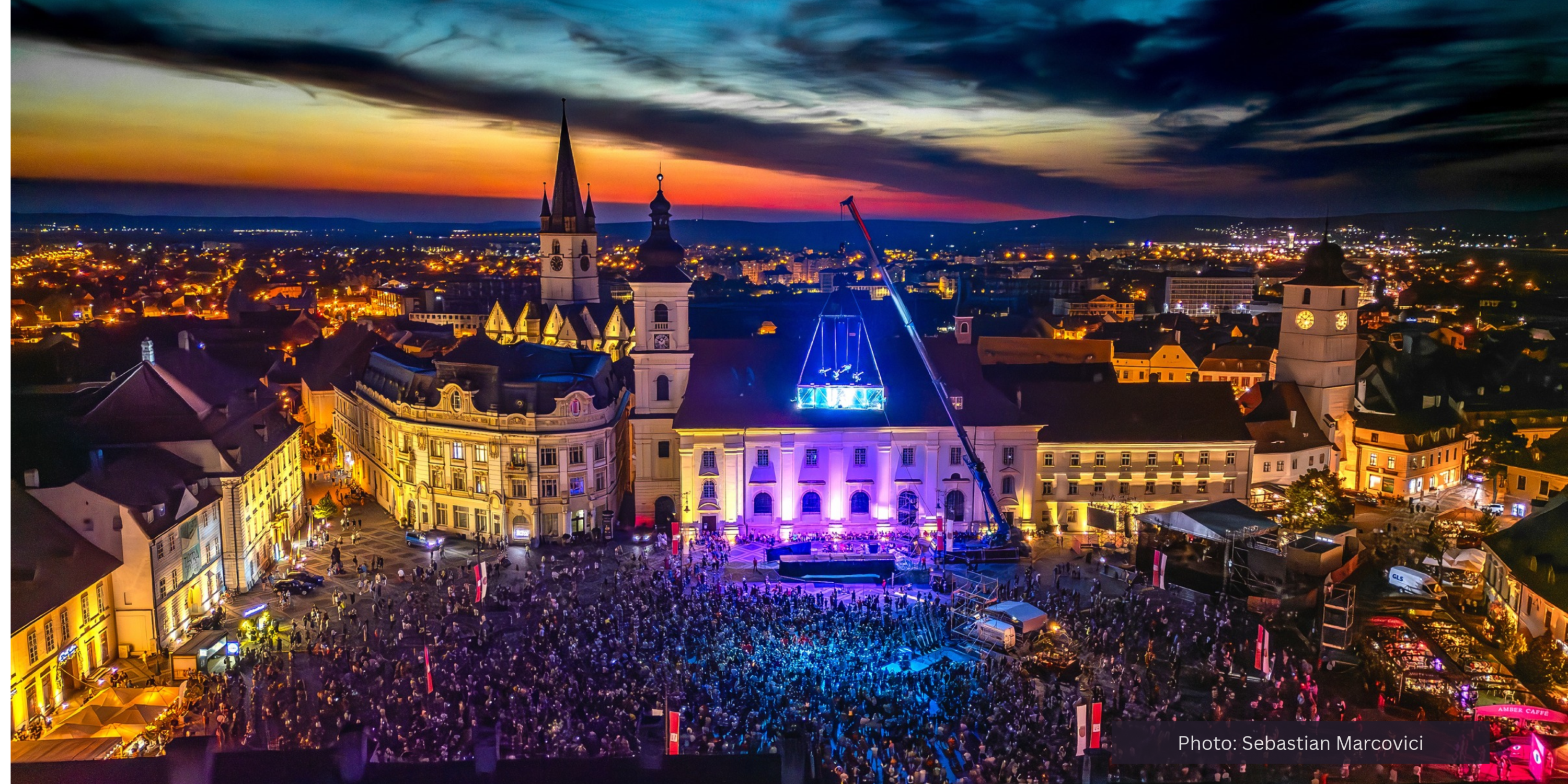
From Edinburgh and Avignon, both established in 1947, to Wuzhen in China, Verbier in Switzerland and Sibiu in Romania today: how the form was invented, what makes it work, and what it takes to start a new one. Then, you can build your own!
Culture that crosses borders and changes the world
Cultural diplomacy is how artistic vision moves between countries when politics stalls. You will learn how to build and sustain the partnerships, the platforms and the networks that make it happen. Culture can change the world!
Admissions
- A good bachelor's degree in any discipline from a recognised university
- Compliance with NTU's English language proficiency requirements
- International applicants whose medium of instruction was not English at tertiary level must submit an IELTS score of 7, or a TOEFL score of 100 (internet-based), 233 (computer-based) or 577 (paper-based)
- International applicants holding a bachelor's degree of at least three years from a university where English is the medium of instruction do not need TOEFL or IELTS results, but must provide documentary evidence
You do not need a background in arts management, or in the arts at all. Some of the strongest applicants arrive from law, business, engineering or teaching, with a conviction about culture and a willingness to start.
What to send us
A curriculum vitae, a letter telling us why this programme and why now, and a portfolio of your professional work if you have one. Shortlisted applicants are invited to an interview, in person or online — a conversation about your ambitions rather than a test.
Selection is competitive, so meeting the criteria does not guarantee a place. For the mechanics of applying, see the Coursework Programmes Admission Guide.
Mode and duration
| Full-time | 1 year, 2 semesters. Maximum candidature 2 years. |
| Part-time | 2 years, 4 semesters. Maximum candidature 4 years. |
| First intake | August 2027, AY2027 Semester 1 |
Programme structure
Thirty academic units, one year full-time. Half of it is shared ground, half of it is yours to shape.
Compulsory core
Four courses everyone takes. Leadership, programming, marketing and the ideas underneath them all.
Electives
Four courses you pick, from festivals and fundraising to diplomacy, entrepreneurship and AI.
Final project
A festival or live cultural event of your own design, taken from idea to fundable proposal with a supervisor beside you.
Suggested full-time schedule
| Semester | Period | Duration | Courses |
|---|---|---|---|
| Semester 1 | August – November | 13 weeks | 2 core, 2 electives |
| Semester 2 | January – April | 13 weeks | 2 core, 2 electives, final project |
Studying part-time? See the two-year schedule
| Semester | Period | Duration | Courses |
|---|---|---|---|
| Year 1, Semester 1 | August – November | 13 weeks | 2 core |
| Year 1, Semester 2 | January – April | 13 weeks | 2 core, 1 elective |
| Year 2, Semester 1 | August – November | 13 weeks | 2 electives |
| Year 2, Semester 2 | January – April | 13 weeks | 1 elective, final project |
Courses
Thirty academic units in three parts. The colour on the left of each row tells you which part a course belongs to.
Core courses — 12 AUs
Four courses everyone takes, in the first weeks and across the year.
HI6101 Creative Leadership3 AUs
What does it take to shape culture, inspire change, and lead with vision in a rapidly evolving world? Creative leadership is the answer! It is the ability to imagine possibilities for the future, while responding intelligently to the realities of the present. This course examines how leaders in the arts and cultural sector bring together vision, creativity, practical wisdom, courage, and ethical responsibility to shape institutions and communities through cultural life.
Students will be encouraged and empowered to develop their own ideas for creative leadership while reflecting on the values, principles, and forms of judgement required to turn ideas into meaningful action.
A distinctive feature of the course is its mentorship-based approach. Through direct engagement with leading practitioners from Singapore and around the world, students will gain insight into the opportunities and challenges of leadership in real-world cultural environments. Case studies, field visits, discussions, internships, and one-to-one mentoring will provide opportunities to explore different models of leadership and to learn from the experience of renowned and respected cultural leaders.
By combining critical reflection with practical engagement, conceptual approaches with direct know-how, the course aims to cultivate vision, mission, action and direction coupled with a genuine sense of responsibility, preparing students to become leaders who shape the cultural life of their communities and of the wider society. Creativity is the way!
HI6102 International Cultural Programming3 AUs
International cultural programmes do not emerge by accident or serendipity. Whether in an arts festival, an orchestra season, a theatre company’s repertory, this type of programming involves a series of decisions about artistic priorities, resources, audiences, and long-term purpose. This course examines how those decisions are made in order to generate great local and global impact, across publicly funded, independent and not-for-profit cultural organisations.
Focusing on major examples, the course introduces students to the concepts and practices that underpin international cultural programming in a variety of institutional settings. It explores how cultural organisations develop programmes that remain artistically ambitious while building lasting relationships with audiences and communities.
Drawing on case studies from across the cultural sector, students will consider different models of programming and the practical realities that shape them. The course provides an introduction to the planning, coordination, profitability, and strategic thinking involved in sustaining cultural organisations and enabling them to fulfil their artistic mission over time.
HI6103 Cultural Marketing for Creative Industries3 AUs
Cultural organisations depend not only on artistic excellence but also on their ability to connect with the people they hope to reach. This course explores how arts and cultural institutions communicate their purpose, build their public profile, and foster lasting relationships with audiences through brilliant marketing campaigns.
Focusing on the creative industries as live cultural ecosystems, the course introduces students to the principles of communication, promotion, and marketing in the arts. It examines how organisations identify and engage different audiences while remaining guided by a clear artistic mission. Along the way, students will consider what makes cultural audiences distinctive and how cultural organisations generate awareness, stimulate interest, cultivate relevance, and establish reputation in an increasingly crowded media landscape.
Through case studies, discussions, and practical exercises, students will analyse successful communication strategies and develop their own approaches to promoting arts and culture. Particular attention will be given to questions of audience development, effective branding, institutional identity, public trust, and the ethical responsibilities that accompany cultural marketing.
HI6104 Introduction to Culture: Practice and Theory3 AUs
What is culture? What is cultural identity? Is there an essential relationship between culture and society? Are we living in an age of postmodernity, or does the notion of supermodernity better capture the realities of our increasingly digital private and public lives? Has globalisation irreversibly transformed our understanding of time and space? How can theories of culture remain relevant to everyday experience?
This course engages with these and related questions through examples drawn from literature, philosophy, architecture, music, theatre, performance art, sociology, history, and contemporary life. It introduces students to some of the central concepts and debates in cultural studies, while exploring a wide range of cultural phenomena and perspectives.
Throughout the course, students will develop the ability to engage critically with cultural ideas and practices, interpret cultural information thoughtfully, and broaden their intellectual horizons. Everyone interested in arts programming and creative leadership will gain a deeper understanding of the societies in which they live through valuable insights into the cultures that shape the contemporary world.
Electives — 12 AUs
Choose any four. The electives offered each semester vary with teaching availability and demand.
HI6105 Partnering and Fundraising for Culture3 AUs
The success of great cultural projects rarely depends upon artistic vision alone. It involves resources, partnerships, and support networks that make ambitious ideas possible. This course introduces students to the strategies that arts and culture professionals use to build lasting relationships with public and private stakeholders, secure funding, and sustain creative initiatives.
Students will learn how cultural organisations – from performing arts companies and orchestras to interdisciplinary cultural centres, start-ups, and non-governmental organisations – develop and implement successful fundraising campaigns. The course focuses on both the practical and strategic dimensions of fundraising, providing students with the knowledge and skills required to prepare effective grant applications, sponsorship proposals, and fundraising plans.
A range of funding models will be examined, including government grants, corporate sponsorships, philanthropic giving, individual donations, and fundraising events. Through case studies and practical experiments, students will explore the opportunities and challenges associated with different sources of support, and learn how cultural organisations build the partnerships that enable creative projects to thrive.
HI6106 Creative Entrepreneurship3 AUs
Behind many successful cultural organisations lies a creative entrepreneurial idea: an individual or a small group identifying a need, spotting an opportunity, and finding a new way of turning vision into reality. This course explores how such initiatives take shape and what it takes to sustain them.
The course introduces students to the theory and practice of cultural entrepreneurship, examining the opportunities and constraints that characterise various creative ecologies. Students will learn how cultural projects are conceived, developed, and managed, while gaining insight into the policies, institutions, and economic realities that determine the destiny of any creative enterprise.
Through examples drawn from advertising, architecture, design, digital entertainment, music, publishing, media, and the performing arts, students will encounter a range of entrepreneurial approaches and organisational models. The course also provides an opportunity to develop original project ideas and to consider how creative ambition can translate into viable and lasting cultural ventures. /p>
HI6107 International Cultural Festival Management3 AUs
Since the founding of both Edinburgh International Festival and the Avignon Festival in 1947, festivals have become some of the most vibrant expressions of cultural life, bringing together artists, ideas, and audiences from around the world. They create spaces where local traditions meet international energies, generating new conversations, collaborations, and forms of cultural exchange.
This course explores the history, theory, and practice of international festival management through a range of case studies drawn from different cultural contexts. Students will examine how festivals are conceived, organised, and sustained, while considering their artistic, social, cultural, and economic significance.
From small community-based initiatives to legendary events, the course looks at the many ways international festivals contribute to cultural life and shape the places in which they occur. Students will be encouraged to reflect on the needs and aspirations of their own communities and to imagine new festival models capable of bringing people, ideas, and creative inspirations together in meaningful ways through platforms for the “flowering of the human spirit”. Through the study of various types of successful festivals from around the world, students will gain insight into the principles, challenges, and possibilities of festival management in a fluid cultural landscape.
HI6108 Cultural Diplomacy in the Digital Age3 AUs
Cultural diplomacy is founded on the idea that culture can bring people together across borders, languages, and political differences. From artistic collaborations and educational exchanges to international festivals and institutional partnerships, it has long played an important role in relations between communities and countries.
This course explores the history, ideas, and practices of cultural diplomacy, examining how cultural connections are formed, nourished and sustained over time. Through historical examples and contemporary case studies, students will consider how individuals, organisations, and institutions use the arts, heritage, and education to build relationships and encourage dialogue beyond cultural boundaries.
Particular attention will be given to the role of interpersonal relationships and genuine connectivity, which remain as important as ever in the age of digital networking. The course invites students to think about culture not simply as a reflection of society, but as a means through which people, communities, and nations come to understand one another.
HI6109 Effective Communication and Cultural Advocacy3 AUs
Ideas matter, but they matter most when they are communicated clearly and persuasively. This course explores the art of public communication and cultural advocacy, examining how individuals and organisations make compelling cases for the causes, projects, and values they seek to advance.
Students will develop their ability to communicate with confidence, engage different audiences, and present ideas effectively in any public setting. Alongside practical training in communication, the course considers the role of advocacy in supporting the arts and cultural sector, exploring how cultural initiatives gain visibility, attract support, and influence public conversations.
Through case studies, discussions, presentations, and collaborative exercises, students will analyse a range of communication strategies and advocacy campaigns. The course encourages them to develop their own voice, refine their persuasive skills, and think carefully about how ideas can be communicated in ways that are both authentic and effective. Designed as a series of interactive and discussion-based experiences, the course will provide opportunities to present arguments, develop advocacy proposals, and offer constructive feedback in an environment that values curiosity, dialogue, and the open exchange of ideas.
HD6023 Culture and the Transformative Effects of AI3 AUs
Cross-listed from our Master of Arts in Digital Humanities. How artificial intelligence is reshaping cultural landscapes, and what it is doing to traditions and practices that took centuries to form.
HD6027 Communities, Platforms and Power3 AUs
Cross-listed from our Master of Arts in Digital Humanities. How digital platforms shape communities, and how power online is distributed, contested and exercised.
Final project — 6 AUs
One project, developed across the year with a supervisor.
HI6110 Final Project6 AUs
Your year ends with something you made: an original proposal for a festival or live cultural event, complete with the concept, the research behind it, the plan for staging and publicising it, and a clear account of the impact and legacy you intend. It is the piece of work that defines you as a programmer and a leader, and the one you will put in front of an employer, a funder or a board.
Where this takes you
Singapore's cultural sector is growing faster than the pool of people qualified to lead it. This degree is built for that gap.
150,000
creative professionals in Singapore, but only one in three works directly in the cultural sector
Over half
of the skills the sector recruits for sit in business and organisational management
2025
the first year the national Skills Demand report named creative industries a growth priority
That is management expertise applied to cultural judgement, craft supporting vision, skill serving will – the combinations this degree is built to produce. It opens new roles for those who can programme and lead live cultural events across the public, private and non-profit sectors, in Singapore and well beyond it.