Third Sustainability Lecture: Sustainable Cities: Reflections from Hong Kong
ABSTRACT
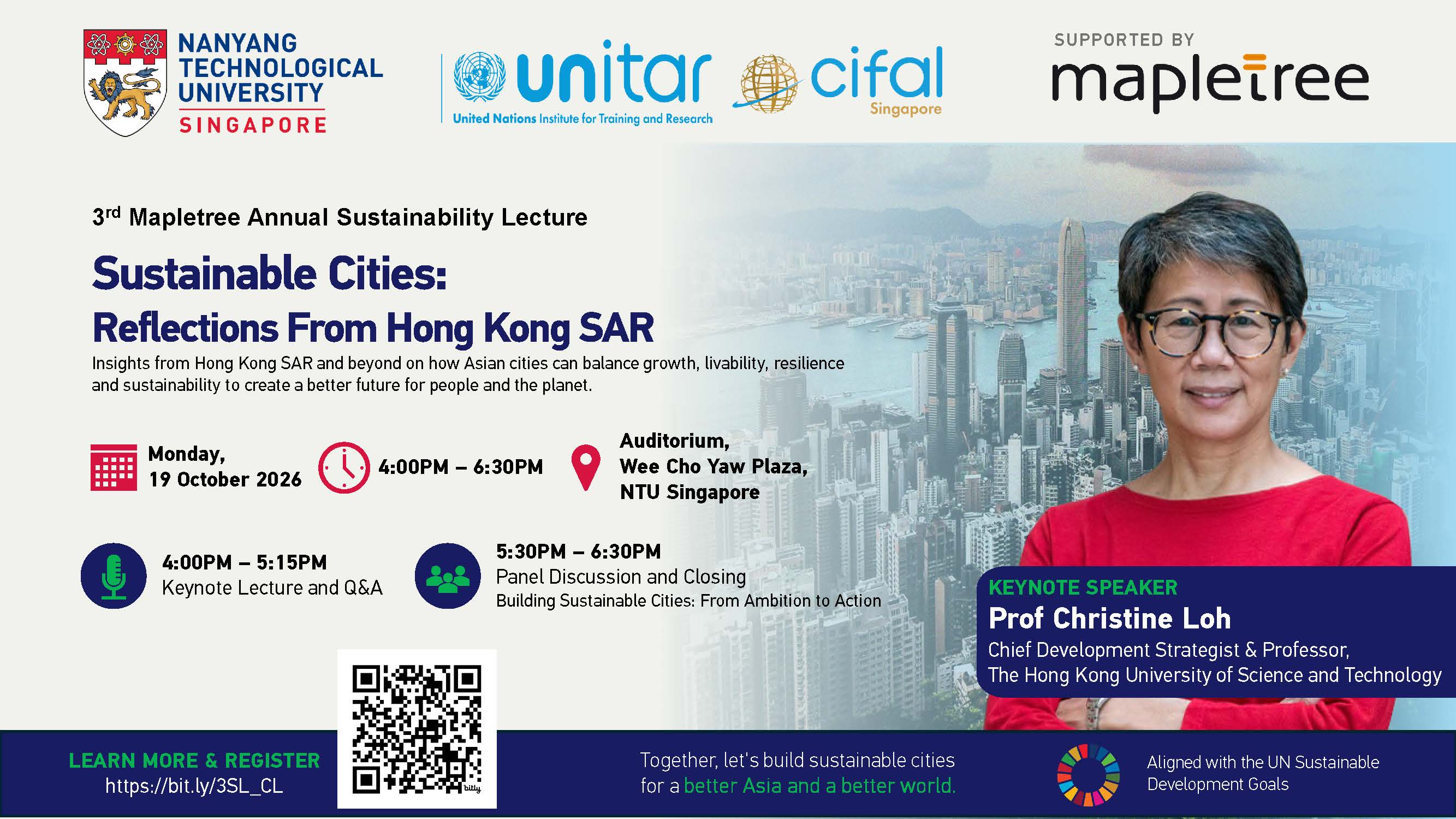
Sustainable Cities: Reflections from Hong Kong SAR
Making Sustainable Cities Happen
What does it take to make a city sustainable? Cities do not begin from a blank slate. Their geography, topography, climate risks, urban form, economy, population, and stage of development shape both the challenges they face and the choices available to them.
Drawing on her experience in public policy, the legislature, government, think tanks and academia, Prof Christine Loh will reflect on what these factors mean for high-density cities such as Hong Kong and Singapore, and how they shape pathways towards more sustainable, liveable, and resilient urban environments.
She will explore sustainability as a city-wide systems challenge, in which energy, buildings, mobility, waste, nature, public health, consumption and inequality are closely interconnected. Against a backdrop of ageing populations, rising wealth and consumption, and increasing climate risks, cities must consider how these systems interact rather than address each issue in isolation.
Drawing on examples from Hong Kong, Prof Loh will examine the challenge of translating sustainability ambitions and policies into action. She will also consider how business and market leaders can influence practices beyond their own operations, and how governments can create the conditions to mobilise private capital for the transition from “brown” to “green”.
Ultimately, sustainable cities cannot be created through policy alone. Governments, businesses, academia and communities must work together to reshape the systems through which cities are built, financed, managed and experienced. Through reflections from Hong Kong, the lecture will consider what other high-density Asian cities can learn about moving from sustainability ambition to meaningful implementation.
ABOUT THE SPEAKER:
Christine LOH
Chief Development Strategist
/christine-loh.jpg?sfvrsn=4dc7a887_1 "Christine Loh") Christine Loh is the Chief Development Strategist at Institute for the Environment, Hong Kong University of Science and Technology. She was the Undersecretary for the Environment in the HKSAR Government (2012-17). Between April 2019 and March 2020, she was the Special Consultant to the Office of the Chief Executive of the HKSAR Government on the ecological civilization aspects of the Greater Bay Area Outline Development Plan. She has a long history in public policy and politics, having been a legislator between 1992-2000, and then was the CEO of Civic Exchange, a non-profit public policy think tank.
Christine Loh is the Chief Development Strategist at Institute for the Environment, Hong Kong University of Science and Technology. She was the Undersecretary for the Environment in the HKSAR Government (2012-17). Between April 2019 and March 2020, she was the Special Consultant to the Office of the Chief Executive of the HKSAR Government on the ecological civilization aspects of the Greater Bay Area Outline Development Plan. She has a long history in public policy and politics, having been a legislator between 1992-2000, and then was the CEO of Civic Exchange, a non-profit public policy think tank.
Professor Loh is currently a board member of Towngas Smart Energy Company Limited, Hong Kong Maritime Museum, and is Asia Society’s Scholar in Residence (2023-2026). She is also a Steering Committee member of the United Nations International Organization for Migration’s new Climate Mobility Innovation Lab, as well as member of the Advisory Committee of the Indra and Harry Banga Gallery at the City University of Hong Kong. She is a published author of many academic and popular works – her latest book by HKUP is on Covid-19 and its socio-economic and political implications. Loh is a lawyer by training, and a commodities trader by profession. She received her legal training in England, and received honorary degrees of Doctor of Law from the University of Hull and Doctor of Science from the University of Exeter.
Panel Discussion:
Building Sustainable Cities: From Ambition to Action
Abstract:
Sustainable cities cannot be created by governments, businesses or communities working in isolation. As cities face increasing pressures from climate change, resource constraints, urban growth and changing expectations around liveability, the transition towards more sustainable urban environments requires collaboration across sectors and a willingness to move from ambition to implementation.
This panel brings together perspectives from industry, academia and the public sector to examine how sustainability can be embedded into the way cities are planned, developed, financed and managed. The discussion will explore the practical challenges of translating sustainability commitments into decisions—from investment and infrastructure to building design, technology, policy and everyday practices.
The panel will also consider the influence that market leaders can have in accelerating wider change. Through their investment decisions, development practices, supply chains, partnerships and engagement with communities, businesses can help raise standards, encourage innovation and influence sustainability practices well beyond their own organisations. At the same time, effective policy, research and public-sector leadership are essential to creating the conditions in which sustainable solutions can be adopted and scaled.
Against the backdrop of Hong Kong SAR and Singapore as two highly urbanised and globally connected Asian cities, the discussion will explore what can be learned from different approaches and experiences. Panellists will consider where the greatest opportunities for collaboration lie, what barriers continue to slow progress, and how government, business and academia can work together to create cities that are more resilient, inclusive, liveable and sustainable.
Moderated by Prof Adam Switzer, the panel will invite speakers to move beyond broad sustainability commitments and focus on a central question: What will it take to turn the ambition for sustainable cities into meaningful and measurable action?
/sustainability-lecture-2026---holding-slide---panel.jpg?sfvrsn=c6c7ba6_1 "Sustainability Lecture 2026 - Holding Slide - Panel")
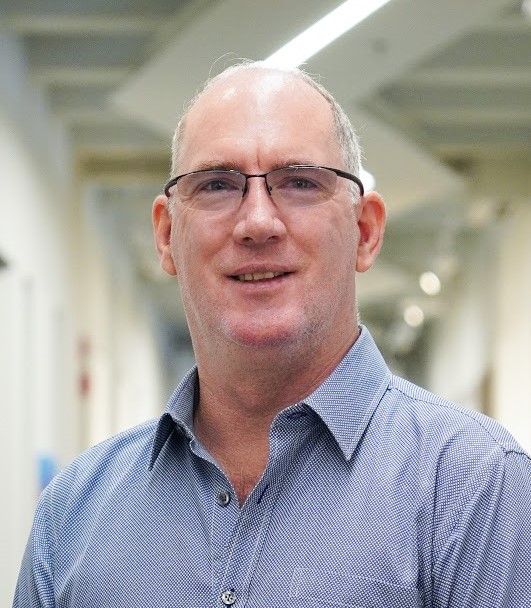 Prof Adam Switzer,is a coastal scientist with more than two decades of academic and applied experience, Prof Switzer’s research focuses on tsunamis, storms, sea-level change, and the long-term impacts of climate on coastal environments and communities. His work has taken him across Asia and the Pacific, where he has collaborated with governments, international organisations, and industry partners to strengthen disaster preparedness, climate adaptation, and coastal resilience. Prof Switzer has published widely in leading scientific journals and serves on international advisory panels related to coastal hazards and sustainability. At NTU, he has held leadership positions that include Assistant Dean (Development) and Director of CIFAL Singapore. Through his leadership at CIFAL Singapore, Prof Switzer is committed to advancing education and training in sustainability, disaster risk reduction, and sustainable cities and communities, with a strong focus on equipping future leaders to address global challenges through interdisciplinary approaches.
/thomas_schroepfer_1.jpg?sfvrsn=60d78798_1 "Thomas_SCHROEPFER_1") Prof. Dr Thomas Schroepfer is Full Professor of Architecture and Sustainable Design at the Singapore University of Technology and Design (SUTD), where he is Founding Programme Director of the Architecture and Sustainable Design programme and Director of the Advanced Architecture Laboratory. He also serves as Director of the Future Cities Laboratory Global at the Singapore-ETH Centre. His research focuses on sustainable urban development, exploring the relationships between architecture, ecology, health, climate adaptation, and emerging technologies, including artificial intelligence and digital twins. Working closely with government agencies, industry, and international partners, he develops evidence-based approaches to creating more liveable, resilient, and future-positive cities. He is the author of several books on sustainable urbanism, including Dense+Green Urban Development (2025), and has received numerous international awards for research and design.
Prof. Dr Thomas Schroepfer is Full Professor of Architecture and Sustainable Design at the Singapore University of Technology and Design (SUTD), where he is Founding Programme Director of the Architecture and Sustainable Design programme and Director of the Advanced Architecture Laboratory. He also serves as Director of the Future Cities Laboratory Global at the Singapore-ETH Centre. His research focuses on sustainable urban development, exploring the relationships between architecture, ecology, health, climate adaptation, and emerging technologies, including artificial intelligence and digital twins. Working closely with government agencies, industry, and international partners, he develops evidence-based approaches to creating more liveable, resilient, and future-positive cities. He is the author of several books on sustainable urbanism, including Dense+Green Urban Development (2025), and has received numerous international awards for research and design.
/dennis-woon.png?sfvrsn=a0b4b4ee_1 "Dennis Woon") Mr Dennis Woon, as Group Chief Development Officer, leads Mapletree’s Group Development Management team in its development strategy and initiatives globally. He is a registered Certified Architect with the Singapore Board of Architects with more than 25 years’ experience in property development in Singapore, China, Malaysia, Australia, India, Japan, Vietnam, the United States (US), the United Kingdom (UK) and other key European cities. His diverse range of property development experience includes mixed-use developments, commercial, residential, industrial, logistics, data centres, serviced apartments, hotels and student housing. He has successfully led full life-cycle projects roles for the business from land and asset acquisition, technical due diligence, project feasibility analysis to overall development, design, project and construction management. Prior to joining Mapletree, Mr Woon was the Head of Development and Project Management at Lendlease and was responsible for all aspects of property development such as project and design management, construction management, as well as business development and project conversion. He also held positions such as Head of Project Management with The Ascott Limited in CapitaLand Singapore and Chief Operating Officer with Asian Pac Holdings Malaysia. Mr Woon holds a Master in Architecture from the Mackintosh School of Architecture, University of Glasgow and Bachelor of Arts (Architecture) from the National University of Singapore.
Mr Dennis Woon, as Group Chief Development Officer, leads Mapletree’s Group Development Management team in its development strategy and initiatives globally. He is a registered Certified Architect with the Singapore Board of Architects with more than 25 years’ experience in property development in Singapore, China, Malaysia, Australia, India, Japan, Vietnam, the United States (US), the United Kingdom (UK) and other key European cities. His diverse range of property development experience includes mixed-use developments, commercial, residential, industrial, logistics, data centres, serviced apartments, hotels and student housing. He has successfully led full life-cycle projects roles for the business from land and asset acquisition, technical due diligence, project feasibility analysis to overall development, design, project and construction management. Prior to joining Mapletree, Mr Woon was the Head of Development and Project Management at Lendlease and was responsible for all aspects of property development such as project and design management, construction management, as well as business development and project conversion. He also held positions such as Head of Project Management with The Ascott Limited in CapitaLand Singapore and Chief Operating Officer with Asian Pac Holdings Malaysia. Mr Woon holds a Master in Architecture from the Mackintosh School of Architecture, University of Glasgow and Bachelor of Arts (Architecture) from the National University of Singapore.
/prof-perrine-hamel_1.jpg?sfvrsn=617ba353_1 "prof-perrine-hamel_1") Assoc Prof. Perrine Hamel’s, research examines how nature-based solutions can make cities more resilient and inclusive. In 2020, she received the Singapore National Research Foundation Fellowship to study urban resilience in Southeast Asia. Prior to joining NTU, Perrine was a senior scientist with the Natural Capital Project, a global partnership aiming to integrate the benefits provided by nature into major societal decisions. She led the Livable Cities program, an initiative aiming to understand and elevate the role of nature in urban environments. Prior to her research on natural capital, Perrine has worked as an environmental engineer in Phnom Penh, Cambodia, and conducted her PhD research in the field of integrated urban water management. She holds a PhD from Monash University, Australia, and a Master of Civil and Environmental Engineering from Ecole Centrale Nantes, France.
Assoc Prof. Perrine Hamel’s, research examines how nature-based solutions can make cities more resilient and inclusive. In 2020, she received the Singapore National Research Foundation Fellowship to study urban resilience in Southeast Asia. Prior to joining NTU, Perrine was a senior scientist with the Natural Capital Project, a global partnership aiming to integrate the benefits provided by nature into major societal decisions. She led the Livable Cities program, an initiative aiming to understand and elevate the role of nature in urban environments. Prior to her research on natural capital, Perrine has worked as an environmental engineer in Phnom Penh, Cambodia, and conducted her PhD research in the field of integrated urban water management. She holds a PhD from Monash University, Australia, and a Master of Civil and Environmental Engineering from Ecole Centrale Nantes, France.
19 October 2026
4:00pm - 6:30pm
Wee Cho Yaw Auditorium, NTU