
The MA in Art, Design and Media offers a creative environment in which students tailor their curriculum to their unique scholarly and creative interests and apply theory to original research. Students develop a critical understanding of the scholarly implications of creativity in highly digitized culture. There are two options to complete the degree: thesis or art practice thesis.
This research-oriented MA is designed for students who wish to pursue cutting-edge research in specific areas of Art, Design and Media. The MA has been structured to keep the number of required courses to a minimum (three) so that students’ time and energy can be utilised fully in the research topic of their choice. Students will work under the close supervision of ADM faculty for the duration of their studies.
Our Strengths
- Our internationally renowned faculty members who combine theory and practice, preparing student artists to theorize their own experience in art, design and media
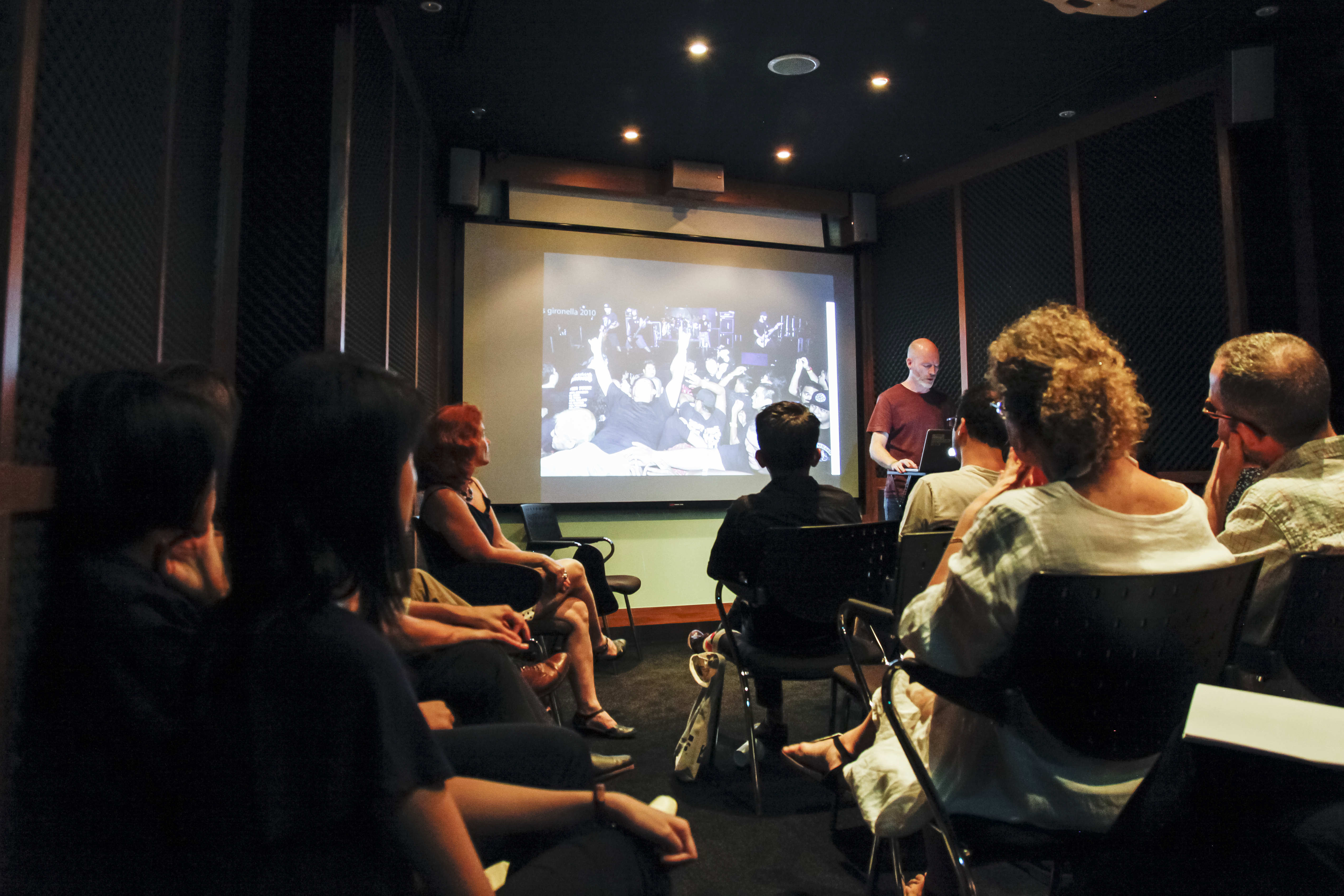
- Dynamic hub where international scholars, thinkers, and artists share their experiences with graduate students through regular ADM Lecture Series, workshops, screenings, exhibitions, and Digital Humanities Research Cluster
- Cutting-edge resources and facilities including ADM Library, research lounge for ADM graduate students, sound stage, motion-capture studio, 3D printing lab, movie theatres, dark room, print lab, digital sound lab, sound mixing studio, virtual reality (VR) studio, animation, and editing suites
- Active graduate communities, such as Graduate Club and TGIF (Thoughtful Gathering and Insightful Friday), where students share their own research and thoughts
- Interdisciplinary approach to embrace diverse disciplines at NTU while we stand at the centre of our core question on Art, Design and Media
- Multicultural environment where diversity becomes a prerequisite for intellectual dialogues and creative collaborations for innovative thinking
Sight and Sound
The admission requirements for the MA (Research) are as shown:
A bachelor's degree with a minimum of 3.5 out of 4.0 or its equivalent in a field of study that is relevant to the proposed research topic from a recognized university.
The standard technical proficiency tests (GRE/GMAT/GATE) are strongly encouraged and not mandatory for admission to our postgraduate programmes.
Applicants whose native language is not English must meet the University’s English language proficiency requirement. A minimum IELTS score of 7.0 or TOEFL score of 105, obtained within the last two years, is required at the time of application. This requirement may be waived if the applicant has completed at least three years of tertiary education with English as the medium of instruction.
To demonstrate the ability to pursue research in the applicant's proposed field of advanced study, applicants should include with their application a 1,000-word research proposal; artistic portfolio, if applicable; samples of academic writing; and a personal statement on why they intend to pursue the proposed area of study.
For applicants whose master’s degrees are completed in 1 year or less, scholarly/academic writing samples in the English language should be submitted to demonstrate the level of English proficiency.
Option of Study
There are two options to complete the MA degree: thesis or art practice thesis:
Thesis Option
The theoretical component of the thesis should offer a substantial critical and/or technical contribution to the chosen field of inquiry. At the end of their programme, MA (Research) candidates will submit an approximately 40,000-word thesis under the supervision of a faculty advisor in their chosen field of research.
Thesis and Creative Component Option
Students could select this option if the intellectual investigation undertaken cannot be fully expressed in words. The creative component will be vital in complementing and developing the theoretical research undertaken. It should not merely be an illustrative of the thesis but also make an original contribution. MA (Research) candidates undertaking this option will submit an approximately 30,000-word thesis under the supervision of a faculty advisor in their chosen field of research
To graduate, students in the MA (Research) programme are required to obtain the following:
- Pass 3 graduate courses (or earn 9 Academic Units) with a minimum CGPA of 3.0 within 12 months of the candidature
- Comprise 1 core graduate course* and 2 elective courses (1 elective must be taken within ADM)
- Both electives must be relevant to the thesis and approved by the supervisor
- Pass the Qualifying Exam# by the 12th or 13th month of their candidature to maintain enrolment in the programme
- Pass the thesis exam
*AP7049 Proseminar in Art, Design and Media
This course equips all graduate students (research) with the required skills to undertake academic scholarship in Art, Design and Media.
#Qualifying Exam
The key objectives of the Qualifying Exam are to ascertain that the thesis is a distinct addition to the knowledge in the chosen field and that the candidate possesses the level of competency required to proceed to the next stage of the candidature.
Required Coursework
MA (Research) students are required to pass 3 graduate courses (or earn 9 Academic Units) with a minimum CGPA of 3.00 within 12 months of the candidature. These comprise 1 core graduate course, and 2 elective courses, at least one of which must be taken within ADM, and the other from ADM or other Schools within NTU. Both electives should be relevant to the student’s thesis and approved by their respective supervisors.
The compulsory core graduate courses are:
- AP7049 Proseminar in Art, Design and Media
This course ensures that all our candidates embark on their graduate studies with the requisite level of advanced knowledge and research competence to undertake research at graduate level.
- Qualifying Exam and Thesis Examination
After fulfilling their coursework requirements, MA (Research) students are required to pass take a Qualifying Exam by during the 12th or 13th month of their candidature or earlier. The key objectives of the Qualifying Exam are to ascertain that the thesis is a distinct addition to the knowledge in the chosen field and that the MA (Research) student possesses the level of competency required to proceed to the next stage of the candidature. MA (Research) students who pass the Qualifying Exam will continue with their candidature.
Length of Candidature
The MA (Research) can be pursued on a full-time or part-time basis. The minimum and maximum length of candidature are as shown:
Prospective students
The maximum course duration for Part-time Research programmes has been revised to be standardised with the equivalent Full-time Research programme.
| Full-Time | Part-Time | |||
|---|---|---|---|---|
| Programme | Minimum | Maximum | Minimum | Maximum |
| Master of Arts (Research) | 1 Year | 3 Years | 1 Year | 3 Years |
Maximum Course Duration refers to the maximum candidature period of study, beyond which, students pay fees at unsubsidised rates.
Part-time Students will pay fees at unsubsidised rates if they exceed the candidature period of 3 years for Master's as shown above.
Academic Calendar and Intake
Nanyang Technological University's academic year commences in August and ends in July the following year. ADM has two intakes in January and August per academic year. The application deadline is shown below:
| Intake | Application Period |
|---|---|
| January 2026 | Application reviews are underway. Application closed on 31 July 2025. |