Food-preserving fridges, poop-powered cars and gene-ius prescriptions
How NTU researchers are harnessing science and technology to unlock new possibilities and transform everyday life
by Lester Kok / Illustrations by Vivian Lim and Sora
Gene-ius prescriptions just for you

Feel tired no matter how much you sleep? Or maybe you’ve got a nagging headache that just won’t go away? In the future, a quick saliva swab at the doctor’s could give you answers based on your DNA and open up treatment options tailored for you.
Thanks to precision genomics, scientists can decode your genetic blueprint to better understand how your body works and how it’s shaped by your ancestry. In a GenomeAsia100K study of over 1,500 genome samples, NTU scientists found that Native South Americans trace their roots to North Asians who migrated more than 26,000 years ago.
Over centuries of living in extreme environments – from the icy peaks of Patagonia to the humid depths of the Amazon – their genes adapted, making them genetically distinct. By studying these genetic differences and where they come from, doctors can personalise treatments that match your body’s unique code.
From poop to plate, powered by the sun
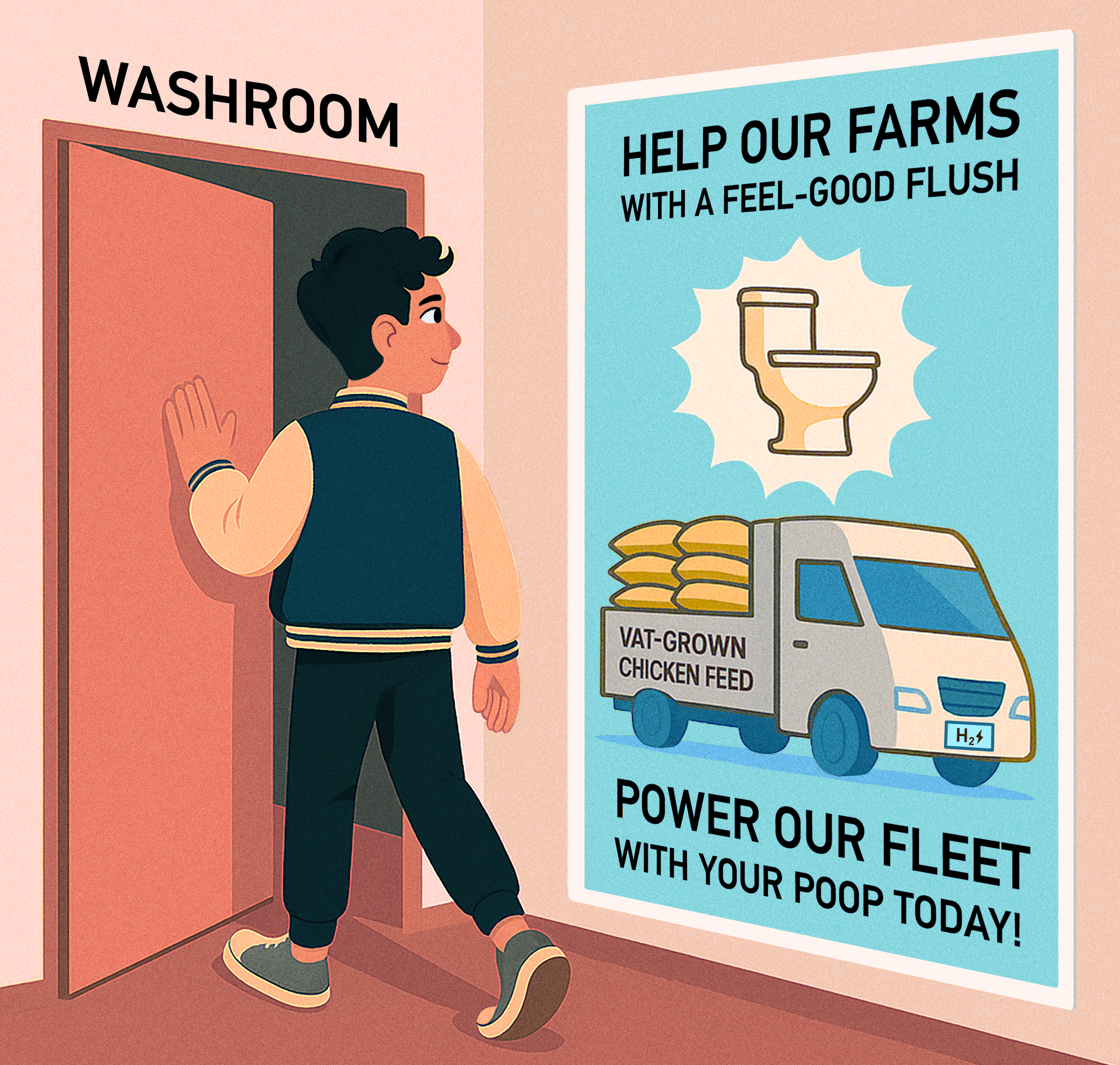
One day, flushing your toilet could help fuel your car, pickle your carrots and feed the chicken on your dinner plate. That’s because a new system developed at NTU can convert sewage – yes, pee and poop included – into clean hydrogen fuel, food- grade chemicals and even protein for animal feed.
The process first mechanically breaks down the waste and uses chemicals to remove harmful materials. Special solar-powered electrodes are then introduced to transform the waste into hydrogen for clean energy and acetic acid – the same chemical that gives vinegar its sour bite. Acetic acid is often used in food production, such as to whip up fluffy meringues or preserve vegetables.
After these useful components are extracted, the remaining sludge is turned into a nutrient-rich soup. Special bacteria are added to digest the organic gunk and grow single-cell proteins, which can be processed into food pellets for chickens and fish. From waste to wok, this poo-werful system is killing three birds with one stone.
Fridge of the future? UV bet
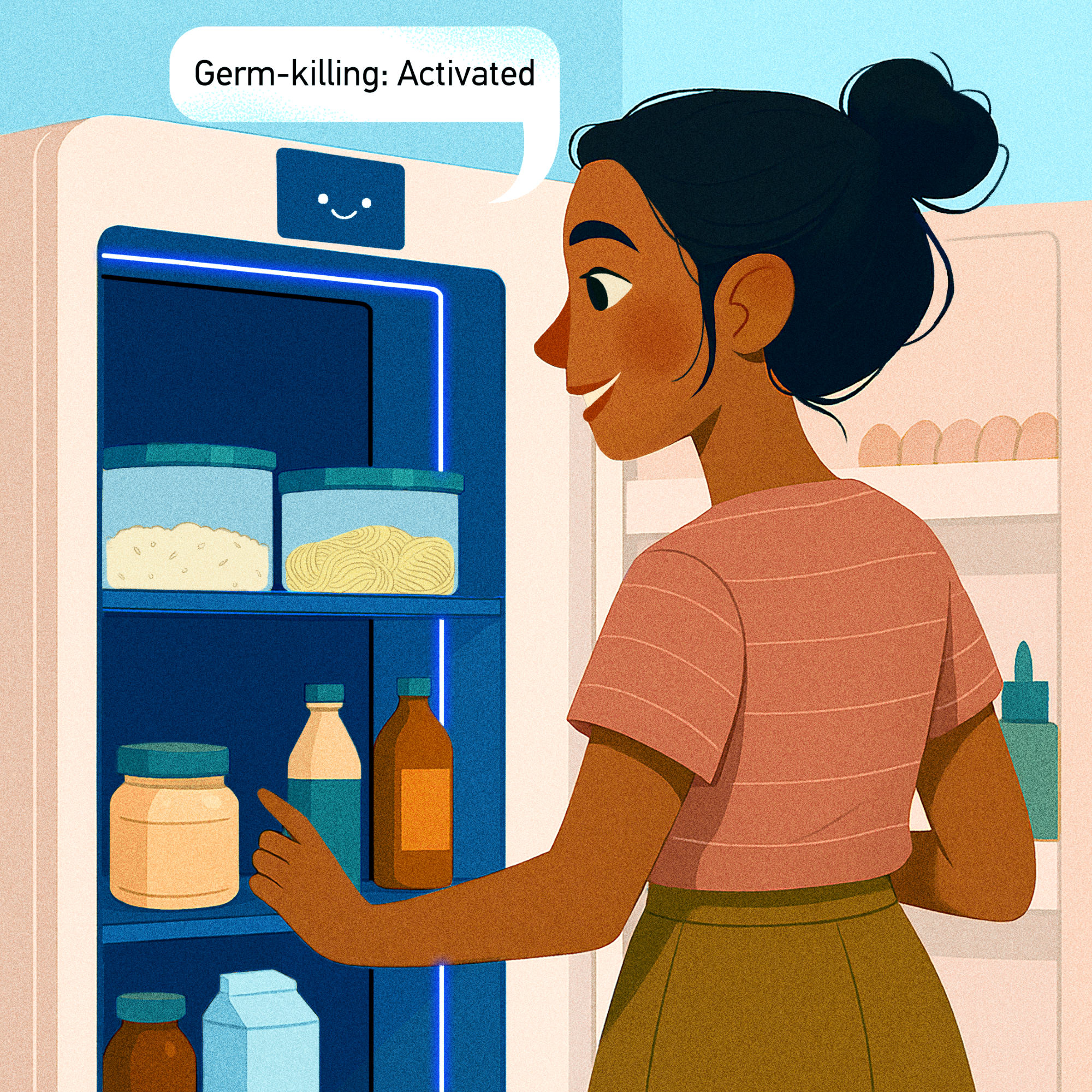
Keeping leftovers in the fridge and eating them after a week may no longer sound like the start of a food poisoning episode. In the future, fridges could come fitted with anti-bacterial sanitation tech, using energy-efficient UV lamps to zap microbes and keep your food fresher for longer.
Already on the market are food containers with a compact sterilisation lid powered by a UV LED chip. The device emits ultraviolet light that kills bacteria and has been shown in tests to keep food fresh for up to a week. Developed at NTU, the chip is power-efficient, eco-friendly and helps households reduce food waste and live more sustainably.
This story was published in the Jul-Aug 2025 issue of HEY!. To read it and other stories from this issue in print, click here.