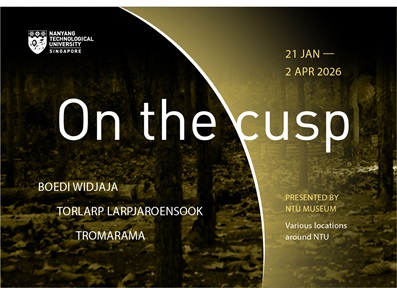
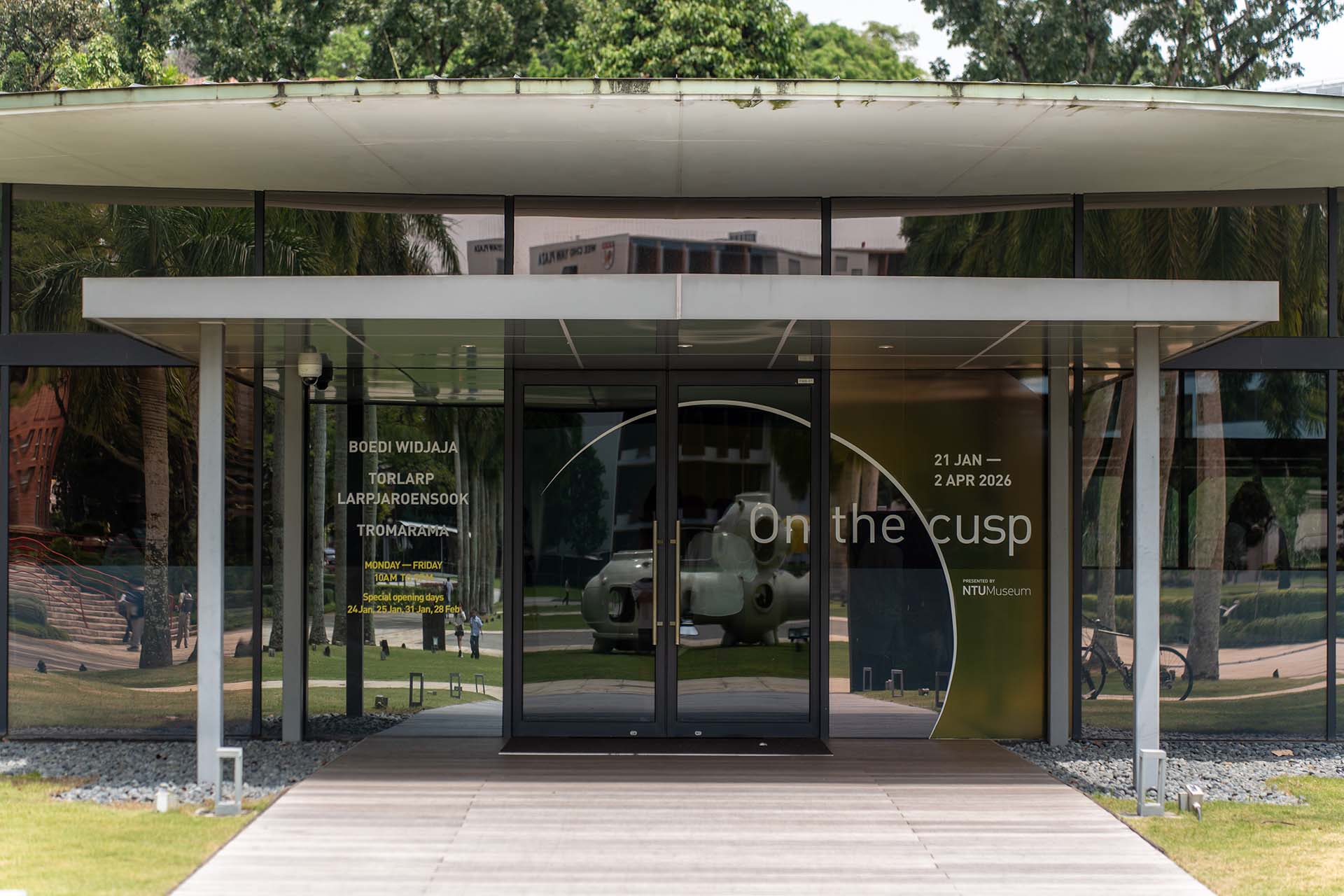
On the cusp
What happens when different realms—past and present, virtual and physical, earthly and spiritual—converge? How do they speak to each other and what is passed on at points of transition? This exhibition explores how these intersections shape belonging, connection and identity through the lens of memory.
Artists Boedi Widjaja, Torlarp Larpjaroensook and Tromarama mine the personal and collective memories embedded in the body, language, place, custom and social structures. They approach memory not as a static repository of the past, but a living force carried within us and continually re-interpreted. Spread across three venues at Nanyang Technological University, the works engage in dialogue with the sites they inhabit. Viewers are invited to linger and attune to the surrounding environments and the stories told through the works.
The search for grounding and connection can seem elusive in an ever-changing world. Practices we inherit, intergenerational stories and our collective experiences could offer strategies to make sense of this search. On the cusp considers how the bonds we forge—with one another and the world—are closely interconnected with what, and how, we choose to remember.
- Exhibition Catalogue – Curator's notes and artist interviews
- Artists and Artworks
- Writing History in the Body – Artist talk featuring Boedi Widjaja, Dr Eric Yap and Dr Wee Soon Keong
- On second thought – Art writing competition in collaboration with Art & Market
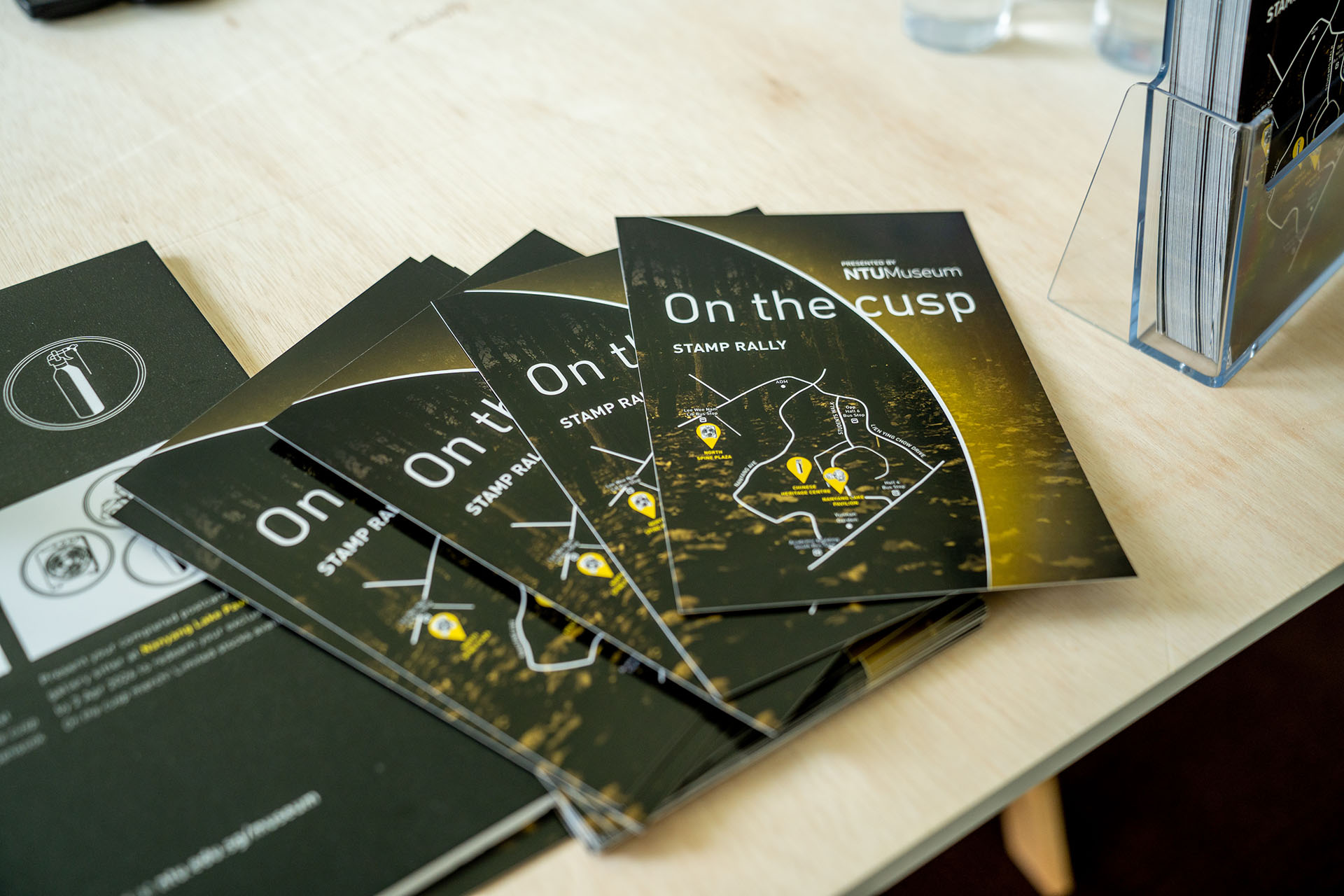
- Stamp rally - Artwork stamps and exclusive merch
- Exhibition information – Artwork locations and detailed opening hours
Artists and Artworks
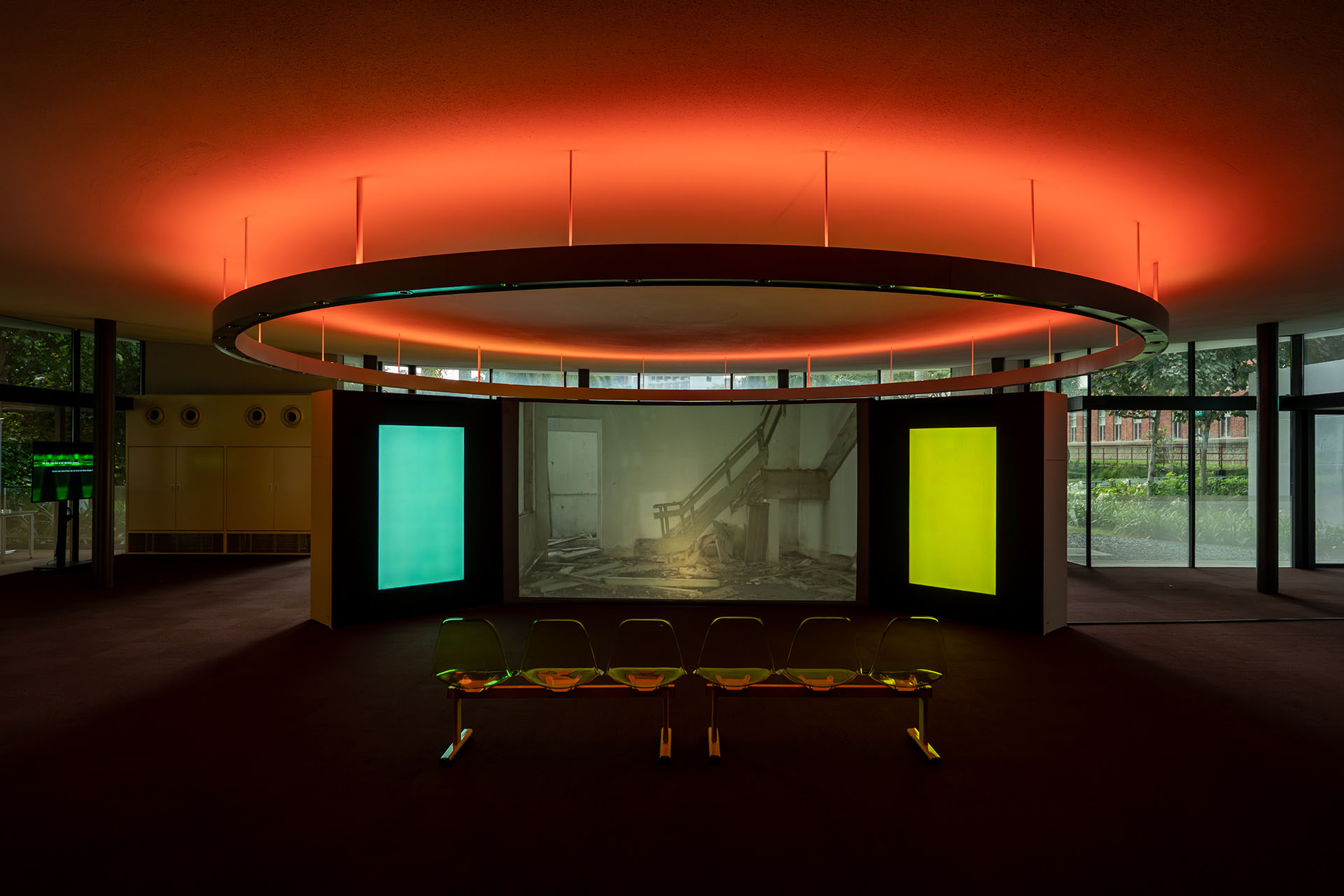
Installation view of 东邪西毒 I Want to Infect You with History by Boedi Widjaja.
东邪西毒 I Want to Infect You with History
Location: Nanyang Lake Pavilion
Language and genetic code carry history and memory, keys to understanding personal and collective pasts and identity. 东邪西毒 I Want to Infect You with History is centred on a proposition: history is like a virus. It takes up space within the body, permeating our being and propagating across generations. It survives through language, DNA, gesture and lived experience. What happens to those whose histories are omitted because of displacement or dispossession? How can history regain lost ground through the body?
Boedi Widjaja engages in a speculative dialogue with a cell, mediated by a poem. This poem, composed in English and Bahasa Indonesia by the artist, is encoded and synthesised into DNA using a biocultural key shaped by his multilingual cultural inheritance. The installation inhabits the Nanyang Lake Pavilion, transforming it into a living cell that metabolises memory, language and genetic code.
The installation delves into diasporic experience and the complexities of negotiating home, identity and belonging. Boedi continues his long-standing collaboration with Dr. Eric Yap, Associate Professor in Human and Microbial Genetics at the Lee Kong Chian School of Medicine, Nanyang Technological University, Singapore and Principal Investigator at the Institute for Digital Molecular Analytics and Science. With molecular code as a starting point, the installation presents explorations that manifest in poetry, sculpture, performance and photography. Through these strategies of transmission and translation, hidden narratives embedded within the body surface and take form. Moving from absence to presence, history reclaims agency as it replicates across the Pavilion site. Unstable and mutable, it reverberates through human contact, circulating and evolving across time and space.
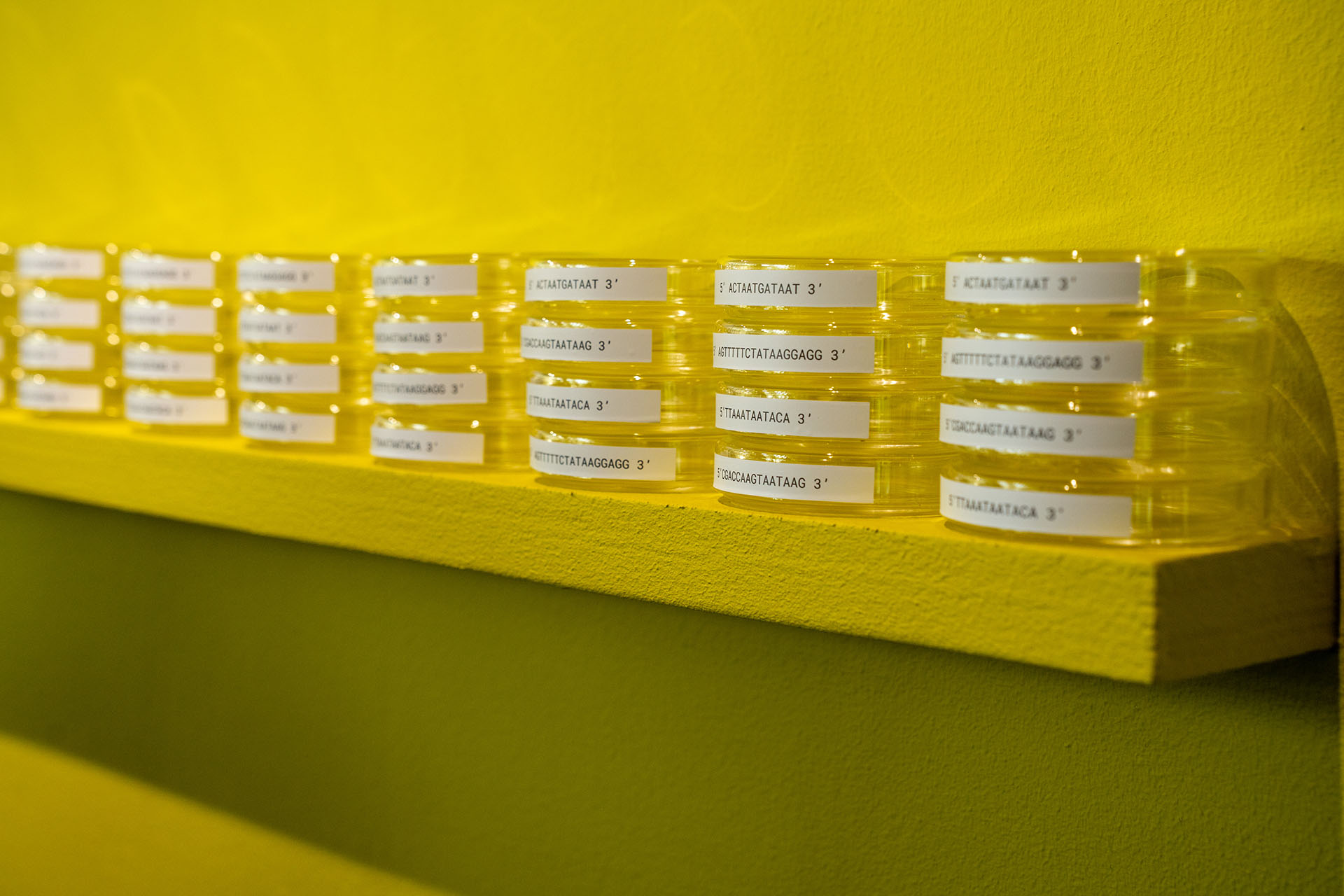
Encoding words and language with DNA.
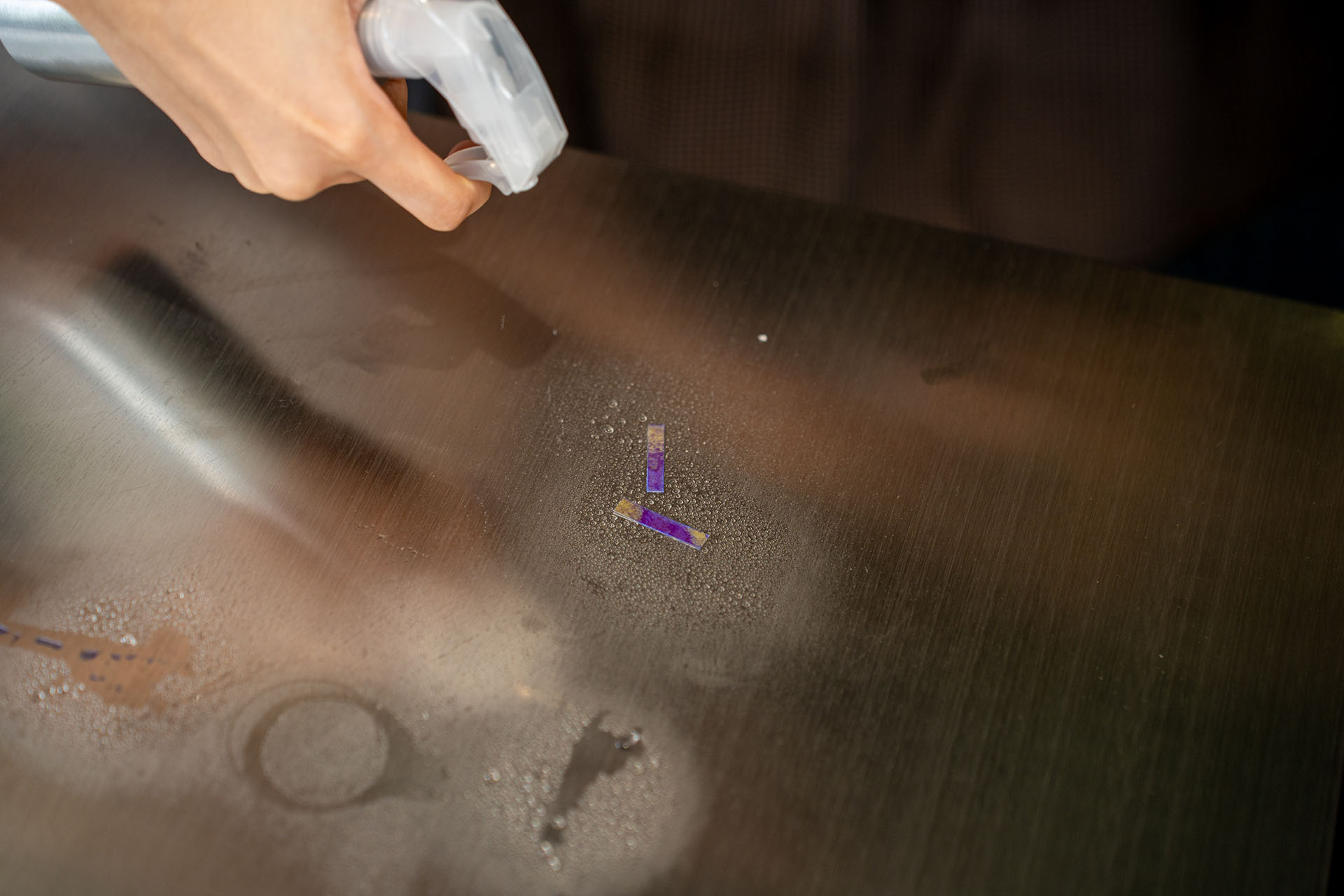
Being infected with DNA.
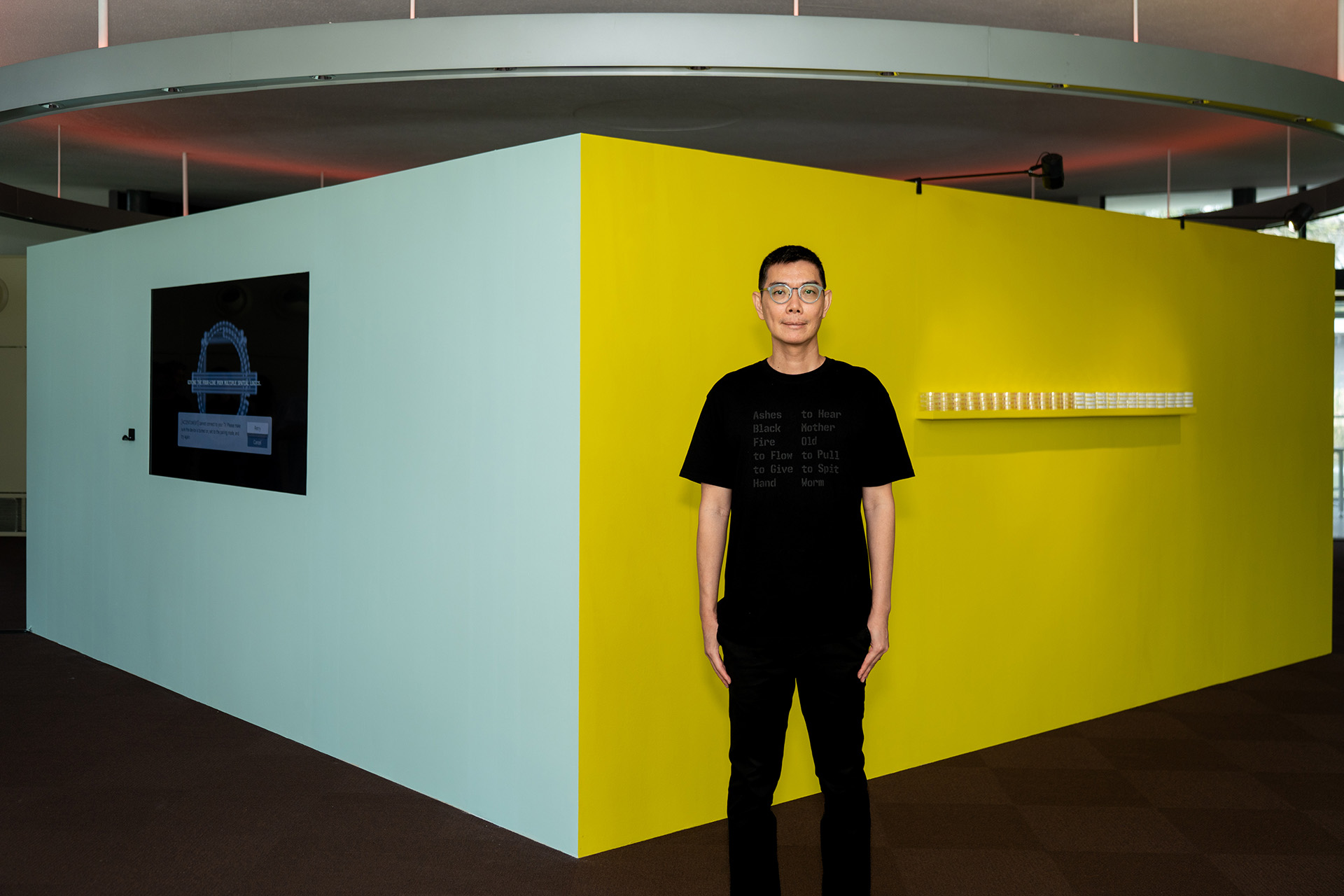
Boedi Widjaja
1975, Indonesia; based in Singapore
Boedi Widjaja explores migration as a condition inscribed in the body, carried through memory, language, genealogy and diasporic imagination. His practice probes the primordial pulls of house, home and homeland—forces that shape migrant histories and imagine routes of return. Trained in architecture and design, he works across bio art, performance, experimental photography and architectural installations, interweaving scientific phenomena with poetic gesture. His works are exhibited internationally across Asia, Europe and the Americas. Boedi is represented by ShanghART Gallery.
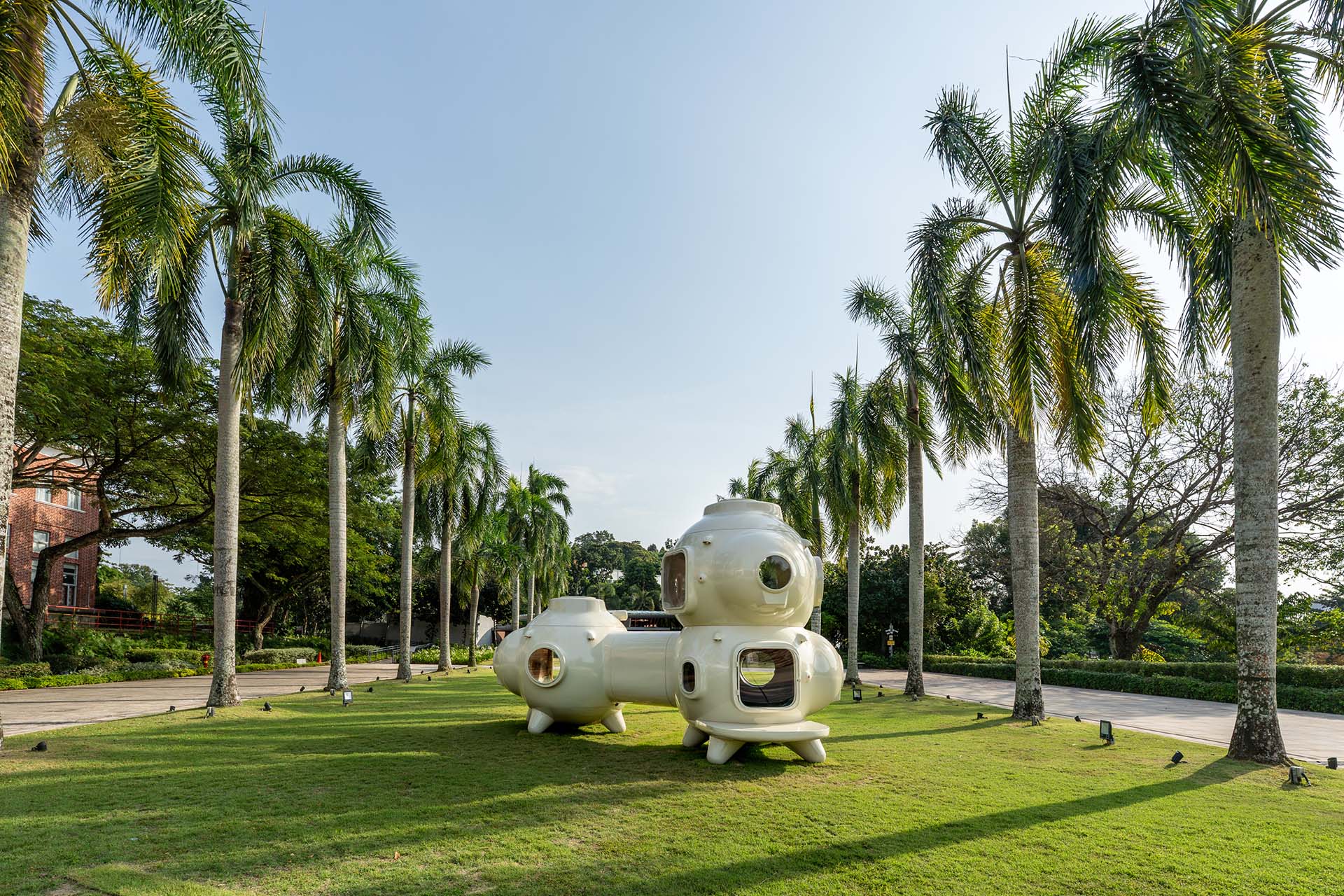
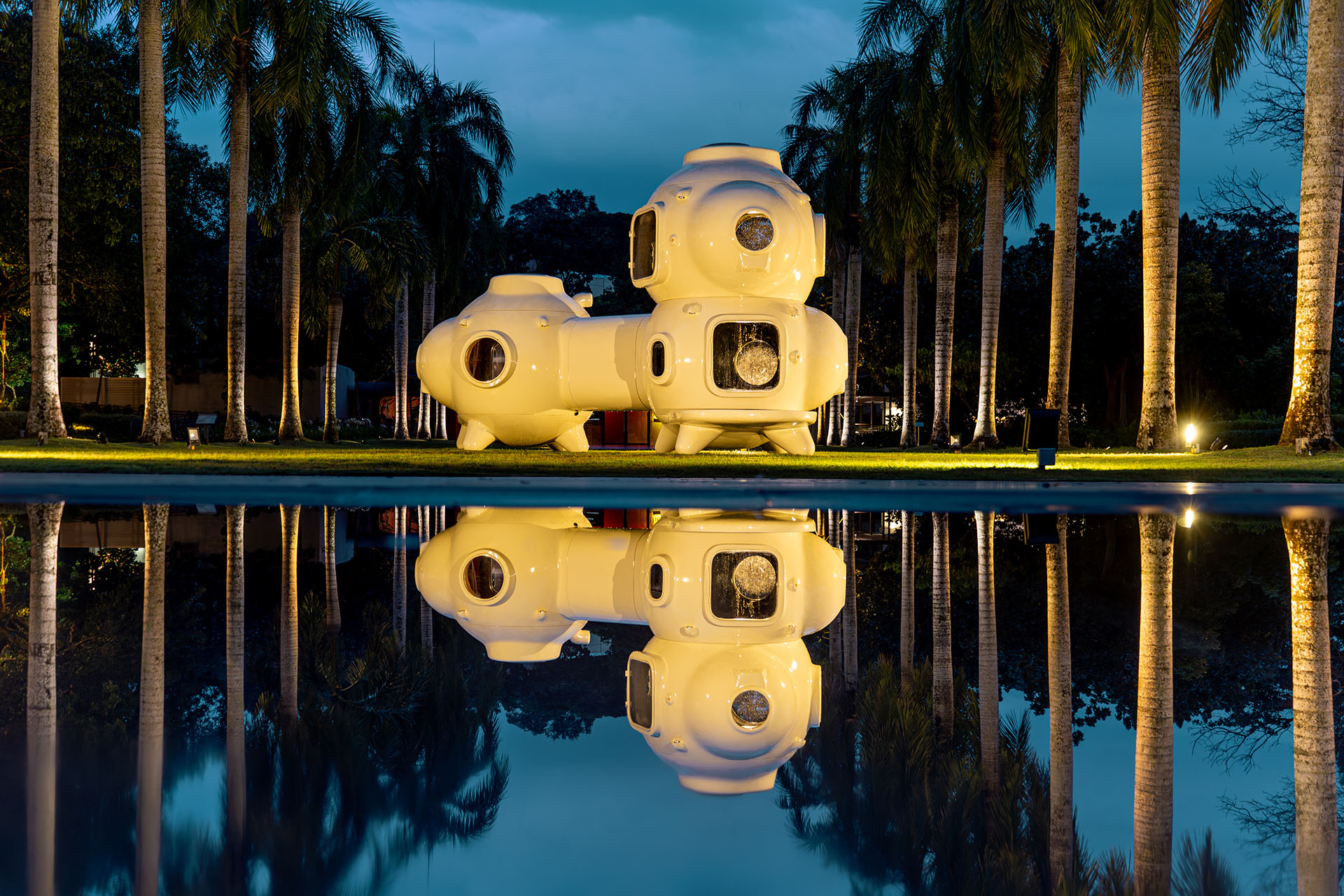
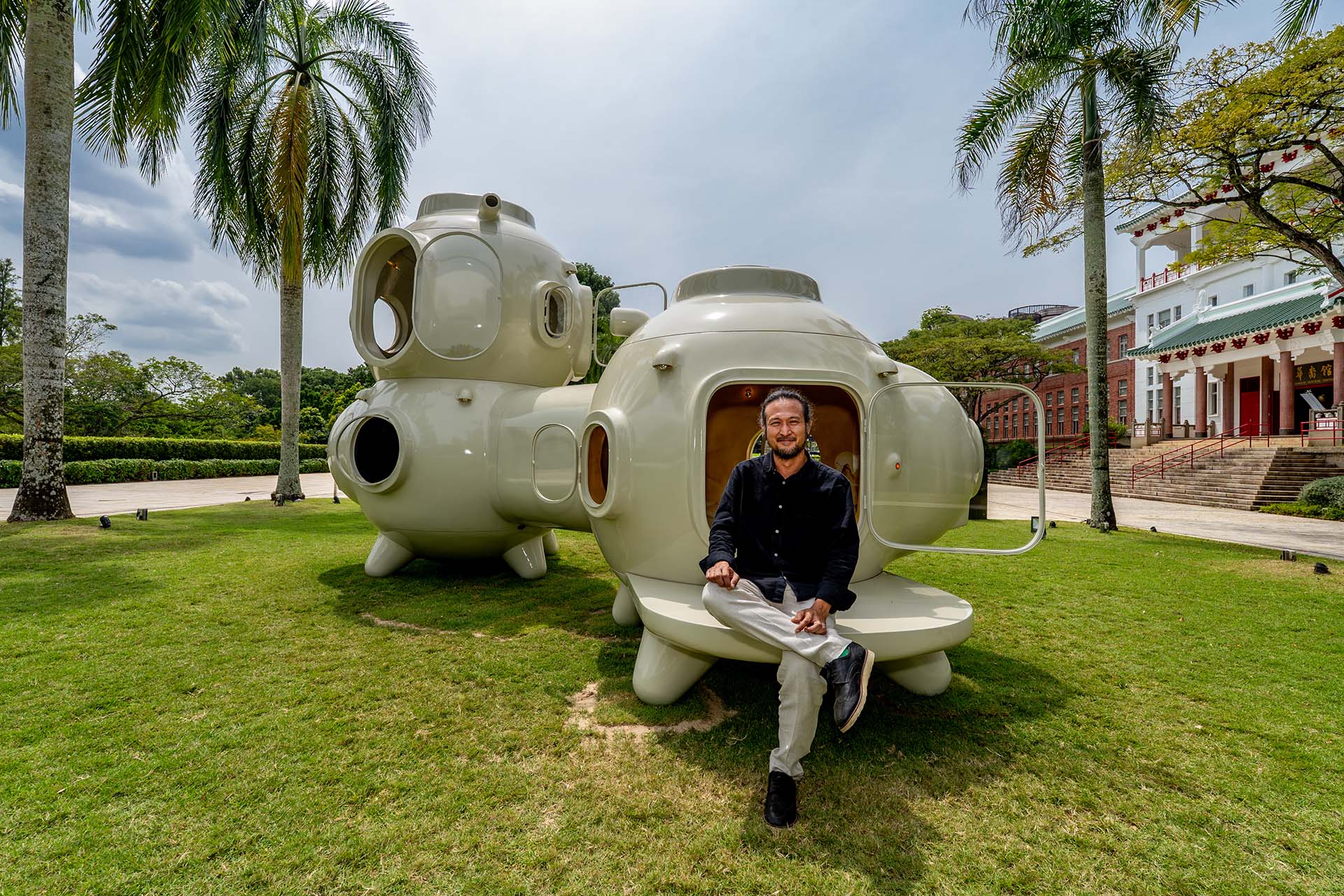
Installation view of Cosmos of Nostalgia by Torlarp Larpjaroensook.
Cosmos of Nostalgia
2025
Fibreglass, acrylic hand paint and electrical light bulbs
377 x 625 x 255 cm
Location: Chinese Heritage Centre Lawn
Humanity has looked to the skies, seeking to decipher the universe and make sense of existence. In this installation, Torlarp Larpjaroensook explores how our fascination with otherworldly realities transcends geographies, cultures and generations. Situated beside the Chinese Heritage Centre and Yunnan Garden, sites steeped in history, Cosmos of Nostalgia is both sculptural environment and architectural intervention. Conceived as a time capsule from the future, viewers can enter and witness this imaginary world merge with the work’s immediate surroundings.
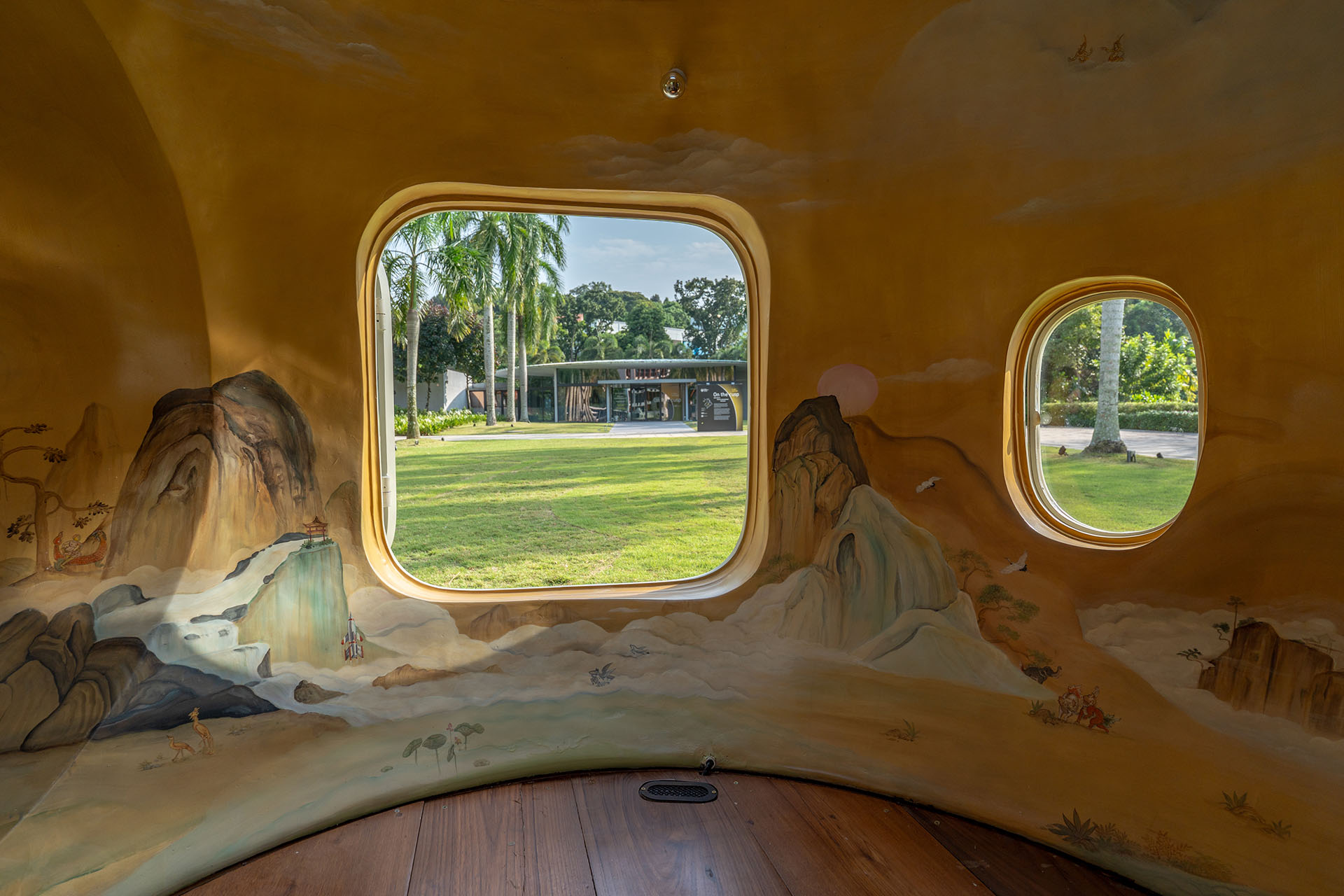
The artist stitches together imagery from 20th-century Thai science fiction, early science encyclopaedias, Chinese philosophy and mythology to create a hybrid visual lexicon where imagination and contemporary reality meet. Intricate paintings evoke traditional Chinese landscape paintings and hand-painted temple murals. This panorama of rivers, mountains and skies reflects Taoist philosophy and the vastness of nature. Excerpts from a poem by the Tang Dynasty poet Li He (李賀), known for his cosmic imagery and philosophical musings, adds a layer of quiet contemplation. Within the upper capsule, a bare, unpopulated landscape unfolds. Viewers are invited to envision themselves as characters within this world, collaborating in a collective act of storytelling.
Wan Hu, an astronaut in Chinese legend who dreamed of reaching outer space, navigates this dreamlike world. Resolute and filled with wonder, he is a metaphor for humanity’s inquisitive spirit and collective desire to connect with the unknown. Through a constellation of myth, memory and history, Cosmos of Nostalgia bridges the earthly with the cosmic, a forgotten past and an imagined future.
Torlarp Larpjaroensook
1977, Thailand; based in Chiang Mai
The practice of Torlarp Larpjaroensook centres around forging relationships between art and the viewer. Incorporating ready-made objects into sculpture, installation and what he calls “moving architecture,” his works explore themes of identity, history and fact versus fiction. Harnessing the stories and messages embedded in objects, Torlarp’s works act as a bridge for viewers to connect with materials found in everyday life. Selected exhibitions of Torlarp’s work include ArtScience Museum, Singapore (2025); CHINI Gallery, Taipei, Taiwan (2023); Bangkok Art Biennale, Bangkok, Thailand (2018) and Koganecho Bazaar, Yokohama, Japan (2013).
Turn On
2026 Single-channel video, sound 14 min 42 sec
Location: North Spine Plaza Level 1, INDEX: Stories in Motion screen
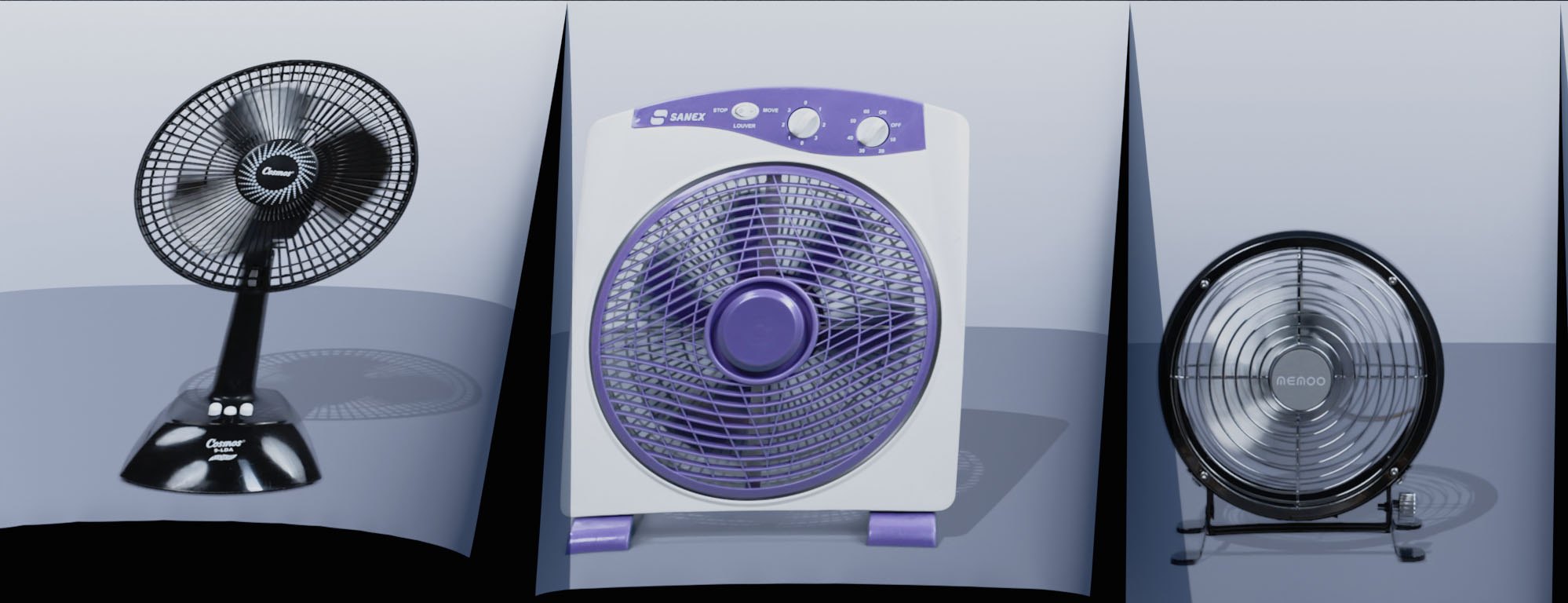
Turn On explores how technology reframes the everyday, influencing our perceptions of reality and how we relate to the world around us. It traces the entanglements between the self and the digital realm. The electric fan is the central character in this moving image work. Commonly used in Southeast Asia to combat heat and humidity, this humble appliance has come to symbolise survival and sustenance. Set on an endless, choreographed loop, a motley crew of fans whirs to life. This virtual flow of air appears to trigger a series of responses: the screen morphs into a flapping curtain, familiar objects are catalysed into motion, and scenes of mundane, daily life
On closer look, it becomes apparent that the relationship between action and response, cause and effect, is more than what it seems. Expectations of behaviour informed by what we observe in lived reality are disrupted. By animating familiar objects and environments in unanticipated ways, the work questions the limits of memory and association. In a hyper-connected world, we increasingly experience the world through representations rather than physical encounters. Is one reality more authentic than the other? The screen has become an active site where individual and collective identities are negotiated. Instead of experiencing the world through the body, perception is increasingly mediated through technology. Turn On reflects on the power of technology in blurring the lines between fact and fiction, the real and the virtual.
Read an excerpt about Turn On from the exhibition catalogue written by NTU Museum's curator on Art & Market.
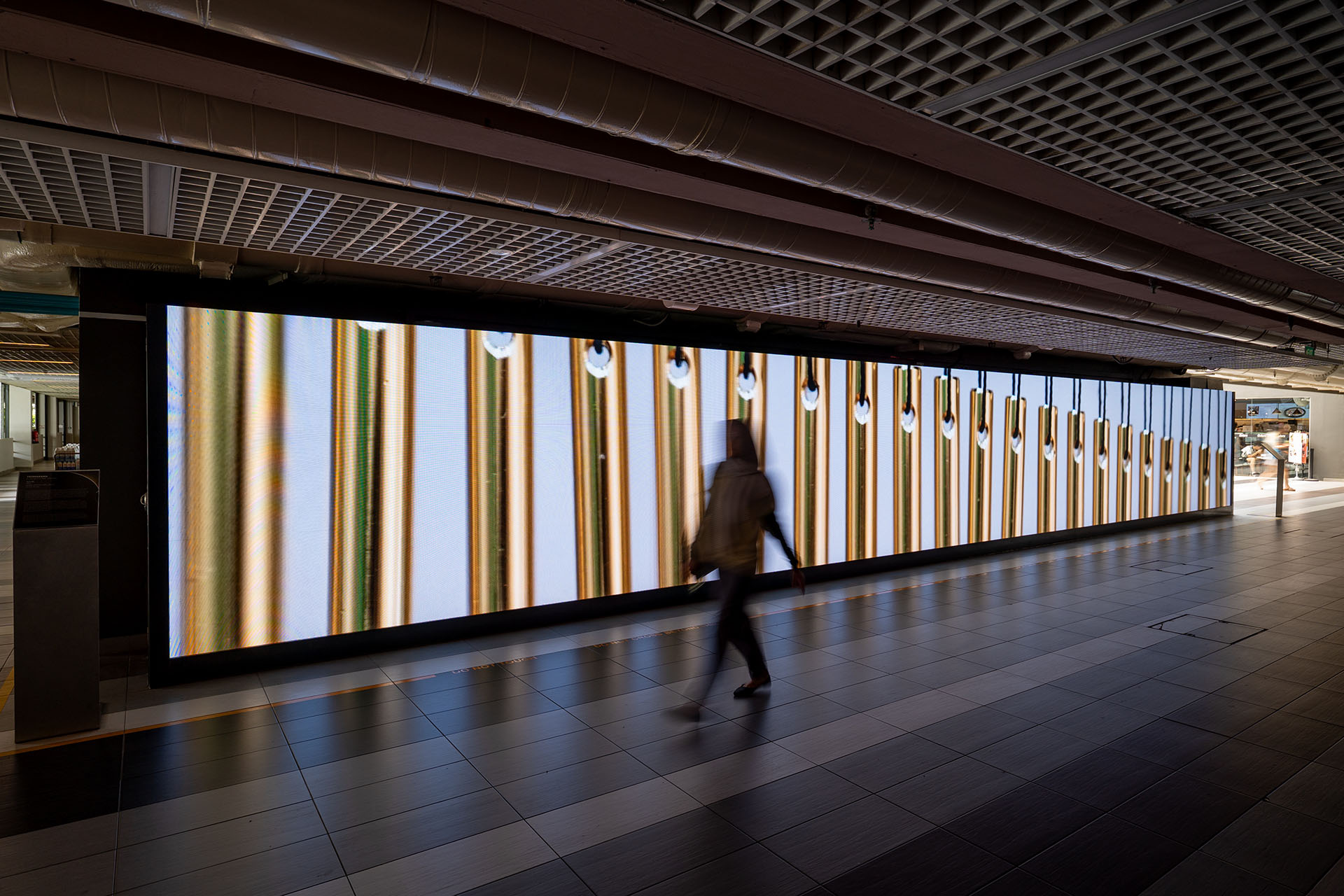
Installation view of Turn On, playing on the INDEX: Stories in Motion screen
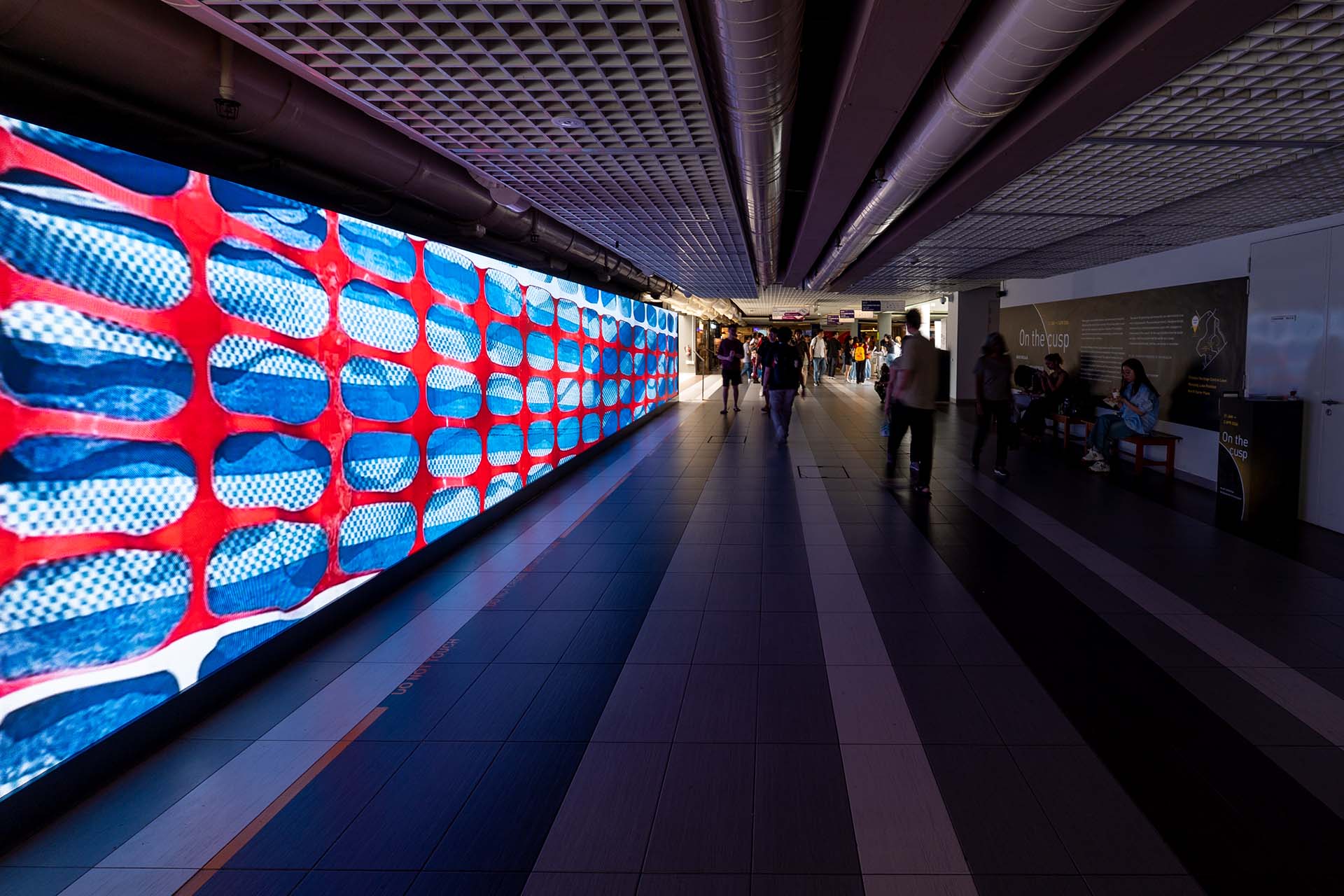
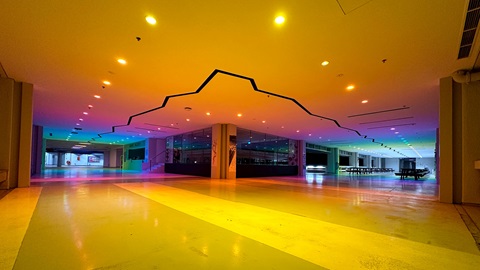
Turn On is located at the busy North Spine Plaza corridor

Tromarama
Established in 2006; based in Bandung and Jakarta
Tromarama is an artist collective founded by Febie Babyrose, Herbert Hans and Ruddy Hatumena in 2006. They engage with the notion of hyperreality in the digital age, delving into the relationship between the virtual and physical world. Using video, installations computer programming and audience interaction, their projects explore how digital platforms influence social behaviours and perceptions towards the world around us. Recent exhibitions of their work have been held at SongEun Art and Cultural Foundation, Seoul, South Korea (2025); Kiang Malingue, Hong Kong (2023) and National Gallery of Victoria, Melbourne, Australia (2020).
Artist Talk: Writing History in the Body
Artist Boedi Widjaja in conversation with Dr Eric Yap and Dr Wee Soon Keong from IDMxS
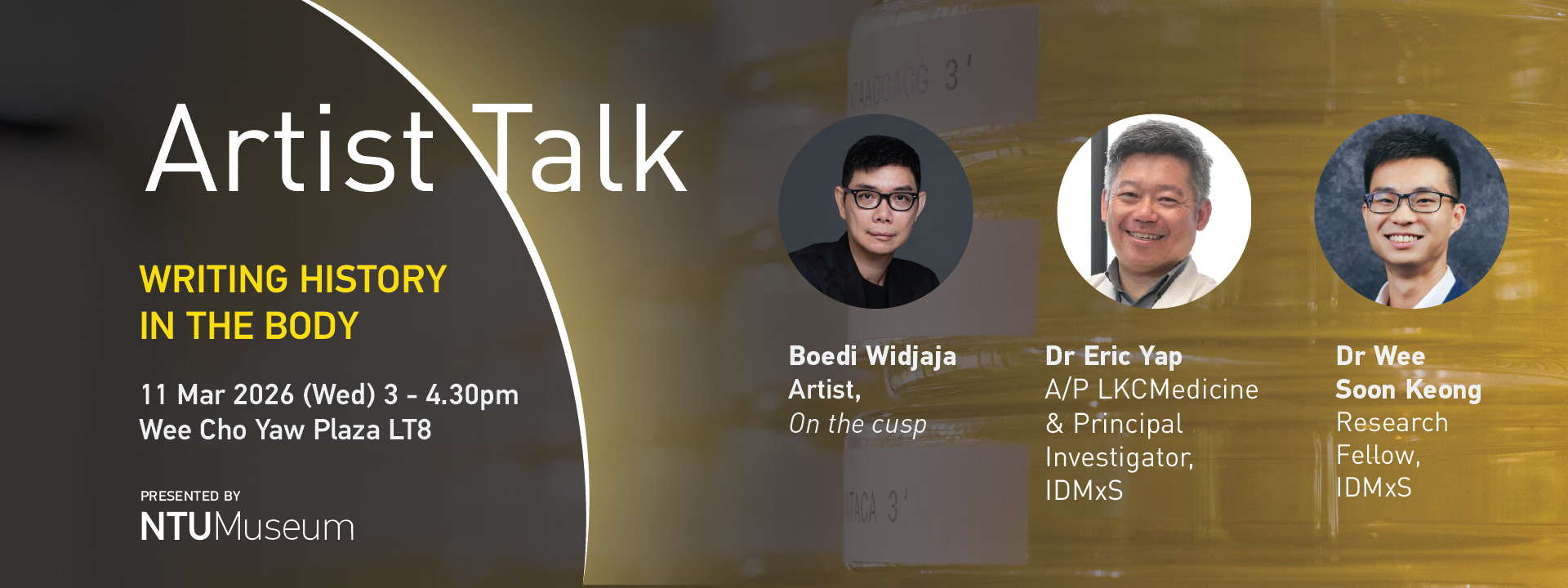
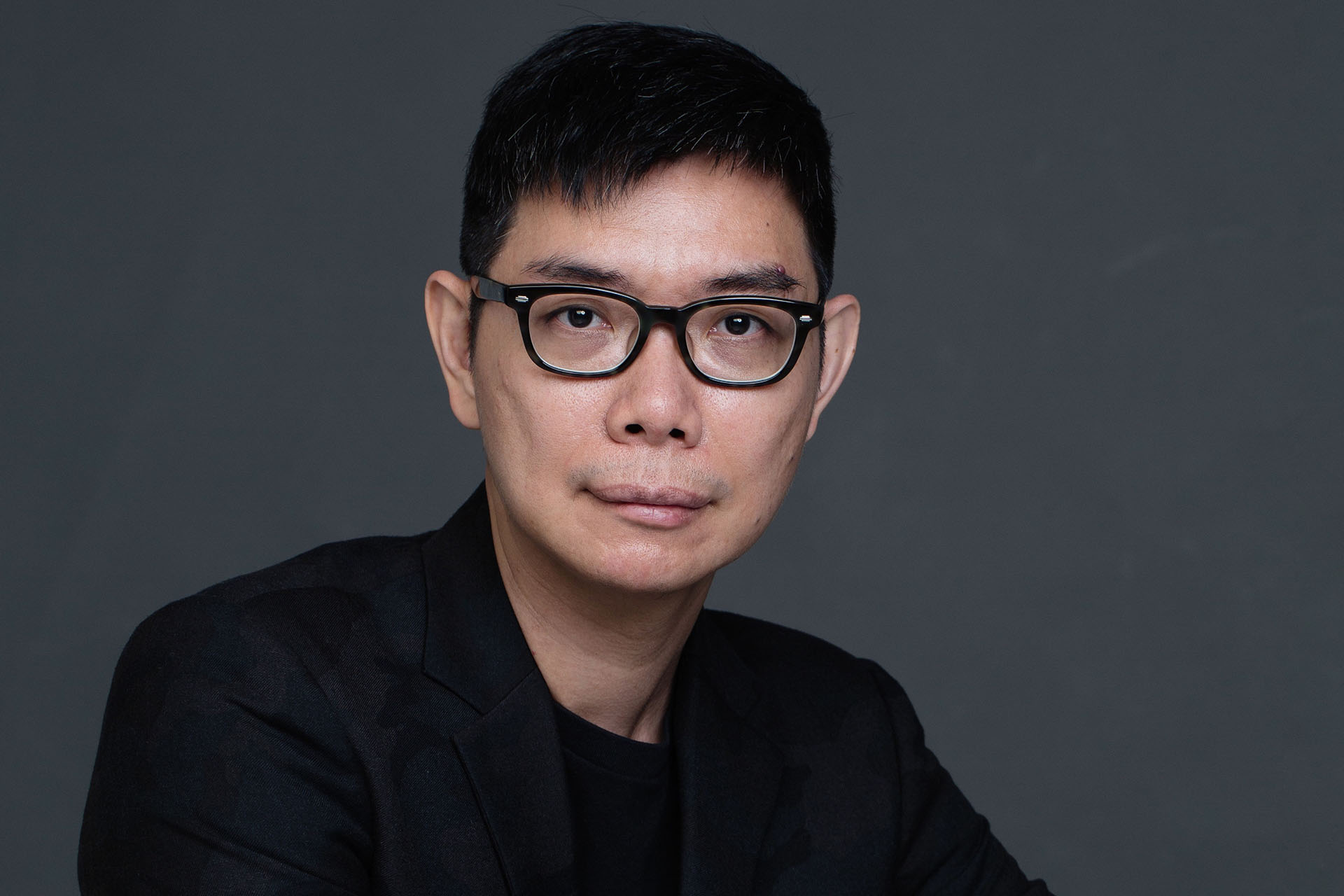
Boedi Widjaja
Artist
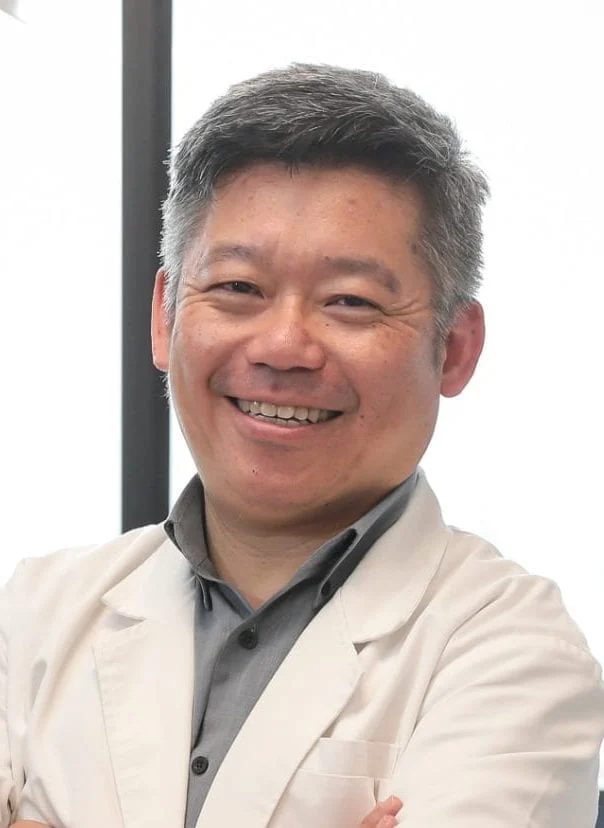
Dr Eric Yap
A/P LKC NHM & Principal Investigator, IDMxS
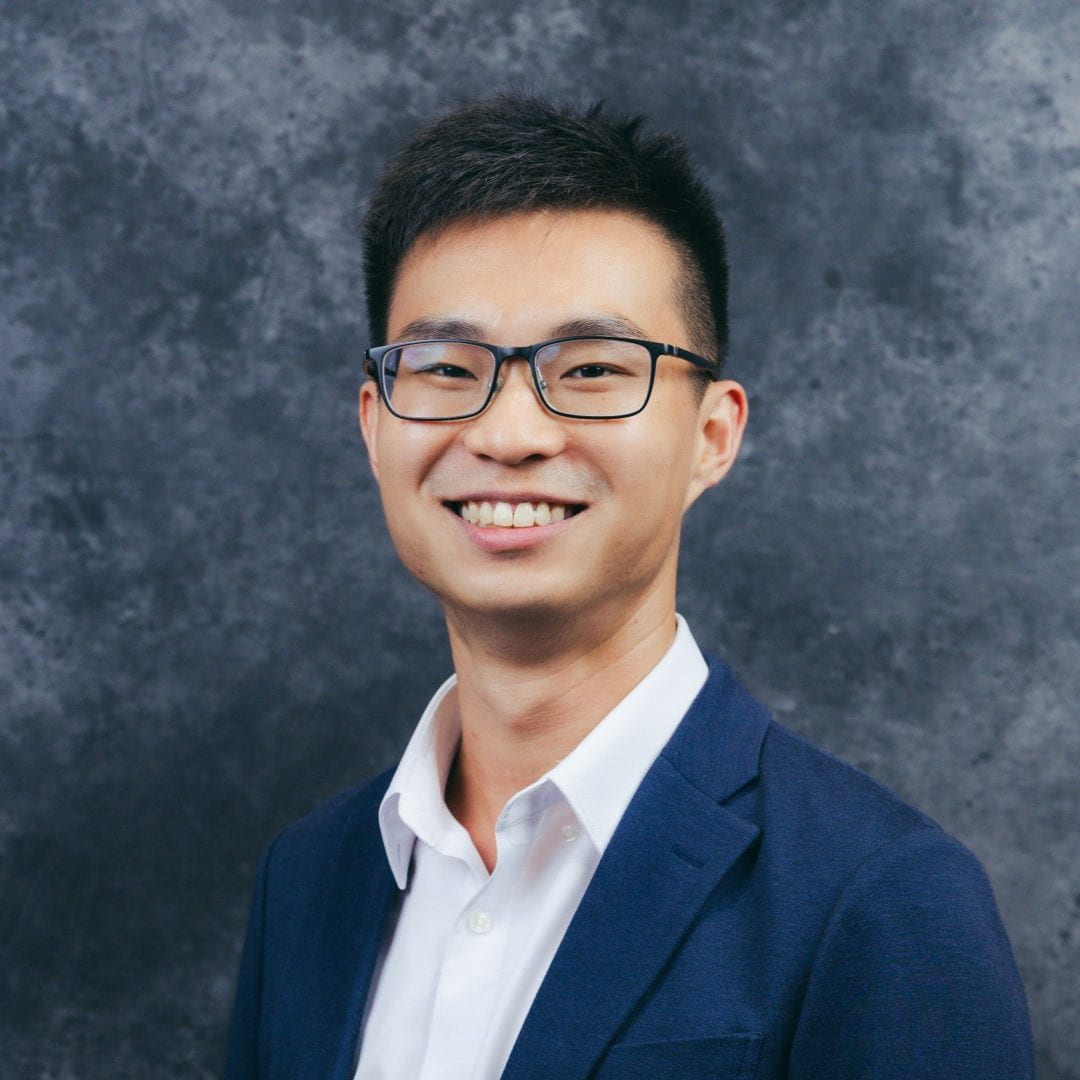
Dr Wee Soon Keong
Research Fellow, IDMxS
How can DNA become a medium for thinking about diaspora? Since 2019, artist Boedi Widjaja has worked with Dr Eric Yap, Clinician Scientist and Associate Professor in Human and Microbial Genetics at the Lee Kong Chian School of Medicine and Principal Investigator at the Institute for Digital Molecular Analytics and Science (IDMxS), to explore this question. Their cross-disciplinary collaboration brings together art and molecular biology to expand on Boedi’s explorations of memory, genealogy and diaspora.
Boedi’s installation 东邪西毒 I Want to Infect You with History, currently on view in the exhibition On the cusp, considers how history survives through language, DNA, gesture and lived experience. Dr Yap and Dr Wee Soon Keong, Research Fellow at IDMxS, will share insights into the genetic sequencing and experimentation undertaken in the lab and how these informed Boedi’s investigations. Together, they will discuss how DNA is a language through which inherited histories could be encoded. The programme concludes with a guided tour of Boedi’s installation, inviting participants to encounter the work in situ.
Event sign up page [now closed]
On second thought: Art Writing Competition
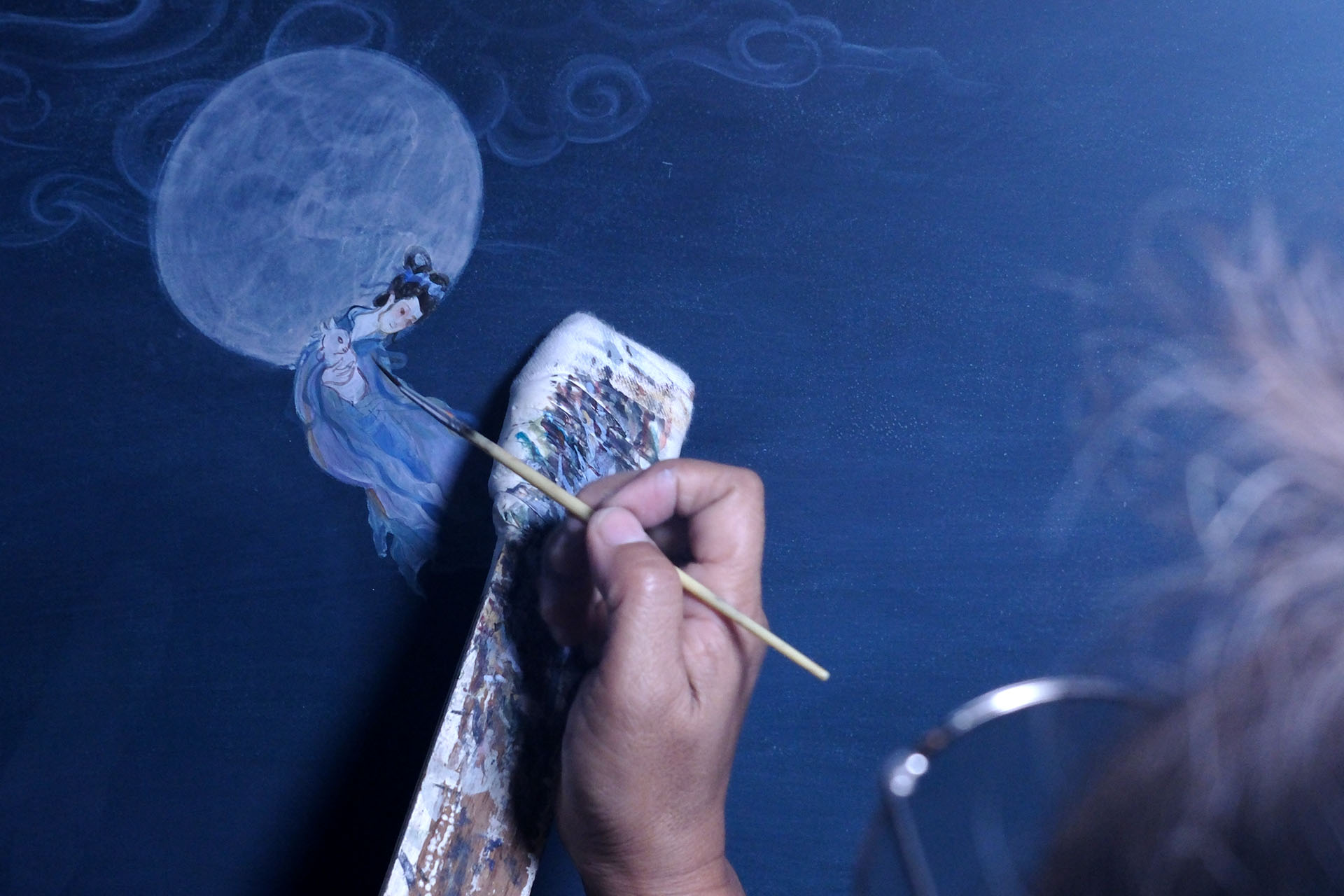
In February-March 2026, NTU students were invited to participate in On second thought, an art writing competition in response to the ongoing exhibition, On the cusp at NTU. This competition was an opportunity for participants to critically and creatively engage with the artworks on display and reflect on the exhibition's theme and artworks.
Thank you all who participated in this competition. Three winners were selected:
- Grand Prize Winner: Eric Lim Jit Kai
- Runner Up: Snehal Bhadani
- Runner Up: Celine Tan
Eric's article will be published on Art & Market, a multimedia platform presenting specialist content on Southeast Asian art and he was awarded S$300 Kinokuniya vouchers. The runners up were awarded S$200 Kinokuniya vouchers each.
Read Eric's article on Art & Market here.
See all winners entries published here.
Special thanks to our jury:
- Anitha Devi Pillai, Senior Lecturer, English Language and Literature, NIE NTU
- Ian Tee, Editor, Art & Market
- Lu Xiao Hui, Curator, NTU Museum


Video
Media
- 2 FEB 2026: Kiang Malingue - On the cusp Tromarama
- 22 JAN 2026: Bakchormeeboy - Visual Art: NTU Museum’s “On the cusp” features new works inspired by memory, identity and transitions
- 22 JAN 2026: The New Age Parents - New NTU Museum today launches On the cusp, a campus-wide exhibition
- 22 JAN 2026: Alvinology - NTU Museum Launches “On the cusp” Exhibition Exploring Memory, Identity and Transition Across Campus
- 20 JAN 2026: NTU Press Release: NTU Museum’s On the cusp exhibition features new works inspired by memory, identity and transitions
Info
On the cusp
21 January - 2 April 2026
Opening Hours: Mon-Fri, 10am-5pm
* Exhibition will be open on these special days:
- Exhibition Opening: 20 Jan 2026 (Tue)
- Singapore Artweek: 24-25 Jan (Sat-Sun) and 31 Jan 2026 (Sat)
- NTU Open House: 28 Feb 2025 (Sat)
Location: On the cusp works can be found in three locations around the NTU Campus:
- Nanyang Lake Pavilion
- Chinese Heritage Centre Lawn
- North Spine Plaza
Getting to Nanyang Lake Pavilion / Chinese Heritage Centre Lawn
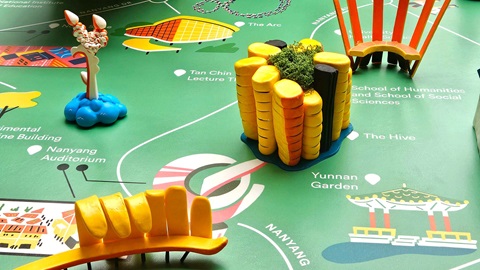
Nanyang Lake Pavilion is located next to the Chinese Heritage Centre in the Yunnan Garden District. The lawn is in front of the CHC building.
- By car: Take PIE Pioneer Road Exit 38. Parking is available at Nanyang Circle, Tan Lark Sye Walk, or Carpark Q.
- By bus: Take 179 from Boon Lay Bus Interchange and stop at Academic Building South (Bus Stop # 27251) or Hall 4 (Bus Stop # 27261)
Getting to North Spine Plaza
The North Spine Plaza is located in the North Academic District.
- By car: Take PIE Pioneer Road Exit 38. Parking is available at Carpark A
- By bus: Take 179 from Boon Lay Bus Interchange and stop at Lee Wee Nam Library (Bus Stop # 27211)
Other NTU Museum events: