
CVP0002 Essentials of Orff-Schulwerk for Music Educators

An introductory experiential workshop to let participants understand the rationale of the processes found within an authentic Orff-Schulwerk music class. This pedagogy was initiated by the German composer Carl Orff, who later with his colleague Gunild Keetman, developed a teaching approach based on the unity of music, movement and speech. Processes such as exploration, improvisation and creation are used to help the individual express themselves in an authentic manner, where the participant is an active learner. Pair and group work are essential part of the learning as ensembles are often created within the group.
📅 TBC
⏱️ 7 hours
📍 Face-to-face

By the end of this course, participants should be able to:
- Identify and demonstrate basic musical elements such as steady pulse, rhythm, and simple expressive contrasts through guided warm-ups, movement, and participation.
- Follow and respond to Orff-Schulwerk processes by imitating and participating in scaffolded musical activities using action, listening, and silence.
- Describe and demonstrate the connection between speech, movement, and music through the use of poems, rhymes, and chants in structured activities.
- Perform and explore simple musical patterns by maintaining a steady pulse, using body percussion, and playing basic instrumental accompaniments with appropriate dynamics and contrast.
This workshop aims to give participants an overview of how basic musical concepts like rhythm and meter are taught through speech in an Orff-Schulwerk class. Participants will be introduced to different types of percussion, how speech is used to teach percussion and how both are used in teaching children musical concepts in an Orff-Schulwerk Class. Other aspects such as the importance of warm-ups, games, chants and rhymes in Orff-Schulwerk and how they can spiral to more complicated actions created by children, leading to peer learning and ownership of their work.
- Warm-Ups; the importance of preparation of body and voice and awakening of the senses.
- Games within the Orff-Schulwerk classroom.
- Speech using rhymes and chants. Their utilisation in the context of Orff-Schulwerk.
- Playing with nonsensical words and rhythmical structures; addition of body percussion and movement.
- Body percussion with speech.
- Inner audiation.
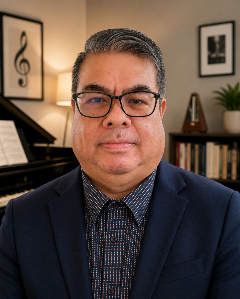
Dr Paul Grosse is a Lecturer of music pedagogy at the National Institute of Education, Nanyang Technological University where he also teaches choral conducting and piano within the instrumental studies programme. He is an international expert in the Orff-Schulwerk music pedagogical approach and currently serves as Vice-President of the Orff-Schulwerk Association of Singapore (SingOrff).
His work includes extensive engagement with disenfranchised communities and persons with disabilities. Dr Grosse is also a founding member of the Research Committee of the International Orff-Schulwerk Forum Salzburg.
Total nett fee payable (including prevailing GST & copyright fee): S$916.69
| Public | |
| Full course fee | S$840.00 |
| Copyright fee | S$1.00 |
| 9% GST | S$75.69 |
| Total fee payable | S$916.69 |
Note:
1. You may use your available SkillsFuture Credits to offset the course fees.
2. NTU/NIE alumni may utilise their $1,600 Alumni Course Credits. Click here for more information.
Individuals interested in learning more about child-centered music pedagogy centered on music, movement and speech.
Participant must achieve a minimum of 75% attendance and pass the assessment. Participant will be issued the Certificate of Completion upon fulfilling both attendance and assessment criteria.