

Artificial Intelligence for Education
If you are interested in LSA Department’s work in AIED including potential collaborations and partnerships, please contact Assistant Head and Chairperson, LSA AIED Taskforce, Dr Farhan Ali.
If you are interested in our Professional Development courses, please contact Dr Wu Jing
Courses
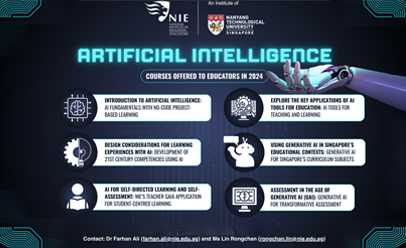
Certificate in AI for Education
LSA leads NIE’s new Certificate in AI for Education which will start in July 2025.
MoreResearch and Development Projects

Leveraging AI flaws for human learning: Asst/P Tanmay Sinha
This research strand focuses on conceptualizing AI flaws (their hallucinations, biases, uncertainty, and other kind of misleading outputs) as triggers for learning and aims to create new pedagogical designs and AI interfaces for K-12 and higher education that can be used by (i) teachers for intentionally curating novel AI-mediated learning opportunities, and (ii) students for developing epistemic agency in the age of AI. Initial findings from this work have been presented as a long paper in the flagship international conference ISLS 2026 (USA) as well as a prestigious blue sky visionary article at AIED 2026 (South Korea).
Generative AI to Assess Curiosity and 21st Century Competencies: Asst/P Farhan Ali
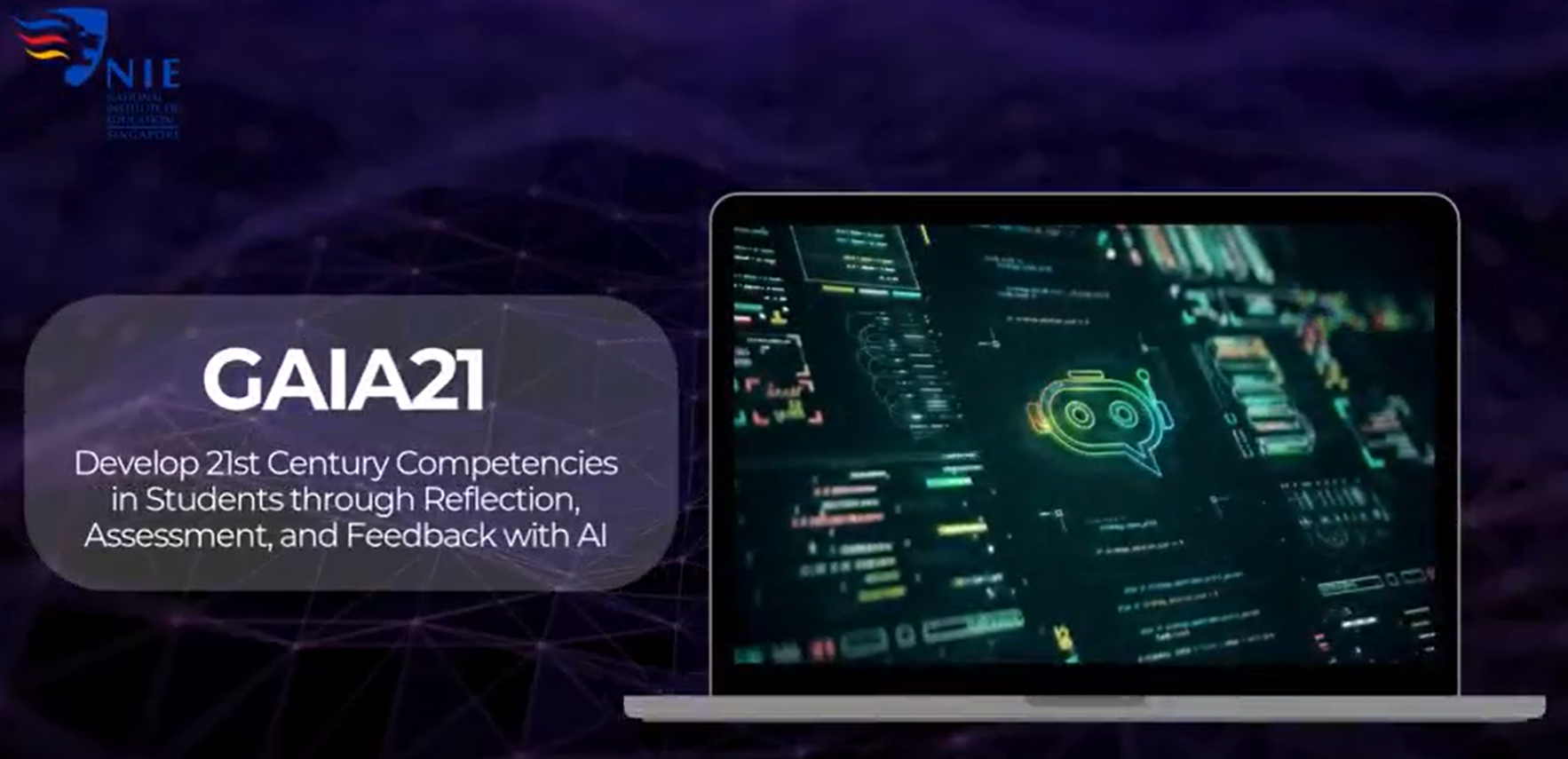
A team led by Asst/P Farhan Ali was recently awarded an ERFP Tier 2 grant to study students’ curiosity and 21st Century competencies in self-directed learning contexts. As part of the project, a generative AI platform was developed with various affordances that support assessment, feedback, and reflection by students. The project is currently looking for partner schools in the project. Interested teachers can click More for a video demo of the platform.
More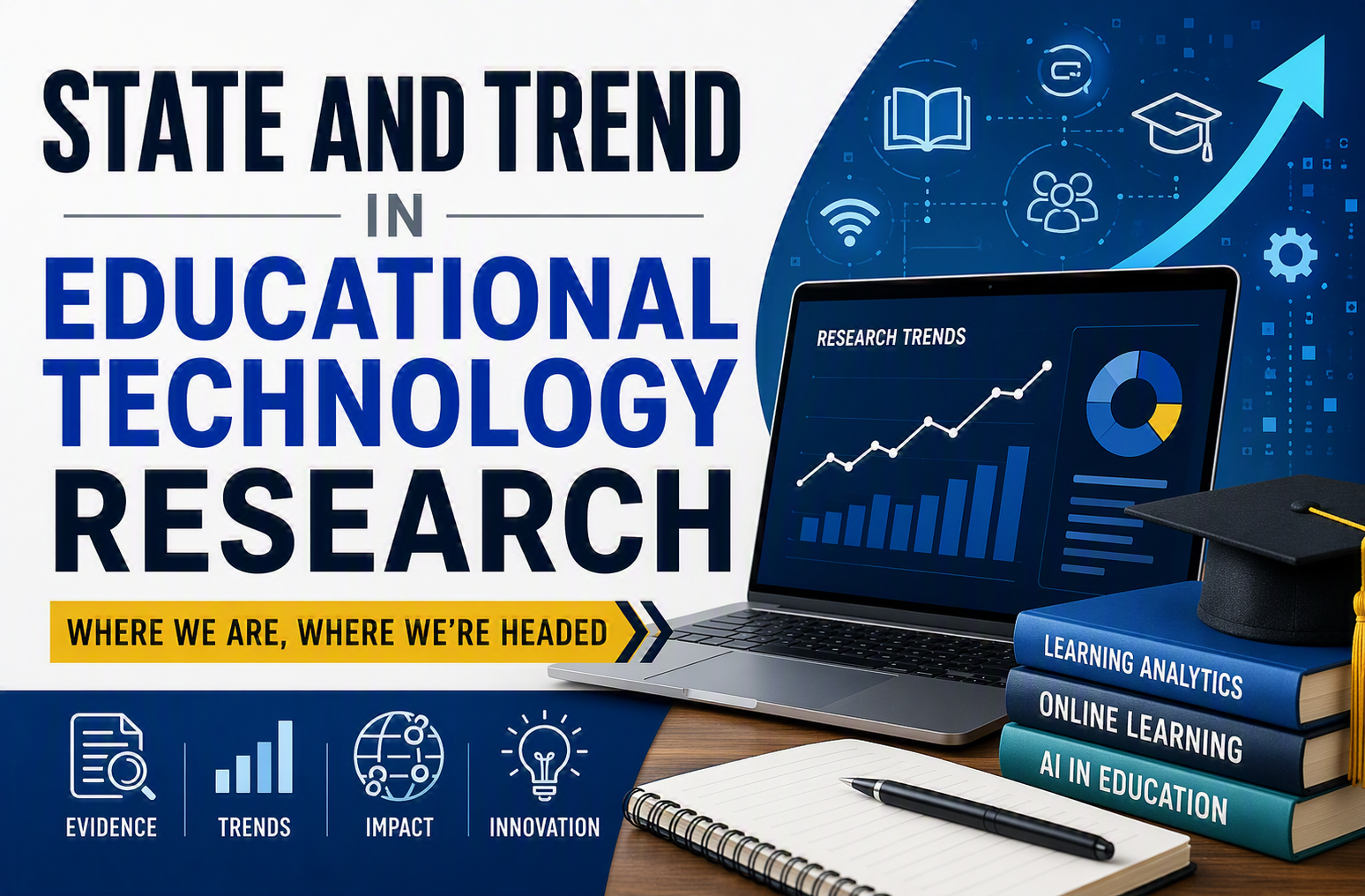
State and Trend in Educational Technology Research, 2020-2025: Asst/P Farhan Ali
Asst/P Farhan Ali and collaborators analyzed large-scale data of educational technology publications from 2020 to 2025 to better understand the state and trend in Educational Technology research. Two findings stood out: Generative AI has rapidly become a dominant research theme, and East Asia leads globally in research outputs and impact.
More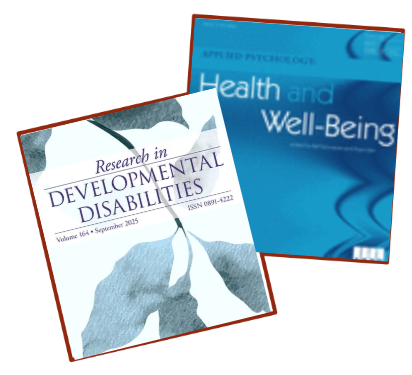
AI for Special Education: Author Asst/P Farhan Ali
There is potential for artificial intelligence to contribute to special education, particularly in supporting personalized interventions and improving wider well-being outcomes. To this end, Asst/P Farhan Ali and his PhD student Amanda Tan, who is also an educational therapist, led two published projects in collaboration with Prof Kenneth Poon and team from the NIE Centre for Research in Child Development. Tan et al. (2025). Subjective well‐being of children with special educational needs: Longitudinal predictors using machine learning. Applied Psychology: Health and Well‐Being. Tan et al. (2025). Predicting literacy intervention responsiveness using semi-supervised machine learning. Research in Developmental Disabilities.
More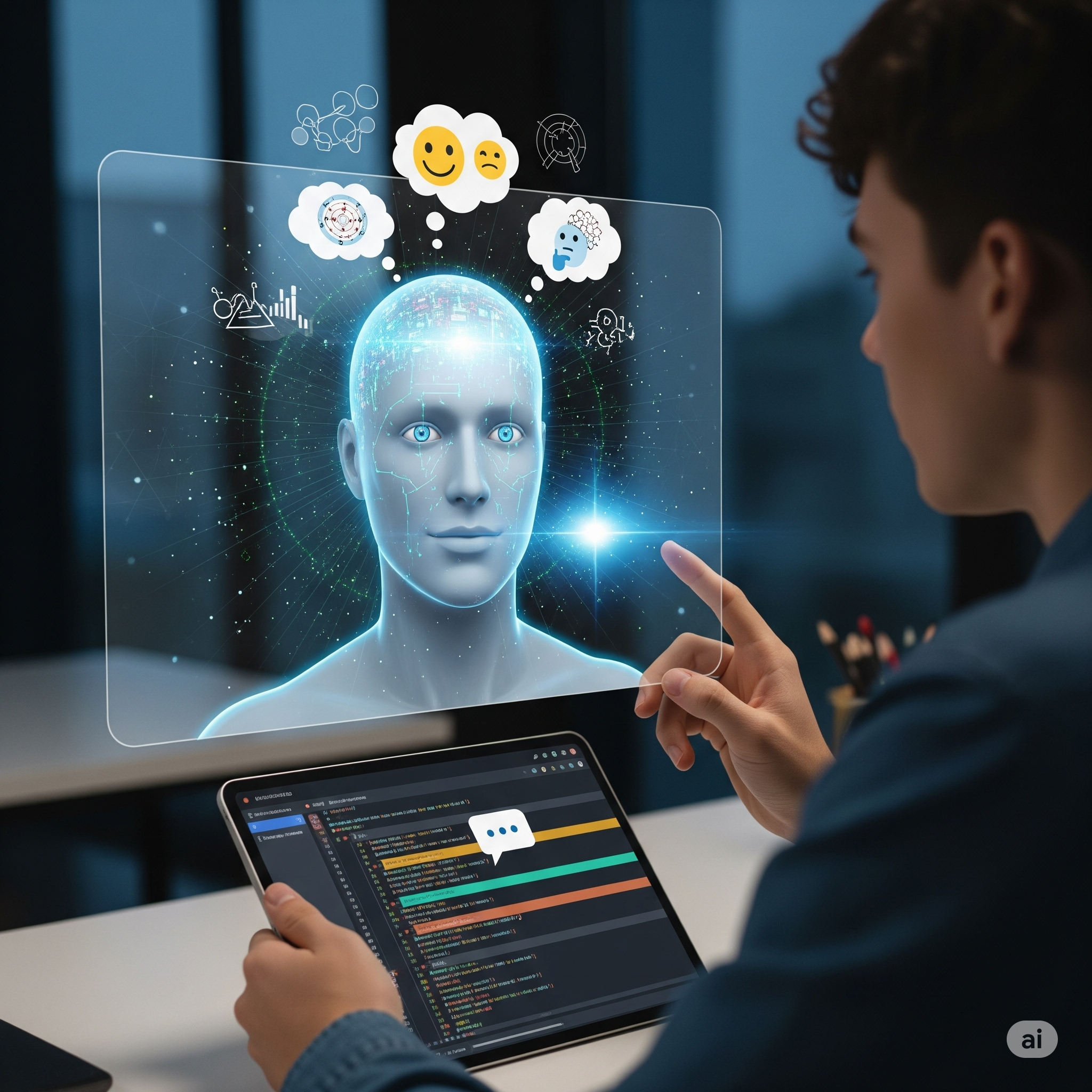
Open emotion learner modeling to improve machine predictions and improve human metacognition: PI: Asst/P Tanmay Sinha (LSA) co-PI: Asst/P Dr. Wei Xing Toh (SSS) collaborator: Dr. Elizabeth Koh (CRPP)
The project aims to kill two birds with one stone – improve emotionally-aware AI as well as students’ self-regulated learning – by creating open learner models (OLMs) where emotional predictions can be refined with human feedback. Different interaction designs for OLMs to enhance emotional awareness and regulation in education will be tested.
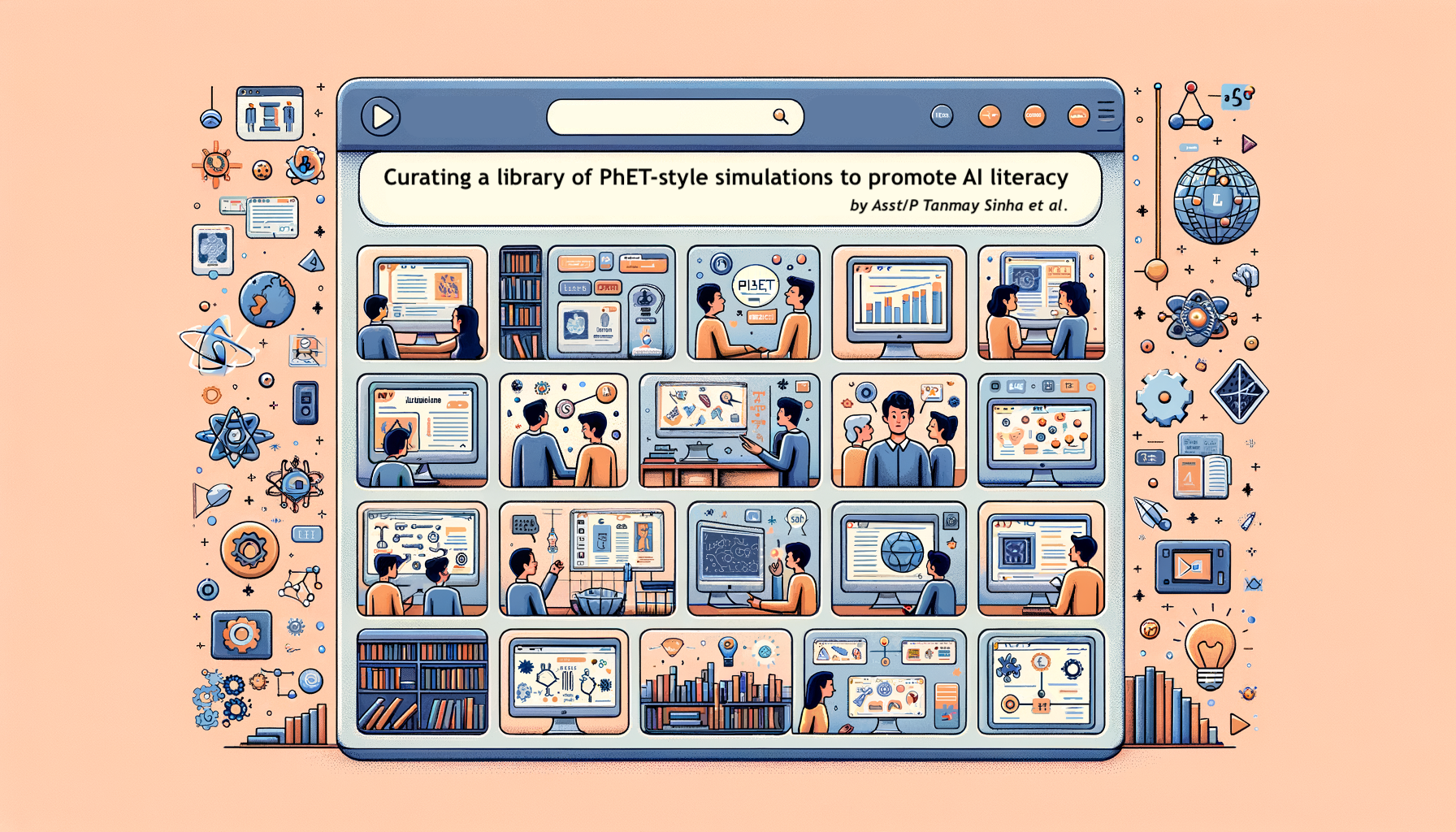
PhET-style simulations to promote AI literacy: PI: Asst/P Tanmay Sinha (LSA) co-PI: Dr. Peter Seow (CRPP), Prof David Hung (LSA)
The project aims to develop a curated library of interactive, high-quality web-based resources for teachers following an explore-then-instruct pedagogy that puts NIE at the forefront of AI literacy. Project findings and demos have been shared at flagship international conferences like ISLS 2026 (Irvine, USA) and AIED 2026 (Seoul, South Korea).
More
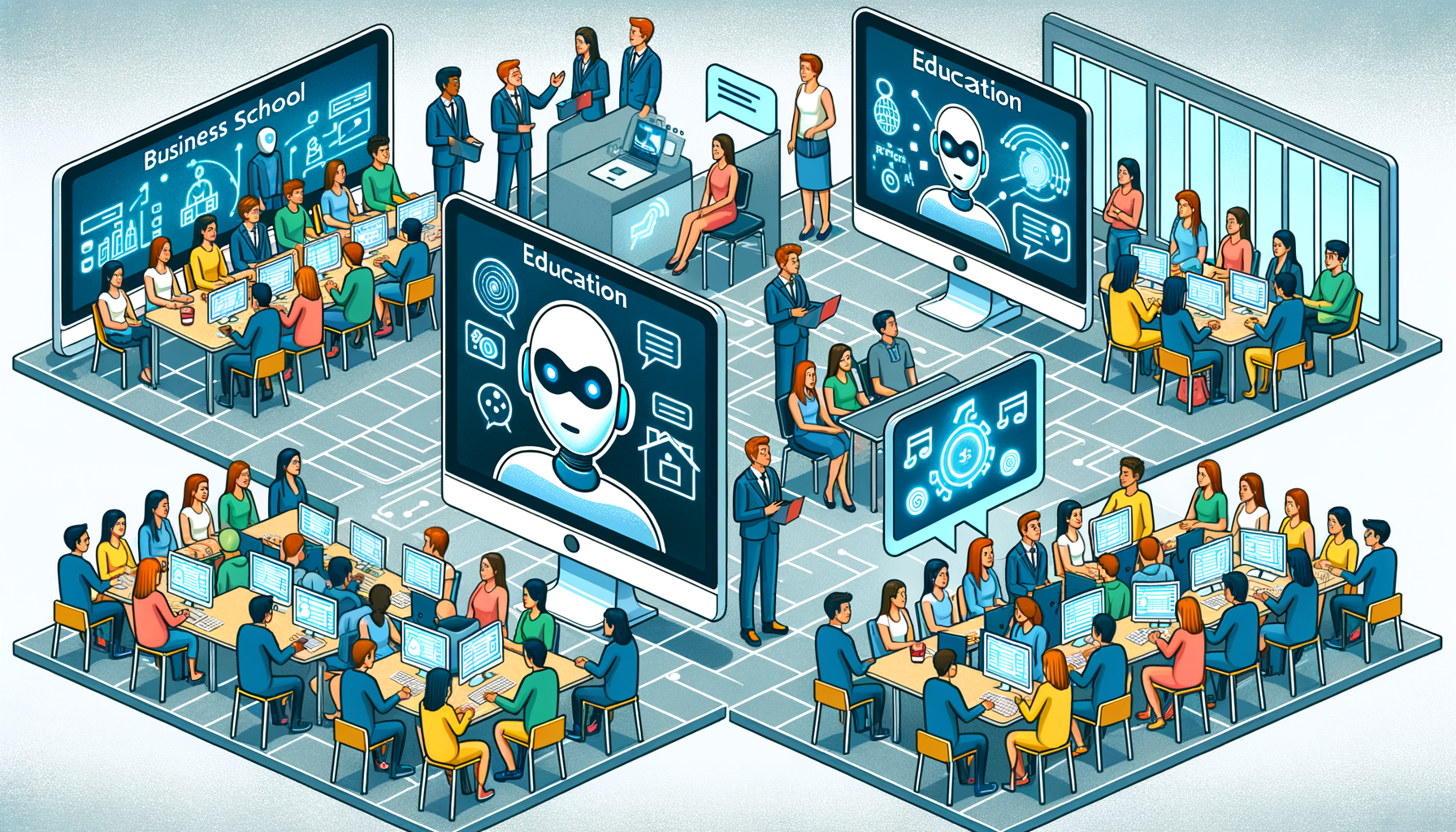
GenAI in Action: Transforming Analytics Course in Business Education : PI: Asst/P Qiujie Li (LSA) co-PIs: Asst/P Tanmay Sinha (LSA), Asst/P Qinshen Tang (NBS)
The project aims to integrate GenAI into problem-based learning for business education as means to foster student-centered learning, where students lead the investigation of complex and uncertain problems and teacher facilitate the process through prompting techniques and worked examples. Project findings have been shared at the international GCCCE 2026 conference (Hong Kong).
An investigation on the efficacy of redesigning learning assessments with Gen AI: PI: Dr. Kumaran Rajaram (NBS) co-PI: Asst/P Tanmay Sinha (LSA)
The project aims to develop innovative formative assessments that use genAI to provide deliberate critiquing opportunities for students and assess their impact on learning across interdisciplinary courses at NBS and NIE. Project findings have been shared at flagship international conferences like ISLS 2026 (Irvine, USA).
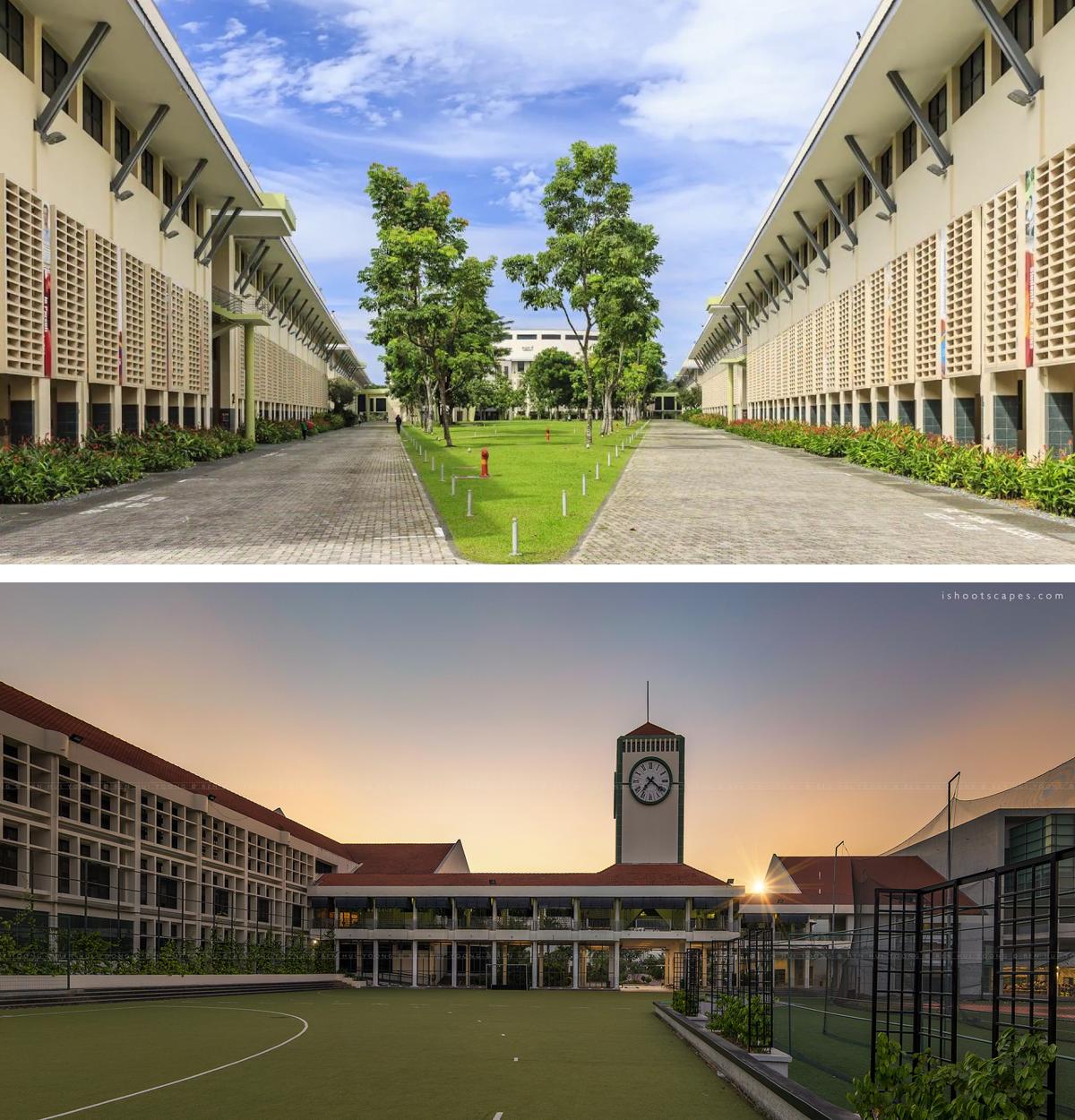
NIE x RI collab on generative AI for STEM assessment (Developed by Asst/P Farhan Ali (LSA), Joonhyeong Park (NSSE), Kuang-Wen Chan (RI))
This project comprehensively assesses large language models for their capabilities in generating advanced high school assessment items in various STEM subjects. The project involved collaboration between NIE researchers from LSA and NSSE and a group of teachers from Raffles Institution. The work is published in Chan et al. (2025): https://doi.org/10.1016/j.caeai.2024.100344
More
TeacherGAIA (Developed by: Asst/P Farhan Ali)
TeacherGAIA is a generative-AI chatbot developed by LSA to support diverse forms of student-centered learning. It is currently in use in numerous MOE schools with free accounts for teachers and students. More information about the design and prompt engineering can be found in Ali et al. (2023), https://www.tandfonline.com/doi/abs/10.1080/23735082.2023.2258886
More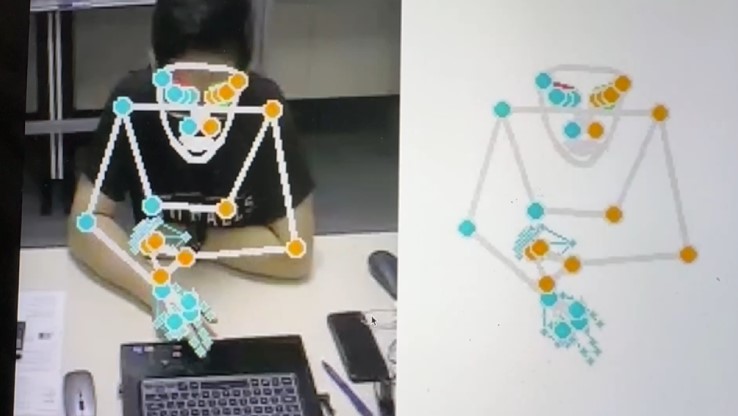
AI-Empowered Analytics on Gesture (Developed by: A/P Chen Wenli and Miss Lyu Qianru)
This research explores how students apply bodily engagement for computer-supported collaborative learning (CSCL). We have utilized MediaPipe, a machine learning model, to analyze video files and extract moment-by-moment body landmarks. This approach allows us to understand and visualize how students use hand movements and body gestures during collaborative learning activities.
More
AI-Empowered Analytics on Joint Attention (Developed by: A/P Chen Wenli and Miss Lyu Qianru)
In another research, we employed AI-Empowered Analytics on Joint Attention analysis. This research examines how students apply joint attention, specifically synchronized gazing detection, for collaborative learning. By using machine learning models such as YOLOv7 for gazing detection and object detection, we analyze video files to capture moment-by-moment gazing and object detection. This method provides a precision level of 60% to 89%.
More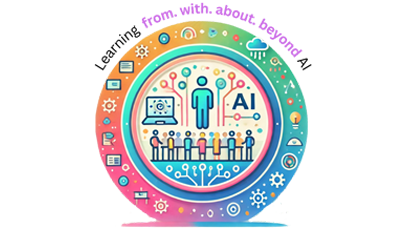
LLMs Chatbot Proof-of-Concepts (Developed by: A/P Tan Seng Chee and Ms Tan Yee Yin)
Six different proof-of-concepts chatbots that explore and exemplify teaching and learning from, with, about, and beyond AI.
More
ARCHE 2.0 (PI: Asst/P Wen Yun)
An AI-powered seamless Chinese vocabulary learning system for young learners. For more information, please contact Asst/P Wen Yun.
More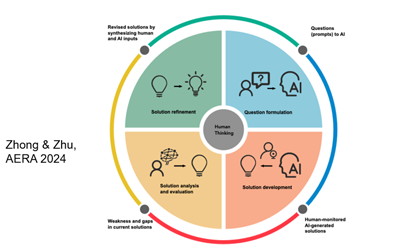
Students' AI-Augmented Thinking, Academic Performance and Emotions During Problem Solving. (PI: Asst/P Zhu Gaoxia)
This project aims to understand students’ thinking processes when programming with the supported of generative AI or not; and examine What factors will impact AI-augmented thinking?
More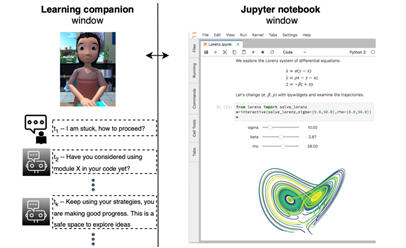
Embodied Learning Companions as An Experimentation Platform for Scaffolding in the Learning Sciences. (PI: Asst/P Tanmay Sinha)
Learning companions, implemented as 2-D/3-D virtual characters, can evoke trust with human-like shape and form (appearance realism). Provide multimodal adaptive support based on inferring multimodal student behaviors (behavior realism).
More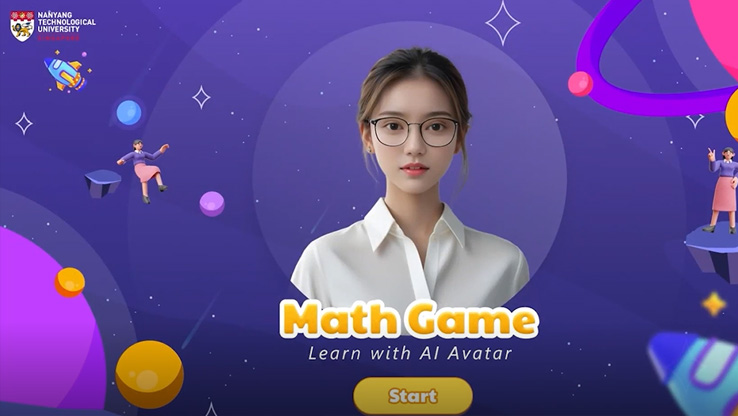
AARA-DA: AI Powered Avatar, Adaptive Progression and Remediation Analytics for Dyscalculia
AARA-DA is a neuroscience-informed mathematics Fractions games powered by a VR teacher/caregiver avatar that is trained to provide personalized cognitive and affective care for learners between the ages of 7 - 13.
MoreAI Teaching and Learning Innovations

From AI Tool Use to Responsible AI Design - Instructor: Asst/P Li Qiujie
Students have shifted from simply using AI tools to adopting a problem-driven mindset, where they clearly define what AI should solve, for whom, and why. As a result, their solutions are more purposeful, relevant, and aligned with real user needs. They also demonstrate stronger awareness of responsible AI practices, considering factors such as accuracy, fairness, privacy, and potential misuse. At the same time, students develop practical and transferable skills, enabling them to design AI-enabled solutions without needing deep technical expertise. Overall, this leads to a key outcome: students grow into thoughtful and responsible AI solution designers, rather than just passive tool users.
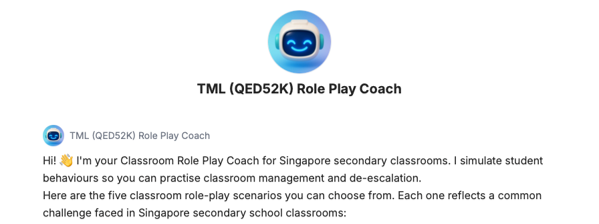
AI Role Play Learning Companion/Coach for Managing Diverse Learners in the Classroom - Instructor: Mr Liang Hong Poh
The simulation tool enhances teacher preparedness by allowing student teachers to safely practice different intervention strategies while building practical skills and professional judgement before entering real classrooms. Through varied AI responses and multiple difficulty levels, it exposes them to a wide range of learner behaviours, helping them handle the diversity and complexity of real teaching situations. It also promotes reflective practice by encouraging them to pause, analyse student behaviours, and think critically about their instructional decisions. Additionally, the tool offers scalable, on-demand access to consistent and repeatable practice opportunities, ensuring all student teachers—regardless of cohort size or learning mode—can develop essential classroom management skills anytime and anywhere.
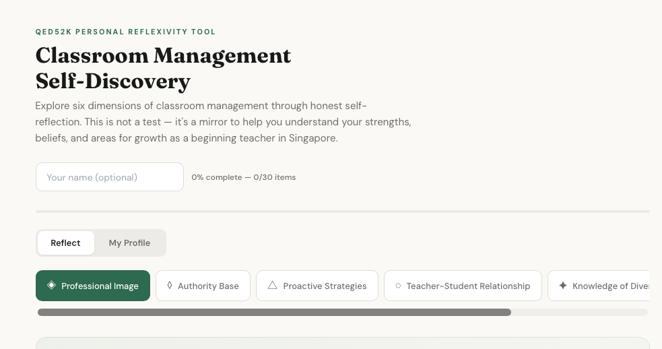
AI for Reflexive Learning: from Mastering Knowledge to Developing Disposition - Instructor: Dr Wu Jing
Student teachers develop deeper and more meaningful understanding by connecting classroom management theories to their own experiences while covering all key areas of the course. This process strengthens their self-awareness, as personal profiling and group discussions help them identify their teaching styles, strengths, and areas for improvement while learning from peers’ perspectives. It also fosters a stronger sense of community, where students appreciate diverse approaches, share good practices, and support one another’s growth. Altogether, these experiences better prepare them for Teaching Assistantship, allowing them to enter with greater confidence, clearer self-understanding, and more intentional practice.
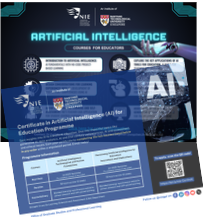
Towards Thoughtful Integration of Pedagogy and Technology - Certificate in Artificial Intelligence for Education (AIED) - Instructors: Asst/P Farhan Ali, Asst/P Tanmay Sinha, Dr Lin Rongchan, A/P Shanti Divaharan, Asst/P Alwyn Lee
The inaugural run attracted and sustained strong student interest, with 29 participants in ILA1002 and 27 in ILA1003, including many who continued from the first course. Students demonstrated meaningful learning through key deliverables such as collaboratively proposing AI solutions, critically analysing AI tools in student-led seminars, and designing lessons for their own educational contexts. They found the experience especially useful in applying pedagogical practices like assessment, understanding ethical considerations, recognising the importance of human involvement, and exploring technical tools such as NotebookLM and Hugging Face, highlighting both the practical relevance and applicability of the course.
Leveraging AI for Resource Development - Instructors: Dr Lin Rongchan, Asst/P Alwyn Lee, A/P Shanti Divaharan, Mr Liang Hong Poh, A/P Tan Seng Chee
In MLS3107, middle leaders progressed from basic awareness of AI to practical application by designing chatbots for diverse school contexts such as parent communication, peer support, subject tutoring, and administrative FAQs, while also embedding ethical considerations and safeguards that positioned them as responsible advocates guiding their departments in purposeful AI use. In ILA1003, participants first experienced chatbots as learners before critically examining their strengths and limitations through lessons and student-led seminars, helping them become informed and discerning users of AI. Overall, EdCafe demonstrated strong scalability as an AI-enabled pedagogy platform that effectively supports the professional development of in-service teachers across NIE’s programmes.

Rapid AI-Enabled Prototyping in Digital Game-Based Learning: Instructor: Asst/P Azilawati Jamaludin
The initiative transformed learning by shifting students from producing conceptual ideas to developing functional or semi-functional prototypes within 13 weeks, enabling them to translate theory into practical design. This led to increased engagement, stronger motivation, greater confidence in real-world implementation, and a deeper understanding of the trade-offs between pedagogy and technology. At the same time, it demonstrated meaningful pedagogical advancement, where AI supports and enhances learning without replacing theoretical thinking. Moving forward, further improvements will focus on structured artefact analysis and clearer tracking of iteration and progress.
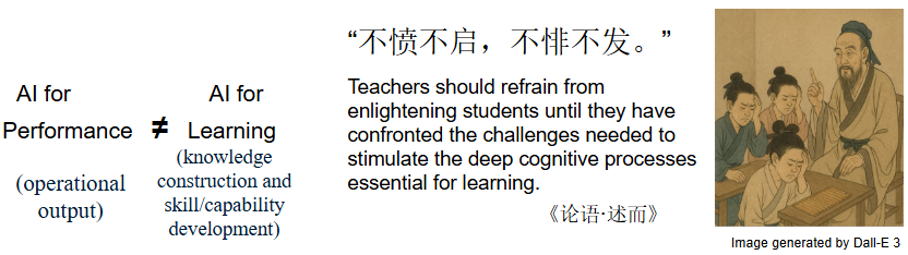
Human-AI Collaboration for Intelligence Augmentation (IA) - Instructor: Professor Chen Wenli
AI‑augmented peer feedback enhances learning by combining human perspectives with AI-supported insights, enabling students to give and receive more structured, timely, and actionable feedback. It helps learners articulate clearer critiques, identify gaps they might otherwise miss, and refine their work through iterative improvement. At the same time, the AI guidance supports consistency and depth in feedback quality while still preserving the value of peer interaction, discussion, and judgement. Overall, this approach fosters deeper reflection, stronger collaboration, and increased confidence, leading to more meaningful learning and improved outcomes.

Leveraging AI Flaws to Drive Human Collaboration - Instructor: Asst/P Tanmay Sinha
Educators demonstrate a clear shift from surface-level acceptance of AI to more nuanced and critical thinking, showing stronger reasoning about how AI should be integrated into teaching. This leads to deeper professional judgement, as they become more able to decide when and how AI is appropriate in K–12 contexts while weighing different trade-offs. Through engaging with biased AI outputs and diverse peer perspectives, they learn through productive conflict, turning limitations into meaningful learning opportunities. Overall, educators evolve into critical evaluators rather than passive users of AI, capable of making balanced decisions that consider multiple stakeholders in human–AI collaboration.

Bridging Neural Network Inquiry with Reflexive Quantified-Self Analytics - Instructor: Asst/P Tanmay Sinha
Students developed a stronger understanding of how their actions influence AI outcomes by linking inputs to model responses through hands-on, inquiry-based experiments. This empowered them to use learning data as a reflective tool rather than mere surveillance, generating insights into how their behaviours relate to cognitive states such as confusion or uncertainty. At the same time, they enhanced their ethical and critical thinking by recognising the limitations of data in fully representing personal learning processes and forming more nuanced critiques of AI. Overall, students moved from abstract understanding to more practical, reflective, and ethically informed engagement with AI.
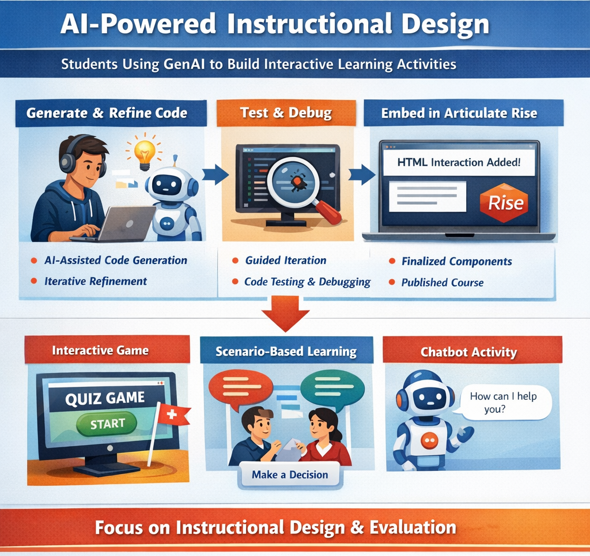
GenAI-Enabled Capstone: Non-Programmers Building Custom HTML Interactivity Embedded in Articulate Rise - Instructor: Asst/P Li Qiujie
When students build custom HTML interactivity embedded in Articulate Rise through scenario-based tasks, it shifts them from passive consumers to active creators of learning experiences. This process deepens their understanding as they translate ideas into interactive, decision-based scenarios, reinforcing both content knowledge and problem-solving skills. Even without formal programming expertise, learners gain confidence in designing meaningful digital experiences, while developing critical thinking about how interactions influence learning outcomes. Overall, it promotes active, experiential learning, where learners engage more deeply, think more creatively, and better apply knowledge in realistic contexts.
Keynote Talks, Invited Speech, and Research Publications

The beauty of the glitch: Why AI imperfection is the future of learning (Keynote: Asst/P Tanmay Sinha)
Asst/P Tanmay Sinha presented two keynotes at (i) the ASEAN Teacher Education Conference (AsTEC), Philippines, July 2026, and at (ii) an invitation-only dialogue on reimagining English teaching and assessment in an AI world, organized by CA International College, Singapore in collaboration with Cambridge, March 2026. In his talks, Tanmay argued that the quest for AI accuracy within education is a pedagogical dead end, and introduced new learning designs that can leverage AI’s misleading outputs, creative leaps, and logical failures as raw material to fuel human learning and assessment.
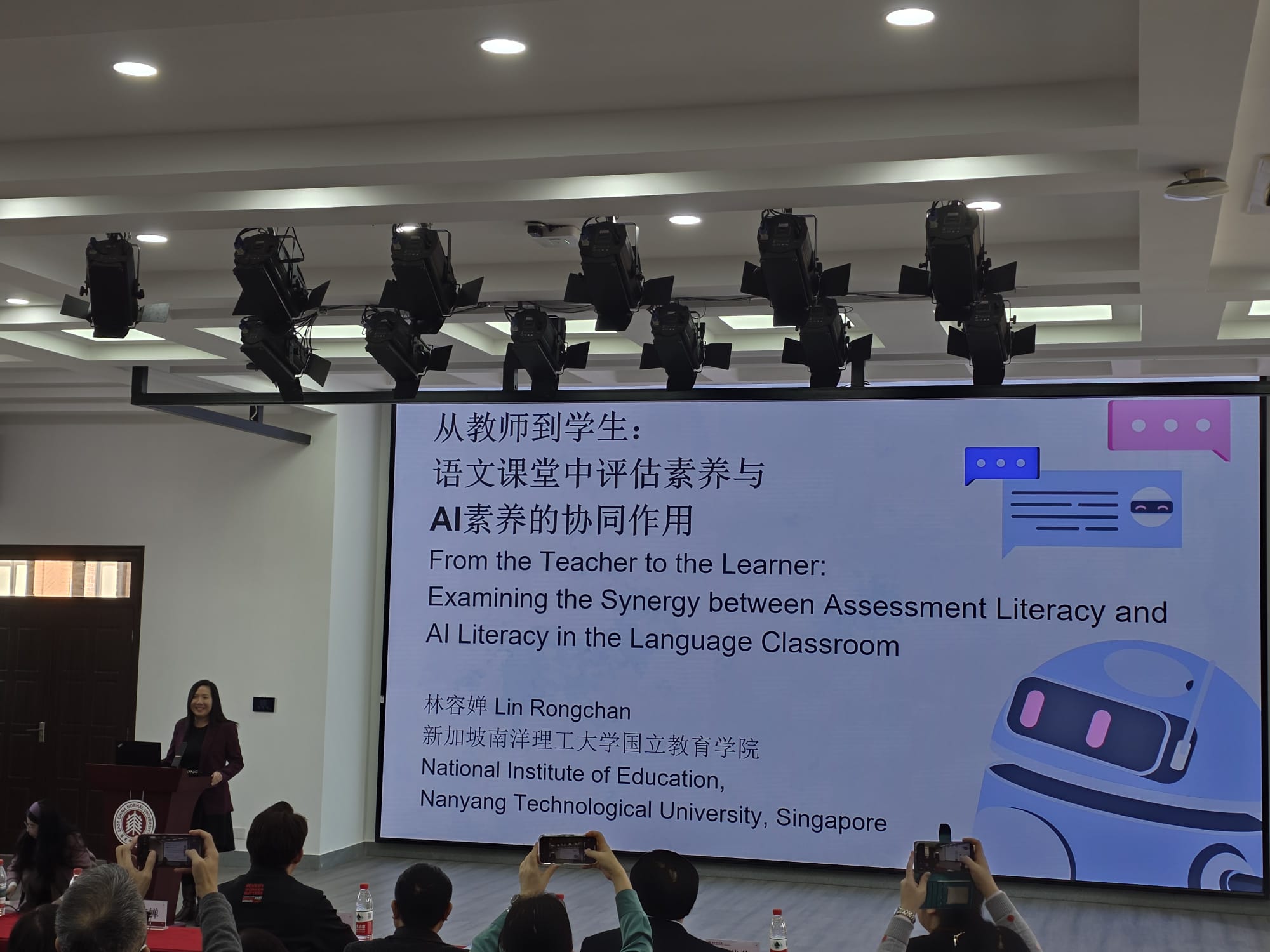
From the teacher to the learner: Examining the synergy between assessment literacy and AI literacy in the language classroom (Keynote: Dr Lin Rongchan)
Dr Lin Rongchan gave an invited keynote talk at the 12th International Forum on Chinese Language Education in Shanghai on 30 November 2025. She emphasized the importance of going beyond a teacher-focused approach to develop learners' assessment literacy and AI literacy concurrently. She also posed a list of questions for practitioners to consider when examining the interplay between assessment literacy and AI literacy. The forum was organized by the Singapore Chinese Teachers’ Union and the School of International Chinese Studies, East China Normal University.

Introduction to Data Literacy (Workshop: Asst/P Tanmay Sinha)
Asst/P Tanmay Sinha has been carrying out a recurring workshop along with Dr. Karen Khor (CRPP) for Singapore teachers (March 2025, June 2025, November 2025) focused on cultivating skills associated with data literacy and the dispositions to meaningfully engage with human-generated and AI-generated data for optimizing classroom orchestration.
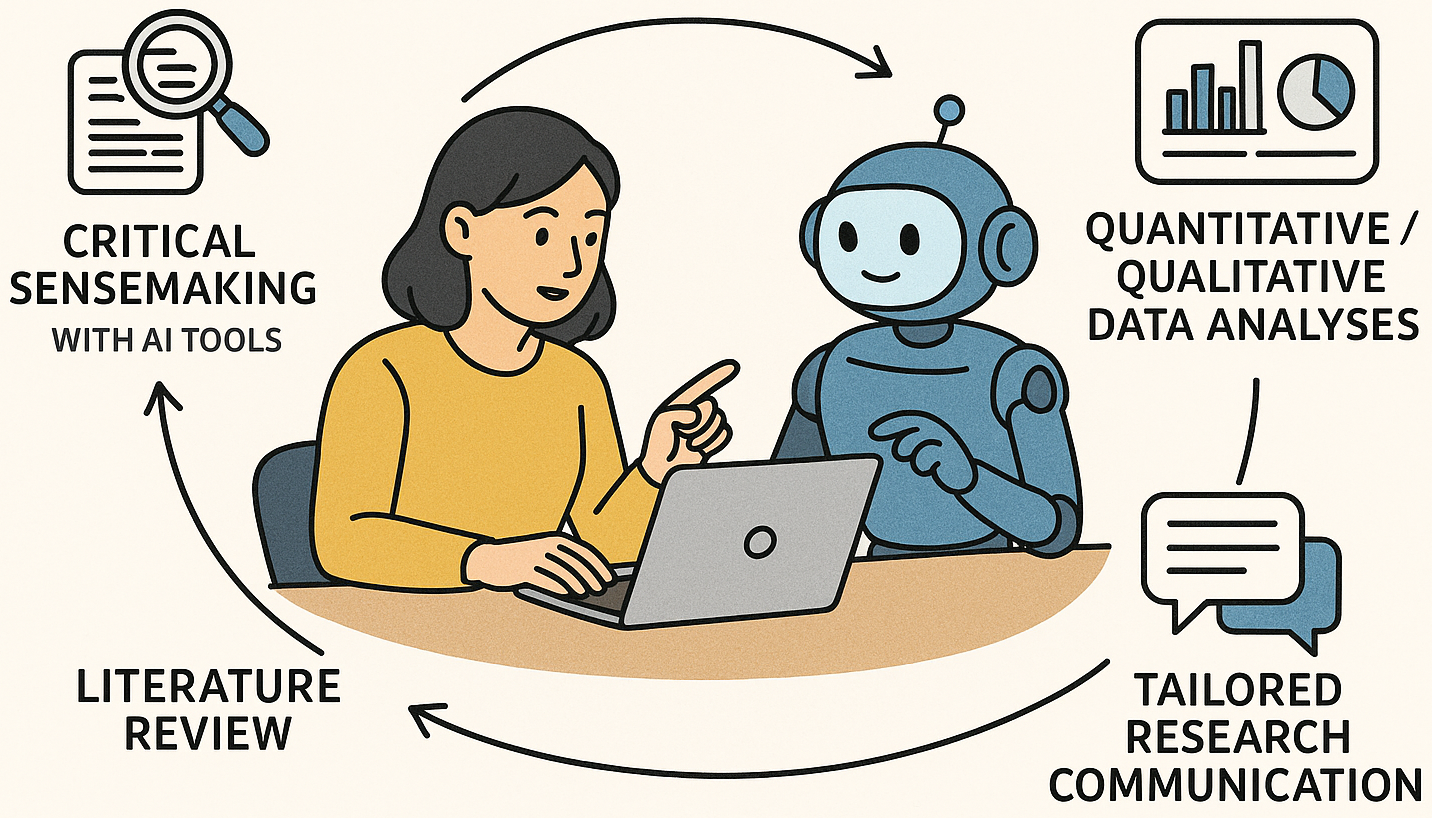
Responsible human-AI collaboration for impactful research practices (Keynote: Asst/P Tanmay Sinha)
Asst/P Tanmay Sinha presented a keynote at the 12th Mid-year Accounting Teachers’ International Conference (MYATIC), Cambodia, October 2025, focusing on critical sensemaking with AI tools for literature review, quantitative / qualitative data analyses, and tailored research communication.

AI-enhanced pedagogical design in tertiary education (Keynote: Asst/P Tanmay Sinha)
Asst/P Tanmay Sinha presented a keynote at the ASEAN Regional AI Forum, 17th ASEAN Accounting Education Workgroup Meeting, Cambodia, October 2025, where he shared practical ways to leverage on GenAI's flaws to deliberately design instructional opportunities in higher education classrooms.
Curiosity and 21st Century Competencies: Role of Generative AI (Keynote: Asst/P Farhan Ali)
Assistant Professor Farhan Ali delivered an invited keynote talk titled “Curiosity and 21st Century Competencies: Role of Generative AI” at a university conference in the Faculty of Education, Chulalongkorn University in Thailand on 22 May 2025, attended by ~100 faculty members and teachers. Subsequent to the keynote talk, he also ran a 4-hr workshop for ~30 faculty members on the use of Gen AI to enhance student learning.
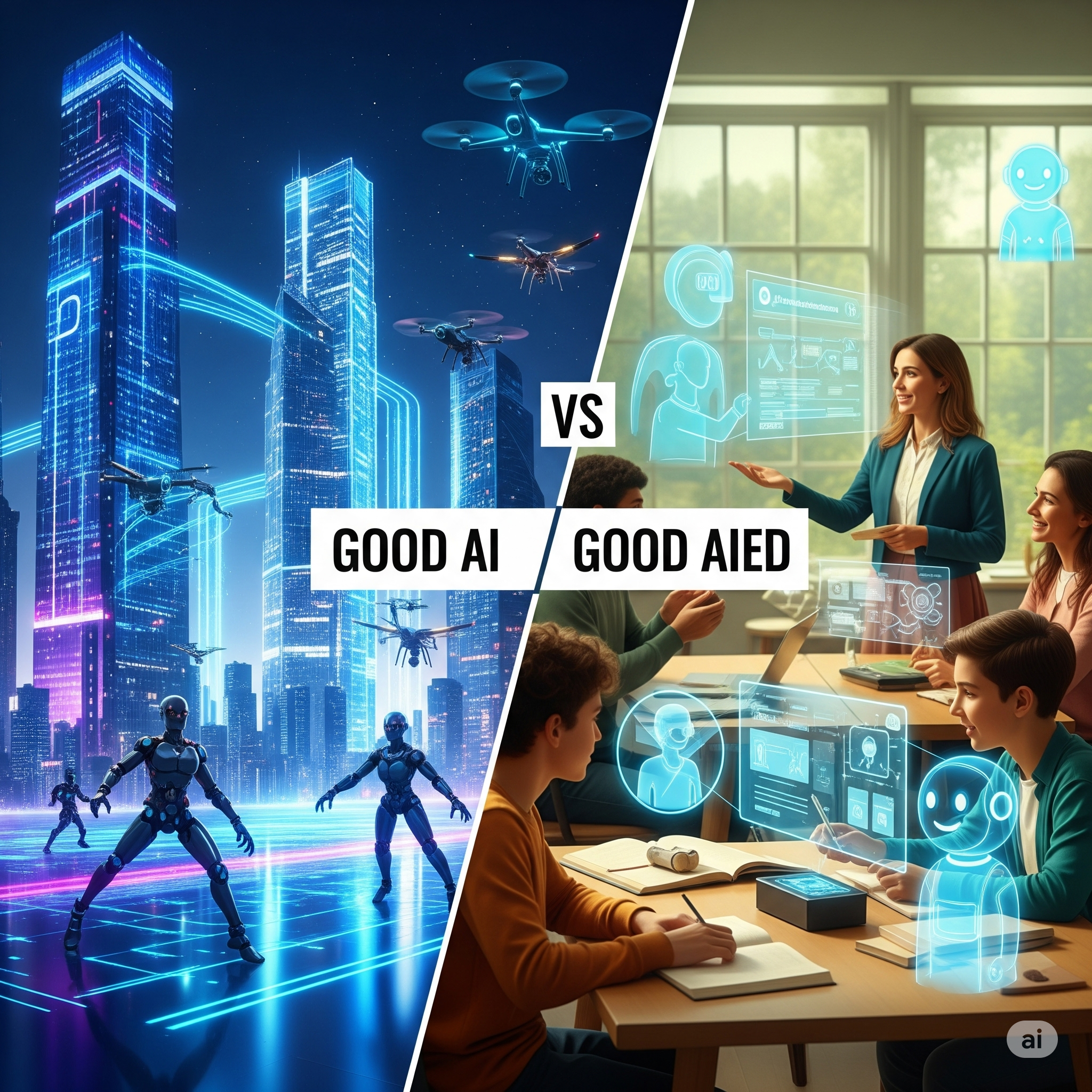
Does good AI equal good AIED? Fundamental requirements for AI-based augmentation to be impactful for learning (Keynote: Asst/P Tanmay Sinha)
Asst/P Tanmay Sinha delivered three impactful AI keynotes at - #1. Innovations in Teaching and Learning (iTL) Conference, AWS Asia Pacific Hub, Singapore, October 2025, #2. Nanyang Polytechnic (NYP) Education Seminar on “Teaching the Skills That AI Can’t: Reimagining Learning in an AI-Pervasive Future”, Singapore, October 2025, #3. AI in Education Forum (AI by Teachers, for Learners), NIE, NTU Singapore, June 2025
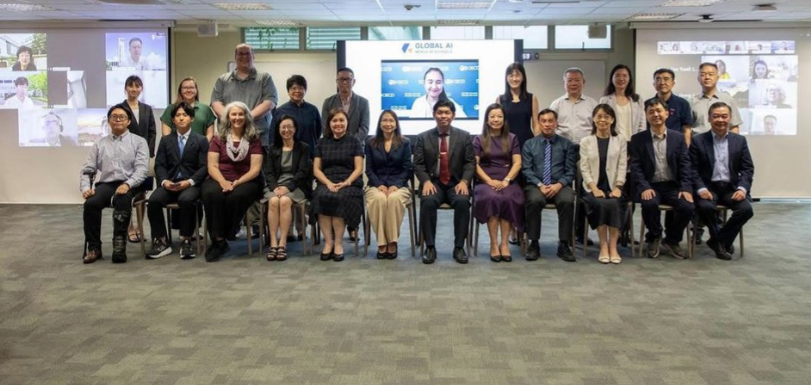
Launch of the Global AI Nexus of Schools and involvement of A/P Chen Wenli and A/P Kelvin Tan
The Global AI Nexus of Schools was launched in Singapore on 4 Aug 2025. It unites 23 schools from seven countries to advance ethical, human-centred AI in education. Supported by OECD, it fosters frontier projects and global learning communities on AI and assessment reform, with expertise from A/P Chen Wenli and A/P Kelvin Tan.
More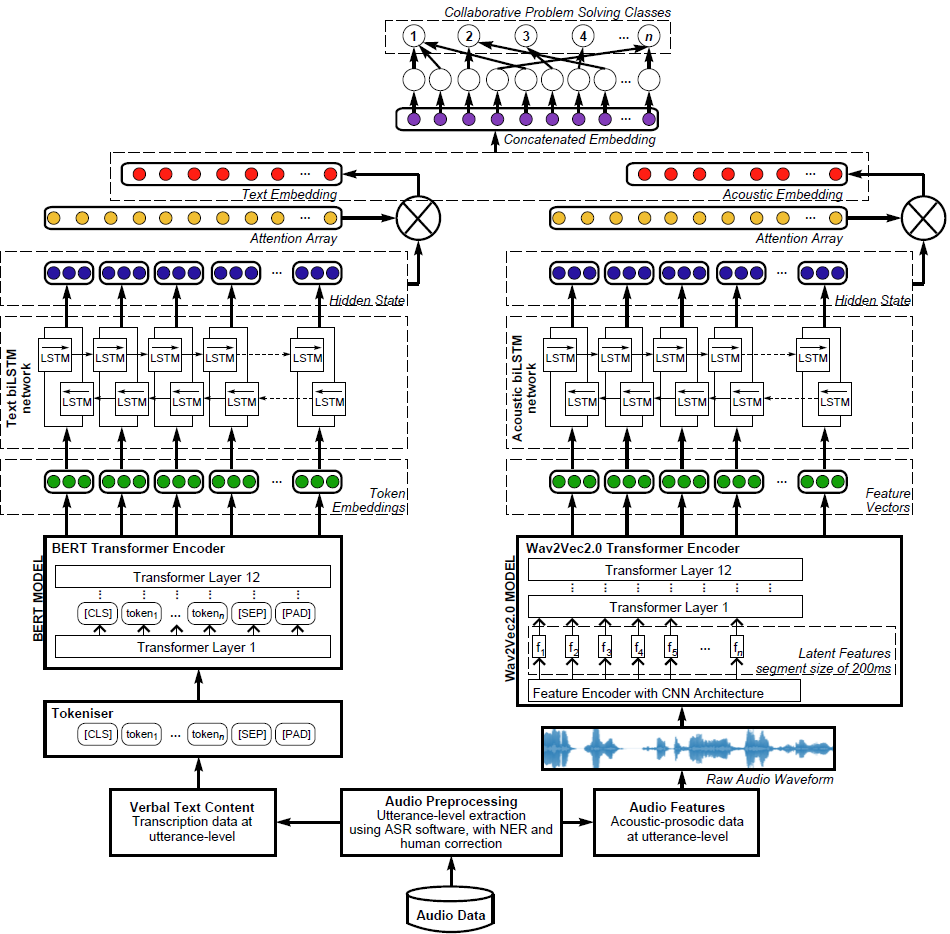
AI for 21CC: Collaborative Problem Solving Diagnosis among Secondary School Students using Multimodal Audio Data (Developed by: Mr Kester Wong)
This study, published in the 26th International Artificial Intelligence in Education (AIED) Conference, discusses how multimodal audio data from students' conversations (aged 14 - 15 years) can be used to perform Collaborative Problem Solving (CPS) diagnosis. This paper was recognised and awarded the ‘Best Student Paper’ at the conference.
More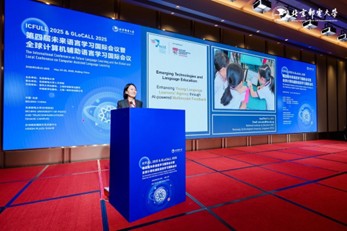
Enhancing Young Language Learners’ Agency through AI-Powered Multimodal Feedback
Invited by the International Conference on Future Language Learning (ICFULL 2025) AND the Global and Local Conference on Computer-Assisted Language Learning (GLoCALL 2025), Asst/Prof Wen Yun delivered a speech titled “Enhancing Young Language Learners’ Agency through AI-Powered Multimodal Feedback” on 24 May 2025.
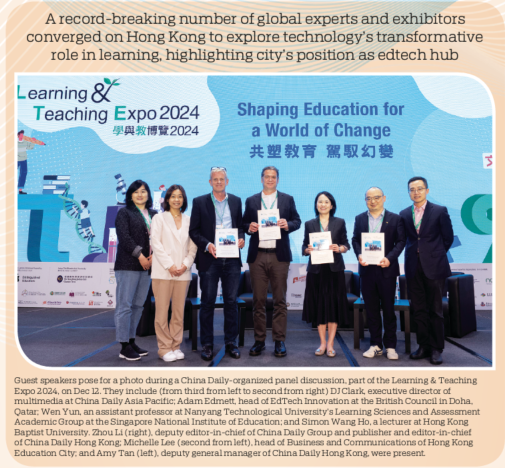
Transforming Language Learning through AI
Asst/Prof Wen Yun was invited to join the panel discussion on “Transforming language learning through AI” hosted by China Daily took place at the Learning and Teaching Expo (LTE) 2024, held at the Hong Kong Convention and Exhibition Centre.
More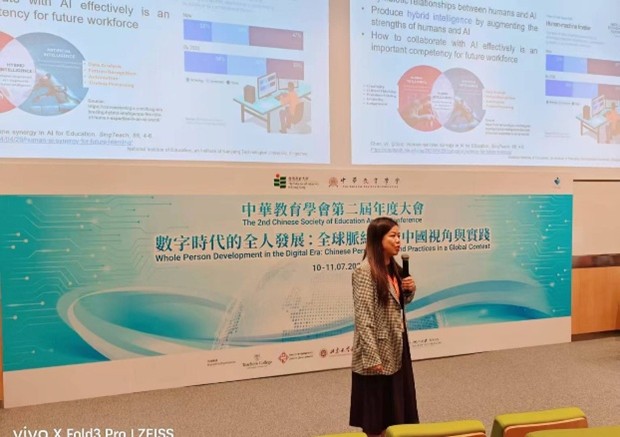
Human-centered AIED for whole person development: Learning Sciences perspectives
A/P Chen Wenli delivered an invite speech titled “Human-centered AIED for whole person development: Learning Sciences perspectives” at 2nd Chinese Society of Education Annul Conference in Hong Kong on 11 July 2025.
More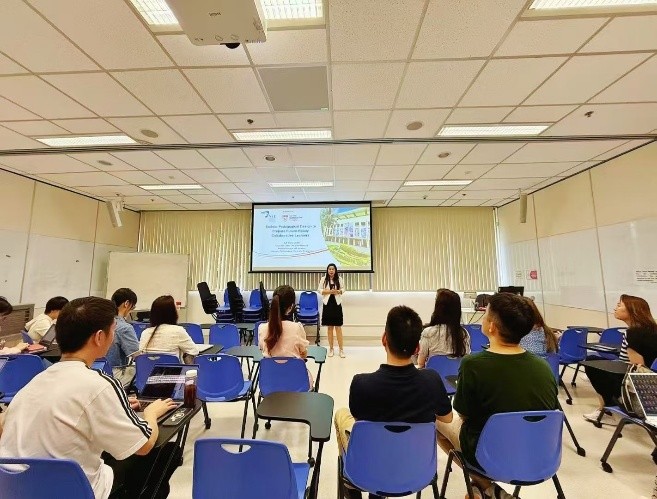
Techno-Pedagogical Design of Human-AI Collaboration in University of Hong Kong
A/P Chen Wenli delivered an invited talk on Techno-Pedagogical Design of Human-AI Collaboration in University of Hong Kong on 9July 2025.
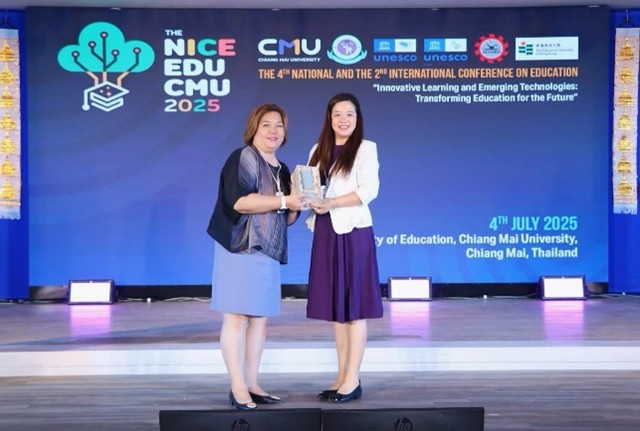
Innovative Learning Practices leveraged by AI technologies
A/P Chen Wenli delivered an invited talk titled ”Innovative Learning Practices leveraged by AI technologies at the 2nd International Conference on Education in Chiang Mai, Thailand on 4 July 2025.
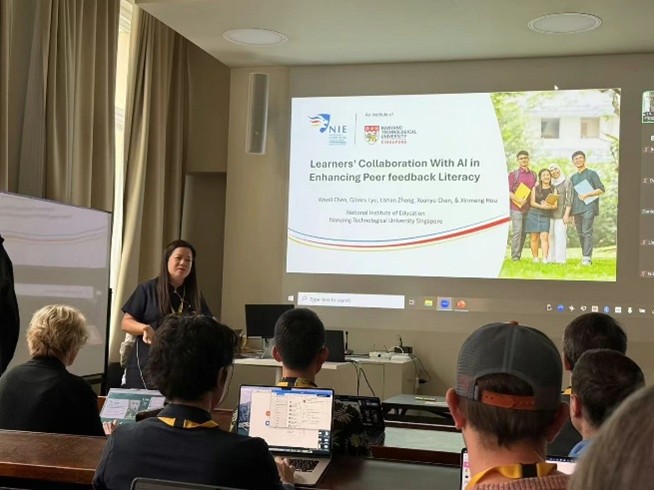
Learners’ collaboration with AI to enhance feedback literacy
A/P Chen Wenli did a presentation titled “Learners’ collaboration with AI to enhance feedback literacy” at International Society of Learning Sciences Annual Meeting 2025 at Helsinki Finland in June 2025.
More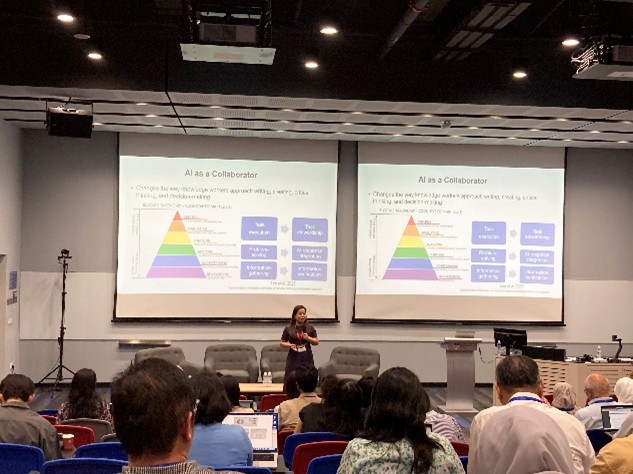
From AI to IA (Intelligence Augmentation): Empowering Learners through Human-Centered AI in Education
Invited by NTU's Institute for Pedagogical Innovation, Research & Excellence (InsPIRE), A/P Chen Wenli delivered a speech titled “From AI to IA (Intelligence Augmentation): Empowering Learners through Human-Centered AI in Education” at NTU Annual Learning and Teaching Conference 2025: From Good to Great. Nanyang Technological University Singapore on 27 May 2025.
More
AI for personalized learning in Singapore
Invited by Ministry of Education of Republic of Korea, A/P Chen Wenli spoke about AI for personalized learning in Singapore at APEC Global Education Reform Conference at Jeju, Korea on 12 Feb 2025.

AI for personalized learning: Perspectives from Singapore
Invited by Kyoto University, A/P Chen Wenli delivered an online speech on “AI for personalized learning: Perspectives from Singapore” at the International Conference on AI, Digital Textbooks and Educational Big Data in Asia 2025 on 12 Feb 2025.
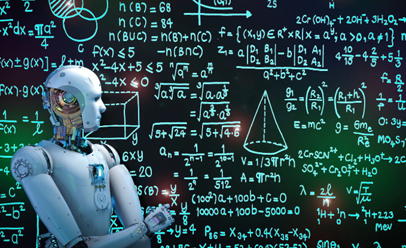
The fascinating world of AI for education (Delivered by: Asst/P Tanmay Sinha
Faculty Development Program, CamEd Business School, Cambodia, January 2025

The fascinating world of AI for education (Delivered by: Asst/P Tanmay Sinha)
AICTE-ATAL Sponsored Faculty Development Program, Guru Gobind Singh Indraprastha University, India, December 2024
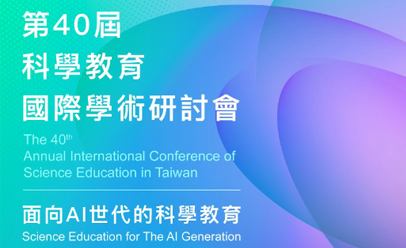
Harnessing AI for Science Education: The Importance of Pedagogical Framing. (Keynote: A/P Tan Seng Chee) - 5 Dec 24
This talk suggests pedagogical framing of using AI for science education as a critical component in AISE research and presents examples of pedagogical framing.
More
Learning from, Learning with, Learning about, and Learning beyond AI. (Keynote: A/P Tan Seng Chee) - 4 Nov 24
In this talk, Dr Tan will introduce other aspects of AIED, including learning with, learning about and learning beyond AI, which apply to both students and teachers.
More
AIED@NTU (Workshop: A/P Shanti Divaharan) - 4 Nov 24
This workshop introduces a proof-of-concept data- and AI-empowered learning environment that provides feedback to the instructors in the form of multimodal learning analytics.
More
Beyond The Hype: Challenges and Opportunities for Artificial Intelligence in Education (Invited Speaker: Asst/P Tanmay Sinha) - 4 Nov 24
AI for education is often oversold. Let's look at the real challenges of turning teaching wisdom into computer code and the potential of AI in helping students learn. I'll talk about what works, what doesn't, and where we should focus our collaborative efforts to make AI a truly helpful tool for teachers, students and researchers.
More
IEAN mini-summit 3 - Policy and Practice in A! Assessment (Singapore Representative: Dr Tay Hui Yong) - 15 Oct 24
AI - Policy and Practice Discussions as Countries Case Studies (Singapore, Norway and Wales)
More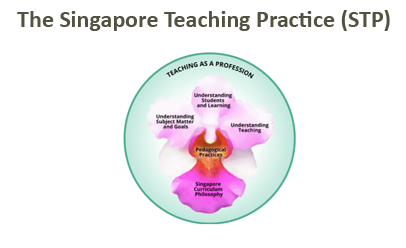
Centre for Assessment & Evaluation (CAE): What Technology-Enabled Feedback Can Do For Us (Speaker: Dr Tay Hui Yong) - 19 -Sep 24
This session provided educators with practical strategies on how to leverage technology to enhance feedback process and improve student learning. Additionally, the session also discussed how the Singapore Teaching Practice (STP) could guide us in shaping feedback for learners.
More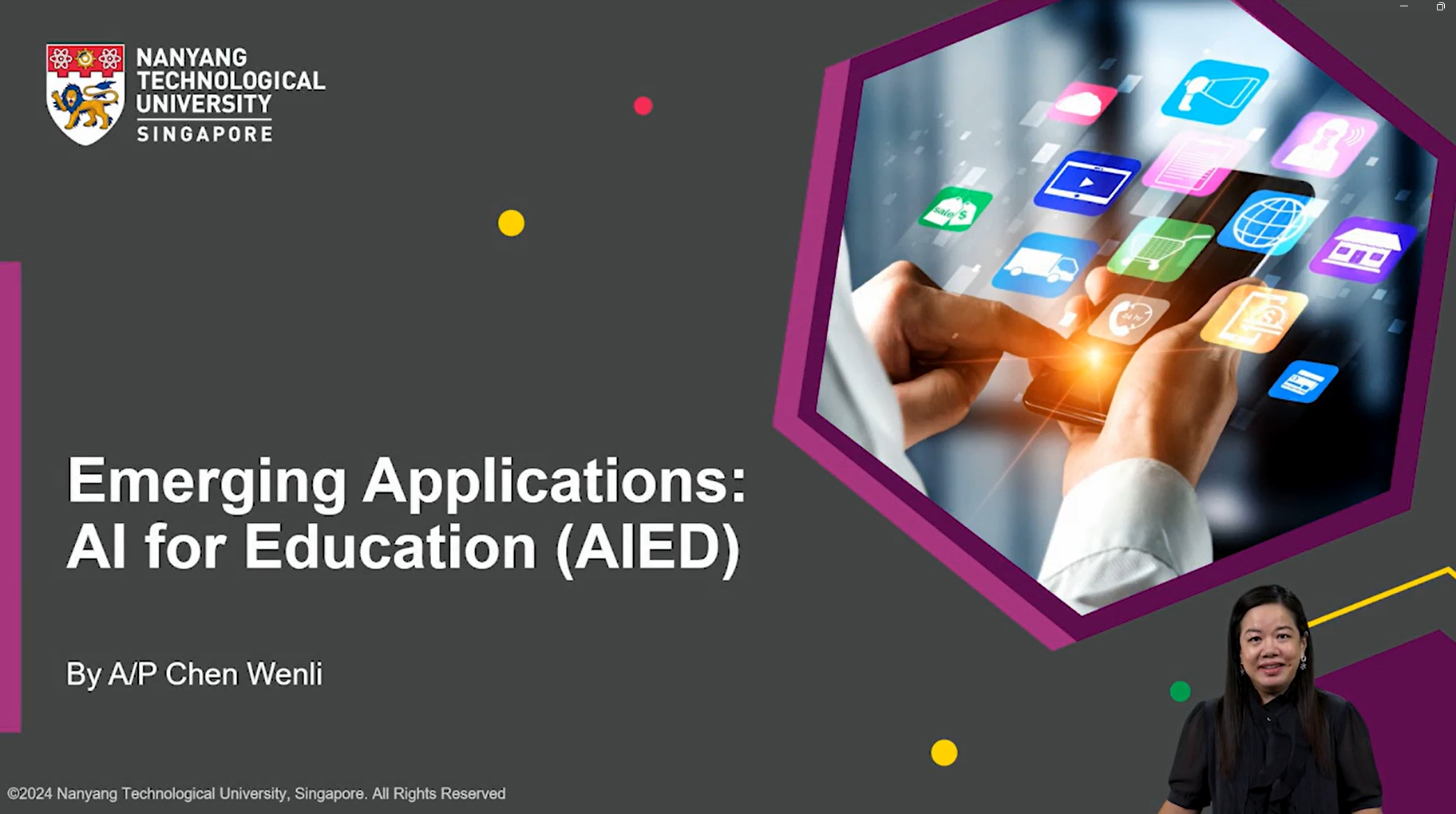
Artificial Intelligence Literacy (Video lecture delivered by: A/P Chen Wenli) - Aug 24
A/P Chen Wenli recorded a video lecturer on AI for Education for NTU Postgraduate Research Interdisciplinary Collaborative Core course GP8000: Artificial Intelligence Literacy. This course is Compulsory for all PhD students (Aug 2024 Intake onwards) of NTU.
Singapore’s Practices and Cases of Innovative Uses of AI in Teaching and Learning: Experience and Insights. (Invited Panelist: A/P Tan Seng Chee) - 28 Aug 24
At the Global Education Innovation Summit (GEIS), more than 200 global education leaders, including scholars, ministers, vice ministers, education policymakers and experts, and international organizations officials will gather to share their experiences and examples of changes in teaching and learning methods.
More
Harnessing the Power of AI for Transformative Education: Empowering Singapore Schools with the Latest AI Tools. (Keynote: A/P Chen Wenli) - 5 Jul 24
A/P Chen Wenli delivered a keynote speech at W1 Cluster ICT Interest Group seminar on "Harnessing the Power of AI for Transformative Education: Empowering Singapore Schools with the Latest AI Tools" at Anglo-Chinese Junior College on 5 Jul 2024.
More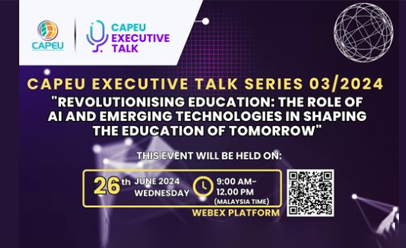
Revolutionizing Education: The Role of AI and Emerging Technologies in Shaping the Education of Tomorrow (Invited Panelist: A/P Tan Seng Chee) - 26 Jun 24
This session delves into the transformative potential of AI and emerging technologies in revolutionizing education. We will explore the challenges and opportunities these innovations bring, discussing strategies for fostering a tech-savvy workforce equipped to drive Asia-Pacific's competitiveness on the global stage.
More
AI Feedback: Moving Beyond the Hype to Integrating It Into a Coherent Feedback Pedagogy. (Author: Dr Tay Hui Yong) - 21 Jun 24
The advent of Artificial Intelligence (A.I.) has brought about more platforms to give automated instantaneous feedback to student writing. This paper reports on the use of one such platform in an after-school tuition program offered to students from financially disadvantaged families.
More
Human–AI Synergy for Future Learning (Editor: A/P Chen Wenli) - Mar 24
A/P Chen Wenli wrote an article titled “Human–AI Synergy for Future Learning” for SingTeach.
More
Empowering Education Through AI: Applications, Innovations and Challenges (online). (Keynote: A/P Tan Seng Chee) - 4 Mar 24
Keynote for A 'Sharqiyah University Centre for Language and Foundation Studies (ASU CLFS) 3rd International Symposium 2024, Demystifying the Role of AI in Teaching and Learning. ASU, Ibra, Sultanate of Oman.
More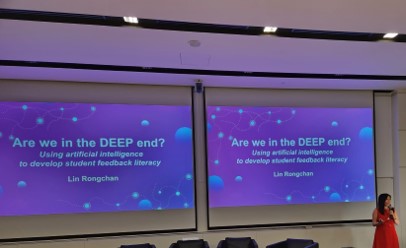
Are we in the DEEP end? Using artificial intelligence to develop student feedback literacy. (Keynote: Ms Lin Rongchan - 9 Sep 23)
Language in Singapore Forum Series: Talking AI, Rethinking Humanity, Singapore University of Social Sciences, Singapore. Speaker: Ms Lin Rongchan
More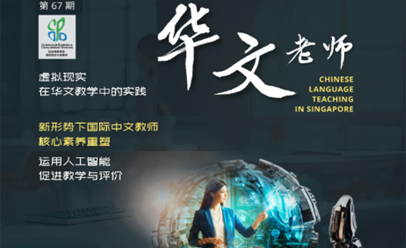
Using AI to enhance teaching, learning and assessment: With illustrative examples from Singapore primary and secondary Chinese language curriculum. (Authors: Ms Lin Rongchan and Ms Koh Li Yun Grace) - 23 Dec 23
Chinese Language Teaching in Singapore, 67, 12-21. (Published by CPDD, MOE, Singapore) Authors: Ms Lin Rongchan and Ms Koh Li Yun Grace
More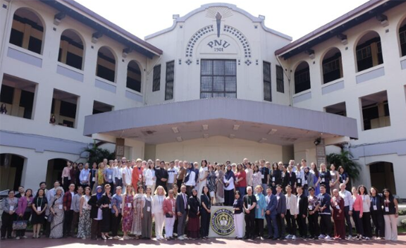
17th ASEF Classroom Network Conference on “Learning about AI and Learning with AI”, 11-15 Nov 2023. Manila, Philippines. (Invited Panelist: A/P Tan Seng Chee) - 11 Dec 23
For over two decades, the ASEF Classroom Network has been providing capacity-building opportunities for collaborative teaching and learning and a platform to explore the potential of cutting-edge EdTech tools and the integration of ESD in secondary, high, and vocational schools in Asia and Europe.
More
Transforming Education with Artificial Intelligence: Promises and Challenges. (Keynote: A/P Tan Seng Chee) - 1 Dec 23
Taiwan Association of Educational Communications and Technology (TAECT) Annual Conference, 1-2 Dec 2023, Taipei, Taiwan.
More