Brain Literacy Initiative Alliance Inaugural International Launch Event: Advancing Brain Research-Informed Education Worldwide!
The Brain Literacy Initiative Alliance (BLIA) hosted its inaugural international launch event on 29 June 2026, bringing together researchers, educators, and advocates from around the world to advance brain research-informed education. The hybrid event was held at the Instituto de Investigaciones Biológicas Clemente Estable (IIBCE), Montevideo, Uruguay, and online, with participants joining globally to explore how neuroscience can inform learning, teaching, and community engagement.
The event was led by Dr. Astrid Schmied, Education Research Scientist at the National Institute of Education, Singapore, and founder of the Brain Literacy Initiative Alliance. The hybrid event was hosted by Dr. María Castelló, Associate Professor of Research at IIBCE, Montevideo, Uruguay. Coordination support was provided by SoLEC member Sandra Chua and Dr. María Castelló, ensuring a seamless and engaging experience for all participants.
BLIA addresses the growing global need for a coordinated, evidence-based approach to understanding how people learn. By connecting researchers, educators, policymakers, and communities, BLIA aims to bridge research and practice, promote brain literacy, and advance education informed by neuroscience.
Highlights from the Event
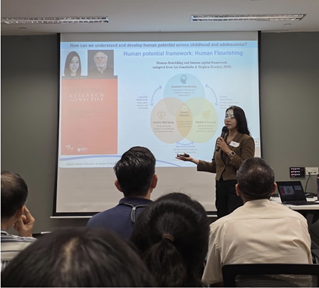
- Dr. Astrid Schmied (National Institute of Education, Singapore) opened the event with an introduction to the BLIA, highlighting its mission to connect global communities, share knowledge, and develop best practices for brain research-informed education.
- Dr. Norberto Garcia-Cairasco (University of São Paulo, Brazil) presented Science, Arts, Education and Society Network – ScienArtES: Current Pluriversal Challenges, showcasing how neuroscience awareness can be promoted through education, arts, and community outreach. The initiative encourages empathy, ethical responsibility, and citizenship by bringing neuroscience beyond universities into schools, public spaces, and underserved communities.
- Dr. Pâmela Mello-Carpes (Federal University of Pampa, Brazil) shared the POPNeuro Program: Bridging Neuroscience and Education Through Outreach and Teacher Training, demonstrating how evidence-based neuroscience outreach and teacher development can improve scientific literacy, correct neuromyths, and strengthen teaching practices.
- Dr. Janet Dubinsky (University of Minnesota, United States) conducted a masterclass on BrainU: Process, Content, Impact, highlighting over 25 years of work supporting educators in applying neuroscience concepts, including synaptic plasticity, agency, and social-emotional learning, to enhance classroom experiences.
- Dr. Annie Brookman-Byrne (BOLD, Jacobs Foundation, Switzerland) explored What’s the best way to communicate science to educators and caregivers?, sharing lessons from BOLD’s evolution as a platform communicating the science of children’s learning and development through articles, interviews, podcasts, videos, animations, illustrations, and newsletters.
- Dr. María Castelló (IIBCE, Uruguay) presented ANT, ANT4Kids & LDEN contributions to neuroscience literacy across the educational and societal spectrum, highlighting initiatives that use workshops, demonstrations, artistic interventions, and public engagement activities to make neuroscience accessible to children, families, educators, and communities.
Impact & Takeaways
The inaugural BLIA international launch event demonstrated the power of global collaboration in advancing brain literacy and neuroscience-informed education. Through diverse initiatives spanning five continents, participants explored innovative approaches to connecting research, education, and society.
The event highlighted the importance of making neuroscience accessible across all stages of life — from young learners and teachers to families, communities, and lifelong learners. By fostering collaboration between researchers, educators, and outreach networks, BLIA continues to champion evidence-based approaches that support learning, well-being, and human potential worldwide.
Under the leadership of Dr. Astrid Schmied, BLIA continues to build a global community dedicated to transforming education through neuroscience, strengthening connections between research and practice, and promoting lifelong brain literacy.
.tmb-listing.jpeg?sfvrsn=2dc9ee39_1)
.tmb-listing.jpeg?sfvrsn=774cc2b7_1)