
Designing a Systemic STEM Learning Ecosystem for Singapore Students
Temasek Foundation - Systemic Design of STEM Programme in Singapore
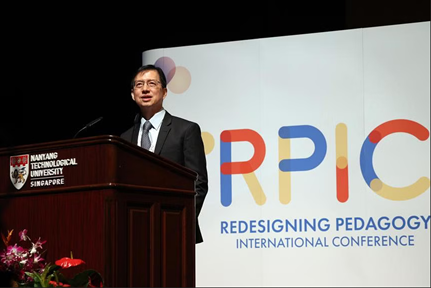
"Every student should have access to quality STEM education that can prepare them for the future workplace ... We are supporting a collective and holistic STEM learning pathway for students’ learning.” — Stanley Lee, Temasek Foundation.
"We have to be systematic and cohesive in rendering our expertise that support our students to succeed as future STEM leaders.” — Assoc Prof Teo Tang Wee, Co-Head, meriSTEM@NIE.
Excerpt from: NIE Collaborates with Temasek Foundation to Launch A Three-Year Programme on The Systemic Design of STEM in Singapore
Project Team
PI: A/P Teo Tang Wee
Co-PIs (from meriSTEM@NIE): A/P Tan Aik Ling, Mr Ong Wei Xiang Adrian, Mr Mabulo Sherwin John, Ms Lim Yu Shan
Project Description
The EPIC-STEM Programme (Enterprising, Progressive, Innovative, Creative STEM Learners) is a three-year initiative fully funded by the Temasek Foundation and organised by meriSTEM@NIE. It is designed to cultivate strong STEM capital among Secondary 3 students by exposing them to connected learning opportunities across schools, institutes of higher learning, and industry. STEM capital encompasses not only technical knowledge but also meta-knowledge (problem-solving, critical thinking, collaboration), ICT skills, and humanistic capacities (cultural sensitivity, empathy, inclusivity). The students’ progress from foundational classroom learning to authentic workplace experiences, developing robust portfolios that showcase their conceptualisation, implementation, and real-world application of STEM projects.
EPIC-STEM embodies an ecosystemic and co-created approach in which educators, STEM professionals, and students actively co-design and refine learning experiences. Through rich partnerships, the programme builds high-impact networks that connect schools, tertiary institutions, and industry, thereby creating meaningful opportunities for applied STEM learning and professional growth.
Preliminary findings point to increased student confidence, competence in digital literacy and engineering design, and enhanced motivation to pursue STEM pathways.
Project Implications
Findings from the programme highlighted the importance of systemic partnerships between schools, IHLs, and STEM industries that help students develop STEM capital through systemic and sustained efforts. This project will yield a model that will guide STEM partnerships in future.
Resources
Project website: https://www.meristem.site/outreach/epic
Featured in the following:
- NIE Launches Three-Year STEM Programme for Secondary Schools | NIEWS #124
- Making Strides in STEM Education | NIEWS #126STEM Learning Journeys under the NIE-Temasek Collaboration Kick Off | NIEWS #125
- NIE Collaborates with Temasek Foundation to Launch A Three-Year Programme on The Systemic Design of STEM in Singapore
- 三年制横跨学校与职场阶段 逾百中三生参与STEM跨校提升课程 | National Institute of Education (NIE) | NTU Singapore
Selected Articles:
- Teo, T. W., Mabulo, S. J. S. B., Tan, K. C. D., Ho, J. X. M., & Tan, X. X. T. (2025). Epistemic infrastructure in STEM hackathons. Journal of Science Education and Technology. https://doi.org/10.1007/s10956-025-10203-6
- Chang, J., Teo, T. W., & Tan, A. L. (2025). Formation and Influence of Epistemic Norms in Integrated STEM Problem-Solving: A Study of Singapore Secondary Students’ STEM Inquiry. Research in Science Education. https://doi.org/10.1007/s11165-024-10222-0
.tmb-listing.jpg?sfvrsn=15a05377_2)

.tmb-listing.jpg?sfvrsn=6330dcae_2)