Singapore Malay Pronunciation: When the Standard Is No Longer Fully Standard
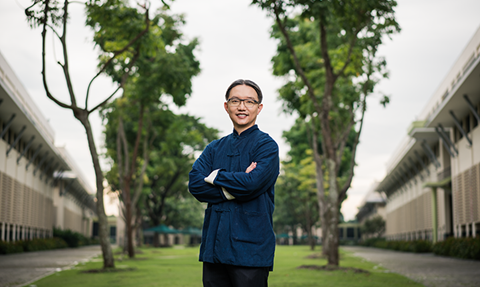
By Mukhlis Abu Bakar
What makes the Malay spoken in Singapore different from the Malay spoken in Malaysia or elsewhere?
When discussing the distinctive features of language in Singapore, we often focus on words borrowed from other languages. We know that Singapore English, or Singlish, uses many Malay words, such as makan, lepak, alamak and shiok (from syok).
But have we ever asked how life in Singapore has, in turn, changed the Malay we speak?
These changes affect not only our choice of words or sentence structures, but also how we pronounce Malay words.
Indeed, several studies I have conducted show that a hybrid form of pronunciation, combining features of Sebutan Baku (the prescribed standard pronunciation) and Johor-Riau pronunciation, is becoming increasingly established among Singapore Malay speakers.
More intriguingly, this change may involve not only how we pronounce words, but also how we understand and recognise what counts as Sebutan Baku.
Two pronunciation varieties and a deliberately constructed system
To understand this situation, we first need to distinguish between pronunciation varieties that have developed naturally within Malay communities and Sebutan Baku, which was introduced through language policy.
Standard Malay has traditionally had two main pronunciation varieties: the /a/ variety spoken in the northern Malay Peninsula, Sabah and Sarawak; and the /ə/ variety, or Johor-Riau pronunciation, which originated in the Johor-Riau dialect, developed naturally as a standard pronunciation, and is widely used, including in Singapore.
Both are native pronunciation varieties that developed naturally within their speech communities. Each has its own phonological system.
Sebutan Baku is different in nature. It is not a native pronunciation variety that evolved naturally within a community, but a deliberately constructed system based on the principle that each letter represents one sound and that words should be pronounced as they are spelt.
For example, in Johor-Riau pronunciation, saya and kita are usually pronounced saye and kite, with the sound /ə/ at the end. In Sebutan Baku, the final letter a is pronounced /a/, in accordance with its spelling.
However, the differences between Sebutan Baku and Johor-Riau pronunciation extend beyond the letter a. They also involve the pronunciation of the vowels i and u in final closed syllables, as in balik and datuk.
In 1993, Singapore formally introduced Sebutan Baku into Malay language education. Malaysia also implemented the same policy, but reverted to Johor-Riau pronunciation in 2000. Singapore, by contrast, has retained Sebutan Baku in education and formal broadcasting.
Consequently, Singapore’s Malay community has lived with two pronunciation systems of different origins for more than three decades: Johor-Riau pronunciation, rooted in everyday speech, and Sebutan Baku, introduced through education and formal institutions.
The interaction between the two has produced an interesting development: the emergence of a hybrid pronunciation that does not fully conform to either system.
When pronunciations mix
In a study I conducted with Maisarah Zulkifly, we examined the pronunciation of several political leaders and television and radio newsreaders as they read prepared texts. We also examined radio presenters’ spontaneous speech.
These speakers were selected because they are expected to use Sebutan Baku, particularly in formal settings.
However, our analysis showed that their pronunciation did not fully conform to the Sebutan Baku system.
Instead, it combined features of Sebutan Baku and Johor-Riau pronunciation, which we termed hybrid pronunciation.
One particularly interesting finding was that adherence to Sebutan Baku varied across vowels.
Speakers were generally more consistent in pronouncing the letter a according to Sebutan Baku than the letters i and u in final closed syllables.
In other words, a person might pronounce saya and kita with the a sound prescribed by Sebutan Baku, while retaining Johor-Riau features when pronouncing words such as balik and datuk.
Since Sebutan Baku is based on the principle of pronouncing words as they are spelt, speakers should find it easier to follow this system when reading a written text than when speaking spontaneously. Yet the study found inconsistencies even when speakers read prepared texts. Clearly, having a written text does not necessarily ensure consistent use of Sebutan Baku.
These inconsistencies become more pronounced when speakers have no written text to follow. In another study I conducted with Sa’eda Buang, involving Malay language teachers and secondary school students, we found that the use of Sebutan Baku in classroom interactions was also inconsistent.
This shows that hybrid pronunciation is not simply a feature of casual speech or a habit among speakers who have never learnt Sebutan Baku.
It also occurs among those who have been exposed to Sebutan Baku, and in situations that call for its use.
What are we actually hearing?
I recall a conversation with a Malay minister who expressed admiration for a younger politician’s Sebutan Baku.
What made this comment interesting was that the politician was among the speakers whose pronunciation we had analysed in our study.
His pronunciation did indeed conform almost entirely to Sebutan Baku—but only for the letter a. He did not show the same consistency when pronouncing i and u.
In fact, for these two vowels, his pronunciation was less consistent with Sebutan Baku than that of the minister who praised him, who happened to be another speaker in our study!
This experience gave me pause.
Could Singapore Malays’ understanding of Sebutan Baku be focused primarily on the pronunciation of the letter a?
When someone says saya rather than saye, or kita rather than kite, we immediately assume that the person is using Sebutan Baku.
But what about the pronunciation of i and u in words such as balik and datuk? Do we pay the same attention to these two vowels?
If not, this may help explain why hybrid pronunciation persists, even among speakers regarded as good models of Sebutan Baku.
Of course, one personal experience is insufficient to establish how the community as a whole evaluates pronunciation. This requires more systematic research into speech perception.
Nevertheless, the experience raises an intriguing possibility: we may have developed not only a hybrid way of pronouncing Malay, but also a selective understanding of what Sebutan Baku actually entails.
In other words, change may be taking place not only in how we speak, but also in how we listen to and evaluate others’ speech.
Pronunciation and Singapore Malay identity
These changes in pronunciation also raise questions about linguistic identity.
Johor-Riau pronunciation has long been used by Singapore’s Malay community. It is part of a spoken heritage that connects us with Malay communities in the southern Malay Peninsula and the Riau Islands.
Interestingly, however, the hybrid pronunciation emerging among Singapore Malay speakers now displays features whose sound qualities are closer to the /a/ variety spoken naturally in the northern Malay Peninsula.
It must be stressed that this hybrid pronunciation is neither Sebutan Baku nor the native /a/ variety. It is the product of the interaction between Sebutan Baku and Johor-Riau pronunciation within Singapore’s linguistic environment.
Herein lies a paradox.
Sebutan Baku was introduced as a pronunciation system based on spelling. Yet, after more than three decades of implementation, the pronunciation that has developed among Singapore Malay speakers is not fully Sebutan Baku. Instead, the emerging hybrid resembles another Malay pronunciation variety that has not traditionally been part of the Singapore Malay community’s speech.
Without realising it, we may be gradually moving away from a pronunciation variety that has long been part of our linguistic identity, towards one that, in some respects, more closely resembles the speech of other Malay communities.
This does not mean that Singapore Malays are deliberately abandoning Johor-Riau pronunciation or adopting the /a/ variety of the northern Malay Peninsula.
The change arises from the interaction between two pronunciation systems.
It is possible that, from the outset, speakers accustomed to Johor-Riau pronunciation—including those expected to model Sebutan Baku—did not fully master the new system. The resulting hybrid pronunciation may then have become a model that other speakers followed.
This development also raises a question worth considering: as the way we pronounce Malay changes, does our sense of ourselves as Singapore Malay speakers change too?
Towards a distinctive Singapore Malay pronunciation?
When discussing hybrid pronunciation, we need to distinguish between two issues.
The first is how closely a speaker follows the prescribed Sebutan Baku system.
The second is how Malay is actually spoken within the community, including changes arising from education, social interaction and everyday language use.
Both questions matter, but they do not necessarily lead to the same conclusions.
From the perspective of language education, inconsistent pronunciation may be viewed as a problem of proficiency in Sebutan Baku.
From a sociolinguistic perspective, however, recurring pronunciation patterns that become increasingly established within a community also merit examination as part of language change.
The more interesting question, therefore, may extend beyond whether Singapore Malays are using Sebutan Baku correctly.
Has the interaction between Sebutan Baku, established through language policy, and Johor-Riau pronunciation, rooted in community speech, produced a new Singapore Malay pronunciation norm—a hybrid that differs from both, yet in some respects more closely resembles the /a/ variety that occurs naturally elsewhere?
If so, how should we understand it?
Is hybrid pronunciation merely a departure from the prescribed standard? Or is it a natural adaptation to our linguistic environment that may eventually become a distinctive feature of Singapore Malay speech?
These questions cannot yet be answered conclusively.
Nevertheless, this development reminds us that language change is not solely the result of natural processes. Language policy can also influence how a community speaks, sometimes with unexpected consequences.
In Singapore, the introduction of Sebutan Baku has contributed to the formation of a hybrid pronunciation that is moving increasingly away from Johor-Riau pronunciation, a variety that has long been part of the Singapore Malay community’s linguistic identity.
The distinctiveness of Singapore Malay may lie not only in the words we use, but also in the sounds we produce, how we recognise those sounds, and the meanings we attach to them.
Ultimately, changes in pronunciation are about more than speech sounds.
They are also about history, education, perception and identity—how we speak, how we listen, and how we understand ourselves as Singapore’s Malay community.
Further reading
Readers who wish to learn more about the studies discussed in this article may refer to the following publications. Original publication titles are retained below.
Mukhlis Abu Bakar (2019). Sebutan Johor-Riau dan Sebutan Baku dalam konteks identiti masyarakat Melayu Singapura. Issues in Language Studies, 8(2), 61–78.
Mukhlis Abu Bakar & Maisarah Zulkifly (2023). Perbandingan Sebutan Hibrid dalam Wacana Lisan Berskrip dan Wacana Lisan Spontan di Singapura: Analisis Fonetik. Jurnal Bahasa, 23(2), 259–288.
Mukhlis Abu Bakar & Sa’eda Buang (2025, August). Sebutan Baku (SB) in the Secondary School Classroom [Sebutan Baku di Bilik Darjah Sekolah Menengah]. Knowledge Resource Bank (SingTeach), 93, 1–10.
The author is Head and Associate Professor, Asian Languages and Cultures Department, National Institute of Education, Nanyang Technological University. His doctoral research focused on speech production and perception. The views expressed are his own and do not necessarily reflect the position of the institute.
Read the original article on Berita Minggu.
.tmb-listing.jpg?sfvrsn=1a71f9dd_2)