Translation in Transition: AI, Bilingualism and the Future of Language Expertise
Artificial intelligence is transforming translation and multilingual communication, changing both the work performed by translators and the forms of human expertise that will remain most valuable.
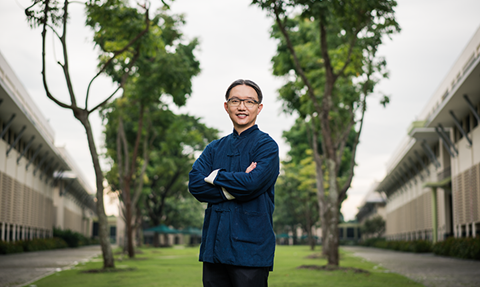
Associate Professor Mohd Mukhlis Abu Bakar, Head of NIE’s Asian Languages and Cultures Department, discussed these developments at the National Translation Committee Conference 2026 on 26 September.
In his plenary presentation, A/P Mohd Mukhlis identified three major shifts in translation: from translating language to mediating meaning; from language proficiency to multilingual judgement; and from human translation to human-AI collaboration.
While AI can perform many routine translation tasks quickly and efficiently, translation involves more than replacing words in one language with words in another. Translators must interpret intentions, understand relationships and contexts, anticipate an audience’s needs and negotiate cultural meanings.
Large language models can produce fluent and plausible text, but they do not fully understand human social relationships, institutional histories, political sensitivities or lived cultural experiences. This is particularly important in multilingual societies such as Singapore, where communication frequently relies on shared knowledge beyond the words appearing in a text.
A/P Mohd Mukhlis cautioned that one of the greatest risks may not be a visibly poor translation, but the unquestioning acceptance of a translation that sounds fluent. Fluency does not necessarily mean that the original meaning has been conveyed accurately.
Instead of asking whether humans or AI are better translators, he suggested examining their different contributions. AI offers speed, consistency, scale and access to multiple languages. Humans provide ethical judgement, cultural understanding, contextual interpretation and accountability.
Translators may consequently spend less time producing initial drafts and more time designing prompts, evaluating AI-generated content, refining texts, preserving the original voice, resolving ambiguities and ensuring fairness. The profession could increasingly involve communication design, quality assurance and intercultural mediation.
These changes have important implications for language education. Strong language proficiency remains essential because users need sufficient knowledge to judge the quality of AI-generated translations. Students also require cultural competence, critical literacy, AI literacy and ethical judgement.
Schools can support these capabilities by giving students more opportunities to experience and use languages meaningfully beyond the classroom. Learners should be taught not only how to use AI, but also when to question, challenge and improve its outputs.
A/P Mohd Mukhlis argued that bilingualism should be understood more broadly than proficiency in English and a Mother Tongue language. It should enable people to understand different ways of thinking, communicate across cultural boundaries and participate meaningfully in a multilingual society.
AI may make communication faster, but it cannot by itself create mutual understanding, social harmony or intercultural trust. The goal should therefore be to develop multilingual professionals who can guide the responsible use of AI and ensure that technology serves human communication, not the other way around.
Read the original article from Berita Mediacorp here.