When Losing One’s Mother Tongue No Longer Feels Like a Loss
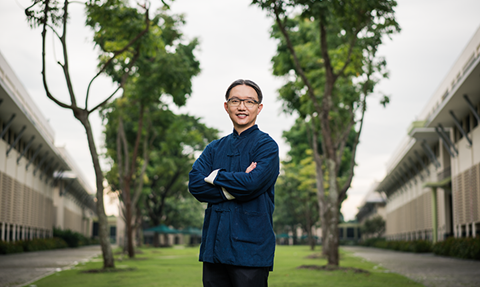
In a commentary for Berita Harian, Associate Professor Mohd Mukhlis Abu Bakar, Head of NIE’s Asian Languages and Cultures Academic Group, reflected on the changing relationship between language and identity in Singapore.
A/P Mohd Mukhlis observed that many young Malay Singaporeans are now more comfortable using English than Malay in their daily lives. Although they may remain able to speak Malay, it may no longer be the language they instinctively use for friendships, learning, humour, arguments or expressing their thoughts and emotions.
For those who continue to use Malay regularly, this shift can feel like a significant cultural loss. However, young people who have grown up primarily using English may not share that sense of loss. English may feel like their own language, while Malay, despite being officially designated their Mother Tongue, may be experienced more as a second language.
A/P Mohd Mukhlis challenged the familiar saying that losing a language means losing one’s ethnic identity. History shows that communities can lose their heritage languages while retaining strong identities, cultures and a sense of collective belonging. Malay Singaporeans would therefore not cease to be Malay even if Malay were no longer the principal language of the majority.
The more important question, he argued, is what form Malay identity would take if the language were no longer regarded as one’s own. Language is more than a tool for communication. Its grammar, vocabulary and expressions carry memories, humour, values, cultural references and particular ways of understanding relationships and experiences.
Turning to Singapore’s bilingual policy, A/P Mohd Mukhlis acknowledged its significant achievements. English has provided Singaporeans with a common language across ethnic groups and connected them with education, science, international commerce and the wider world.
However, the country’s linguistic environment has changed considerably since the policy was introduced. English is now used not only in schools and workplaces, but increasingly among friends and within families. For many children, it is the first language through which they encounter and understand the world.
This may produce Singaporeans who are technically bilingual but relate very differently to their two languages. One language is lived and embedded in everyday experience, while the other is principally studied for lessons, examinations, cultural occasions or communication with older family members.
A/P Mohd Mukhlis suggested that it may be timely to reassess Singapore’s model of bilingualism—not because it has failed, but because the country’s linguistic circumstances have evolved. Singapore should consider whether Mother Tongue languages have sufficient space to be used meaningfully beyond the classroom in intellectual, social and cultural life.
He added that this responsibility extends beyond schools. Families, community organisations, cultural institutions, the media and language users all have a part to play in keeping these languages relevant and lived.
Future generations will adapt to linguistic change and develop new forms of identity. The question, A/P Mohd Mukhlis concluded, is whether a society in which Mother Tongue languages are learnt but seldom lived is the outcome Singapore wants from its bilingual policy—and whether this is the direction it wishes to take while it still has a choice.
Read the entire commentary at Berita Harian here.