Knowledge Building in Education
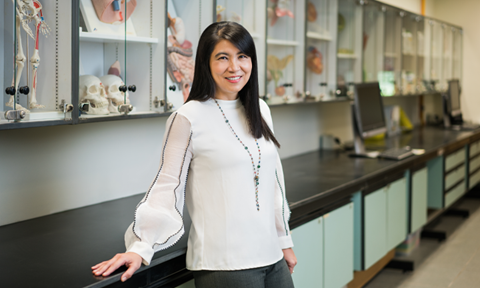
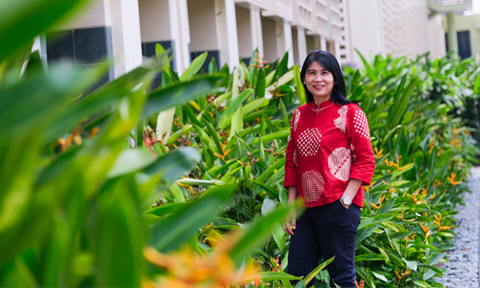
The concept of knowledge building values creative work with ideas and community knowledge. While it might not be a new concept, not many Singapore schools currently apply this approach in their classroom practice. OER Senior Research Scientist Dr Teo Chew Lee, founder of Knowledge Building Singapore, a knowledge building community for teachers who seek to mature in their understanding of knowledge building research and practice, shares with us why knowledge building is important in the knowledge age society where innovations are pervasive. Chew Lee is also guest-editing an upcoming issue of SingTeach that looks deeper at knowledge building in Singapore education and research.
Q: How did you land yourself in education research and in particular, in the area of knowledge-building?
For a start, I never planned to do what I am doing now – it is very much one thing leading to another. I started out as a Science teacher who spent a long time figuring out why it is a struggle to get across some of the science concepts to students. When I pursued a course in Master of Arts (Instructional Design and Technology), I was introduced to Knowledge Building (KB). After the course, I applied the theory back to the Normal (Technical) class I was teaching then and I was amazed at what the approach did to my class. There were significant shifts in their engagement, motivation and learning within quite a short period of time.
More importantly, as I was engaging students in working with their ideas in the process of KB, I not only experienced a change in myself as a teacher and learner, but I also began to see the value of my questions and ideas. This gave me courage to ask questions even though it might make me feel stupid at times. While I am respective of authoritative knowledge, I also understand that there is always space to push our understanding a little bit further. This was a huge turning point for me, having grown up as an average student in a Singapore classroom and being told repeatedly to ask only “good” or “clever” questions. I think that was part of the reason why I decided to do a PhD because I felt there were knowledge in education that can be built-on further.
Back to what I said earlier about one thing leading to another: I think the people and the community around me is another major factor that led me to doing education research. I am really grateful to have the opportunity to meet brilliant and generous researchers who have mentored me and more importantly, trusted in my abilities that I have never imagined. There are also amazing teachers and school leaders who have inspired me so much and make my work meaningful. Of course, over the years, it has been the students who kept the KB work going. We have students who did KB in science questioning why they weren't engaged in the same way in their Geography lessons.
The work that I am doing on knowledge building makes me stronger in withstanding never-ending criticism and nay-sayers, and this actually strengthens my conviction to want to do more.
Q: Having been involved in various aspects of knowledge building research and activities with schools, what is the one thing that stood out most to you in terms of the way teachers teach and students learn?
One thing that stood out for me is that our teachers and students have immense potential to work creatively with ideas. However in general, this doesn’t come to us naturally. Teachers are more comfortable with set routines and structures that they can follow. In addition, the common phrases I often hear from teachers who were starting out in KB were things like: “I don’t think they (students) can do this”, or “I think they (students) will be confused”. This exhibits our tendency to underestimate our students’ abilities.
We have since seen sustained shifts in teachers and students in KB classes in these few areas, which is why I started by saying that there is immense potential to work creatively with ideas in this culture; we just need to ignite it and nurture it.
Q: Which areas in research on knowledge building do you think merit further attention and research?
I think that from a macro-level, we have been thinking a lot about the next-generation knowledge building pedagogy and technology. This is especially so in the current evolving landscape, as we try to embrace the emerging context of education. Part of our work looks into cognition, emotion and the brain development in KB classrooms from a multi-disciplinary research engagement, which forms the initial work on development of multimodal-learning-analytics for KB.
At the meso-level, we have been expanding the KB community from preschool to K12 settings and to the parents’ communities to really challenge the notion of community knowledge and collective responsibility. In the more micro-sense, I think there is a place for KB at home.
Q: What are your hopes for the future of the KB community in Singapore?
It is my hope that every child and every teacher who engages in KB gets a chance to work with ideas and see their ideas grow. I hope that each of them starts to see learning and knowledge in a different light, and start to develop a grounded sense of confidence in themselves.
We hope that with KB, we can develop students who will be active co-creators of knowledge and who are excited see their ideas grow and develop. Developing our students’ capacities for such knowledge work seeks to even the playing field for all students and will really help to set all students up for greater achievements during their school years and even beyond that.
.tmb-listing.jpg?sfvrsn=eaf6042f_2)