
PSLE science exam: How to help your child remember the concepts
SINGAPORE – Why does your Primary 6 child struggle to remember science topics that he or she has been taught?
The PSLE science examination covers four years of material from Primary 3 to 6, and is organised around the themes of diversity, cycles, systems, interactions and energy. Hence, it is essential that pupils retain the knowledge acquired.
If your child has been relying on passive study methods, such as simply reading the textbook, rote memorisation and only practising questions just before weighted assessments, these will lead to only short-term gains.
“Pupils remember the facts for a brief period of time and quickly forget them once the exams are over. This leads to a need to revise everything again nearer to the PSLE, resulting in pupils feeling overwhelmed by the vast amount of material they have to learn,” says Associate Professor Tan Aik Ling at the National Institute of Education (NIE).
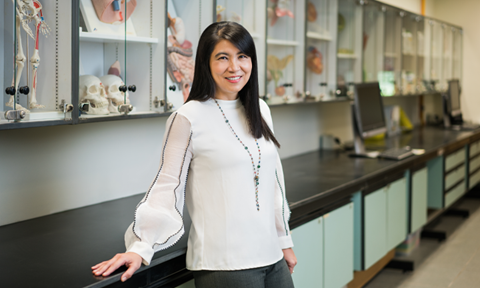
She is the deputy head for teaching and curriculum matters at NIE’s Natural Sciences and Science Education Academic Department.
Prof Tan co-authored the Inspiring Science textbook and activity book series, which are used in schools from Primary 3 to 6. She is also the principal investigator on a research project focusing on how primary science curricular resources are used by teachers for teaching and by students for learning.
To help your child develop a deeper and more enduring grasp of science, encourage him or her to connect the concepts with daily life, and use his or her senses to explore the surroundings and engage in hands-on experiences.
For example, pupils learn about the properties of magnets in school. They would have observed that the like poles of magnets repel while the unlike poles attract.
Prof Tan suggests that you reinforce this learning by asking your child to explore where magnets can be found in home appliances, such as in the refrigerator door.
“Remembering familiar experiences is easier than memorising obscure and isolated facts,” she says.
Simple activities, such as discussing weather changes, food spoilage or plant growth, can also effectively bridge the gap between abstract scientific ideas and real-life situations.
Another effective method is encouraging your child to apply his or her scientific knowledge to develop useful solutions for various problems.
Prof Tan notes: “You will grow together with your child by not only supporting his or her conceptual understanding, but also fostering confidence, enjoyment and long-term understanding of science.”
Read the questions carefully
The 2026 Primary School Leaving Examination science paper is scheduled to take place on Sept 29.
It comprises two booklets. Booklet A consists of 30 multiple-choice questions with four options and makes up 60 out of 100 marks. The remaining 40 marks are from Booklet B, which will have 10 to 11 structured questions.
Pupils and their parents often mistakenly believe that “keywords” are essential for scoring marks on the open-ended questions in Booklet B.
Marks will be awarded as long as the ideas are expressed clearly, and are relevant and scientifically accurate to the given context, an MOE spokeswoman told The Straits Times in a 2023 interview.
The spokeswoman added that pupils are encouraged to demonstrate their understanding by using their own words when explaining scientific concepts.
For example, when asked to explain why water puddles on the road are not seen after a while, they can say the water has “evaporated” or “turned into water vapour”.
“Both replies demonstrate an understanding that water has changed its state,” she said.
The focus of learning science is about developing the ability to inquire, understand and explain phenomena, and not on giving standard answers or reproducing keywords, she added.
Separately, Prof Tan points out that pupils tend to miss out on marks because they do not understand or consider the question’s context.
She advises: “Pupils should be patient and read the questions carefully, pausing to analyse the context before answering. In this way, they will be better able to identify the scientific concepts relevant to the question and explain them more accurately.
“They should also be able to use the information and data presented in the question context for their explanations.”
Ms Laura Oh from House of Hows says words such as “state”, “observe” and “explain” require a different style of response.
Ms Laura Oh, founder of education centre House of Hows, says it is common for pupils to misinterpret the command words in the question. Words such as “state”, “observe”, “describe” and “explain” require a different style of response.
For example, if a question asks pupils to “state” what happens, the answer should be short and direct: “The number of bubbles increased.”
A common mistake is to add reasons, such as “because photosynthesis increased”. If unnecessary or inaccurate explanations are included, marks may not be awarded.
When asked to “observe”, pupils should write only what they can see from the diagram or data, without inferring reasons.
However, if the question requires pupils to “explain”, they must link the cause and effect clearly using scientific concepts – for instance, relating light intensity to the rate of photosynthesis.
Other keywords that pupils should look out for include “compare” (state similarities and differences), “predict” (use trends or data to suggest what will happen next), “suggest” (give a possible reason), “calculate” (show clear working with correct units) and “identify” (select the correct option without unnecessary elaboration).
Beyond misunderstanding command words, Ms Oh adds that Primary 6 pupils often lose marks through mistakes that can be avoided. These include copying phrases from the question without processing them, failing to use precise scientific terminology, giving incomplete cause-and-effect explanations, omitting units in calculations and overlooking key details in diagrams.
To prevent such mistakes, Ms Oh suggests that you remind your child to underline command words, circle key variables, match their answer length to the mark allocation, and check that every explanation includes a clear scientific link or concept.
She adds: “One principle I constantly reinforce is this – answer the question, not the topic. Many pupils know the content, but they lose marks because they write everything they know instead of responding precisely to what is asked.
“In PSLE science, clarity, precision and accurate scientific language make all the difference.”
For the remaining part of the article and the original article, read the original article here.
Source: The Straits Times © SPH Media Limited. Permission required for reproduction.
.tmb-listing.jpg?sfvrsn=eaf6042f_2)
.tmb-listing.jpg?sfvrsn=a2d9f5f9_2)