Designing Technology-Supported Collaborative Argumentation for Classroom Learning
OER 17/19 CWL - Computer-Supported Collaborative Argumentation (CSCA): Techno-Pedagogical Design
"With the technology-enhanced teaching strategies and tools, educators can implement meaningful collaborative learning activities even in large classrooms for students to brainstorm, share and build upon their ideas. In the process, they collectively make sense of information to expand and improve their knowledge, often in fast-paced environments. As classrooms continue to evolve, the research contributes to building future-ready learning environments, where students not just acquire knowledge, but also develop the collaborative learning and critical thinking skills needed for the world ahead.”
Excerpt from Pushing Frontiers, published by NTU.
Project Team
Prof Chen Wenli, Prof Looi Chee Kit, A/P Jennifer Yeo, A/P Mark Baildon, Dr Jesmine Tan, Ms Aileen Chai
Project Description
Prof Chen Wenli’s research team developed innovative techno-pedagogical design to improve the process and outcome of students’ collaborative learning. The team designed AppleTree (Figure 1), an online diagram-based learning platform to help students collaborate in coming up with arguments for and against a claim in a given topic. Like mind maps, the system helps students visually organise their ideas, the claims presented to them, and the evidence for and made against these claims during group discussions.
AppleTree has mechanisms built in to enhance the collaborative learning process in five phases, based on a “spiral model of collaborative knowledge improvement” (SMCKI, Figure 2), developed by Prof Chen. First, students are asked to come up with individual ideas on a given topic and share them with their classmates on the platform. Next, they work in small groups to discuss these individual ideas, consolidate and improve their diverse ideas on the platform. In the third phase, students review ideas shared by other groups and provide constructive feedback. Then, each group revisits and refines its own ideas based on the comments received. Finally, each student is asked to reflect on the learning experience and create their final learning artefacts.
AppleTree enables educators and students to assess and analyse learning processes and outcomes in real time through multi-dimensional learning analytics and visualisation with real-time feedback (e.g., social participation, interaction and inter-dependence, structural completeness of argumentation).
The research team has implemented AppleTree in various Singapore classrooms across subjects like science, language learning and social studies. Whether students are debating environmental policies, analysing literary texts or exploring historical events, the platform helps them see multiple perspectives and build stronger arguments together.
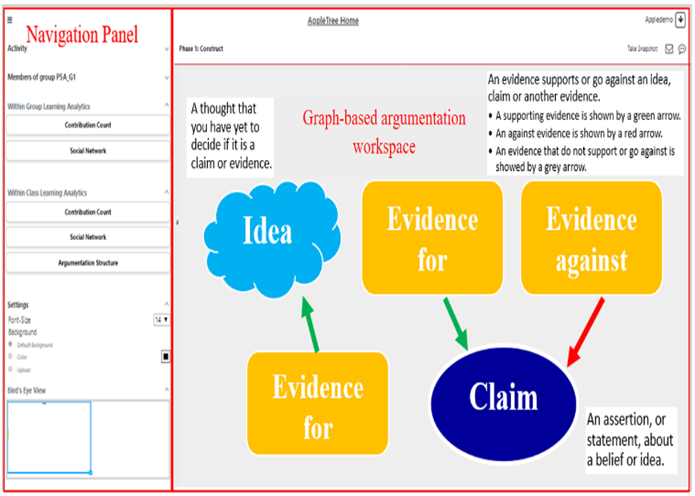
Figure 1. Screenshot of AppleTree Interface
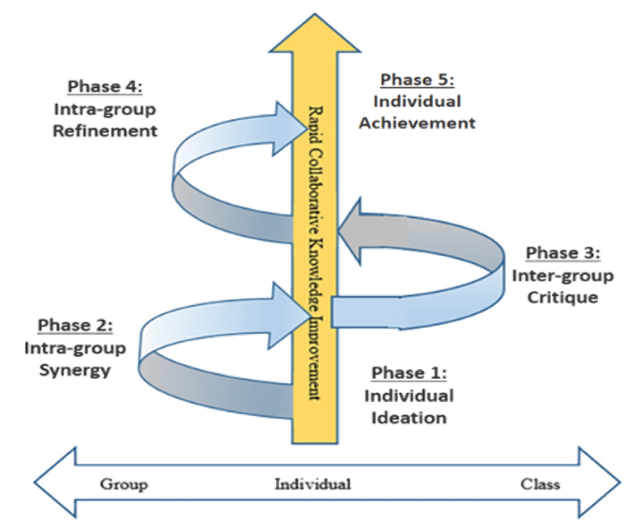
Figure 2. Spiral model for Collaborative Knowledge Improvement
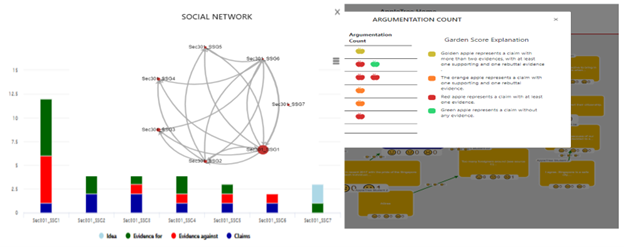
Figure 3. Automated learning analytics on participation, interaction and interdependence, and structural completeness of argumentation
Project Implications
Students in the 21st century engage in collaborative learning, where they learn, discuss ideas and solve problems together as a group. Simply grouping students together, however, does not guarantee effective collaborative learning. Innovative techno-pedagogical designs are needed to improve the process and outcome of students’ collaborative learning.
The diagram based argumentation deisgn in AppleTree helps students focus on big ideas of argumentation. SMCKI scripts students’ collaborative learning activities effectively in classrooms. Real-time learning analytics and visualisation could inform teachers and students about the learning progress and outcome.
Empirical findings show tangible benefits – students could come up with more comprehensive and coherent arguments, indicating improved logical reasoning and critical thinking. Their motivation to learn also increased and their understanding of a topic deepened. More importantly, students showed enhanced cognitive abilities and greater cognitive awareness when communicating, debating and critiquing one another’s arguments in complex problem-solving settings.
With appropriate pedagogical and technological design, CSCA not only helps students to deepen their content knowledge, but also to develop their 21st century competencies.
Resources
Project website: https://appletree.sg
Featured in the Press:
- Chen, W., & Lyu, Q. (2025). using technology to improve how students learn together in classrooms. Pushing Frontiers. https://ebook.ntu.edu.sg/pushing-frontiers-issue-25.html
- Chen, W. (2023). AppleTree-Supported Collaborative Argumentation. SingTeach, 84. Knowledge Resource Bank. https://singteach.nie.edu.sg/2023/02/08/appletree-supported-collaborative-argumentation/
- Chen, W. (2021). Computer-supported collaborative argumentation in Singapore classrooms. OER Knowledge Bites, 15, 15–16. Singapore: National Institute of Education.
- Chen, W. (2021). Technology integration during collaborative argumentation. SingTeach, 78, 2-3. Singapore: National Institute of Education.
- Tan, S.H. J., & Chen, W.L. (2020, August). Scripting collaborative learning with the spiral model of collaborative knowledge improvement, Learning@NIE, 2, 10-11.
Selected keynote speeches:
- Chen, W. (2024, Aug). Prepare future-ready collaborative learners: Technological and pedagogical design. Keynote Address, Teachers' Summit 2024. Astana, Kazakhstan.
- Chen, W. (2024, Jun). Techno-pedagogical design to prepare future-ready collaborative learners in authentic classrooms. Keynote Address, International Society of the Learning Sciences Annual Meeting 2024, Buffalo, United States.
- Chen, W. (2024, Jun). Multi-modal learning analytics for collaborative learning design: Promise and challenges. Keynote Address, Global Chinese Conference of Computers in Education 2024, Chongqing, China.
- Chen, W. (2023, Nov). Technology-enhanced collaborative inquiry for science learning: Perspectives from Singapore. Keynote Address, Hong Kong STEM Education Forum, Hong Kong.
- Chen, W. (2023, Nov). Augmenting collaborative learning in classrooms: Technological and pedagogical design. Keynote Address, International Conference on Technology for Education, Mumbai, India.
- Chen, W. (2021, Dec). Learning analytics for learning design. Keynote Address, eLearning International Conference & Open Education Forum 2021, Taichung, Taiwan.
- Chen, W. (2021, Nov). Supporting effective collaborative learning in classrooms: Technological and pedagogical design. Keynote Address, 3rd International Conference of Education and Science, Jakarta, Indonesia.
- Chen, W. (2021, Feb). Preparing future-ready learner: Pedagogical and technological design for computer-supported collaborative learning in classrooms. Keynote Address, EduTech Conference Middle East, Dubai, United Arab Emirates.
- Chen, W. (2020, Nov). From cooperation to collaboration: Designing computer-supported collaborative knowledge improvement in classrooms. Plenary Address, 28th International Conference on Computers in Education, Darwin, Australia.
- Chen, W. (2020, Aug). Scaffolding and assessing Computer-Supported collaborative argumentation. Keynote Address, UNESCO International Forum for ICT in Higher Education, Shenzhen, China.
- Chen, W. (2019, Mar). Advancing collaborative knowledge improvement through ICT. Keynote Address, Singapore MOE Curriculum Planning and Development Division Networked Learning Community Professional Sharing, Singapore.
- Chen, W. (2018, Nov). Bridging formal learning and informal learning. Keynote Address, 2nd International Congress of Trends in Educational Innovation, Arequipa, Peru.
- Chen, W. (2015, Sep). Preparing for future learning through idea generation and collaboration. Keynote Address, International Conference on Education & e-Learning, Bangkok, Thailand.
Selected Journal Papers:
- Chen, W., Su, G., Zhang, N., & Ng, E. E. (2025). Self and socially shared regulation patterns of computer-supported collaborative argumentation: an entropy analysis and ordered network analysis. Educational Psychology, 1–24. https://doi.org/10.https://doi.org/10.1080/01443410.2025.2606136.2025.2606136
- Chen, W., Pi, Z., Tan, S.H. J., Wang, X., Chai, S.C.A., & Lyu, Q. (2024). The scripted Computer-Supported collaborative argumentation in a secondary school classroom: An exploratory study. Instructional Science. https://doi.https://doi.org/10.1007/s11251-025-09704-z.1007/s11251-025-09704-z
- Chen, W., Han, Y., Tan., J., Chai, A., Lyu, Q., & Lyna. (2024). Exploring students' Computer-Supported collaborative argumentation with socio-scientific issues. Journal of Computer-Assisted Learning, 40(6), 3324-3337.
- Chen, W., Hu, H., Lyu, Q., & Zheng, L. (2024). Using peer feedback to improve critical thinking in Computer-Supported collaborative argumentation: An exploratory study. Journal of Computer-Assisted Learning, 40(6), 3390-3405.
- Chen, W., Lyu, Q., & Su, J. (2024a). The role of individual preparation before collaboration: An exploratory study on students’ Computer-Supported collaborative argumentation in a primary classroom. Journal of the Learning Sciences, 3(4-5), 757-798.
- Chen, W., Lyu, Q., & Su, J. (2024b). How more-improvement and less-improvement groups differ in peer feedback giving and receiving practice: An exploratory study. Instructional Science, https://doi.org/10.1007/s11251-024-09667-7
- Chen, W., Tan, J. S. H., Zhang, S., Pi, Z., & Lyu, Q. (2023). AppleTree system for effective Computer-Supported collaborative argumentation: An exploratory study. Educational Technology Research and Development, 71(5), 2103-2136.
- Tan, S. W. J., Chen, W., Su, J., & Su, G. (2023). The mechanism and effect of class-wide peer feedback on conceptual knowledge improvement: Does different feedback type matter? International Journal of Computer-Supported Collaborative Learning, 9(2), 393-424.
- Chen, W., Zhang, S., Pi, Z., Tan, J. S. H., Wen, Y., Looi, C.K., Yeo, A, C., J., & Liu, Q. (2023). Students’ appropriation of collaboration script in a networked class: an exploratory study. Technology, Pedagogy and Education, 33(1), 23–41.
- Chen, W., Pi, Z., Tan, S. H. J., & Lyu, Q. (2022). Preparing pre-service teachers for instructional innovation with ICT via co-design practice. Australasian Journal of Educational Technology, 38(2), 133-145.
- Chen, W., Tan, J.S.H. & Pi, Z. (2021). The spiral model of collaborative knowledge improvement: an exploratory study of a networked collaborative classroom. International Journal of Computer-Supported Collaborative Learning, 16(1), 7-35.
.tmb-listing.jpg?sfvrsn=15a05377_2)

.tmb-listing.jpg?sfvrsn=6da54113_2)