Researcher in the Spotlight: Dr Elizabeth Koh, Assistant Dean of Research Support, Office of Education Research and Senior Education Research Scientist, Centre for Research in Pedagogy and Practice
The research field of Computer-Supported Collaborative Learning (CSCL) refers to the study of collaborative learning that is facilitated by information and communication technology (ICT). NIE Senior Education Research Scientist Dr Elizabeth Koh from the Centre for Research in Pedagogy and Practice (CRPP) at the Office of Education Research (OER) shares with us her foray into CSCL and ICT research, and how these can support both teaching and learning in Singapore.
Q. What sparked your interest in CSCL and ICT-based education innovation research?
I have a background in Information Systems and what first drew me to CSCL was the wiki technology, which allows multiple users to create and edit documents together. This was before synchronous online editing (e.g., Google Docs) that are commonplace now. While wikis are asynchronous platforms much like discussion forums, at that time, they were considered quite innovative and offered new ways that people could collaborate – in addition to its cool-sounding name (wiki comes from Hawaiian and means “quick”). This marked my foray into CSCL as I was interested to see how we could collaboratively learn together with wikis.
In my PhD dissertation, I examined the different factors that affected the use of such collaborative technology for learning. As I matured in my understanding of ICT-based innovations, I have emphasised the design principles and the learning theories that inform and guide the use of technology for learning, which CSCL very much focuses on. One aspect of social constructivism with the use of technology is the feedback from interacting with technology and others, and the formative use of that feedback for improving learning (also known as assessment for learning). This has led me to innovate in the area of learning analytics, focusing on feedback from learner’s progress data, where I have developed pedagogically-based learning analytics systems, with support of design teams.
Q. Share more about the idea behind your most recent research project, A Multimodal Learning Analytics Approach Towards Learner Dashboard Designs for Better Engagement and Metacognitive Regulation (LADDER).
The project focuses on developing a multi-modal learning analytics approach to measure engagement as students use learning analytics systems and their dashboards. This project firstly builds on an existing path of research I have undertaken, on learning analytics dashboards (which provide the feedback), and secondly goes into a new dimension of learning analytics, multi-modal learning analytics, which emphasises multiple synchronised data streams to automatically measure student learning. The multi-modal learning analytics approach is a new wave of learning analytics that also brings in the Science of Learning with its emphasis on physiological and motoric data from various real-time data sensors (e.g., think of your smart watch that can count your steps, measure your heartbeat, track your location, etc.).
For this project, we focused on more scalable data sources, namely webcams and computer logfiles, and plan to derive a measure of students’ engagement from those data streams. The project is still in its infancy stage now and a challenge we have is finding participants to take part in the study – as we need to have enough learner data to start building the computational model for this approach.
Q. In your opinion, what is the value of CSCL and ICT-based education innovation research in Singapore?
Manifold! Technology for collaborative learning is here to stay despite various changes and enhancements, and from the basis of the learning sciences (which is the area where CSCL comes from), our learning design with technology for students should be based on sound pedagogy considering the context of the learner.
In Singapore, with its emphasis on developing 21st Century Competencies and lifelong learning skills alongside the mastery of academic content, my team and I have designed three learning analytics systems for collaboration, critical thinking, and socio-cognitive engagement and reflection. First, My Groupwork Buddy is a formative learning analytics tool for teamwork. It provides Secondary school students opportunities to become better team players during the course of a team project. It has also spun off two other projects – one in Geography and the other in tertiary education, enabling design principles to be refined and students to benefit.
Second, WiREAD+, is a collaborative web reader for multimodal text with metacognitive scaffolds and formative learning analytics visualisations. It has enhanced students’ critical reading and fosters a culture of reading as a rich social and generative practice, which has also been scaled to all levels of education.
Third, CoVAA, a web-based collaborative video annotation and learning analytics environment. This is designed to stimulate learners’ deep socio-cognitive engagement, rich peer interactions and social knowledge construction around key disciplinary concepts and generate reflective thinking. It has been successfully trialed for students and as a version for teachers for their professional development.
Q. Which area(s) of research in CSCL and/or ICT-based education innovation do you think merit more attention in Singapore?
Data sharing and re-use is a theme and topic that deserves more attention and infrastructure investment in Singapore. While we can have silos projects, it is increasingly more important in the age of Big Data to put resources together, harmonise data, implement integration standards (e.g., application programming interface) and provide secure ways to easily extract the data. This allows respective project data to connect with each other to address learning gaps and larger questions in the system. Moreover, it allows for holistic understandings of students’ data to be generated, providing a more complete profile/data for any learning diagnosis. While multi-modal learning analytics is one way of putting two data streams together, it is currently a complex and tedious endeavour. The disparate data and the difficulty in extraction is also not helping the work. Having such support will go towards addressing gaps and allow for more sustainable research activity, enhancing the contextual understandings and learning interventions that can arise.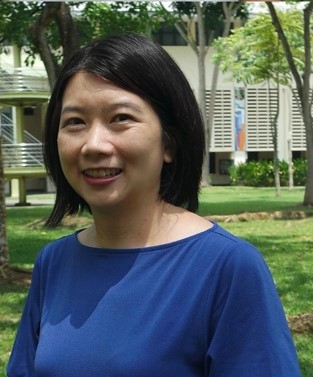
You can find out more about Elizabeth here, and follow her Twitter here as well!
.tmb-listing.jpg?sfvrsn=9546f249_2)