Beyond AI Tool Use: Meta-Task Awareness (MTA) for Human–AI Co-Orchestration (HACCO) in Teacher Education
When artificial intelligence can generate lesson plans and assignment answers within seconds, educators must ask a more fundamental question: Is the original learning task still meaningful?
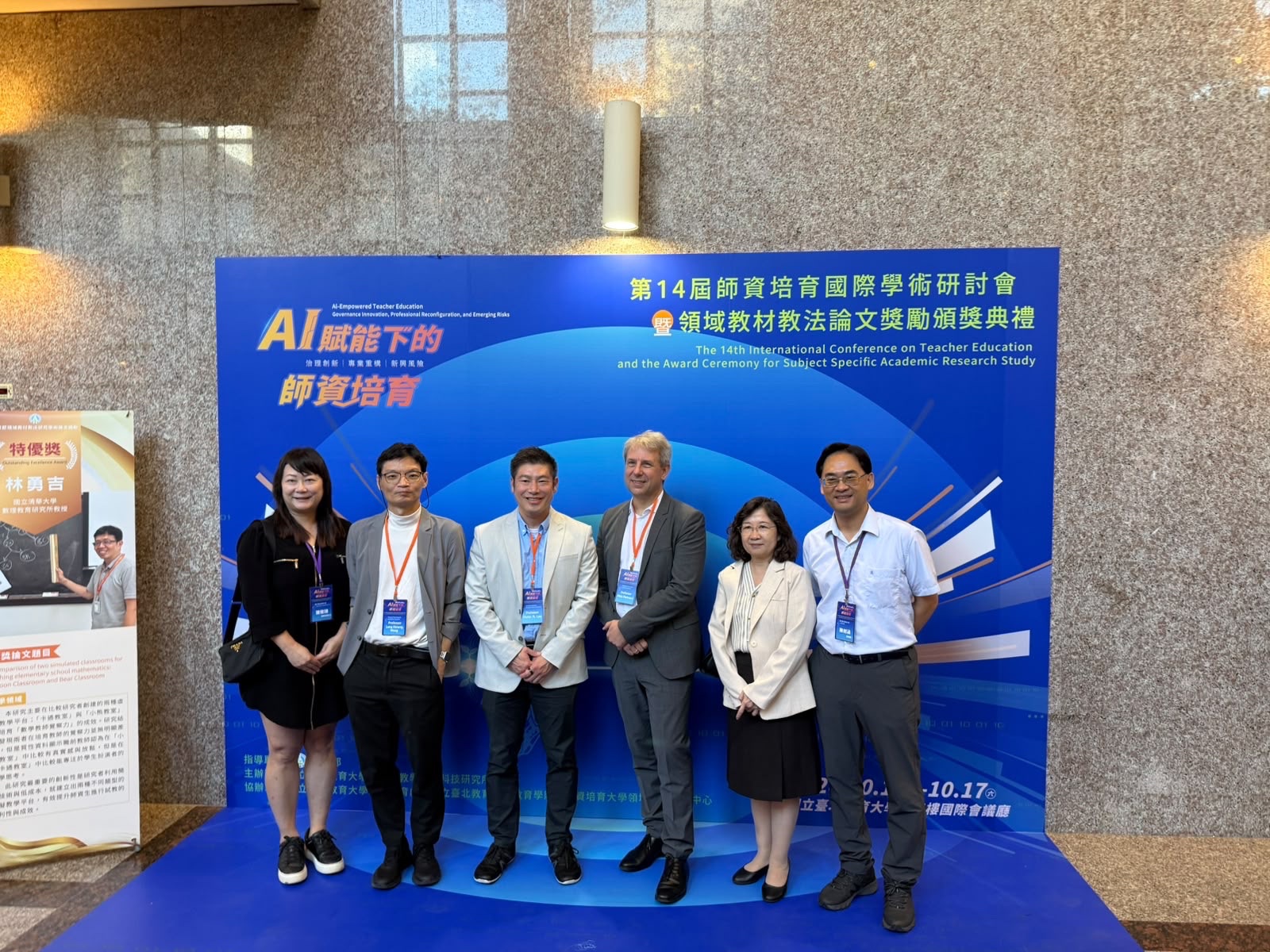
Speaking at the 14th International Conference on Teacher Education, organised by the National Taipei University of Education, Dr Wong Lung Hsiang, Senior Education Research Scientist at the National Institute of Education, introduced the concepts of Meta-Task Awareness (MTA) and Human-AI Co-orchestration (HACO).
The event was attended by Ms Wu Hsiao-hsia, Director-General of the Department of Teacher and Art Education at Taiwan’s Ministry of Education, who sat through Dr Wong’s presentation and engaged him in a discussion during the question-and-answer session.
Drawing on the story of Zhuge Liang “borrowing arrows with straw boats” from Romance of the Three Kingdoms, Dr Wong explained that Zhuge Liang succeeded by reframing an impossible task. Instead of attempting to manufacture 100,000 arrows, he found another way to obtain them. Similarly, teachers and learners should not focus solely on crafting better prompts for AI; they should first identify, question and, where necessary, redefine the task itself.
Dr Wong highlighted three approaches for applying these ideas in education.
First, “Delta assessment” shifts attention from grading only the final product to evaluating the development of students’ thinking. Students critique an initial AI-generated lesson plan, revise it over time and document their decisions to accept, reject or combine AI’s suggestions with their own professional judgement.
Second, teachers can use AI to simulate students with different language abilities, learning needs and cultural backgrounds. These simulations allow educators to anticipate possible responses, identify weaknesses in an activity and refine the task before using it in the classroom.
Third, teachers should move beyond being prompt writers to become instructional orchestrators. They must integrate subject knowledge, pedagogy and technology while retaining responsibility for educational decisions.
Dr Wong emphasised that AI can support execution, but humans must remain responsible for judgement, meaning and task redesign. While lesson-plan generation may be delegated to AI, the purpose and soul of teaching must remain with the teacher.
Read the original article here.
Find out about the conference here.
.tmb-listing.jpg?sfvrsn=c964312a_2)