AI Can Give Us Answers, But Who Will Teach Us to Think?
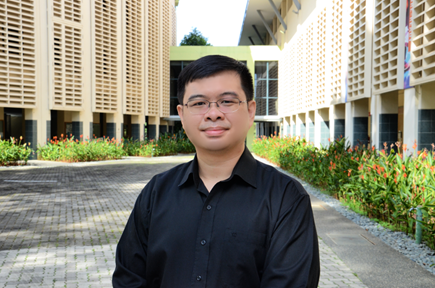
By Dr Roszalina Rawi
Imagine someone preparing to deliver a speech in Malay and wanting to open with a pantun, a traditional Malay four-line verse. Within seconds, artificial intelligence (AI) can produce one that looks well structured and convincing, in language that appears fluent and polished.
But if that person were asked why particular images were chosen for the opening lines, how they relate to the intended meaning, or what cultural values lie within the verse, would they be able to offer an equally convincing explanation?
This is a question worth reflecting on, not only as users of language but especially as language educators in the age of AI.
Much of our educational experience has long been organised around the ability to find, master and produce the correct answers. We teach students to memorise facts, understand content, analyse arguments and demonstrate their knowledge through different forms of assessment.
Yet when technology can now produce answers so quickly, we need to ask ourselves again: Is education simply about developing people who know how to answer questions, or people who know how to think?
When answers are no longer hard to find
AI opens up many exciting possibilities for education.
Teachers can use it to plan lessons, develop resources for learners with different needs, and generate ideas for learning activities. Students can use it to explore topics in greater depth, seek additional explanations and improve their work.
I do not see such technology as a threat to be avoided. Rather, we need to consider how it can be used meaningfully.
At the same time, we must acknowledge its risks. When answers become so readily available, users may feel less inclined to wrestle with difficult questions, consider alternative possibilities or examine the weaknesses in their own arguments.
And yet, wrestling with a question is often an essential part of learning. It is precisely this intellectual struggle that sharpens our ability to think critically and creatively.
Recently, I had the opportunity to meet Professor Mutlu Cukurova of University College London, who is at the National Institute of Education (NIE) as its 18th C J Koh Visiting Professor in Education. His research on the relationship between humans and AI raises an important question: In our efforts to make learning easier through technology, are we inadvertently weakening our capacity to think and learn independently?
As my students and I showed Professor Cukurova around Kampong Gelam, we spoke about how not every aspect of human learning can be fully understood or predicted by technology. Learning about culture and heritage, for example, requires participation and lived human experience.
Our conversation stayed with me. Increasingly, I have noticed how easily we equate technological efficiency with the speed at which something is produced. But must everything be accelerated?
Learning, and the creation of knowledge, do not always happen the moment a person arrives at the right answer or produces page after page of writing. Sometimes the most meaningful learning occurs when we discover that our first answer was incomplete, or that we had overlooked another perspective.
The same applies to writing and the production of scholarly or creative work. Professor Cukurova cautions against handing too many thinking tasks over to AI, at the risk of eroding our own intellectual capacities. At times, a slower and more demanding writing process, rather than excessive reliance on AI, can produce work of greater depth and quality.
What is clear is that the speed with which we obtain answers or produce work does not necessarily reflect the depth of our understanding.
What, exactly, are we assessing?
In education, and especially in the field of assessment, I often return to the relationship between what we assess and what truly matters in learning.
We may assess a student's ability to produce a well-written essay. But does that essay show that the student has thought through an issue, weighed competing arguments and developed a position of their own?
We may also assess the accuracy of an answer. But do we pay enough attention to how the student arrived at it?
These questions are not new. AI, however, makes them increasingly urgent.
In Assessment for Learning, assessment should not serve only to determine students' final achievement. It should also help them recognise where they are in their learning, identify gaps in understanding and decide what they need to do next.
Feedback is central to this process.
AI may provide feedback on an essay in seconds. But the value of that feedback to a learner cannot be measured by how quickly it arrives. Does the student understand the suggestions? Can they explain why a particular change is necessary?
Interestingly, Professor Cukurova also sees potential for AI to help teachers and students make learning processes more visible, including through feedback that allows learners to observe and reflect on their own learning more carefully.
This is an important distinction. AI need not simply tell students what to do next. It can help them recognise what they need to think about for themselves.
In other words, feedback does not become meaningful simply because it has been given, whether by AI or by a teacher. It becomes meaningful when students understand it, evaluate it and use it to improve their learning.
Teachers matter more, not less
Some worry that as AI grows more sophisticated, the role of the teacher will diminish.
I see it differently. When technology can provide information and generate answers, the responsibility of educators to guide students' thinking becomes even more important.
It is no longer enough for teachers to be satisfied with a correct answer. We need to ask more meaningful follow-up questions.
Why do you think so? What evidence supports your view? How do you know this information is reliable? Do you agree with the answer AI has generated?
Such questions may sound simple, but they require students to explain their thinking, defend a position and acknowledge possible weaknesses in their reasoning.
In Malay Language teaching, for instance, AI can help students understand the meaning of a proverb or pantun. But the teacher has an important role in taking the discussion further.
How does the opening imagery of a pantun relate to our lived experience as Singapore Malays? Which values in a proverb remain relevant to our community today?
This is where language learning goes beyond vocabulary and grammar. Language becomes a way of understanding culture, society, identity and how people make meaning of their experiences.
AI can open up opportunities for such exploration, but it should not replace the judgement, dialogue and reflection through which understanding is built.
Teachers, too, must be willing to rethink teaching
If we genuinely want to nurture a generation capable of independent thought, change cannot be expected of students alone. As educators, we must also be willing to examine how we design teaching and assessment.
One important point raised by Professor Cukurova is that students need to develop the ability to recognise when AI is wrong, and to judge which tasks can appropriately be supported by AI and which they should undertake themselves.
This reminds us that AI literacy is not simply about using technology proficiently. More importantly, it is about being able to evaluate, question and, when necessary, reject what AI produces. If we hand over too much of the thinking process to AI, what are our students actually learning?
A more uncomfortable question for teachers is whether AI is exposing weaknesses that have long existed in our educational culture.
If we have placed too much emphasis on final products rather than learning processes, demanded ever faster student output, and celebrated the quantity of assignments over their quality, AI has revealed how easily our existing measures of success can be met without necessarily demonstrating genuine learning.
In this sense, AI is not merely a new challenge. It is also a mirror, compelling us to reconsider educational practices we have long taken for granted.
The question, then, is not simply how we can use AI more efficiently. It is how we can ensure that its use continues to strengthen our capacity as human beings to learn and think.
Educating for a future we cannot yet know
We cannot fully predict how AI will change employment, community life and the ways people interact in the future.
But we can decide what kinds of people we hope education will nurture.
We need a generation that is not only adept at using technology, but also capable of sound judgement, critical evaluation, empathy and responsible decision-making.
These capacities cannot be developed simply by providing more information or introducing more digital applications into classrooms. Nor can they be demonstrated through presentations and knowledge-sharing that are entirely AI-generated, with no original ideas contributed by the people delivering them.
The ability to think must continue to be nurtured through learning experiences that make room for questions, reasoned disagreement, listening to others, weighing different perspectives and reflecting on one's own decisions.
Ultimately, the question is not whether AI can produce better answers than humans.
The more important question is whether our education system still creates space for people to develop the capacity to think independently, critically and ethically.
In a world increasingly filled with answers, perhaps education's greatest responsibility is no longer simply to teach students how to find them.
More importantly, it is to teach ourselves and our students which questions are worth asking, why those questions matter and how to exercise judgement when the answers are not as straightforward as they first appear.
Pandang-pandang kanan dan kiri,
Melintas jalan berkira-kira;
Kurang ringgit boleh dicari,
Kurang akal habis bicara.
In essence: Look both right and left; cross the road with care. Money can be earned again, but sound judgement is not so easily replaced.
Read the original article published on Berita Harian.
.tmb-listing.jpg?sfvrsn=c964312a_2)