
News Story 2: : Bringing Authentic Patient Voices to Life via Simulated Patient (SP) Education
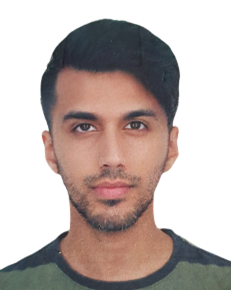 | By Sanjay Devaraja |
Throughout September and October 2025, the Simulated Patient (SP) Programme Team pulled out all the stops to deliver 20 workshops designed to hone SPs’ skills in roleplay authenticity and patient-centred feedback. The workshops were developed by Dr Tanya Tierney, Assistant Dean for Clinical Communication, and Mr Simon Purse, a professional actor based in the UK who has supported the SP programme since LKCMedicine’s inception. Widely regarded as a valued mentor, Simon has played an instrumental role in helping SPs refine their craft in SP methodology.
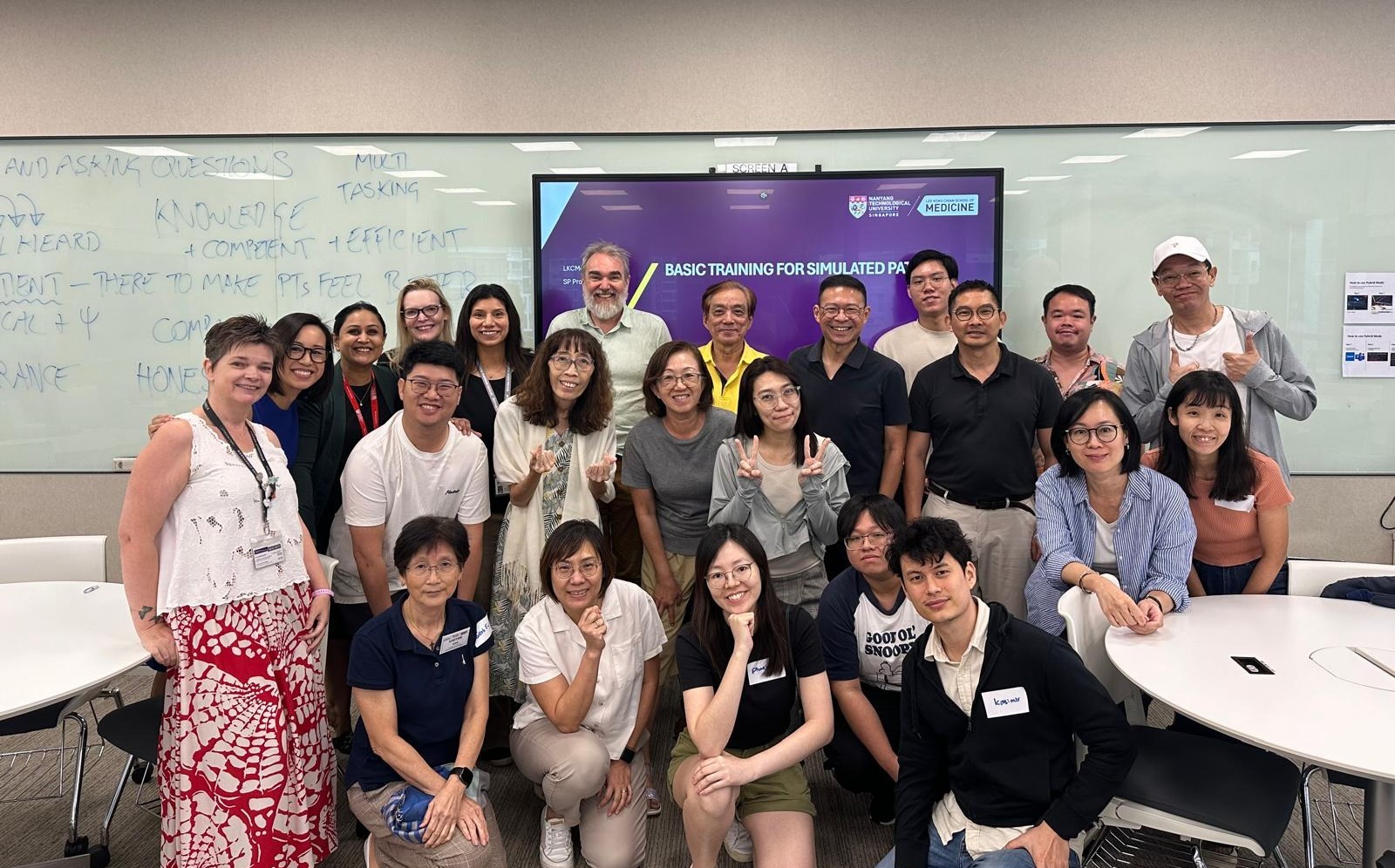
Being an excellent SP is far more complex than it appears. The first critical skill centres on authenticity of roleplay. When students encounter SPs who portray patients convincingly, the experience feels real, allowing students to engage deeply, whether in teaching sessions or examinations. Authenticity enables students to develop clinical communication skills more effectively and demonstrate empathy and compassion more naturally during assessments.
To support SPs in achieving authentic portrayals, the workshops equip them with strategies that go beyond simply memorising scenario documents. SPs learn to transform a written patient history into a lifelike performance through imagination, storytelling, and techniques drawn from performing arts. They also practise responding sensitively to student cues, adapting their replies based on tone, phrasing, and rapport to ensure each interaction feels genuine and nuanced.
The second key competency lies in providing meaningful feedback from the patient’s perspective. In addition to feedback from facilitators and peers, SPs offer unique insights into how a student’s communication makes the patient feel. When delivered well, this perspective can be transformative for students, revealing how subtle non-verbal cues or word choices impact patient experience. SPs therefore train to recall specific moments accurately and articulate their feedback with clarity and empathy.
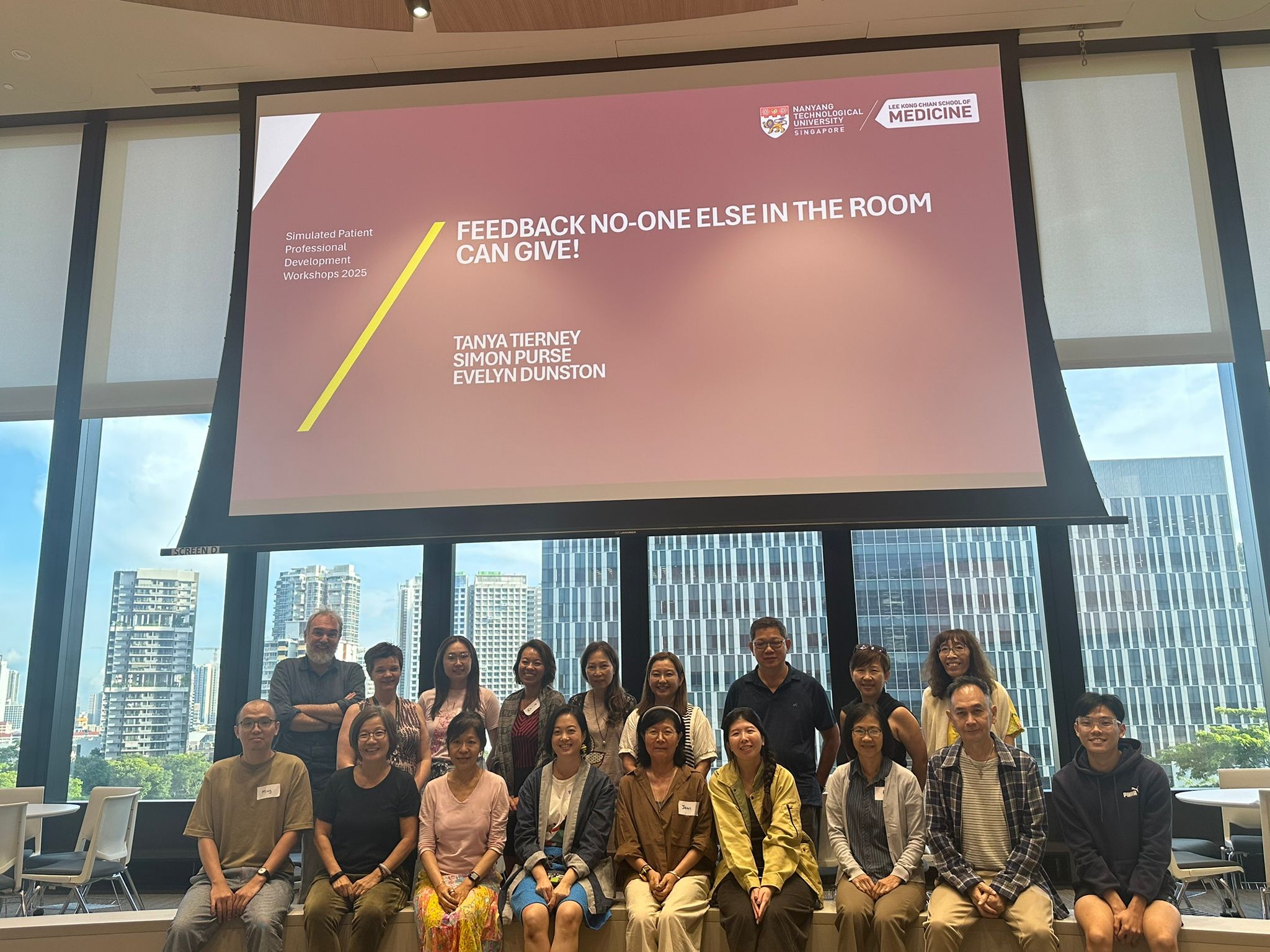
The SP workshops cater to both new and experienced SPs. The introductory session introduces fundamentals of SP work and doubles as an audition to assess participants’ readiness for different programme roles. Newcomers and experienced SPs alike benefit from sessions on “authentic role portrayal” and “feedback no-one else in the room can give,” which encourage collaborative learning and peer exchange.
Additionally, small group coaching sessions provide one-to-one guidance, offering detailed, personalised feedback on both roleplay and feedback delivery. In 2025, an insightful new element was introduced – LKCMedicine students participated in selected coaching sessions, providing real-time feedback to SPs on the authenticity of their portrayals and the effectiveness of their feedback. Both SPs and students found this exchange enriching: SPs appreciated the student perspective, while students valued the opportunity to contribute to the training of those who play a vital role in their education.
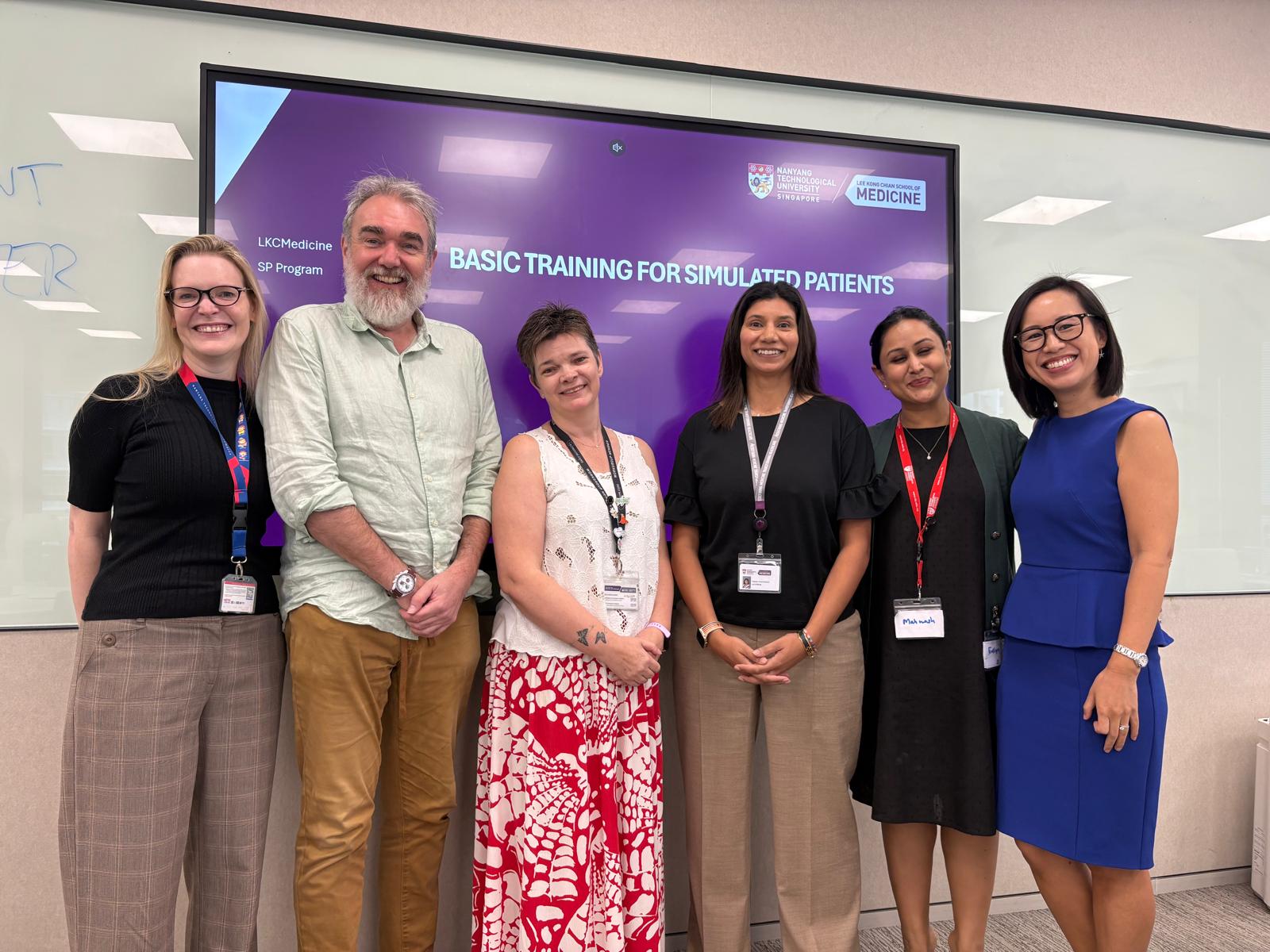
Across the series, the workshops engaged 77 potential new SPs (introductory), 60 SPs (authentic role portrayal), 77 SPs (“feedback no-one else in the room can give”), and 63 SPs (small group coaching). Alongside Dr Tierney and Mr Purse, the sessions were co-facilitated by Dr Evelyn Dunston (Deputy Lead, Clinical Communication), and Clinical Communication Facilitators Mahwash Jamal, Yasmin Chamberlain, and Sue Smith, ensuring every workshop delivered expert guidance and meaningful learning experiences.