Wong Lung Hsiang: From the "Deskilling" Mindset to "Intellectual Partnership 2.0"
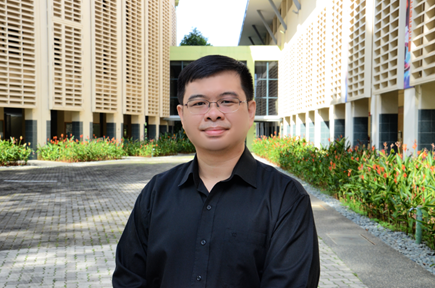
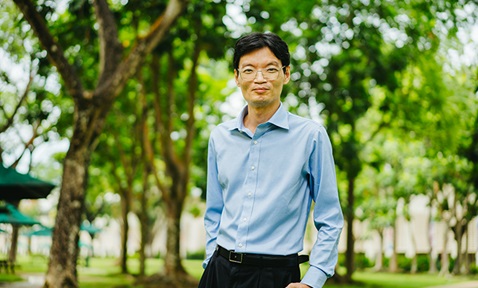
NIE Senior Education Research Scientist Dr Wong Lung Hsiang has argued that the conversation on artificial intelligence (AI) should move beyond concerns about "deskilling" and towards rethinking how humans and AI can work together as collaborative partners.
Writing in Lianhe Zaobao, Dr Wong observed that a series of recent commentaries on AI reflected three common concerns: the future of human capabilities, human agency, and the evolving division of labour between people and AI. While discussions often focus on whether AI weakens human abilities, he suggests that the more important question is how humans and AI should collaborate in an era where generative AI increasingly participates in tasks once regarded as higher-order thinking.
Drawing on education technology scholar David Jonassen's concept of "intellectual partnerships", Dr Wong noted that computers were traditionally viewed as tools that handled information processing, while humans retained responsibility for analysis, judgement and problem-solving. However, generative AI has blurred these boundaries by contributing to idea generation, interpretation, writing and evaluation.
Based on his own experience using AI in academic writing, Dr Wong described human–AI collaboration as an iterative process in which both parties can propose ideas, critique arguments and refine directions. Rather than simply dividing tasks between human and machine, the interaction can reshape both the work itself and the way problems are framed.
Dr Wong proposes a new model of collaboration—"Intellectual Partnership 2.0"—where humans and AI engage in continuous dialogue and co-creation. Instead of viewing AI as replacing human capabilities, he argues that the goal should be to redesign the partnership so that human and artificial intelligence complement one another, creating outcomes that are greater than either could achieve alone.
Read the original article here.