The reason why some PSLE maths problems are so tough
It can be bewildering and disempowering to be stumped by a few difficult PSLE maths problems. Parents and students have been left distraught by some seemingly insolvable questions (remember the Helen and Ivan problem set in 2021?).
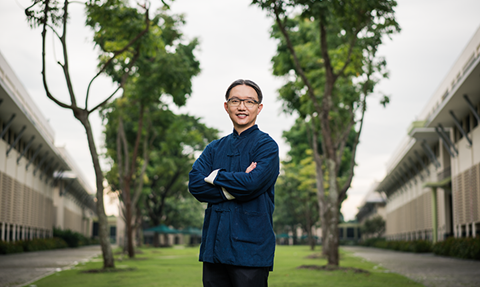
But this article explains why tough PSLE maths questions cannot be removed easily as they anchor the organising principle of sorting underpinning the PSLE. The article, based on a Straits Times forum for parents held on May 20, 2023, was written by Jason Tan, associate professor of policy, curriculum and leadership at the National Institute of Education, and published on May 23, 2023.
Are Primary School Leaving Examination (PSLE) mathematics questions unreasonably hard?
This perennial issue reared its head at a Straits Times forum last week, as parents raised issues with Mr Sng Chern Wei, deputy director-general (curriculum) in the Ministry of Education (MOE).
Among concerns raised were whether pupils had the maturity to understand real-life topics in mathematical problems, if the maths syllabus was setting an unnecessarily high bar, and whether pupils were being taught too much, too fast.
This is not the first time the PSLE maths exam has courted public controversy.
Like clockwork almost each year, such issues crop up, with parents expressing anxiety over the detrimental effect of such questions on children’s self-confidence and mental well-being.
Repeated calls, both within and outside of Parliament, to abolish the PSLE and introduce through-train programmes across the primary and secondary phases of schooling typically follow.
This parental insecurity, along with the continued perception of the PSLE as a high-stakes sorting exercise affecting pupils’ access to educational pathways, is among the factors that fuel the private tutoring industry, with maths likely a top subject that pupils seek tutoring in.
Mr Sng’s assurances that the PSLE maths curriculum is age-appropriate, aims to develop 21st-century competencies in our children and readies them for the higher demands of the future workplace probably did little to assuage concerns.
Understandable anxieties
It can be bewildering and disempowering to be stumped by a few difficult PSLE maths problems.
Some years back, a university-educated mother told me how, despite having scored a distinction in history at the A levels, she felt unable to help her Secondary 3 son with his humanities (social studies, history) homework. The question format and skills her son was tested on were foreign to her.
She subsequently hired a private tutor to make up for her self-professed inadequacy.
The vast majority of adults will most likely never need to tackle real-world problems in the exact manner in which these questions are posed. By the same token, most will not need to conduct scientific experiments or formulate written responses to literary texts as students are expected to in exams.
So the vehemence of parental reactions is perfectly understandable.
Maths is a key subject in an exam that serves to sort primary school leavers into various subject-based bands in the next leg of their schooling journey, and plays a major part in determining which secondary schools they enter.
Primary 6 pupils are at the relatively tender age of 11 or 12, and are seen as ill suited for such perceived rigour. Such concerns are notably not raised during other milestone exams like the O and A levels, which serve similar gatekeeping functions in determining students’ eligibility for various post-secondary programmes of study.
But does this mean such questions are pointless? Far from it.
The central focus of the framework underpinning the entire curriculum is mathematical problem-solving, which includes analysing mathematical situations, defining the problem and applying reasoning skills to tackle novel, non-routine problems.
In fact, asking to remove demanding PSLE maths questions fundamentally questions the organising principle of sorting underpinning the PSLE.
In his response to parental concerns, Mr Sng pointed out that the exam paper must be designed with a range of difficulty levels, with most questions posing minimal challenges to the majority of students, and a relatively small number of more difficult questions to challenge the highest scorers on their problem-solving agility.
This sort of differentiation of pupils would form the basis for the ministry to decide on the allocation of pupils to one of the three subject bands for mathematics at the beginning of their secondary schooling.
The new PSLE scoring system introduced in 2021, where entry into certain secondary school subjects at a more demanding level for Normal (Academic) and Normal (Technical) students depends on the Achievement Level (AL) scored in the corresponding PSLE subjects, enables more precise sorting and permits students to choose subjects aligned to their strengths.
Those questions, which number only one or two a year, are aimed at identifying candidates best able to engage in this sort of mathematical problem-solving.
In short, if we want to remove such questions, we are essentially asking for the top scorers not to be separated from the middle of the pack so that there can be more mixing in the prestigious secondary schools where top scorers typically head to. But is that beneficial for the broad middle of students who arguably do better learning at a more comfortable pace?
Besides the acquisition of mathematical reasoning and the development of cognitive skills, the maths syllabus at the secondary school level also aims to build confidence and interest in mathematics, with learning and level of difficulty tailored to different ALs. It would be a shame if fixation over the difficulty level of PSLE maths questions leads to policy changes with adverse effects for numerical literacy.
Does PSLE sufficiently prepare kids for a disrupted world?
What is apparent from the discussion at the recent Straits Times forum is the disjuncture between MOE rhetoric on the one hand and the perceptions of some parents on the other.
Reforms introduced over the past two decades have aimed to eliminate unnecessary stressors in the education system. These include the reduction of tests and examinations at the primary, secondary and pre-university levels, changes to the PSLE scoring system, and the replacement of streaming with subject-based banding.
Despite repeated clarifications, however, doubts remain.
Parental discontent over PSLE maths questions also belies the tension between a more vocation-orientated education versus a general academic education.
They also resonate with the ongoing discussion in Singapore over the balance between academic qualifications and practical workplace skills. This reality reminds us how challenging it is to develop, assess and lay the foundation for the application of broader skills in students, especially in a world undergoing disruption by technological advances.
This disconnect between curriculum and the job market as students spend time studying impractical subjects irrelevant to the modern labour market, only to forget most of what they learn, is a dilemma identified by George Mason University economics professor Bryan Caplan in his controversial book, The Case Against Education. He calls for schools to better prepare students for the world of work by measuring student aptitudes and exposing them to vocational opportunities.
Educational success, unfortunately, as he acknowledges, is still tied in strongly with professional success, largely because of the signalling effect, where possession of educational credentials signals to employers that prospective employees have the desirable qualities of intelligence, conscientiousness and conformity.
Deeper questions
The concerns raised at the forum compel education policymakers to confront three questions.
First, the necessity of sorting pupils on the basis of examination performance at the end of primary school.
Second, the extent to which students who display superior cognitive skills in these sorts of examinations ought to be deemed as possessing more merit and thus gain entry into prestigious schools that seem better equipped to give their students an even larger advantage, at a time when the concept of meritocracy is undergoing re-examination.
Third, the value that individuals and society place on these higher-order cognitive skills, since not all pupils display them at the end of primary schooling.
Read the original article here.
Source: The Straits Times © SPH Media Limited. Permission required for reproduction.