In Her Own Words: 8 Things About Professor Vivienne Riches
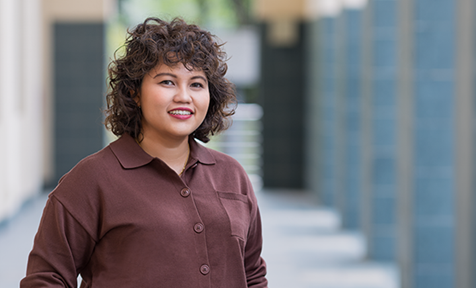
Professor Vivienne Riches is the first recipient of the newly inaugurated Lien Ying Chow Professorship in Education — a one-year appointment aimed at drawing top global minds to the NIE to contribute to Singapore’s education system through impactful education programmes and research. Let’s delve into eight interesting facts about this remarkable visiting professor.
#1 Hello, my name is… Vivienne Riches and I am a clinical professor and senior researcher at the Centre for Disability Studies (CDS), an affiliate of the University of Sydney in Australia. Our Centre specialises in research and programmes for people with intellectual disabilities. We also provide staff training and professional development to the disability sector and are involved in clinical practice.
As a researcher, educator and a clinical psychologist, my role extends across all of these areas. I’ve been involved in research projects focused on transitioning from school to the post-school world, vocational training and employment for people with disabilities. I’ve also contributed to studies involving the classification and assessment of support needs, as well as research into areas like quality of life and mental and emotional health and wellbeing.
#2 I got into special needs and inclusive education when… I was allocated to a special education unit at the start of my teaching career. At that time, we were trying to integrate children with visual impairments into mainstream education, and I felt very unprepared for the task. So I enrolled in a master’s degree in special education at Macquarie University while I taught.
I was subsequently offered a research position at Macquarie University, where I developed pilot programmes for youth with disabilities in areas like vocational training, employment and transition into the post-school world. I have continued with my research, sometimes on a part-time basis, as I also enjoy working as a psychologist in clinical practice helping people with or without disabilities. I find it very rewarding to engage in research that can be translated into practice to enhance quality of life for people with disabilities as well as their families.
#3 Special needs and inclusive education is important in today’s world because… there’s been a significant shift in people’s understanding of the value of diversity. Individuals with disabilities and special education needs are being recognised as citizens with equal rights, whose presence can enrich our societies. Inclusive education provides opportunities for individuals to be accepted and respected, fostering the development of their skills and abilities and enabling them to reach their true potential. It also promotes mutual respect while breaking down barriers and stereotypes associated with disability and special education needs.
#4 With the increasing call for special needs and inclusive education, I foresee… challenges, given the prevalence of the current dual-education system. Much of the present landscape involves integration or sometimes mere presence, rather than true inclusion. There are various reasons for this, including a lack of awareness about the value of inclusion among parents and community members. However, there is also widespread acknowledgement of the need for inclusive lifelong learning, which requires collaborative effort. True inclusion will occur when people with special education needs are meaningfully engaged and experience genuine acceptance and belonging in mainstream schools and their communities.
While in Singapore, I met some very committed and passionate educators who are truly making a difference. This aligns with Singapore’s “Enabling Masterplan 2030” for an inclusive lifelong learning society. I’ve also witnessed some excellent special education practices, and the obvious commitment by educators and others to work towards a truly inclusive society.
#5 The ongoing need for research in special needs and inclusive education demonstrates…the value of inclusion and diversity, especially in the cultural context of Singapore. Research is also needed to inform best practices regarding models, pathways and effective strategies. This will ensure that inclusive lifelong learning is available and useful for people of all ages and backgrounds, particularly those who are most vulnerable. These pathways involve formal and informal learning, online learning and accredited training.
#6 Some of my current research projects include… one by the Australian Research Council examining the outcomes of individualised National Disability Insurance Scheme (NDIS) funding for people with intellectual disabilities. The Inclusive Research Network at CDS is involved in this study and we bring an important perspective to the research, i.e. “Nothing about us without us”, which communicates the idea that no policy should be decided without the participation of those affected by that policy.
#7 Institutions such as the NIE can contribute to the advancement of special needs and inclusive education by… playing a pivotal role in the professional training and development of teachers and leaders, conducting research into best practice and fostering communities of practice.
#8 As the inaugural Lien Ying Chow Visiting Professor… I feel very honoured to be able to come to Singapore to share my expertise, and to learn from colleagues as well as participate in the significant work being carried out here. I’d like to thank the Lien Foundation for its visionary and generous support for the Genie Project, which aims to build up a network of leaders, enhance the quality of educator training and foster excellence through collaboration.
To watch the full interview with Professor Vivienne Riches, click here.