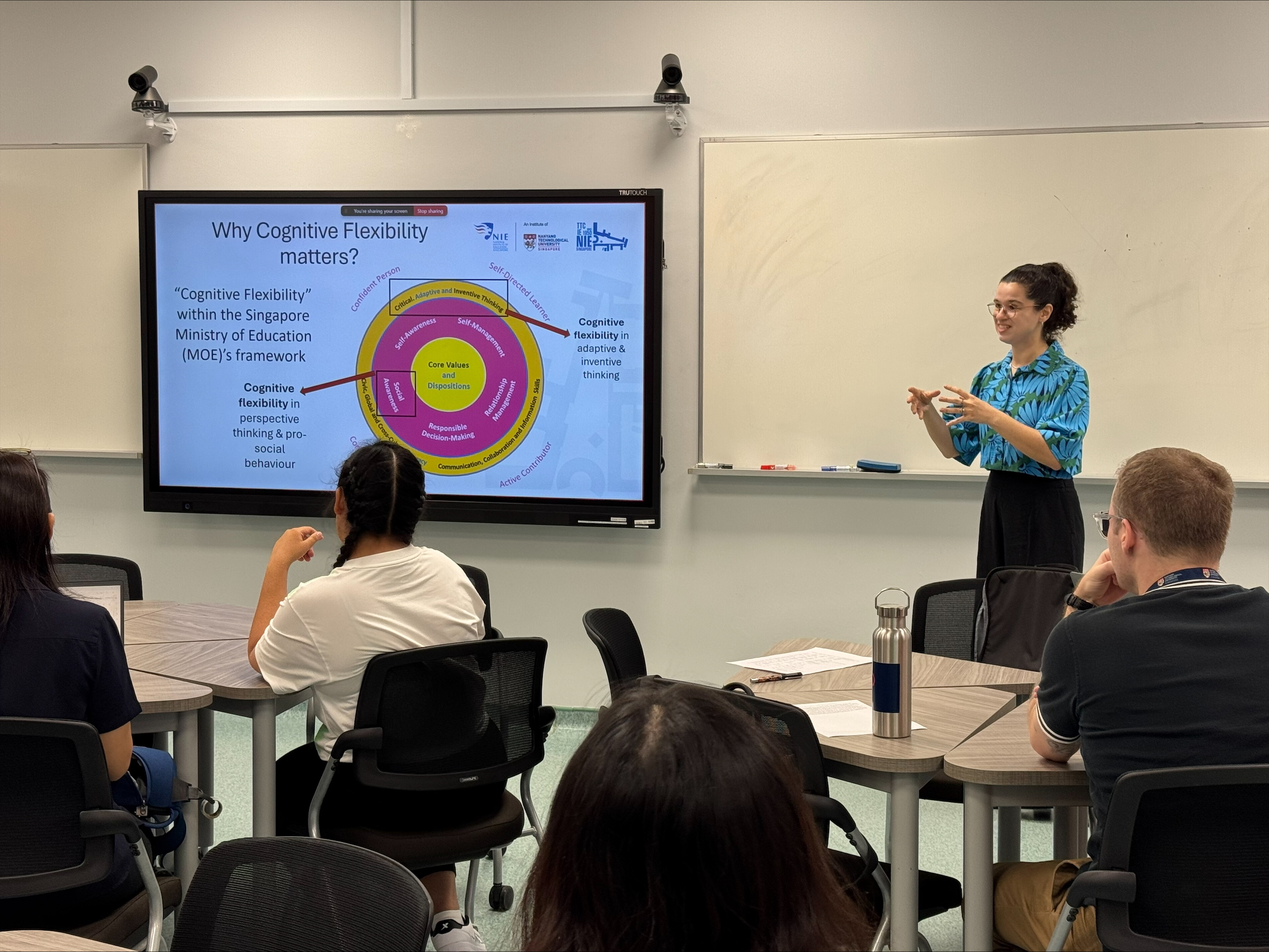
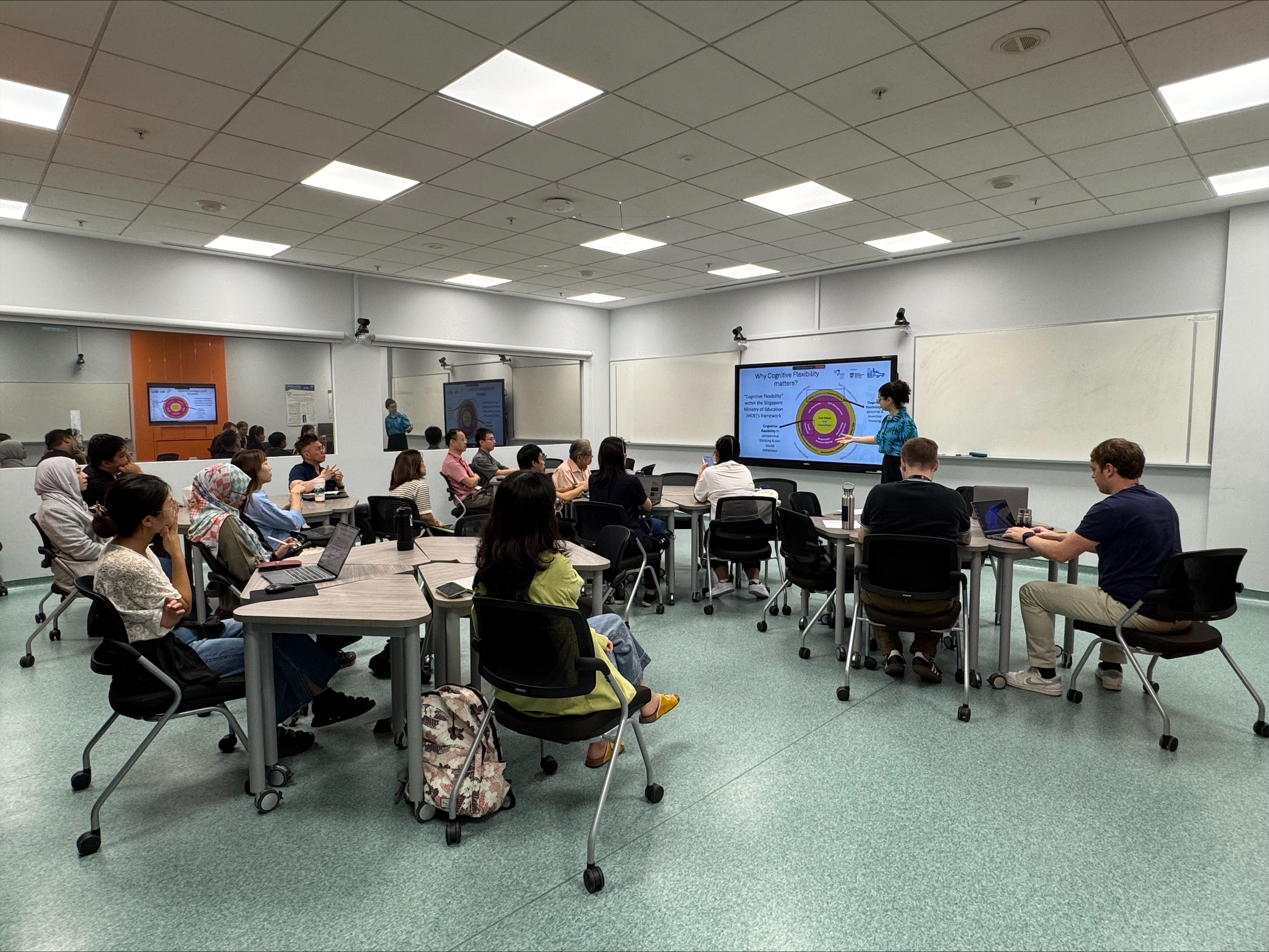
Dr Nastassja Fischer shares at the Strategic Growth Area - Science of Learning Seminar Series
On 24 July 2025, Dr Nastassja Lopes Fischer, Education Research Scientist at the Science of Learning in Education Centre (SoLEC), gave a seminar titled: “Cognitive Flexbility and Creative Thinking in Adolescence”. Her seminar focused on the role of cognitive flexibility in fostering creativity, adaptive thinking, and academic success, particularly in adolescents and emphasised the importance of shifting perspectives and overcoming functional fixedness. Dr Fischer highlighted cognitive flexibility as a key mechanism in divergent thinking, which supports the generation of novel ideas and associations. Adolescence was framed as a critical period for developing these skills, supported by recent research linking semantic flexibility with creative output. She addressed empirical methods for measuring cognitive flexibility through composite task scores and presented findings from meta-analyses showing a moderate but significant positive correlation between creative cognition (especially verbal creativity) and academic achievement. Educational programs that embed creative activities—particularly in the arts—were shown to enhance both creativity and performance in school contexts. Cognitive flexibility supports the generation of novel ideas through the ability to shift between conceptual categories and perspectives. The session also underscored the educational implications of fostering creativity through structured programs and classroom practices, and how such initiatives can enhance both academic performance and personal growth in youth. These insights not only advance theoretical understanding but also aim to inform local educational practices and policy in Singapore.