
Local AI Technology Makes Student Emotions Visible, Helping Teachers Refine Teaching Strategies
What are students really feeling during a lesson? Are they curious, engaged, confused, or disengaged?
Researchers at the National Institute of Education (NIE), Nanyang Technological University, Singapore (NTU Singapore), are developing EmoSense, an AI-powered emotion-sensing platform designed to help educators better understand students' learning experiences in real time.
By combining AI-based facial expression analysis with students' self-reported emotional feedback, EmoSense visualises key learning-related emotions such as curiosity, confusion, and boredom. The platform provides teachers with actionable insights into the emotional dynamics of their classrooms, enabling them to adapt teaching strategies more effectively and respond to students' learning needs.
Making Learning Emotions Visible
The project focuses on epistemic emotions—the emotions students experience when learning, solving problems, or encountering new information. Unlike everyday emotions triggered by social interactions or personal events, epistemic emotions are directly linked to cognitive processes and play a critical role in learning outcomes.
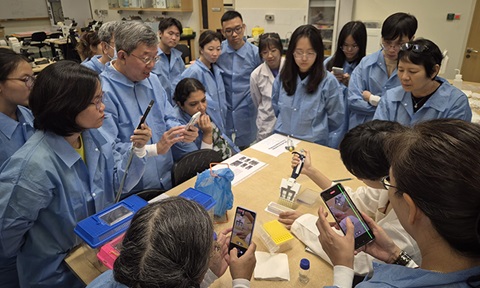
Currently, more than 50 primary and secondary school students aged between 10 and 15 have participated in off-site trials of the platform. The research team is scheduled to conduct a pilot study in a secondary school science laboratory in July, testing EmoSense in an authentic classroom environment.
Helping Teachers See Beyond What the Eye Can Catch
Assistant Professor Alwyn Lee from NIE's Learning Sciences and Assessment Department, who leads the EmoSense project, noted that teachers often face challenges in monitoring the emotional states of large classes, particularly as classrooms become increasingly digitalised.
"In a typical classroom of 30 to 40 students, it is difficult for teachers to accurately observe every student's emotional responses," said Assistant Professor Lee. "Observations are often informal and can be influenced by factors such as seating position, personality, or facial expressiveness. EmoSense provides a more systematic and real-time overview of students' emotions across the entire class."
During classroom activities, students may be asked to watch a short learning video or review learning materials on their personal devices. They then report how they feel—whether curious, confused, interested, or otherwise—while the platform simultaneously analyses subtle facial expressions. The system integrates these data sources and generates aggregated insights for teachers.
Teachers can view class-level emotional trends, including the number of students experiencing emotions such as excitement, enjoyment, frustration, or boredom. Students also receive personalised emotional feedback reports to support self-awareness and reflection.
Supporting, Not Labeling, Students
According to Assistant Professor Lee, the purpose of EmoSense is not to label students but to better understand their learning experiences.
"Emotions are dynamic and closely connected to learning," he explained. "By providing structured feedback, the platform helps students develop greater self-awareness while enhancing teachers' awareness of the classroom's emotional climate."
The research team hopes that EmoSense will support classroom management and instructional decision-making, allowing teachers to focus more attention on students who may need additional support. For example, teachers may identify students who repeatedly report feelings of anxiety or frustration, or investigate why a small group of students remains disengaged during activities that most of their peers find interesting.
Looking Ahead
The EmoSense platform will be expanded to NTU's Nanyang Business School later this year to explore emotional experiences in higher education settings. The research team is also actively engaging with local primary and secondary schools to explore future collaborations, with broader school-based deployments anticipated in the coming year.
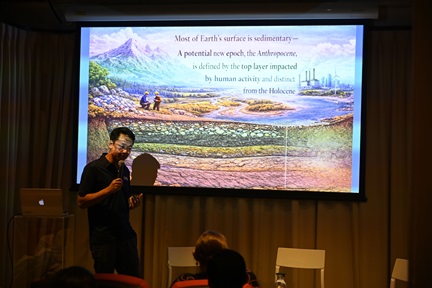
Preliminary findings from the project will be presented by Assistant Professor Lee at the 11th Redesigning Pedagogy International Conference, taking place from 2–4 June.
Read the original article from Lianhe Zaobao here.

.tmb-listing.jpg?sfvrsn=8fe55a62_1)
.tmb-listing.jpg?sfvrsn=5d63969_2)