
News Story 2: From Vision to Vanguard: 15 Years of Educational Excellence at LKCMedicine
 | By Edwin Ong |
When the Lee Kong Chian School of Medicine (LKCMedicine) was established in 2010 through a pivotal partnership between NTU Singapore and Imperial College London, it set out to reimagine medical education for Singapore’s future.
Fifteen years on, LKCMedicine has grown into one of the world’s top 100 medical schools, recognised for its innovative curriculum, student-centred learning, and commitment to nurturing doctors who are as compassionate as they are competent.
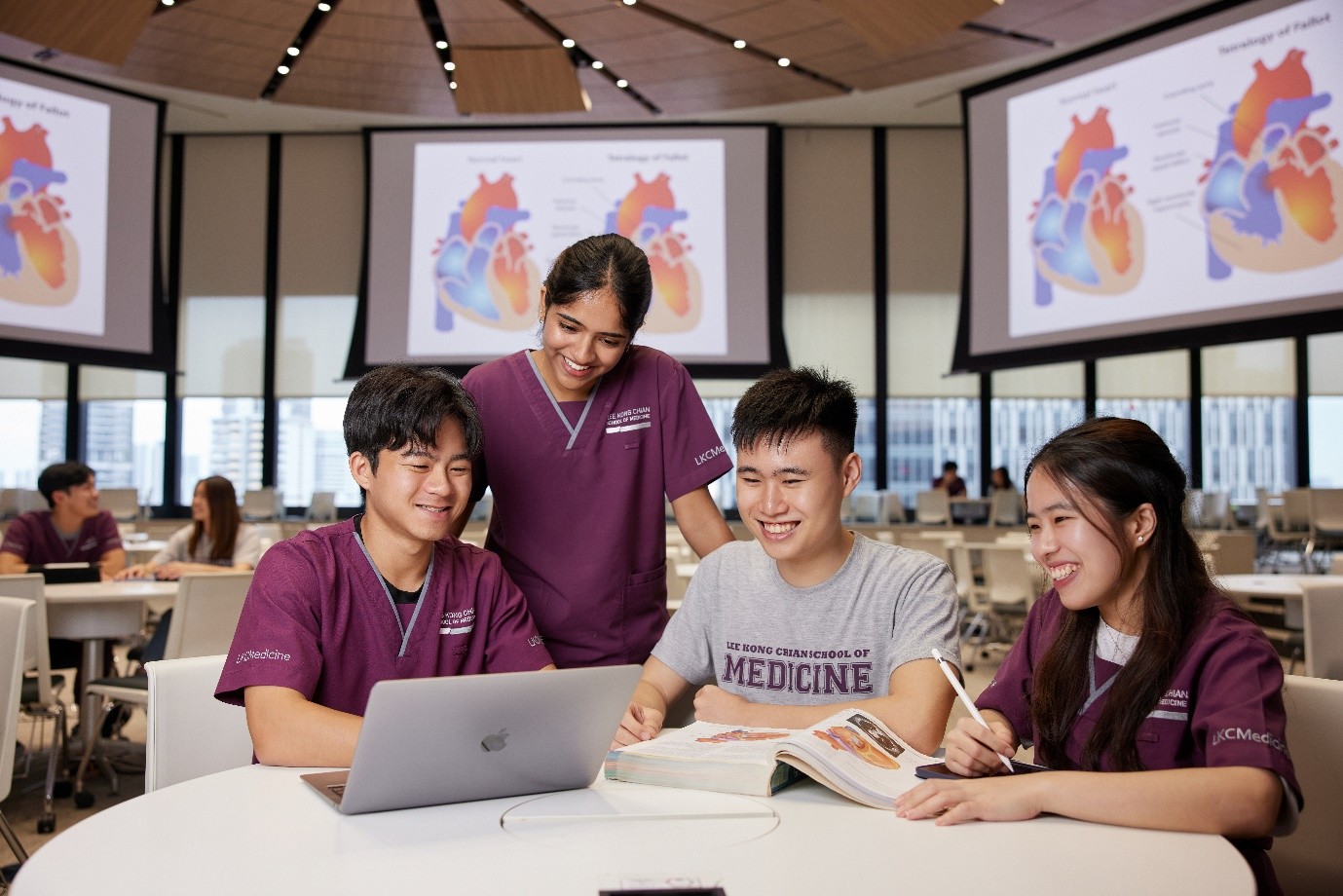
We round up the hallmarks of its development from being born as Singapore’s youngest medical school 15 years ago, to firmly entrenching a reputation (and gaining ground) as a world-class institution today.
Laying the Foundations of Excellence
From the start, LKCMedicine built its educational framework on strong foundations. Working closely with Imperial’s Faculty of Medicine, the School developed a comprehensive curriculum infrastructure that combined scientific rigour with a humanistic approach to care.
This curriculum, managed adeptly by the School’s staff and faculty alike, has constantly evolved to meet the changing needs of healthcare and society, whilst retaining a commitment to keeping the patient at its core. The team’s dedication and innovation have earned international recognition over the years, headlined by the ASPIRE Award for Excellence in Curriculum Development (2021) and ASPIRE Award for Excellence in Student Engagement (2024).
These accolades affirm LKCMedicine’s role as a global leader in medical education – and reflect the strength of its academic foundations, upheld and uplifted by its people.
Team-Based Learning: Collaboration at the Core
At the heart of an LKCMedicine-endorsed education lies its signature Team-Based Learning (TBL) pedagogy.
Instead of passively listening to lectures as was the convention, students work in small teams to analyse clinical scenarios, debate diagnoses, and make shared decisions – much like they will as doctors. This collaborative model not only deepens their understanding of medicine but also shapes them into empathetic communicators and reliable teammates in real-world healthcare settings.
TBL exemplifies LKCMedicine’s belief that great doctors are not made in isolation – they are formed through teamwork, discussion, and shared purpose.
This approach to optimising a medical student’s learning impact and preparation for doctorhood has been lauded by students and industry, with LKCMedicine graduates heralded by their peers, mentors and colleagues at hospitals for their eloquence in patient communications and team-oriented ethos.
“Team-Based Learning which we participated in on a regular basis greatly honed my ability to articulate my thoughts, engage meaningfully with the ideas of others, and resolve conflicting opinions amicably within a group setting. This set me in good stead to work with the countless other healthcare professionals that we necessarily work alongside on a daily basis when looking after patients.”
Dr Stewart Retnam (Class of 2018)
Senior Resident in Infectious Diseases at NHG Health
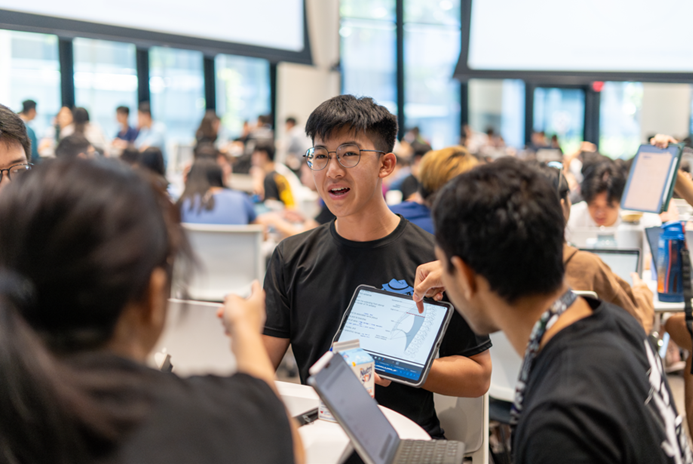 Talk the Talk – Every TBL session is a microcosm of the impact of this pedagogy – lively discussion, optimised learning and team-at-play.
A Vibrant, Engaged Student Community
LKCMedicine’s educational excellence is matched by a culture of active student engagement. Students are given real opportunities to shape their learning journey, from contributing to curriculum reform to planning school-wide events.
Through platforms such as the LKCMedicine Medical Students’ Society, students organise welfare initiatives, lead community outreach, and represent their peers in decision-making committees. This participatory spirit builds a strong sense of belonging and empowers students to be co-creators of their own education — a quality that endures long after graduation.
Where Medicine Meets Multidisciplinarity
As part of NTU Singapore, LKCMedicine enjoys a unique position at the intersection of medicine, engineering, technology, and the social sciences.
Students learn not just how to treat patients, but also how to understand the systems, data, and technologies that shape healthcare today. They collaborate with peers from other disciplines on projects that explore topics such as biomedical innovation, healthcare robotics, and patient communication.
This multidisciplinary approach ensures that LKCMedicine graduates are not only excellent clinicians, but also creative and tech-savvy problem-solvers ready to lead in an increasingly complex healthcare ecosystem.
Always Innovating for Tomorrow’s Healthcare
Medical education at LKCMedicine continues to evolve in tandem with Singapore’s national healthcare priorities. The School has been enhancing its MBBS programme to include emerging fields such as precision medicine, artificial intelligence (AI), digital health, and medical humanities – areas that will shape the next era of clinical practice.
Beyond the undergraduate level, LKCMedicine is expanding its suite of graduate programmes for healthcare professionals seeking to advance their careers. Recent additions include the Master of Science in AI in Medicine and Master of Science in Holistic Palliative Care – both designed to equip professionals with the skills and mindset needed for future-ready healthcare.
 Tech in medical education – A Year 1 student studying anatomy with the aid of VR goggles
A Decade and a Half of Growth, and Still Growing
In just over a decade, LKCMedicine has transformed from a bold idea into a globally respected medical institution, recognised through growing cohorts (the 190-strong Class of 2030 is the largest cohort to-date. Its success is built on a simple but powerful formula: world-class partnerships, an innovative curriculum, and a community of educators and students driven by purpose.
Yet the journey from 2010 to today reflects more than growth – it reflects a shared vision to transform medical education, and through it, the healthcare landscape of Singapore and beyond.
As LKCMedicine looks to the future, one thing remains constant – our people’s unwavering commitment to developing doctors who will care, lead, and inspire for generations to come.
It is perhaps best summed up by Assoc Prof Faith Chia, Vice-Dean (Education) -
“This milestone is as much about our people as it is about our progress. Over 15 years, we’ve built more than a medical school – we’ve built a community that learns together, supports one another, and strives to make a difference. I’m inspired every day by the dedication of our educators, staff, and students, and I look forward to the next chapter as we continue to grow, innovate, and serve with compassion.”