
Physical Climate Risk as a Catalyst for Firm Innovation

Climate change poses both immediate and long-term threats to corporations, especially through physical risks that disrupt operations, supply chains, labour markets, and innovation incentives. While prior research has emphasised transition risks and regulatory responses, evidence on how physical climate risks affect firms remains limited. Understanding this connection is critical, as firms that proactively respond to physical threats may not only mitigate losses but also unlock new opportunities for innovation, resilience, and competitive advantage.
In their latest research, Professor Xin Chang, Dr Fang Qian and Zhou Lei (Nanyang Technological University) develop novel firm-level measures of exposure to physical climate risk and examine their impact on climate innovation, including technologies and practices that reduce emissions and support sustainable production.
Acute vs Chronic Climate Risks
The study identifies physical climate risk in two categories: acute and chronic, following the Task Force on Climate-related Financial Disclosures (TCFD, 2017). Acute risks stem from sudden shocks such as hurricanes, floods, and heatwaves, while chronic risks reflect persistent changes, including rising temperatures, droughts, sea-level rise, and shifting precipitation patterns. Distinguishing them is crucial as acute risks require short-term resilience, whereas chronic risks shape long-term strategies, investments, and innovation. This distinction helps clarify how firms balance immediate disruptions with sustained competitiveness.
The researchers measured firm exposure to physical climate risks by combining data on extreme weather, droughts, floods, humidity, sea-level rise, and disaster losses. Acute risk is captured through disaster-related fatalities, damages, and duration, while chronic risk reflects persistent climate changes. By linking this data to firm locations and weighting by employment or sales, they created a scalable, firm-level measure of climate risk. Therefore, this approach shows where companies are most vulnerable and how climate pressures could drive innovation and adaptation.
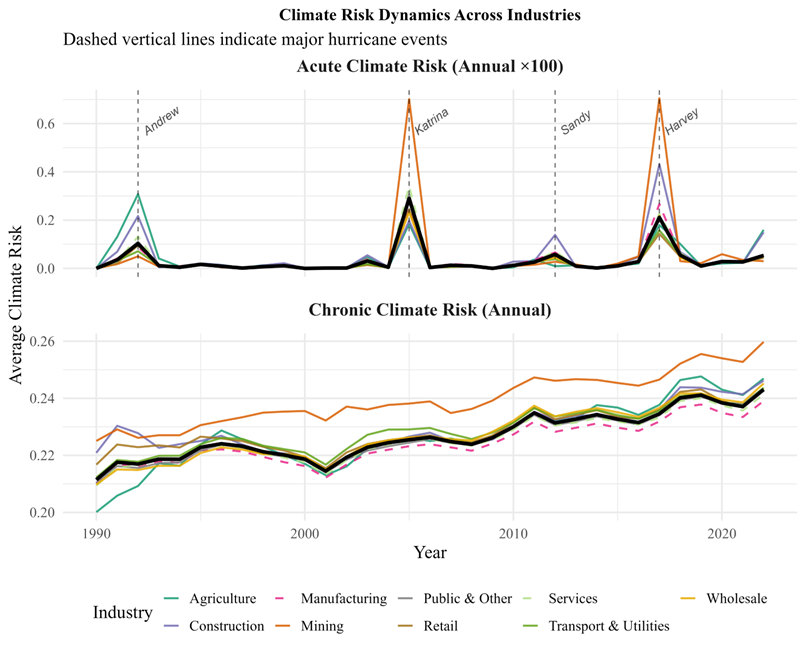 Figure 1: Average Sales-Weighted Chronic and Acute Climate Risk Plot
Tracking Physical Climate Risk Across Firms, Industries, and Locations
Their analysis combines firm-level data with detailed climate hazard information to provide a systematic view of physical climate risk exposure across U.S. companies. The results reveal clear differences over time, across industries, and by location in both acute and chronic risks.
Chronic risks reflecting long-term environmental pressures have been steadily increasing nationwide, while acute risks spike sharply during major disasters such as Hurricane Katrina in 2005. This shows that while long-term climate pressures steadily build, extreme events hit suddenly and intensely. Notably, the transportation, utilities, and construction industries face the highest long-term exposure (rising chronic risks), while manufacturing and energy industries are vulnerable to localised extreme events.
In terms of location, chronic risks are highest in the western and southeastern U.S., driven by persistent heat and drought. Whereas acute risks are concentrated in coastal and southern states, especially Florida and Texas, where hurricanes and floods frequently occur. These geographic patterns show that climate hazards affect regions very differently, creating uneven challenges for U.S businesses.

Managerial Implications
In conclusion, the research advances understanding of climate risk by combining detailed hazard data with firm-level operations to capture both sudden shocks (acute risks) and long-term pressures (chronic risks). Unlike studies that focus mainly on regulatory or transition risks, this study provides systematic evidence of how physical climate risks affect firms’ innovation and broader economic outcomes.
The findings contribute to research in climate finance, business strategy, and sustainability, while offering practical insights for policymakers, investors, and corporate leaders on managing climate risks, fostering innovation, and creating long-term value. Ultimately, this work underscores that proactively addressing physical climate risks is not just a defensive strategy; it is a driver of innovation and sustainable growth for firms and the broader economy.
Xin Chang, Simba is a Professor of Finance at Nanyang Business School and Associate Dean (Research) overseeing PhD programs and research activities at Nanyang Business School. He specialises in corporate Finance, especially capital structure, mergers and acquisitions, and stock valuation. He taught various courses to undergraduate, honours, master, and PhD students at HKUST, the University of Melbourne, the University of Cambridge, and NTU.
Qian Fang is a Senior Research Fellow at the Centre for Sustainable Finance Innovation (CSFI). She holds a PhD in Statistics and has expertise in statistical modelling, machine learning, and AI. Her work focuses on applying advanced data-driven methods to sustainable finance and climate risk. She also teaches PhD-level AI literacy courses, covering machine learning and large language models for research and real-world applications.
Zhou Lei is a Banking & Finance PhD student at Nanyang Business School, Nanyang Technological University.
This research paper is a joint work with Lulu Di (Southwestern University of Finance and Economics).
In-progress