
Better Together: A Systematic Framework for Combining Humans and Artificial Intelligence (AI) in Decision-Making
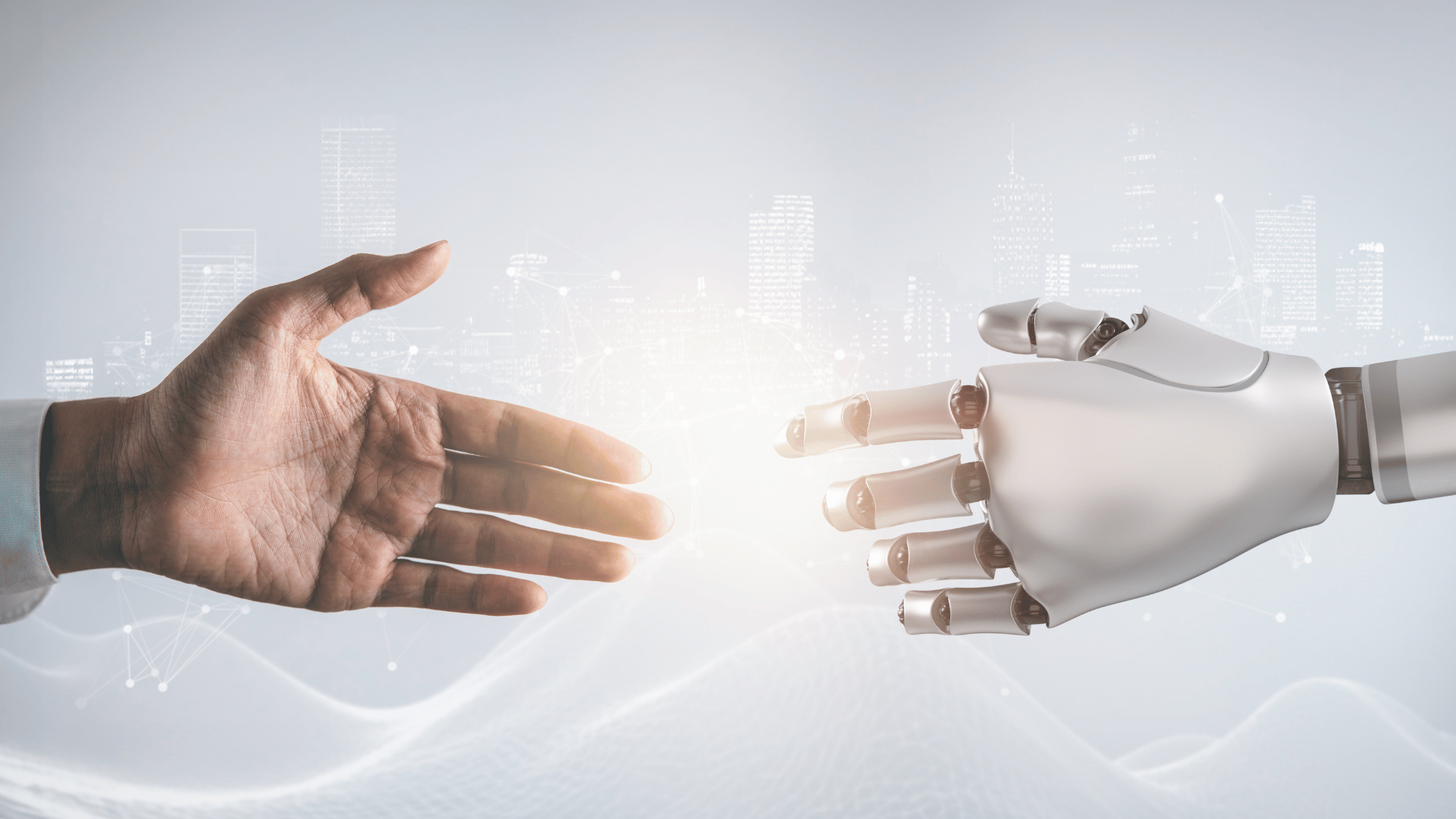
Organisations are increasingly recognising that the most effective way to enhance managerial performance lies not in replacing humans with artificial intelligence (AI), but in combining the strengths of both. While managers bring strategic judgment, emotional intelligence and contextual understanding, AI contributes speed, precision and the ability to process vast amounts of data in real time. By integrating these capabilities, companies are beginning to tackle complex issues such as decision-making under uncertainty, workforce optimisation and adaptive leadership.
Professor Vivek Choudhary (Nanyang Technological University) and his co-authors investigate how to effectively combine human and AI strengths to enhance decision-making in situations in which neither approach excels alone. With growing interest in human–AI collaboration within organisations, this research presents a framework that defines the conditions needed for successful human–AI teamwork.
Division of Labour
Previous efforts to combine humans and AI to complete tasks have largely focused on the division of labour according to specialisation, whereby humans and AI take on different roles based on their strengths. In this research, the authors focus on division of labour without specialisation (otherwise known as the human–AI ensemble)—in which both humans and AI perform the same task but share the workload. This approach has the potential to improve decision accuracy, particularly when humans and AI differ in the types of errors they make in approaching the same task.
“AI may surpass humans when it has all the data, but humans hold the intuitive understanding that machines can’t replicate. Hence, the collaboration between the two becomes essential”, said Professor Vivek.
Why Human–AI Ensembles Work Better
First, the authors predict that when humans and AI differ in terms of their strengths and errors, human–AI ensembles will make better decisions than humans or AI alone. Moreover, using AI to assist humans in decision-making (augmentation) will add more value than using AI to replace them (automation).
The study finds that human–AI ensembles can be effective even when neither the human nor the AI is clearly more accurate on its own. The authors identify specific conditions under which this collaborative approach is most beneficial. Their framework shows that the value of collaboration depends on two key factors: the complexity of the data and whether the AI has access to all the information needed for the task. When data are highly complex and fully available to the AI, the AI typically performs best when working independently. However, when tacit knowledge or “know-how” cannot be easily captured by AI, humans provide essential input. In these situations, combining human judgment with the AI’s ability to model complex patterns produces a more accurate and robust decision-making system than either could achieve independently.
“For human–AI collaboration to add value, both the human and the AI need to be at least better than chance. Otherwise, neither can improve the other’s performance”, Prof Vivek remarked on the importance of human–AI ensembles.

Managerial Implications
The research highlights important implications for managers and organisations in designing work and teams that incorporate AI. It suggests that human–AI collaboration is a viable option, even in situations where it might typically be ruled out, particularly when neither the human nor the AI is superior in the prediction task. This challenges the conventional view that AI should only be deployed to replace humans in tasks in which it clearly produces better results.
Instead, organisations can leverage human–AI ensembles to improve decision-making by combining human intuition with AI’s ability to process complex data. Managers can consider more flexible team structures and collaboration strategies that harness the complementary strengths of humans and AI, expanding possibilities for effective human–AI integration across diverse work contexts.
Human–AI collaboration is not just about efficiency—it is about creating smarter, more resilient decision-making. Organisations that embrace human–AI ensembles can unlock insights that neither humans nor AI could achieve alone. The next time you face a complex decision, consider how combining human intuition with AI’s analytical power could give you a clearer, more accurate path forward.
Note: This research paper was published by the Journal of Management in October 2023.
Vivek Choudhary is an Assistant Professor of Information Technology & Operations Management at Nanyang Business School, Nanyang Technological University. His research focuses on human behaviour across digital platforms, including last-mile delivery, food delivery, and health tech, using Field Experiments, Econometrics, and Machine Learning.
This research paper is a joint work with Arianna Marchetti (London Business School), Yash Raj Shrestha (University of Lausanne) and Phanish Puranam (INSEAD).