
How AI Is Redefining Firm-Level Climate Risk Measurement

Climate change poses significant challenges to economies, societies, and ecosystems worldwide. It can damage infrastructure, disrupt supply chains, lead to regulatory changes, and create additional costs as economies shift toward sustainability. These risks are intensified by more frequent and severe climate disasters, including heatwaves, hurricanes, floods, rising sea levels, and wildfires.
In their research, Professor Xin Chang and Dr Fang Qian (Nanyang Technological University) show that accurately measuring the effects and risks of climate change is essential for understanding its full economic and social impact. Proper measurement enables these risks to be quantified and priced, helping households, businesses, and institutions make better decisions, such as planning ahead, pricing risks more accurately, and investing in solutions that reduce future damage.
Assessing Climate Risk with AI
Their research advances firm-level climate risk measurement by using AI. They compiled a global dataset of over 13,000 earnings call transcripts from public firms across 93 countries and developed a unified large language model (LLM)-based text analysis pipeline to analyse climate-related content. This pipeline covers key steps, including sample labelling, model training, evaluation, and aggregation to firm-level measures. This model allows them to extract meaningful insights from each sentence, capturing both what companies say and the tone in which they say it.
 Figure 1: LLM-Based Climate Text Analysis Pipeline
The model performs three key tasks for each sentence: first, it determines whether the sentence is climate-related; second, it classifies the topic into categories such as Opportunity, Regulatory, Physical, or Other; and third, it assesses the sentiment as Positive, Negative, or Neutral. By sharing a common language model across these tasks, the system can recognise patterns in how climate topics are discussed, improving both accuracy and efficiency.
By using multiple AI models within a consistent framework, the system can recognise patterns in how climate topics are discussed, improving both accuracy and robustness. These outputs are then aggregated to construct firm-level measures of climate exposure, topics, and sentiment, providing a scalable way to quantify corporate climate risk.
Why Earning Calls Matter
Moreover, measuring firm-level climate exposure requires analysing multiple sources of information. For instance, ESG reports provide direct insights into a company’s climate strategies, while annual and quarterly reports offer indirect signals through financial disclosures and risk discussions.
However, earnings calls are uniquely valuable because they offer real-time, candid discussions between executives and investors. During these calls, CEOs and CFOs discuss performance, strategy, and long-term plans, while analysts ask follow-up questions. This dialogue captures not just what firms report officially, but how seriously they prioritise climate risks and opportunities, offering a dynamic picture of corporate climate strategy.
Linking Climate Talk to Real-World Emissions
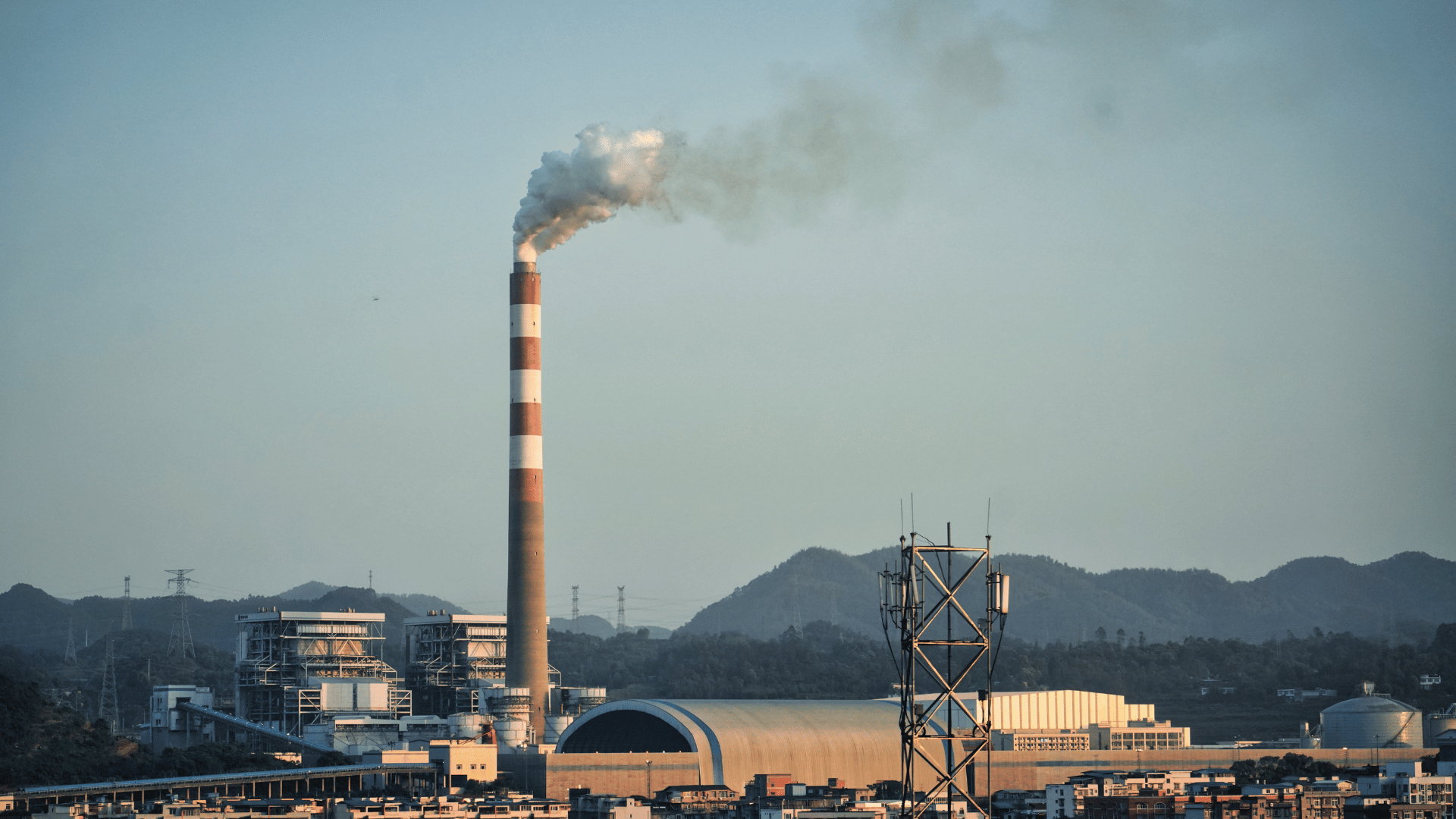
Their study summarises the climate change exposure measures and links them to firms’ carbon emissions. The measures vary meaningfully across firms and periods, with higher exposure associated with greater emissions. This highlights a real connection between corporate climate discourse and environmental impact. The results also show an upward trend in exposure, especially following major climate events and regulatory milestones, such as the adoption of the Paris Agreement in 2016.
Therefore, AI-powered analysis of earnings calls reveals that what companies say about climate change aligns with their actions. These insights help investors, regulators, and stakeholders identify real risks, track progress, and hold firms accountable for their environmental impact.
Xin Chang, Simba is a Professor of Finance at Nanyang Business School and Associate Dean (Research) overseeing PhD programs and research activities at Nanyang Business School. He specialises in corporate Finance, especially capital structure, mergers and acquisitions, and stock valuation. He taught various courses to undergraduate, honours, master, and PhD students at HKUST, the University of Melbourne, the University of Cambridge, and NTU.
Qian Fang is a Senior Research Fellow at the Centre for Sustainable Finance Innovation (CSFI). She holds a PhD in Statistics and has expertise in statistical modelling, machine learning, and AI. Her work focuses on applying advanced data-driven methods to sustainable finance and climate risk. She also teaches PhD-level AI literacy courses, covering machine learning and large language models for research and real-world applications.
In-progress