
Staff Profile: Up Close & Personal with Nanyang Assistant Professor Theresia Handayani Mina
By Sanjay Devaraja
A Life in Data, Diet and Population Health

Assistant Professor Theresia Handayani Mina’s career has been grounded by a scientific curiosity and pragmatism to ensure affordable healthcare through innovations. Her journey began in Indonesia, where she developed an early interest in the interplay between lifestyle, environment, and health. She embarked on undergraduate study in Singapore, then a postgraduate training in the United Kingdom and returned to Singapore for postdoctoral training, eventually establishing her role as Assistant Professor of Health Informatics and Chronic Disease Epidemiology at LKCMedicine.
Her research sits at the intersection of population health, data science, and chronic disease. She leads work on eating behaviour and dietary risk factors in multi-ethnic Asian populations, with a focus on how these factors influence cardiometabolic health. She is also actively involved in large-scale data initiatives, including data harmonisation and quality control for the PRECISE-SG100K Study and Singapore Strategic Cohort Consortium, which draw on electronic health records to derive insights for precision health.
Beyond her research, Theresia is a dedicated mentor. She plays an active role in early career researcher support through founding LKCMedicine EArly Researcher Network (LEARN) and contributes to building a collaborative community for clinician-scientists and population health researchers.
In this interview, she reflects on her academic journey and personal experiences that shaped her career, and the research and teaching priorities that drive her work at LKCMedicine.
What first inspired you to pursue research in health, and how did that decision shape your path from Indonesia to the UK?
I have always been fascinated by human biology, but due to the financial hardship, it was either finding an undergraduate scholarship or study a pragmatic secretarial course in a local Indonesian college. This is what drove me to study biological sciences as an international scholar in NTU Singapore. My early academic training focused on molecular biology, and I truly enjoyed those long biochemistry lectures, there was so much carte blanche.
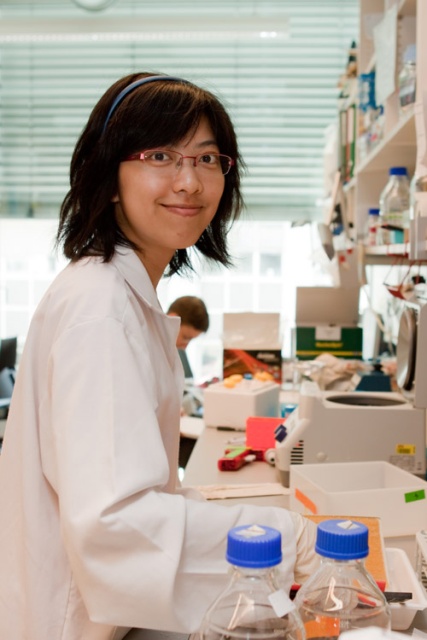
Performing RNA extraction as part of summer internship in Prof Joachim Lingner’s laboratory in Ecole Polytechnic Federale de Lausanne, 2010.
Back in 2008, human pluripotent stem cells were all the rage. I truly enjoyed my internships in the Genomic Institute of Singapore and Ecole Polytechnic Federale de Lausanne, carefully culturing cells in sterile environment and developing films in the dark room. But there was always the nagging question at the back of my head, on how this complex scientific experiment would translate to ordinary Indonesians like my parents. Over time, I yearned for greater exposure towards translational research and a broader horizon. As I preferred not to spend one to two years of laboratory rotation and modules, as expected in the typical US postgraduate program, I decided to pursue my Master and PhD in the University of Edinburgh, and the rest is history.
What were some of the most significant academic or personal challenges you faced when transitioning between countries and institutions, and how did those experiences influence your approach to research and collaboration?
Growing up with the cultural norm which prioritises marriage and family over pursuing higher education, it was challenging to convince my family to support my intention to pursue PhD, so much so that I wrote a recipe book about it as part of the ATHENA-Swan chapter in Edinburgh, in the hope that information would help others. Transitioning between countries and institutions has taught me the importance to remain open-minded, curious and respectful. Indeed, this experience has translated into my approach in research collaborations, acknowledging the need to engage with colleagues with different skillsets and expertise to gain diverse perspectives and knowledge.
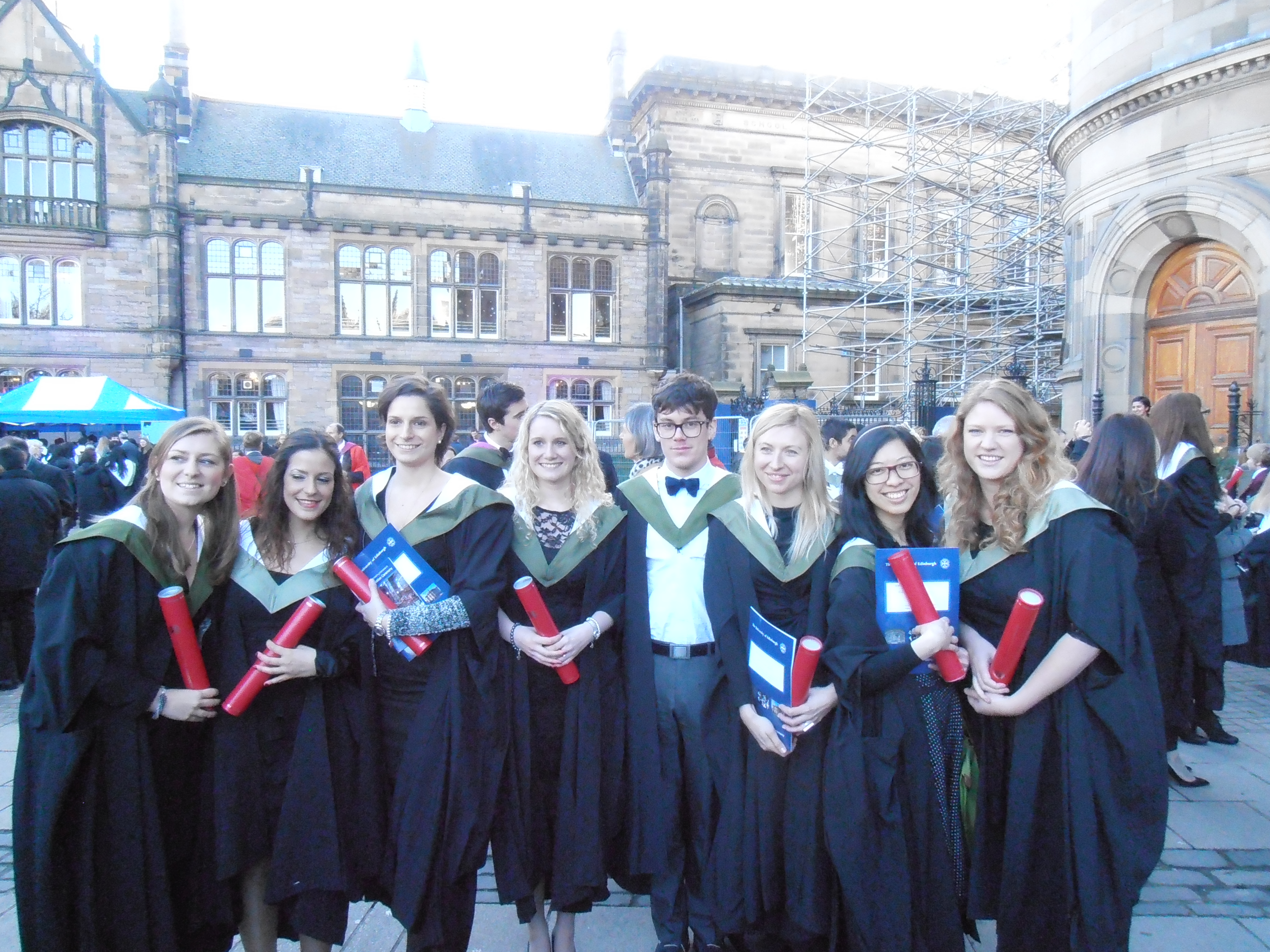
Theresia at the Convocation for her Master’s in Reproductive Sciences at the University of Edinburgh, 2013.
How has your role at LKCMedicine evolved from your early work as a research fellow to your current position, and what does this mean for your work and ambitions?
Previously as a research fellow, my focus was on executing project deliverables and supporting my supervisors. These tasks remain important but as a faculty member, I also need to craft research programmes, set long-term goals, and lead my teams. Being a Principal Investigator comes with greater freedom to pursue an independent research interest, but also more leadership responsibilities, such as securing funding to enable hiring, ensuring student’s success, and balancing these while supporting the departmental and institutional vision and mission. Importantly, the new position will empower me to achieve my pursuit in ensuring affordable precision healthcare.
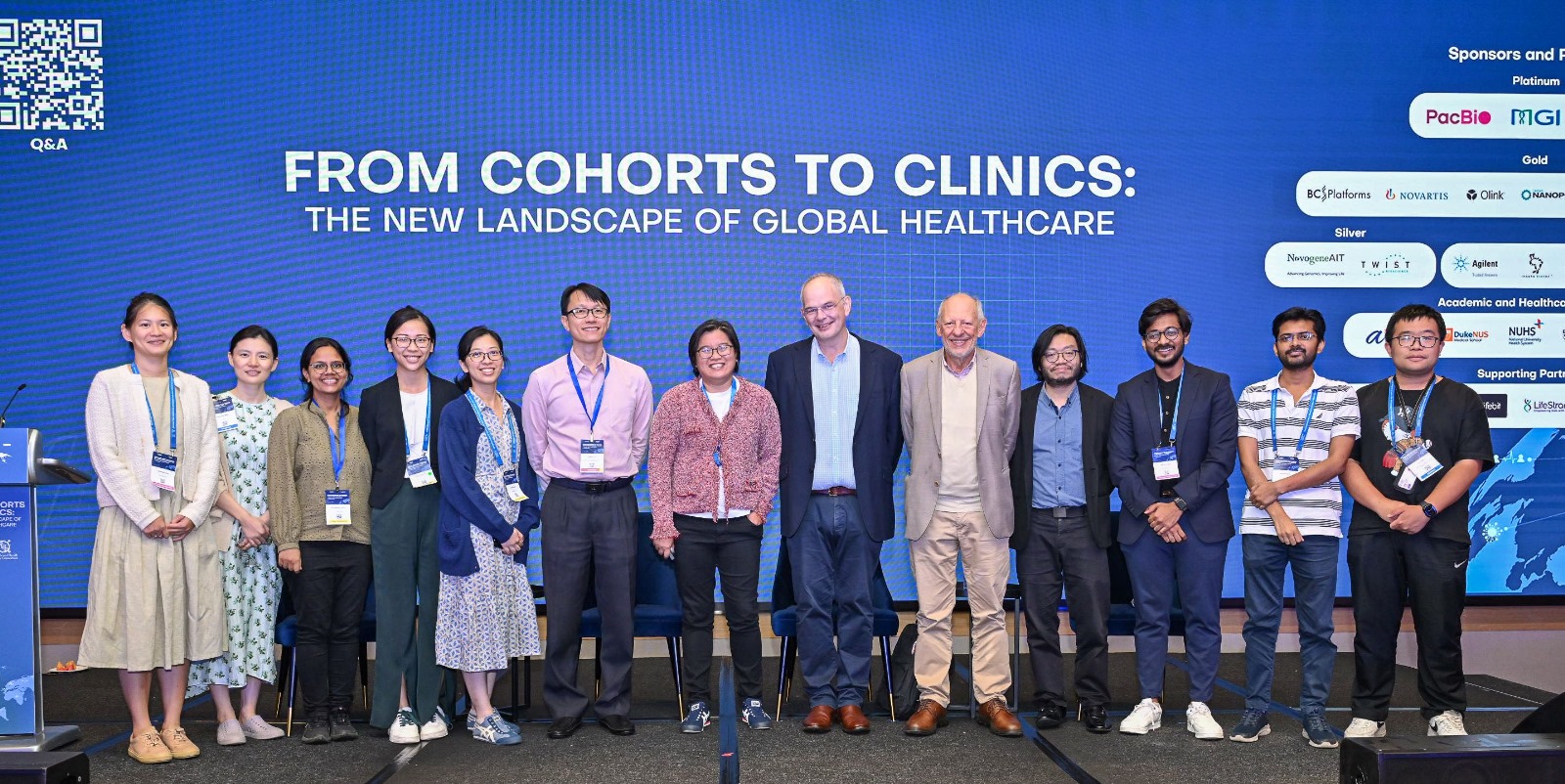
Together with Prof John Chambers’ population and global health group in the PRECISE-IHCC Conference in 2024.
Your project “The role of eating behaviour in cardiometabolic health of multi-ethnic Asian populations”, funded by National Medical Research Council, explores eating behaviour in multi-ethnic communities. What questions about eating habits prompted this work, and what have been some of the most surprising findings so far?
I spent my childhood being told I was too thin and needed to eat more. Yet, even within the same family, my sister, cousins, and my father’s sisters have all struggled to keep their cholesterol levels in check. It’s a reminder of how confusing it can be to know what “eating right” really means or what a healthy weight actually looks like.
These observations were intriguing, and I want to use a precision health approach and go beyond generic dietary advice because it is important to recognise that individual eating behaviour is shaped by genetic predisposition, culture, and environment. I have collected 900 sets of eating behavioural data, revealing several intriguing emerging patterns that suggest distinct behavioural profiles. However, these findings are still preliminary, and further analysis is needed to better understand ethnic differences, the interactions between various components of eating behaviour, and how these patterns translate into actual dietary intake and health outcomes, such as excess visceral fat.
You also investigate links between dietary risk factors and excess visceral fat. Why is visceral fat a critical focus in cardiometabolic research, and how might your findings eventually inform prevention or clinical strategies?
Asian individuals, including East, South, and Southeast Asians, exhibit higher proportions of visceral fat compared to those of European ancestry (thin-outside-fat-inside), with variations among ethnic groups. Excess visceral fat is a critical focus as it is a key risk factor for many cardiometabolic diseases such as type 2 diabetes, hypertension, hyperlipidaemia, and cardiovascular disease. I am investigating visceral adiposity from multiple angles, including genetic predisposition, upstream behavioural and dietary risk factors, down to how we measure visceral fat in a more accessible, yet accurate way. Findings from my research will inform prevention and clinical strategies, for example by establishing ethnic-specific cut-offs for visceral fat, providing empirical evidence on the disease burden associated with visceral fat, and identifying key dietary behaviours and risk factors that promote or protect against its accumulation.
You lead data harmonisation and quality control efforts for large studies such as the SG100K Study and the Singapore Strategic Cohort Consortium. What are the biggest challenges in working with electronic health records at this scale, and how do you ensure data quality while preserving privacy?
In Singapore, we are grateful for TRUST* to establish a trusted research environment to allows researchers to use Electronic Health Records (EHR) while preserving privacy. Large studies often comprise data from different sister cohorts, with slightly varied survey instruments and data collection methods, and each healthcare clusters have slightly different coding system and clinical protocols. It is an unglamorous job, but one that is necessary. As with any analytical pipeline, we strive for perfection, but it will never be perfect. Receiving early feedback from colleagues has helped us to continue improving our work.
*TRUST is a secure, government‑backed platform for researchers to access and analyse anonymised health and real‑world data.
As an educator at LKCMedicine, what aspects of teaching and mentoring students do you find most rewarding, and how do you try to integrate your research interests into the learning experience?
One of the most rewarding aspects of teaching at LKCMedicine is seeing students develop into confident, independent thinkers. I enjoy mentoring students as they learn to critically evaluate evidence, link theories in research to real-world healthcare challenges, and discover their own interests in medicine and science. Having supervised students in pre-university, URECA*, medical scholarly projects, and seeing them pick up many essential research skills and grow in their character is very rewarding. I always encourage students to perform their own data cleaning, try different statistical methods, or collect their own data; this helps them appreciate how epidemiological data can be used to improve health outcomes at both the individual and population levels. I hope to inspire curiosity and a lifelong commitment to evidence-based practice, while demonstrating how research can drive meaningful improvements in healthcare.
*NTU’s Undergraduate Research Experience on Campus (URECA) programme.
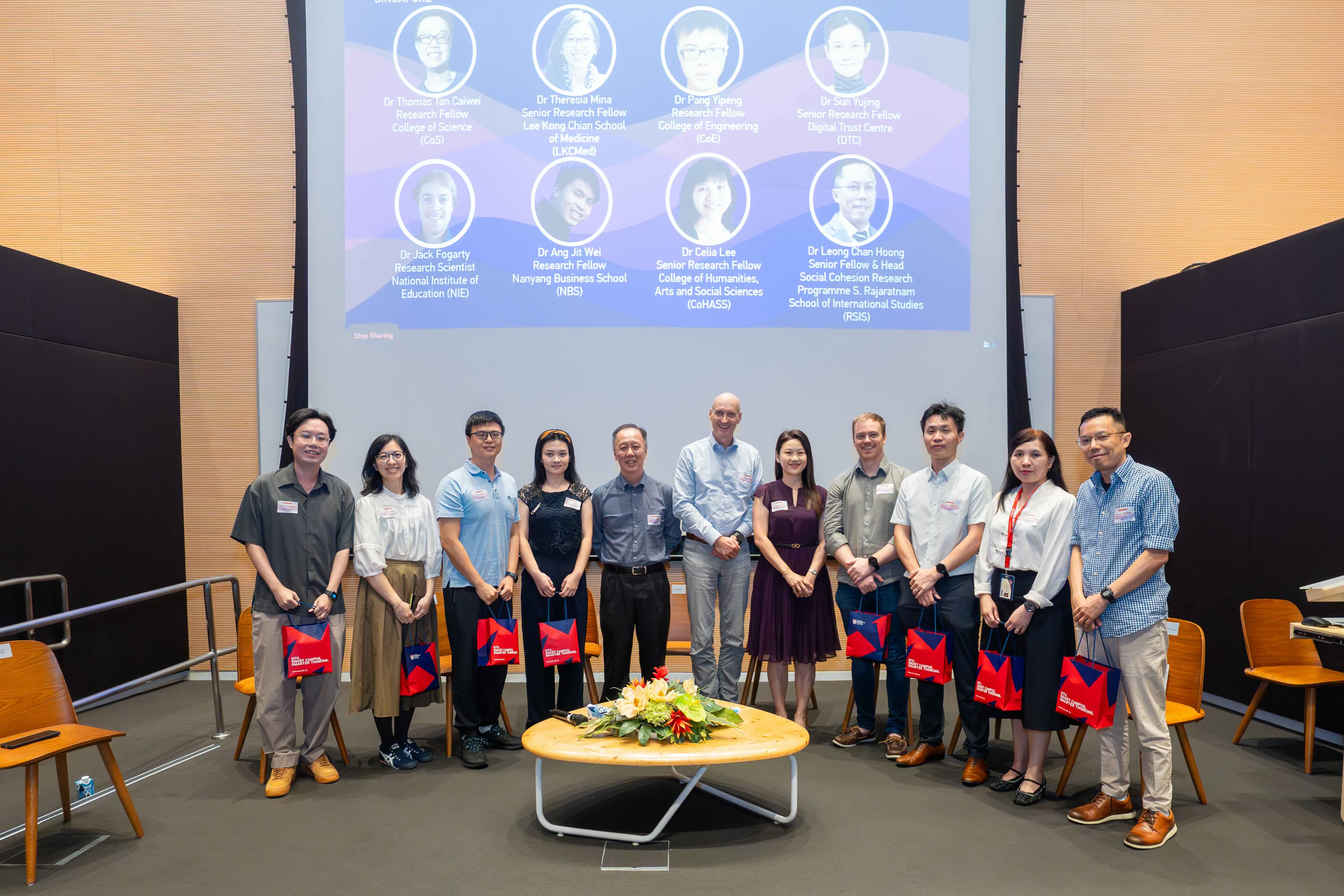
Theresia served as a panellist in the inaugural NTU Research Day in 2025 to share her experience juggling scientific career and raising a young family.
You have been active in early researcher networks and events such as LKCMedicine’s LEARN. Why do you think it is important to build a supportive community for early career scientists, and what role do you hope to play in that?
We have invested heavily in building research programmes, funding grants, and awarding scholarships in Singapore and beyond. These efforts that have collectively shaped the competitive ivory tower of academia. Yet, the postdoctoral journey can often be a lonely one, though it does not have to be. As my mentor once told me, “If you want to break a glass ceiling, break it from the inside.” At this young medical school (LKCMedicine), there was no LEARN, so we established one. LEARN will continue to advocate for early-career researchers, supported by a strong mandate from the School, and work towards creating diverse and meaningful career pathways for the next generation of scientists.
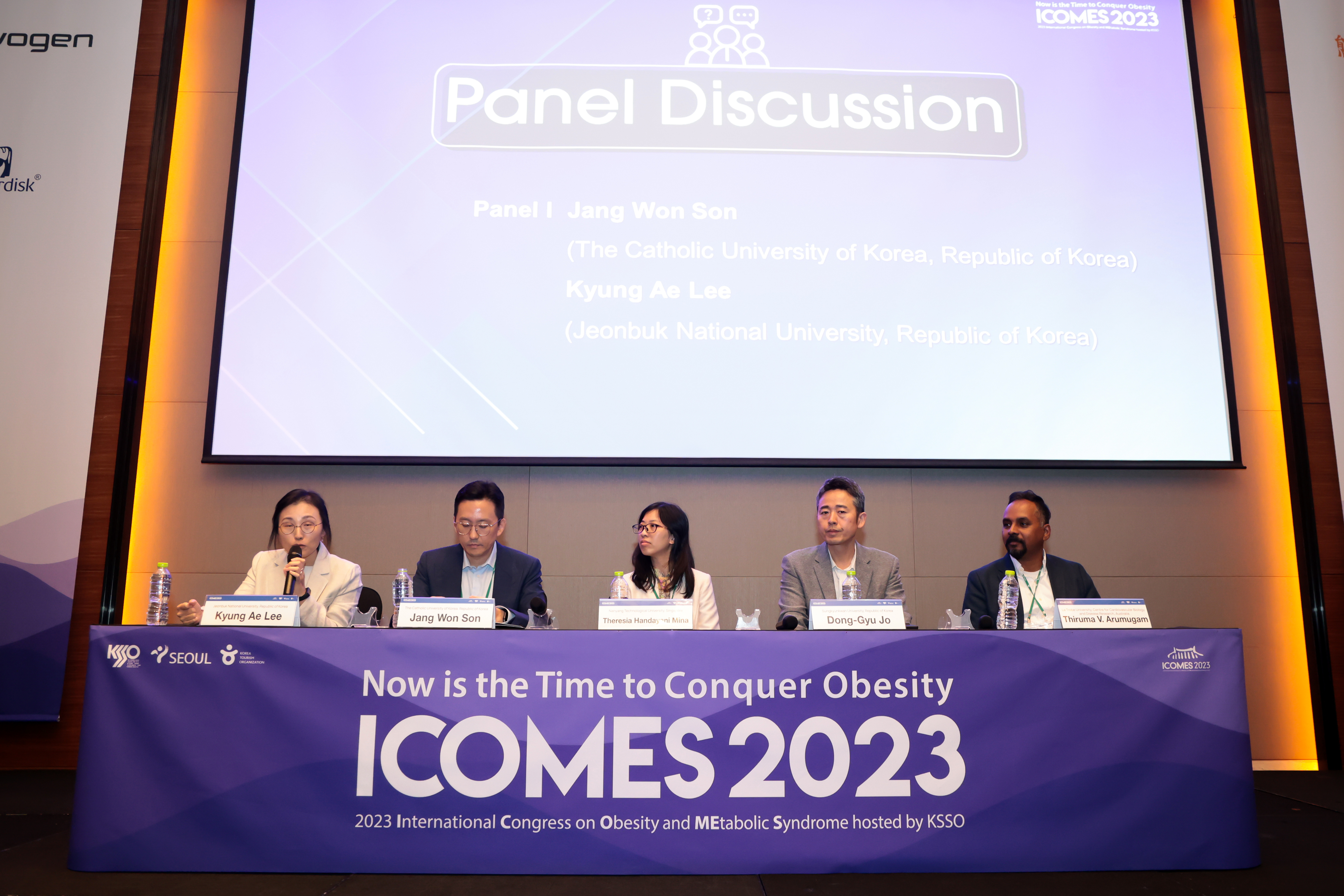
Theresia served as speaker in the International Congress for Obesity and Metabolic Syndrome 2023 held in South Korea.
What are you most excited about for the next phase of your work at LKCMedicine (whether in research, collaboration, or teaching) and what would you like your contribution to be remembered for?
I am excited to welcome my first PhD student in the coming semester, and hopefully many more to come. I am also excited to establish empirical evidence for precision nutrition and work in partnership with policymakers and health implementation scientists to bring the findings from big data analytics to primary care and preventative measures at community levels.
If I could be remembered for one contribution, I would hope it is for advancing our understanding of population health in Asia and beyond through precision nutrition, and for mentoring the next generation of clinician‑scientists and population health researchers.

Theresia facilitated the motion “This house believes that AI accelerates gender equity in leadership” as part of the 2026 International Women in STEM & Medicine Symposium.
More importantly, I am guided by a Javanese proverb from Ki Hajar Dewantara, Indonesia’s Father of Education: “Ing ngarsa sung tuladha, ing madya mangun karsa, tut wuri handayani.” The final phrase, which shares my middle name, is Indonesia’s national motto for education. I hope to be remembered for “supporting from behind” (tut wuri handayani) – that is, for empowering and mentoring the next generation of scientists.