
From Pioneer Cohort to Chief Resident: Alumnus Dr Eden Tay on Palliative Medicine
By Sanjay Devaraja
Meet Dr Eden Tay – one of LKCMedicine’s pioneer graduates who is quietly turning the hard conversations about serious illness into compassionate, practical care. After completing Family Medicine (MMed, 2022) and a meaningful spell at SingHealth Community Hospitals, Dr Tay made the move into palliative medicine full-time and is now a Senior Resident and Chief Resident in the National Palliative Medicine Integrated Programme.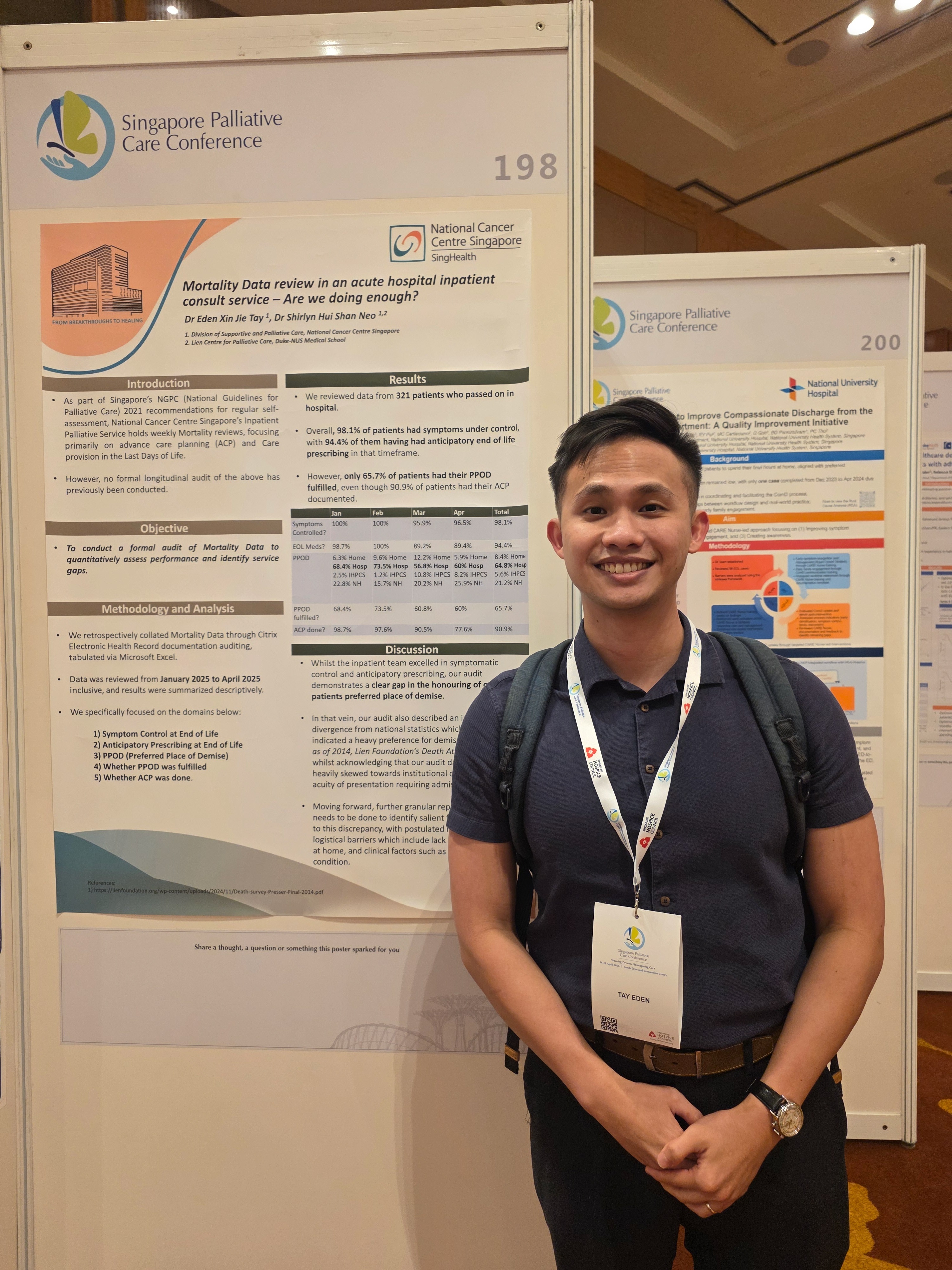
Dr Tay is currently rotating through inpatient palliative units, community home hospice teams and inpatient hospices, sharpening his clinical skills, learning how to build services, and working closely with multidisciplinary consult teams at Changi General Hospital. Along the way, he picked up the SingHealth Medicine Scholarship, was named a SingHealth Associate in Education, and won the Rosalie Shaw Book Prize for his Graduate Diploma in Palliative Medicine.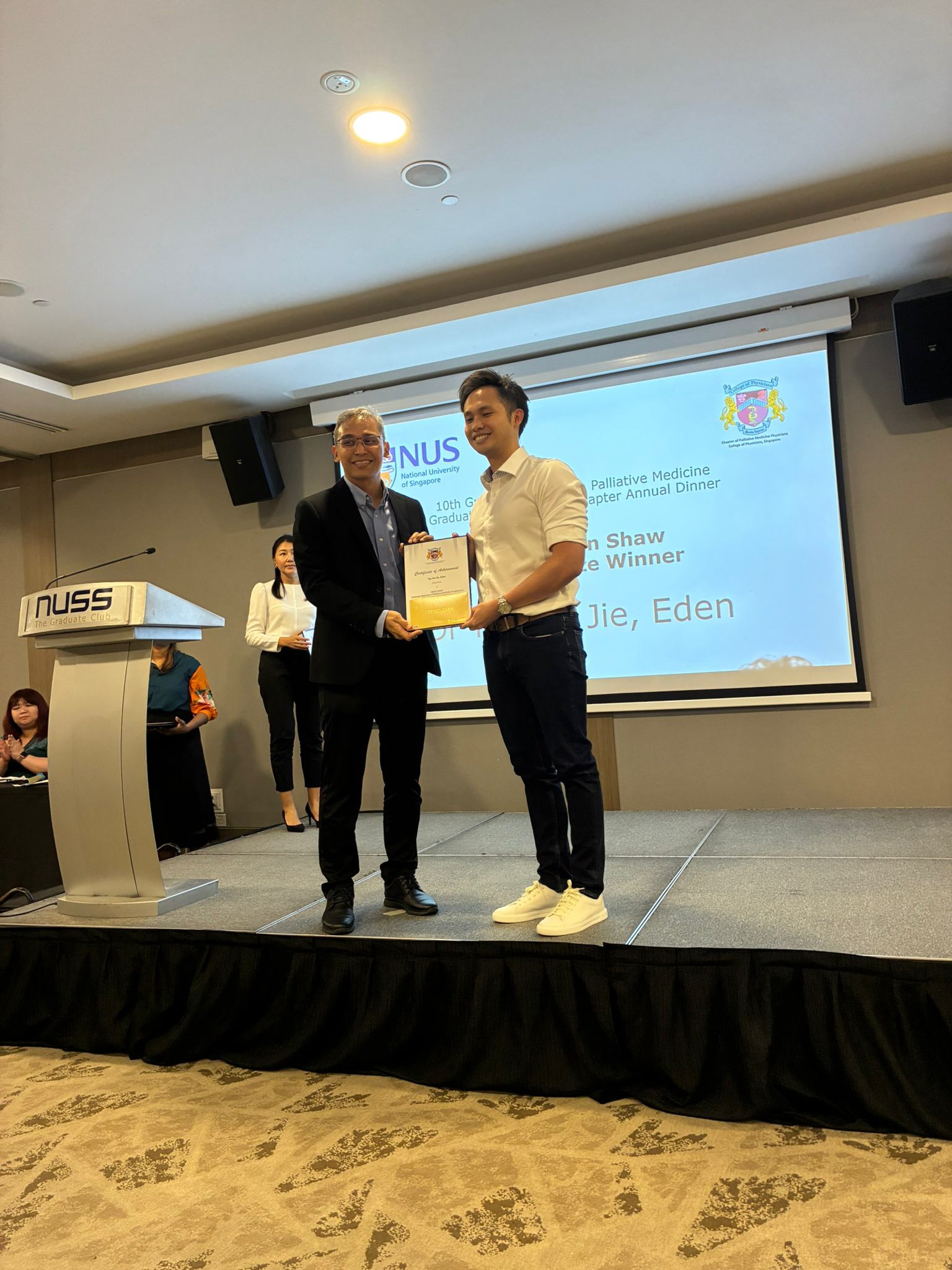
Dr Tay was awarded the Rosalie Shaw Book Prize for his Graduate Diploma in Palliative Medicine.
We caught up with the alumnus to learn more about his journey into palliative medicine, the experiences that shaped his path, and what continues to inspire him in this deeply meaningful field.
You were part of the pioneer LKCMedicine cohort. Looking back, what stands out most from your time at LKCMedicine, and how has it shaped the doctor you are today?
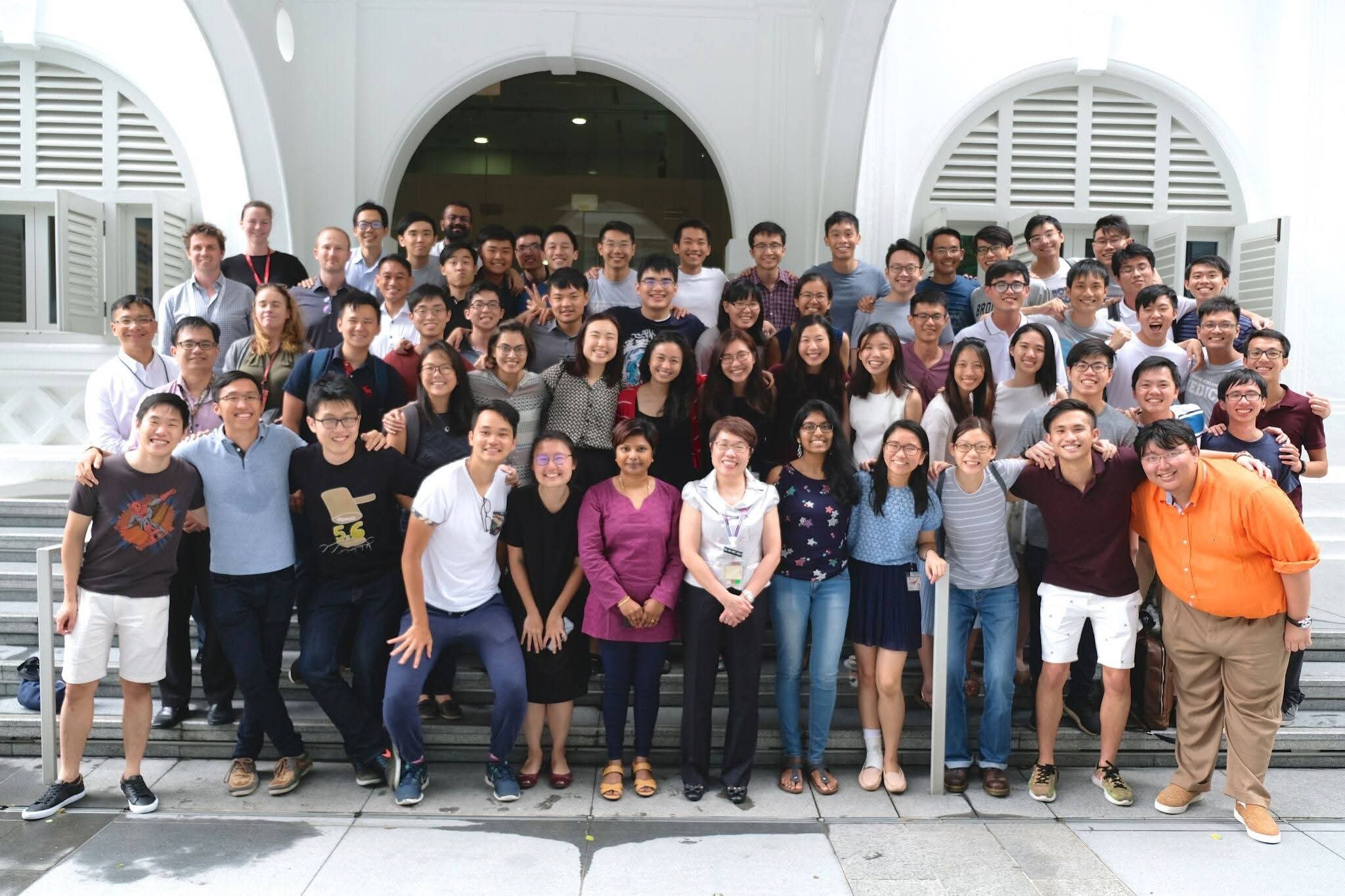 Marking a milestone moment, LKCMedicine’s inaugural cohort comes together after completing their final examinations.
Your training journey has taken you through family medicine and now into palliative medicine. What drew you to make that transition more fully into palliative care?
For most of my time in practice, including during my family medicine training, I often felt that something essential was missing… a deeper, more meaningful connection between physician and patient. While the clinical work was fulfilling in many ways, it sometimes lacked the sense of truly understanding and walking alongside patients through their most vulnerable moments. I found that connection in palliative care, where the focus shifts beyond treatment to presence, empathy, and advocacy. Being able to support patients and their families during such critical times, and to honour their values and wishes, gave my work a renewed sense of purpose and made everything profoundly worthwhile.
Was there a particular patient encounter or rotation that confirmed for you that palliative medicine was the right long-term path?
When I was serving as a Staff Registrar in Sengkang Community Hospital’s Inpatient Palliative Care Hospice Service, we came across a middle-aged lady with relapsed cervical cancer who had extensive pelvic metastatic burden. She had complex cancer pain with a strong psychological component. As she deteriorated, her pain got increasingly worse, requiring extremely high doses of opioids and adjunctive analgesia for it to be kept under control until she finally passed. Throughout the process, caring for her for the good part of two months allowed me the opportunity to truly see her as a person, beyond just her diagnosis or her pain. This experience, on top of many others, brought clarity to my path forward.
You are now a Chief Resident in the National Palliative Medicine Integrated Programme. What have you learned from leading at this stage of training, and what has been the most challenging part of the role so far?
It is challenging, to say the least. Residency itself is already demanding, and the responsibility to prioritise our own training remains. However, as Chief Resident, my focus extends to supporting my fellow residents, ensuring their needs are heard and their concerns addressed. The most difficult aspect is often being in the middle: representing my co-trainees while balancing institutional expectations and constraints; and working toward a meaningful compromise.
What does a multidisciplinary consult team need to do well in palliative care, and what have you had to hone most during your current rotation at Changi General Hospital?
Talking to each other! It sounds obvious and straightforward; in reality, it often does not happen for a variety of reasons. In the same vein, during my posting at Changi General Hospital, I came to appreciate the importance of finding common ground in interdepartmental communication to advocate effectively for our patients’ best interests, especially in palliative care, where we work across most, if not all, specialties.
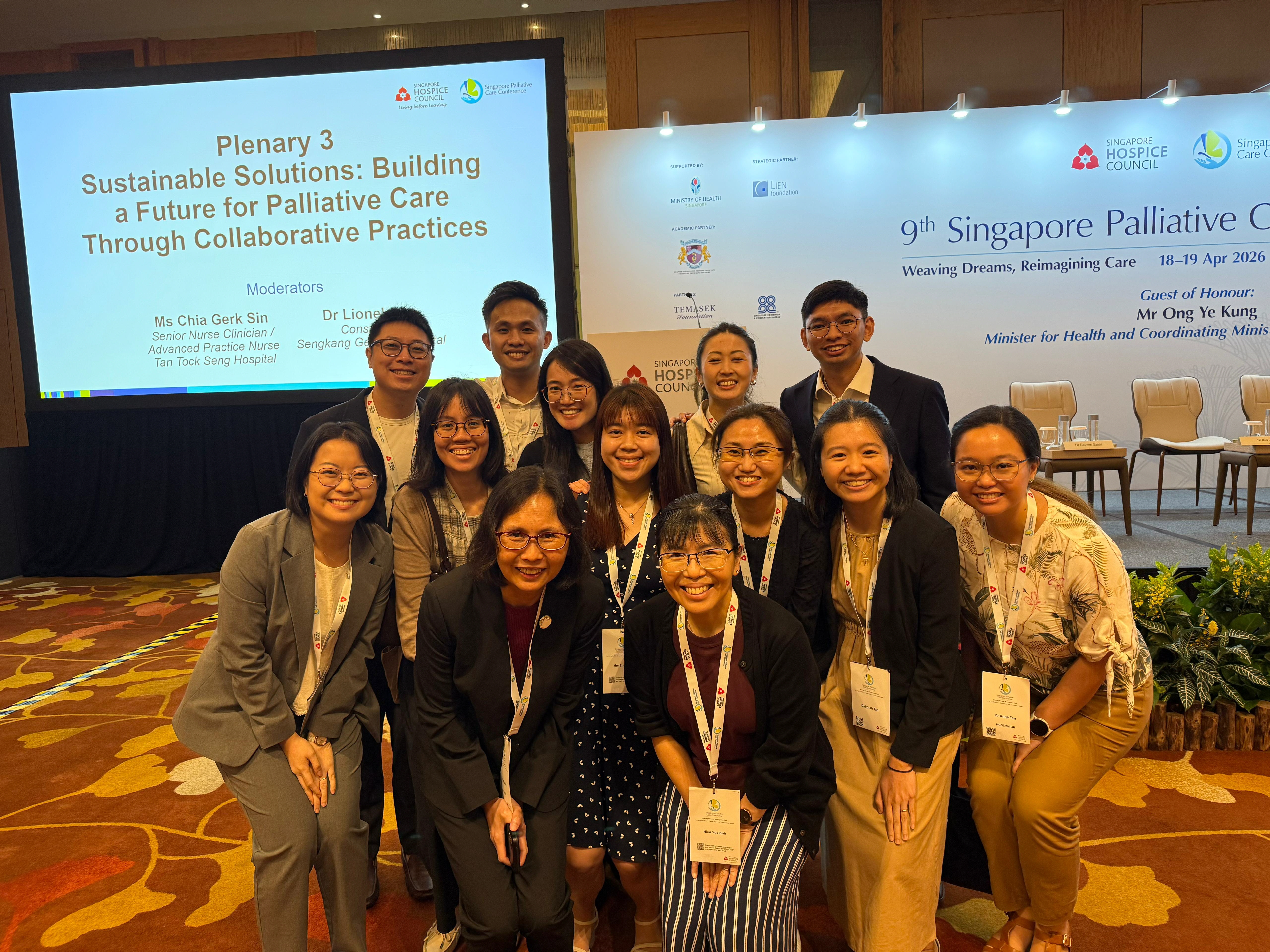 Dr Eden Tay with colleagues at the Singapore Palliative Care Conference 2026.
You were awarded the SingHealth Medicine Scholarship early in your career. How did that support influence your trajectory and professional development?
I have always been deeply grateful to SingHealth for their support. The scholarship relieved a significant financial burden for both me and my family, allowing me to focus fully on my training without the constant worry of the cost of medical school. That support shaped not only my trajectory but also my sense of responsibility. It reinforced for me the importance of paying it forward, contributing to the growth of the profession by investing in those who come after us. I strongly believe in nurturing juniors to develop their own strengths and to become even better than those who came before. Hopefully, when my time comes, they will care for me with the same compassion and skill, and perhaps even better than I ever could myself.
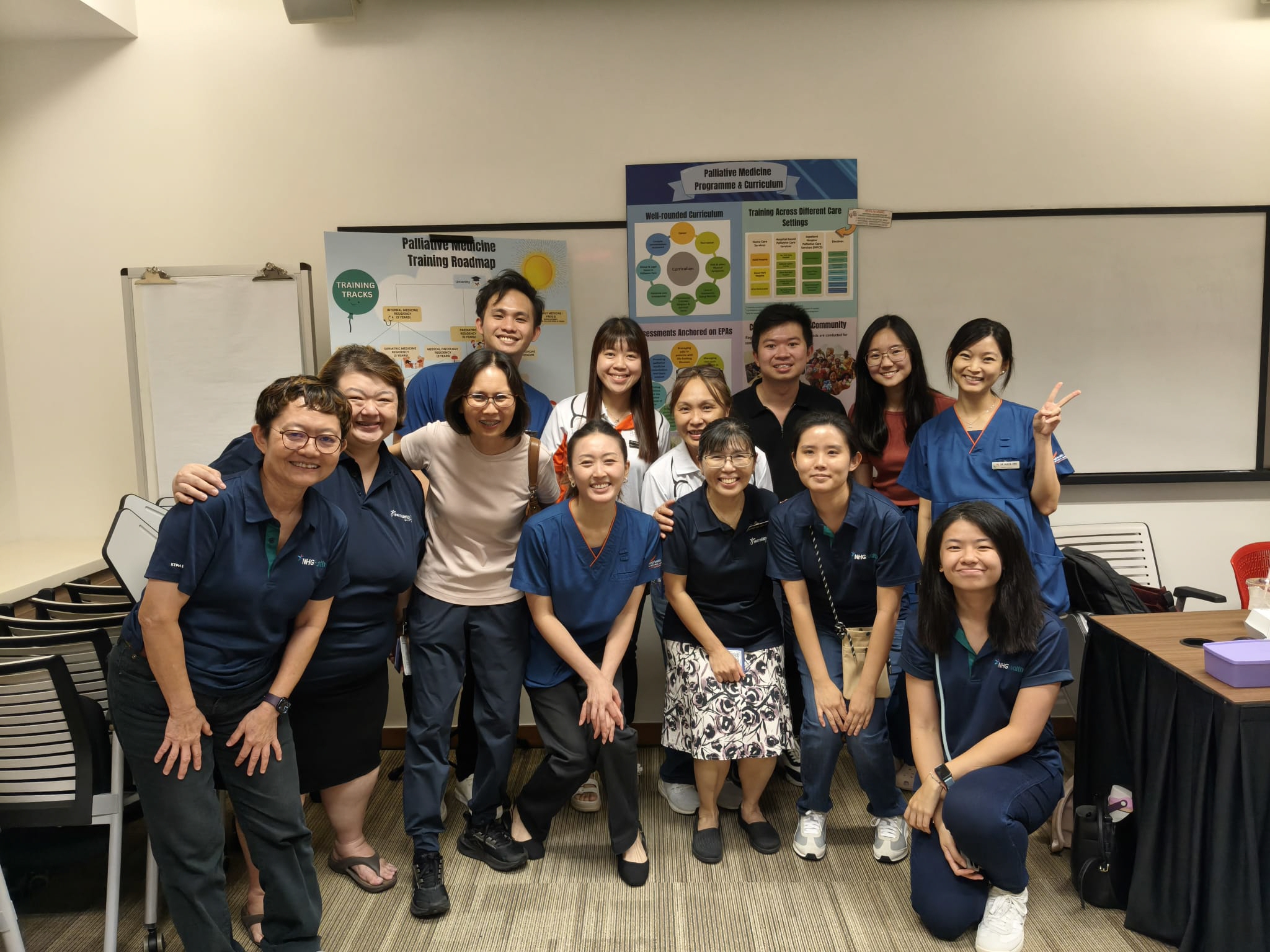
Dr Eden Tay with colleagues at Palliative Medicine Career Day 2026.
Your background includes significant leadership experience beyond medicine, including sport at a high level (as a member of the Singapore water polo national team). How has that shaped your resilience, teamwork, and leadership style as a doctor?
My experience in sport shaped my understanding of resilience, teamwork, and leadership long before I entered medicine. One of the earliest lessons I internalised was that true competence and mastery are built on consistency such as showing up, putting in the work, and improving incrementally over time. That mindset has carried over directly into my medical training and practice, where sustained effort and discipline are essential. Sport taught me to value shared goals, mutual accountability, and trust in others’ strengths. As a doctor, this translates into a collaborative approach to patient care, recognising that the best outcomes are achieved when the team functions cohesively, rather than through isolated effort. These experiences continue to shape my leadership style.
You have taken on both clinical and leadership responsibilities, what advice would you give junior doctors who are unsure whether to specialise or pivot later in training?
Find what gives you meaning and sustains your motivation. If your choice of path is not anchored in something personally meaningful, it becomes much harder to stay the course. At the same time, recognise that your professional identity is only one part of who you are. Alongside being a doctor, you are also a child, a partner, a parent, a friend, and importantly, an individual with your own values, interests, and limits. Do not let the pursuit of a specialty come at the expense of these other roles, because they are what ultimately ground and sustain you.
For those who feel uncertain, it is perfectly acceptable not to have everything figured out early on. Training is not a one-way path, and there is space to explore, recalibrate, and even pivot later. Above all, hold on to your joie de vivre and let it sustain your sense of curiosity, purpose, and joy in both medicine and life beyond it.