IAS 20th Anniversary Symposium: Celebrating Two Decades of Transformative Science
Written by: Shivam Mahajan | Research Fellow, School of Physical and Mathematical Sciences, NTU
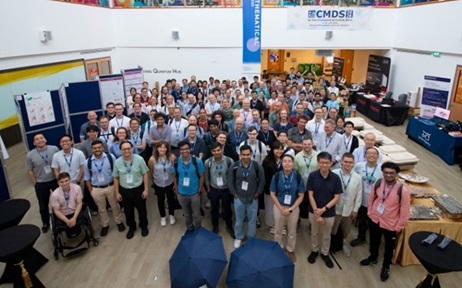
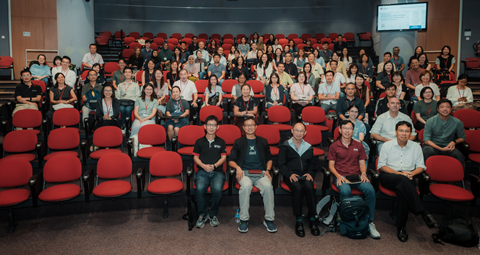
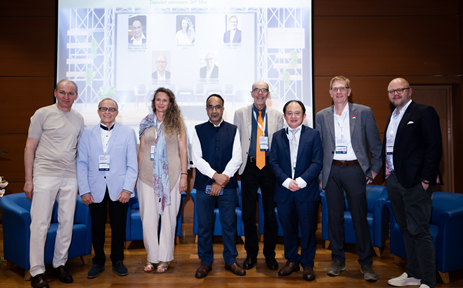
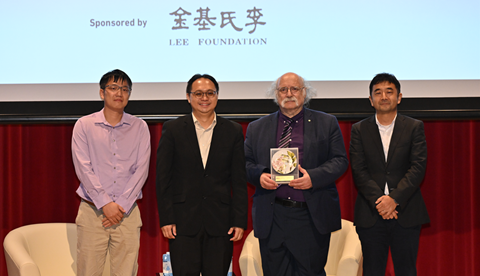
On 29 July 2025, the Institute of Advanced Studies (IAS) at Nanyang Technological University commemorated its 20th Anniversary with a day-long symposium at the Gaia Auditorium. The event brought together distinguished scientists, long-time collaborators, and early-career researchers to honour the institute’s remarkable journey and its ongoing commitment to fundamental science and interdisciplinary dialogue. Founded under the visionary guidance of Nobel Laureate Prof CN Yang and the steadfast leadership of founding director Prof Kok Khoo Phua, IAS has grown into a vibrant intellectual hub, bridging disciplines, nurturing emerging talent, and attracting the world’s leading minds to Singapore. The symposium also acknowledged the many dedicated pioneers who helped shape the institute’s foundations, enabling IAS to emerge as a beacon of academic excellence both locally and internationally.
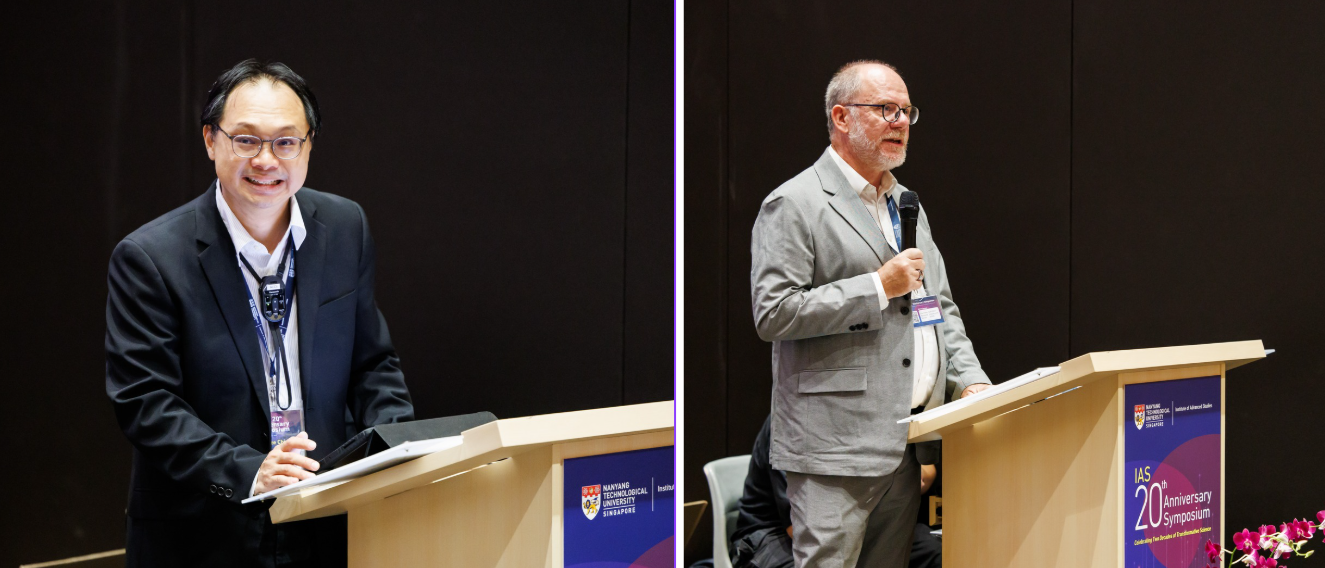 Prof Sum Tze Chien (left) and Prof Simon Redfern (right) open the symposium, celebrating IAS’s legacy and research impact.
The program began with opening remarks by Prof Sum Tze Chien, Director of IAS, who warmly welcomed guests and reflected on the institute’s evolution and impact over two decades. He emphasised IAS’s vital role in fostering interdisciplinary research and collaboration, setting an inspiring tone for the day’s celebrations. Our Guest-of-Honor, Prof Simon Redfern (Dean, College of Science), further highlighted IAS’s significance in advancing fundamental science and its contribution to Singapore’s growing research landscape.
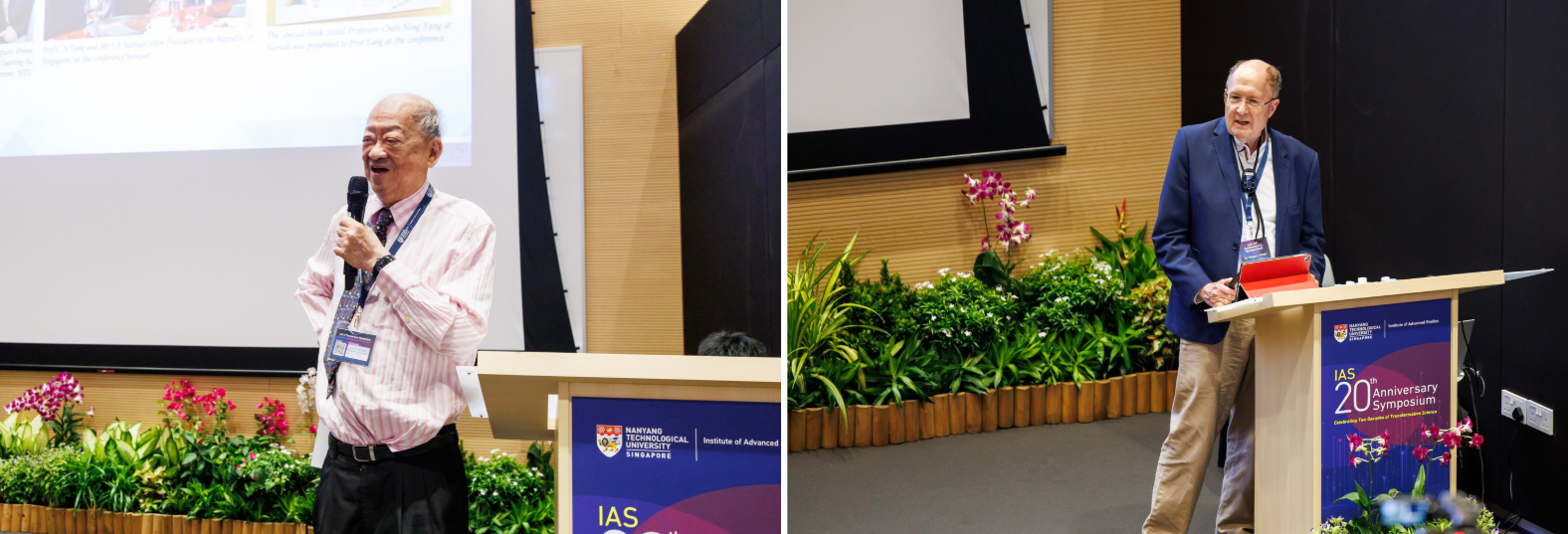 Prof Phua Kok Khoo reflects on IAS’s legacy, as Prof Sir Gregory Winter inspires with ongoing pharmaceutical innovation.
Setting a reflective mood, founding director Prof Kok Khoo Phua presented an engaging overview of IAS’s journey since its inception in 2005. He expressed heartfelt gratitude to Nobel Laureate CN Yang and other visionaries whose efforts made the institute’s establishment possible. Prof Phua traced the institute’s growth through two decades of workshops, conferences, and public lectures, spotlighting the many Nobel Laureates, Fields Medalists, and distinguished scholars hosted by IAS. His talk celebrated IAS’s role as a premier centre for advanced study and intellectual exchange, emphasising its institutional legacy.
One of the symposium’s most inspiring moments came with the keynote address by Prof Sir Gregory Winter, Nobel Laureate and pioneer in antibody engineering, who delivered a compelling talk titled “Deep Tech Commercialisation: The Journey to Antibody Pharmaceuticals.” He took the audience on a fascinating journey through the evolution of antibody therapeutics, from early serum therapy to rodent and chimeric monoclonal antibodies, before highlighting his own ground-breaking contributions in humanised antibodies that transformed treatments for autoimmune and inflammatory diseases like rheumatoid arthritis and Crohn’s disease. Sharing a remarkable story of how his antibody alemtuzumab cured a patient’s tumour, he also offered insights into the complex path of commercialising deep technology, emphasising the importance of collaboration between research institutions, biotech companies, and innovators. As the founder of Cambridge Antibody Technology, Prof Sir Winter’s work led to the development of several FDA-approved therapies, including Keytruda and Actemra. His talk was a powerful testament to how scientific innovation, resilience, and entrepreneurship come together to revolutionise medicine.
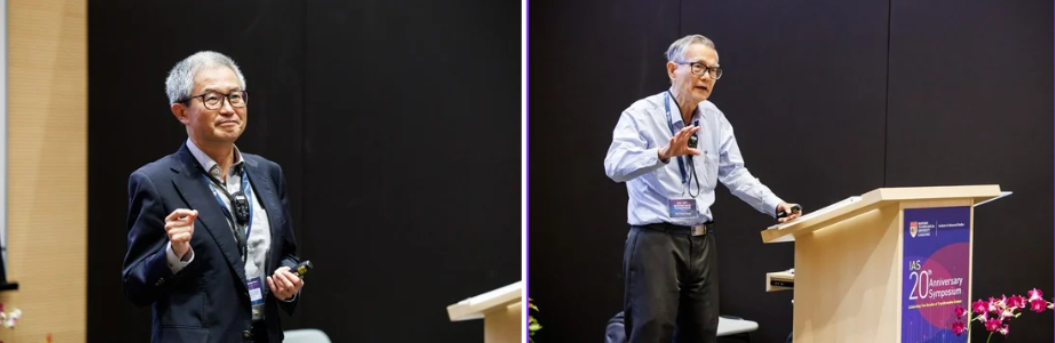
Prof Ling San and Prof Oh Choo Hiap discuss UBIAS, quantum foundations, and graphene applications in the session chaired by Prof Rajdeep Singh Rawat (bottom right).
Building on the theme of how institutes foster innovation, Prof Ling San provided a thoughtful reflection on the role of University-Based Institutes for Advanced Study (UBIAS) within academia. He explored how such institutes complement traditional departments and research centres by nurturing interdisciplinary collaboration and supporting theoretical fields that might otherwise be overlooked. Emphasising the unique value of IAS-like platforms in enriching academic communities, attracting diverse scholars, and engaging the public, Prof Ling highlighted the need to balance costs and benefits while delivering distinctive contributions to university research and education.
Shifting focus to foundational science, Prof Oh Choo Hiap from NUS explored the delicate boundary between quantum mechanics and classical physics. Contrasting classical determinism with quantum uncertainty, he invoked Einstein’s famous question - “Is the moon there when nobody looks?” - to illustrate how reality appears fundamentally different at microscopic scales. Using quantum steering models and the Werner state as benchmarks, Prof Oh illuminated how phenomena such as entanglement and non-locality challenge classical views, carrying profound implications for both fundamental physics and emerging quantum technologies.
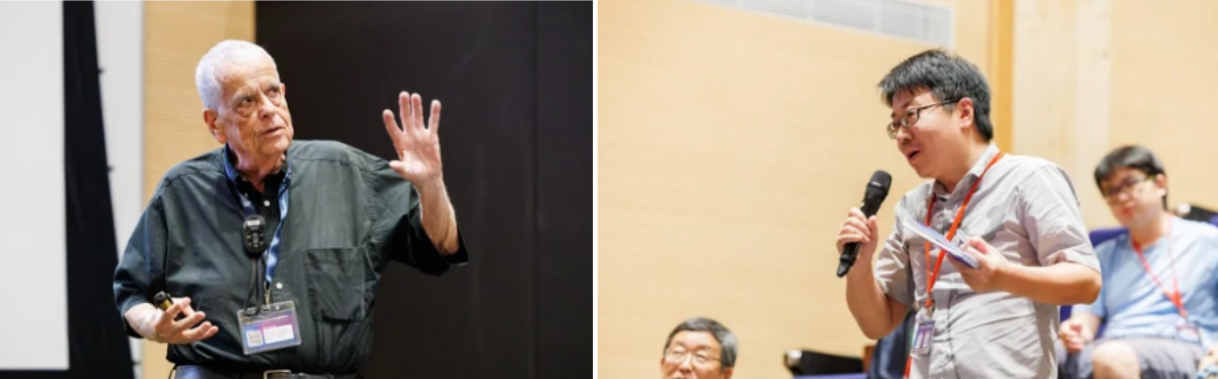
Prof Aaron Ciechanover’s engaging talk on personalised medicine sparking lively audience questions on ethics, longevity, and future treatments.
One of the most profound insights of the symposium came from Prof Aaron Ciechanover, Nobel Laureate in Chemistry (2004) from Technion-Israel Institute of Technology, who delivered a thought-provoking talk titled “The Revolution of Personalised Medicine – Are We Going to Cure All Diseases and at What Price?” Reflecting on humanity’s quest to extend healthy lifespan, he outlined how the 20th century saw remarkable gains in life expectancy - people in developed countries now often live beyond 80 years—but questioned whether similar leaps are possible in this century, especially given the complexity of organs like the brain. He traced the evolution of medicine through three revolutions: from serendipitous drug discoveries such as aspirin and penicillin, through high-throughput screening of chemical compounds, to today’s emerging era of personalised medicine powered by advances in genetics and cell engineering. Prof Ciechanover emphasised that unlike “one-size-fits-all” treatments of the past, future therapies will be tailored to the unique genetic makeup of each patient, transforming the very definitions of disease, patient, and treatment. However, he also cautioned about ethical challenges, including genetic privacy, and highlighted the complex realities of diseases like cancer and neurodegeneration that resist simple solutions. His lecture underscored how cutting-edge science, combined with deep ethical reflection, is reshaping the future of healthcare.
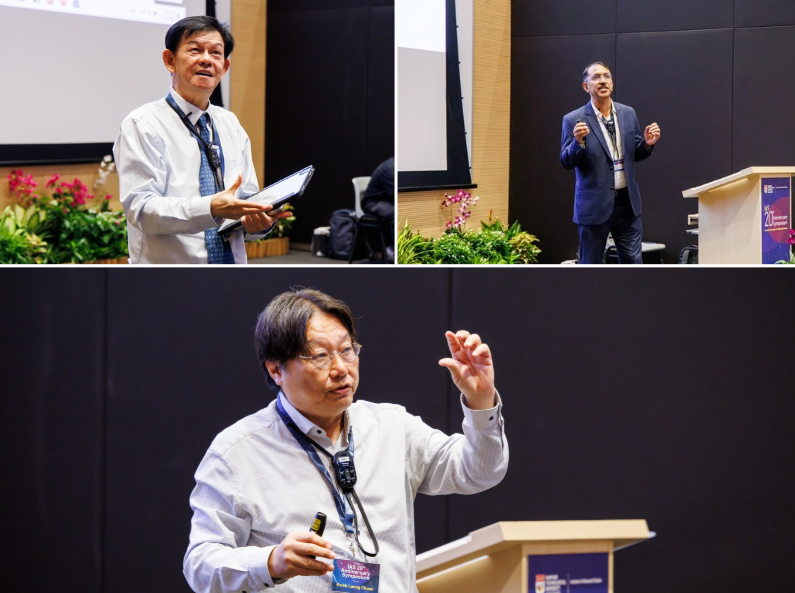 (From top, clockwise) Prof Loh Teck Peng, Prof Rajdeep Singh Rawat and Prof Kwek Leong Chuan presenting pioneering research on sustainable chemistry, fusion energy, and quantum technologies respectively.
Continuing the exploration of innovation with societal impact, Prof Loh Teck Peng from NTU presented “Green and Biocompatible Technologies: From Discovery to Translation and Beyond.” He highlighted how IAS has been instrumental in raising NTU’s global profile by attracting distinguished researchers, including Nobel laureates, and nurturing impactful research. Addressing the negative perceptions often associated with chemistry, Prof Loh described his group’s pioneering efforts to develop environmentally friendly synthetic methods inspired by nature’s efficient, waste-free molecular processes. Highlighting water as a green solvent, he discussed its advantages, such as abundance, safety, and biocompatibility; as well as challenges like poor solubility for organics and waste disposal. His team’s innovations include water-tolerant organometallics, metal- and catalyst-free reactions, and reusable low-toxicity Lewis acids. Prof Loh also shared advances in selective bioconjugation under mild conditions and novel plastic recycling strategies using nanoengineered catalysts for controlled bond cleavage, offering a compelling vision for sustainable chemistry’s future.
Prof Rajdeep Singh Rawat from the National Institute of Education then illuminated the path toward sustainable energy with his talk, “Beyond the Mainstream: Unlocking Fusion Insights with Hot Dense Pinch Plasmas.” Situating fusion as a clean, environmentally friendly alternative in a post-fossil fuel world, he outlined the limitations of current energy sources including fission and renewables. Highlighting Dense Plasma Focus (DPF) devices developed at NIE, Prof Rawat described their generation of extremely high-density, high-temperature plasmas using self-generated magnetic fields. These plasmas produce energetic ions, x-rays, and fusion-relevant neutrons with applications spanning rapid x-ray imaging to materials processing. His team’s work on advanced diagnostics leverages these transient, high-energy environments not only for fusion research but also to enable innovation in plasma science and materials engineering, showcasing fusion’s expanding scientific and technological potential.
Bridging the institutional legacy with frontier quantum research, Prof Kwek Leong Chuan from NTU reflected on the early visionaries whose efforts laid the foundation for IAS and NTU’s photonics research infrastructure. He then presented his group’s advances in quantum information processing using integrated photonic chips. Starting from quantum key distribution systems based on continuous variables implemented on silicon chips, Prof Kwek explored boson sampling as a demonstration of quantum advantage, underscoring the computational complexity inherent in such tasks. He discussed studies of Franck–Condon factors in biomolecules, noting areas of agreement and divergence between theory and experiment. His talk concluded with emerging applications of quantum autoencoders for state compression and teleportation, and quantum superdense coding using interferometric configurations, highlighting the promise of scalable, chip-based quantum technologies.
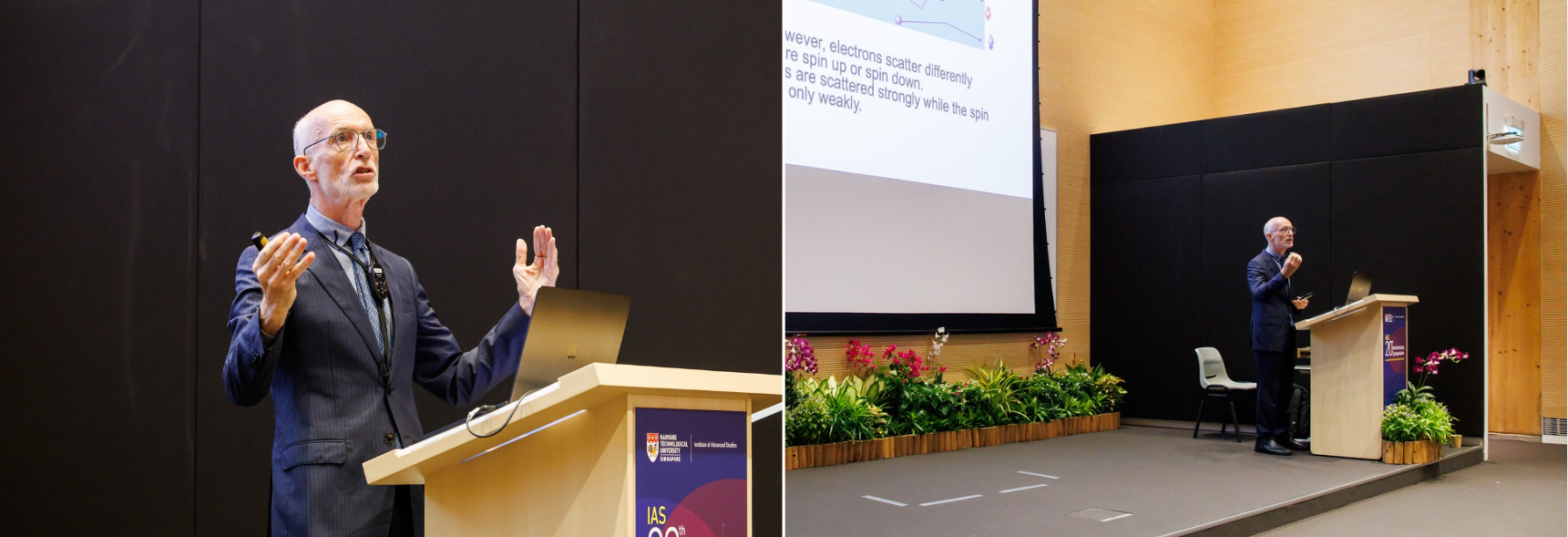 Prof Stuart Parkin presents breakthroughs in spintronics, revealing its pivotal role in revolutionising data storage and powering future computing technologies.
Another symposium highlight was the talk by Millennium Technology Prize laureate Prof Stuart Parkin, whose talk “Spintronics for Massive Data Memory-Storage – Past, Present and Future”, traced the evolution of spintronics and its transformative impact on data storage technologies. He began by emphasising how AI and big data drive the demand for faster, more efficient storage, with data centres projected to consume gigawatts of power; comparable to that powering millions of homes. Spintronics, which harnesses electron spin alongside charge, addresses this need. Prof Parkin explained how spin valve sensors, based on spin-dependent scattering, enabled over a thousandfold increase in hard disk capacities since the 1990s, laying the foundation for today’s digital landscape. He then described Magnetic Tunnel Junctions, which utilise spin-dependent tunnelling to power Magnetic Random Access Memory (MRAM), a scalable, non-volatile technology already adopted by leading foundries. His pioneering concept of racetrack memory advances this further by using spin currents to move domain walls in nanoscale magnetic wires, delivering high-speed, high-density, and low-energy data storage. Recent innovations, such as platinum layers generating strong spin-orbit torques, have accelerated domain wall speeds to 1 km/s and enabled picosecond-scale operation. With chiral domain walls, ultrafast anomalous Hall sensor readouts, and 3D freestanding magnetic heterostructures, racetrack memory is positioned to replace traditional magnetic disk drives and power next-generation, including quantum, computing platforms.
 Prof Chang Ngee Pong reflects on IAS’s legacy and poses bold questions on vacuum structure, echoing IAS’s spirit of deep scientific exploration.
Closing the
scientific sessions, Prof Chang Ngee Pong from City College of New York offered
reflections on IAS’s rich history and global collaborations since its 2005
founding, inspired by luminaries such as CN Yang and Abdus Salam. He shared
personal memories of formative workshops and the vibrant intellectual community
IAS has fostered. Turning to foundational physics, Prof Chang posed a
thought-provoking question: what if the vacuum itself is a crystalline solid,
with each point in space carrying half-integer spin and hosting frozen spinons
and chargons? This provocative idea challenges conventional notions of empty
space and invites new perspectives on the quantum nature of the vacuum,
exemplifying the deep, exploratory spirit IAS nurtures in addressing
fundamental scientific mysteries.
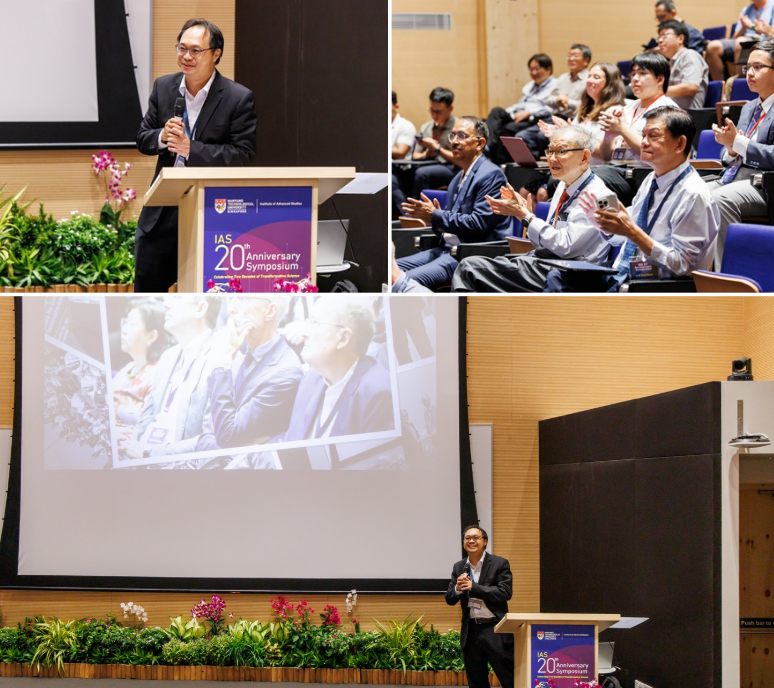 Prof Sum delivers closing remarks amidst a backdrop photo montage, reflecting on IAS’s legacy and future as a hub for transformative, interdisciplinary research.
Throughout the symposium, the spirit of IAS as a catalyst for pioneering research and interdisciplinary collaboration was ever-present. Celebrating two decades of fostering transformative ideas, IAS continues to serve as a vibrant platform where visionary scientists converge to push the frontiers of knowledge. Nobel Laureate Prof Aaron Ciechanover congratulated IAS on reaching this significant milestone, underscoring its vital role in advancing science and nurturing talent. The 20th Anniversary Symposium not only commemorated IAS’s past achievements but also energised its mission to inspire future generations of researchers to explore, innovate, and transform the world through science.
The symposium concluded with closing remarks by Prof Sum, who expressed gratitude to the Nobel Laureates, Fields Medalist, Guest of Honour, distinguished speakers, and all attendees for making the event a memorable occasion. He highlighted IAS’s pivotal role in shaping visionary thinkers and innovators across disciplines including medicine and materials science, reflecting on the institute’s rich history and enduring mission to foster excellence, collaboration, and transformative research. Looking ahead, the IAS remains well-positioned to evolve into a deeper intellectual hub - fostering long-term interdisciplinary residencies, nurturing early-career researchers, and offering a reflective space for senior scholars and global thinkers to come together.

In conjunction with the symposium, interactive dialogue sessions were held the following day with Prof Sir Gregory Winter and Prof Stuart Parkin, offering students and scholars the opportunity to meet the distinguished professors in a more personal setting. These conversations touched on life, their academic journeys, and valuable advice for aspiring researchers. Read more about the sessions with Prof Sir Gregory Winter and Prof Stuart Parkin.
"I greatly enjoyed the talks by the distinguished Nobel Prize-winning guest speakers." - Dr James Miller (Research Fellow, LKC Medicine)
"We were fortunate to have several outstanding scientists speaking to us, and it was a pleasant surprise to have two Nobel laureates among them." - Deng Long Jiang (Masters Student, National University of Malaysia)
"I enjoyed the presentations on graphene, personalised medicine, musings on university-based institutes for advanced study, and the international speakers." - Senior Lecturer, College of Computing and Data Science