Tea Session with Profs Bantval Jayant Baliga and Torsten Hoefler: On Failure, Curiosity, and the Impact of Power Energy and AI
Written by Goh Si Qi | PhD Student, College of Computing and Data Science, NTU
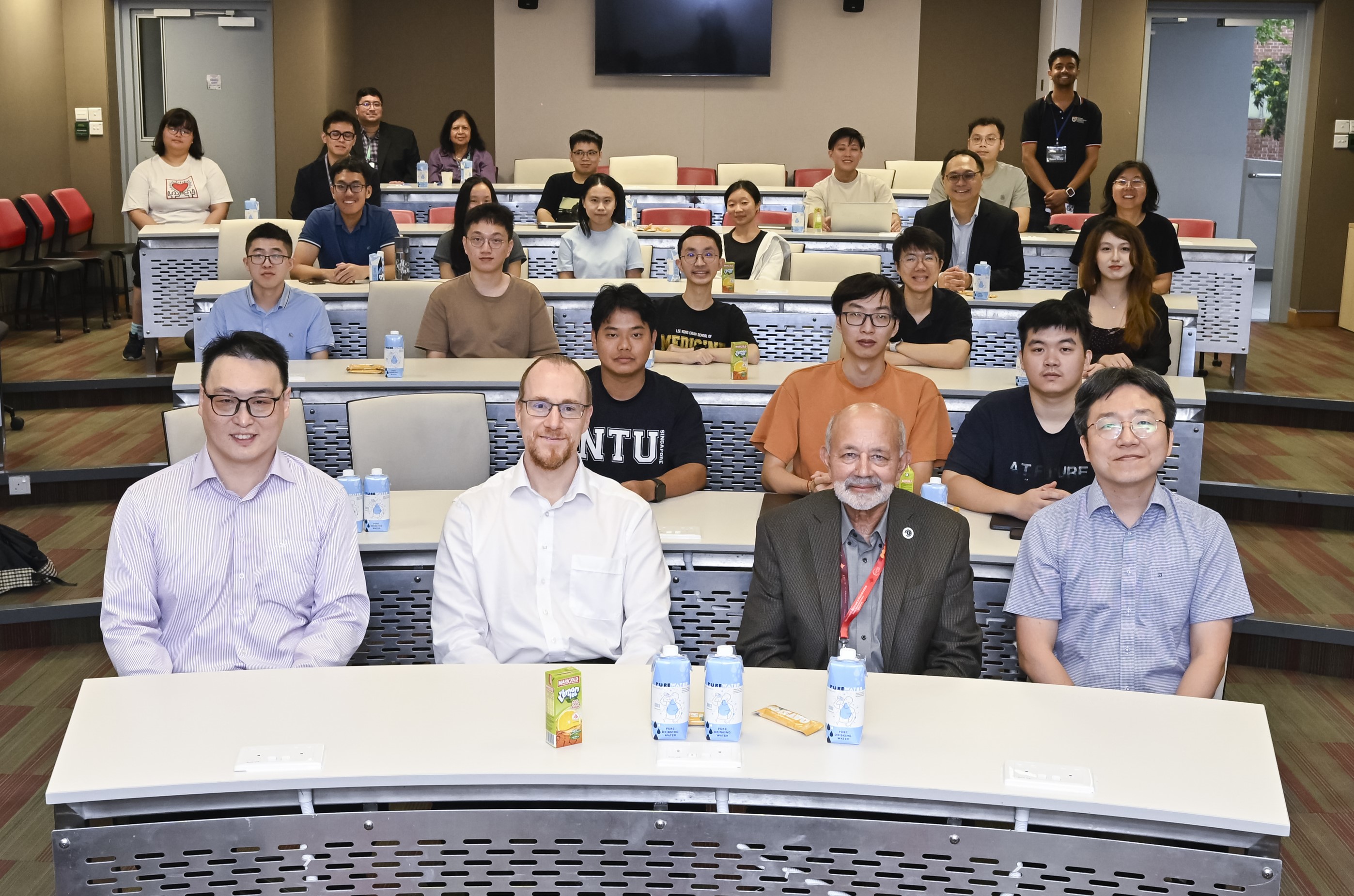
On 7 January 2026, preceding the highly anticipated public lecture, the Institute of Advanced Studies (IAS) at Nanyang Technological University hosted an intimate conversation session with Prof Bantval Jayant Baliga, Millennium Technology Prize Laureate (2024) and Prof Torsten Hoefler, ACM Prize in Computing Laureate (2024). The session was less about presenting finished ideas and more about sharing how research actually works—messy, uncertain, and deeply human. Over an open and engaging discussion, students explored questions around failure, sustainability, computation, and the future of technology.
Finding Your “North Star” in Research
Prof Hoefler began by encouraging students to approach research through specific problems, rather than vague ambition. Instead of trying to solve everything at once, he suggested always working towards a clear “North Star”—a guiding question that gives direction even when progress feels slow.
Failure, he explained, is not something to avoid, but something to use. Referring to the idea of “productive” or “constructive” failure, he noted that while excessive failure early in undergraduate or master’s studies can be discouraging, failure becomes a valuable learning tool during a PhD. Progress, he said, often looks like failing repeatedly until the gradient approaches zero—each attempt bringing slightly more understanding than the last. At the same time, he was clear that not all failure is useful. Getting stuck in loops or poorly defined problems can be counterproductive, which is where mentorship and perspective become essential.
One recurring theme was uncertainty. When asked to clarify certain ideas, Prof Hoefler smiled and admitted that some concepts remain fuzzy precisely because they are still being explored. If everything were already explainable, he remarked, there would be no need to do research in the first place.
He encouraged students to stay curious beyond their immediate fields, pointing out that insights from material science, life science, and other disciplines often shape how future computational challenges are framed. Research, he suggested, is as much about learning how to think as it is about finding answers.
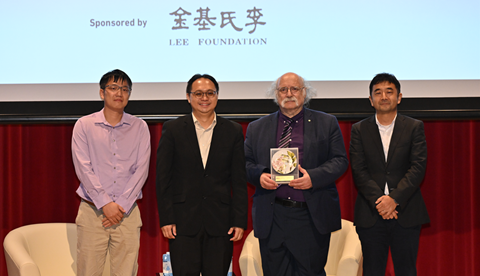
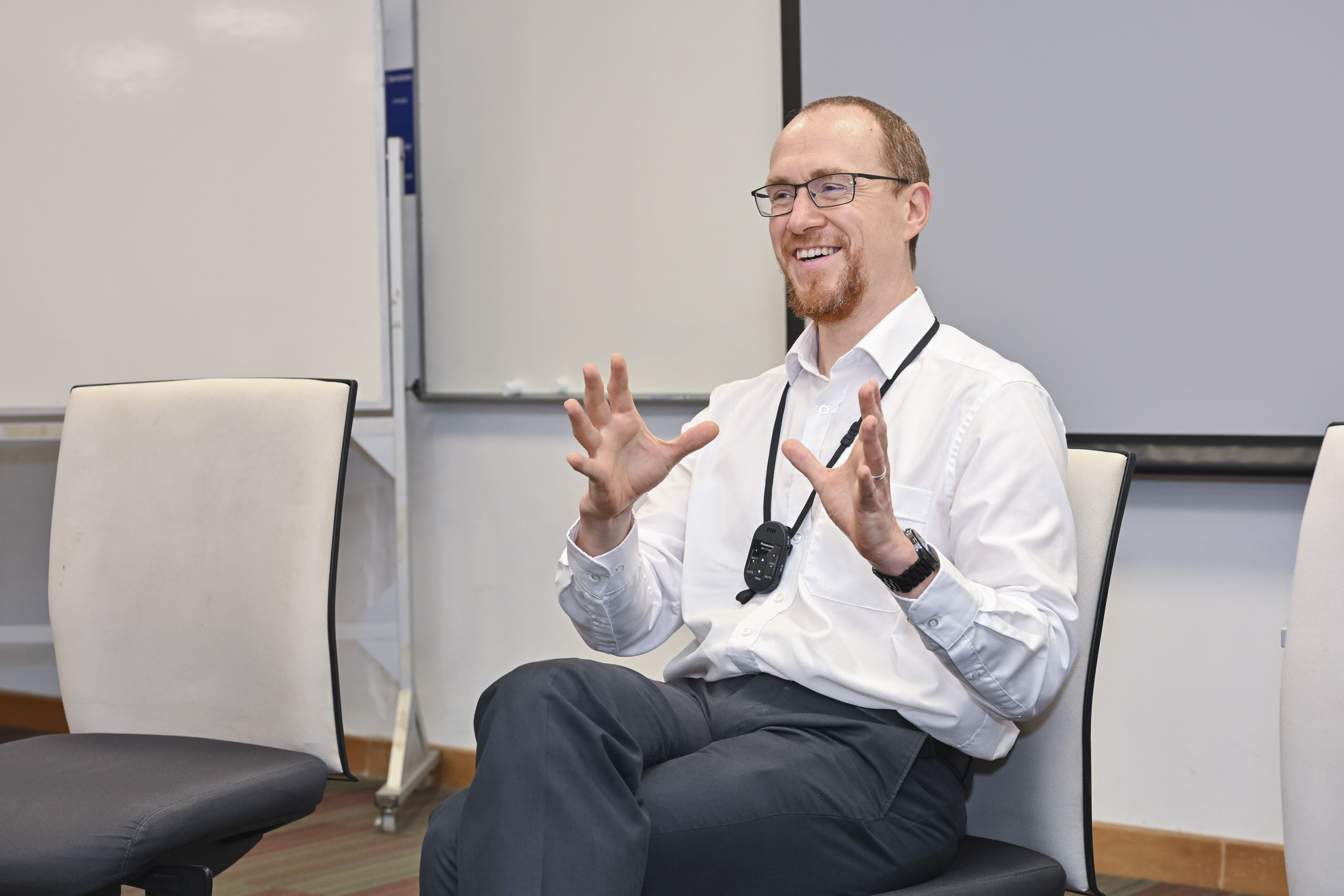 Prof Torsten Hoefler reflects on research, curiosity, uncertainty, and learning through constructive failure.
From Semiconductor Breakthroughs to Industry Reality
The conversation took a practical turn when Prof Jayant Baliga joined the session. Drawing from his experience developing IGBT technology, he explained how combining different physical principles enabled efficient power control at massive scales, shrinking complex control systems into compact, reliable semiconductor devices.
He also spoke candidly about what it takes to convince industry to invest in new technology. Beyond innovation, sponsors look for clarity, scalability, and manufacturability. Technologies that can be integrated into existing production lines stand a much better chance of success. In his case, the rapid transition from idea to production helped build confidence early on. The session continued with questions about advanced materials and semiconductor packaging. Topics such as carbon nanotubes, liquid cooling, and backside cooling were discussed not as silver bullets, but as engineering trade-offs. While such techniques offer performance benefits, real-world adoption depends on cost, reliability, and ease of integration.
Looking ahead, Prof Baliga shared his optimism about AI’s role in chip design. As systems grow more complex, AI tools are increasingly useful for identifying design corner cases and improving accuracy, supporting engineers rather than replacing them.
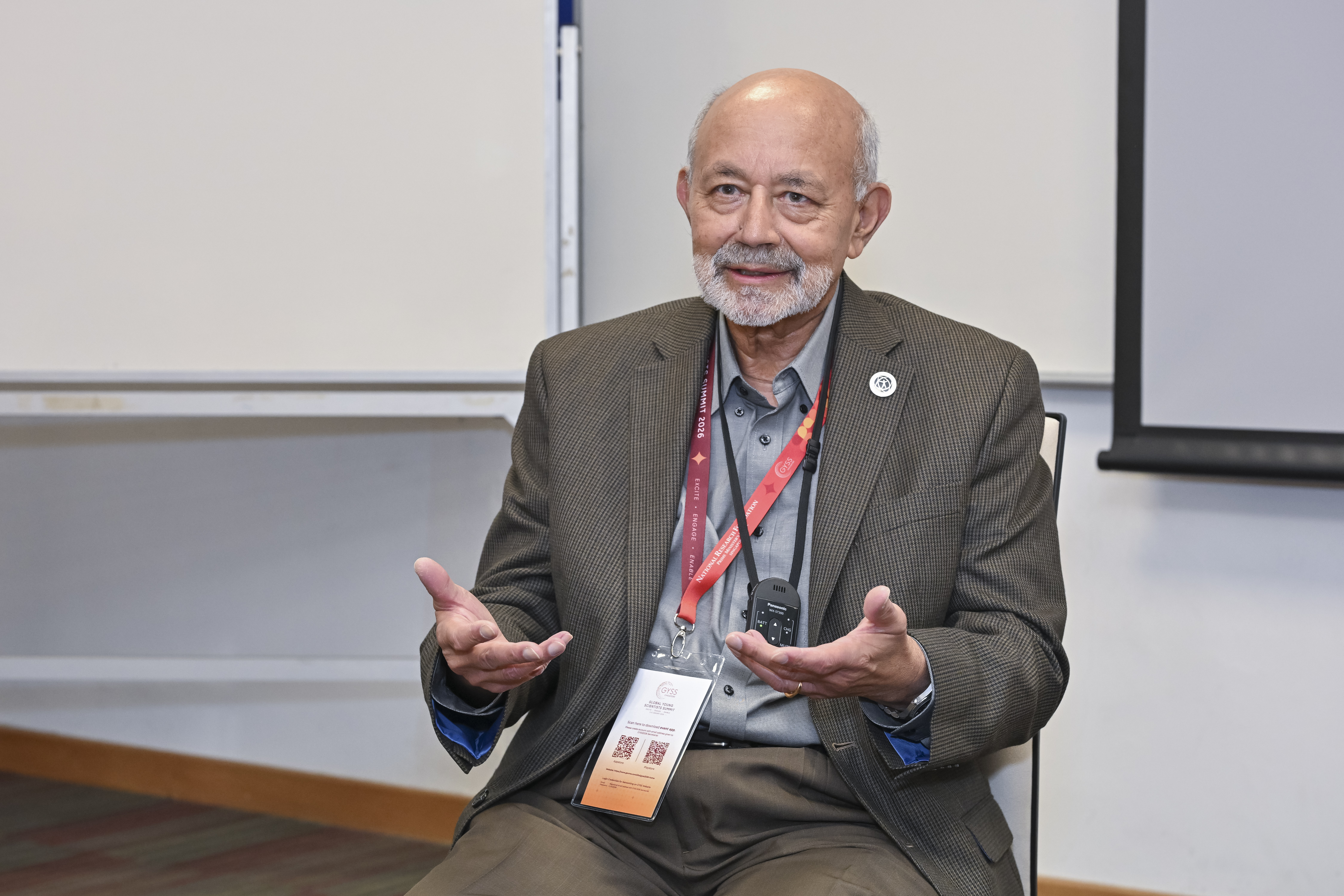 Prof Jayant Baliga shares industry insights on scalable innovation, engineering trade-offs, and the future of AI-enabled chip design.
AI, Energy, and Sustainability
Student questions naturally turned to sustainability and AI’s growing energy demands. Prof Hoefler cautioned against overly rigid definitions of sustainability, noting that trying to formalise such a broad concept mathematically can quickly become unhelpful.
On energy consumption, both speakers offered perspective. Prof Hoefler pointed out that everyday activities like taking hot showers can actually consume more energy than individual AI usage. The larger concern, he said, is not current consumption but growth of usage: if AI energy use doubles year after year, it becomes a systemic issue.
Still, neither speaker was alarmist. Improvements in chip efficiency, system design, and energy sourcing could lead to significant gains. Prof Baliga added that sustainability must also be viewed through the lens of energy origin and timing on how and when power is generated matters just as much as how much is used.
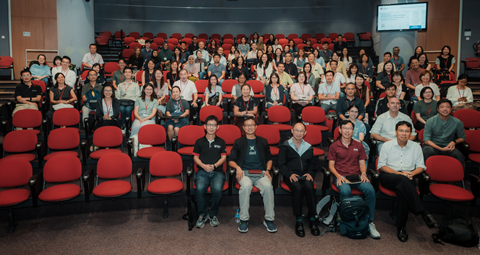
.jpg?sfvrsn=1e784052_1) Students take the floor; asking bold questions, exchanging ideas, and engaging directly with professors in an open, thoughtful dialogue.
Students take the floor; asking bold questions, exchanging ideas, and engaging directly with professors in an open, thoughtful dialogue.
Closing Thoughts
More than a technical discussion, the session offered students a candid look at research as a long-term journey, where one shaped by curiosity, failure, mentorship, and persistence. By sharing both philosophical reflections and real-world experience, Prof Hoefler and Prof Baliga reminded students that progress in computation and semiconductor technology is rarely linear, but deeply rewarding for those willing to think patiently and broadly.