Tea Session with Profs David Baker and Hannele Ruohola-Baker: From Breaking the Myths to Impactful Innovation
Written by Damien Chua | PhD Student, Lee Kong Chian School of Medicine, NTU
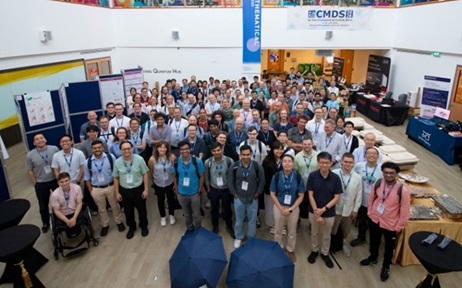
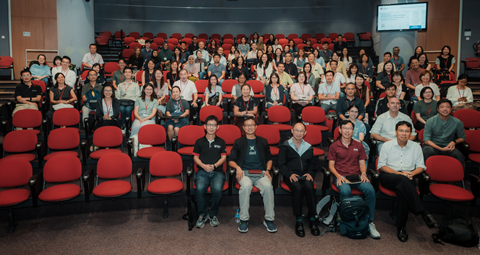
On 6 January 2026, prior to their highly anticipated Lee Kong Chian Distinguished Professor Public Lecture, the Institute of Advanced Studies (IAS) at Nanyang Technological University hosted a close-knitted tea session with Prof David Baker, Nobel Laureate in Chemistry (2024) for computational protein design, and Prof Hannele Ruohola-Baker (Co-Director, Institute of Stem Cell and Regenerative Medicine, University of Washington). The afternoon session with NTU scholars and PhD students became a fast‑paced tour of modern science in motion: careers that veered from philosophy to biology, deep learning reshaping decades of protein design, and purpose‑built proteins opening new paths in stem cell research and patient care. In a lively, candid exchange spanning computational sciences, biology and medicine, the conversation echoed Singapore’s and NTU’s ambitions for high‑impact innovation, inspiring PhD students and researchers to courageously pursue and push research frontiers.
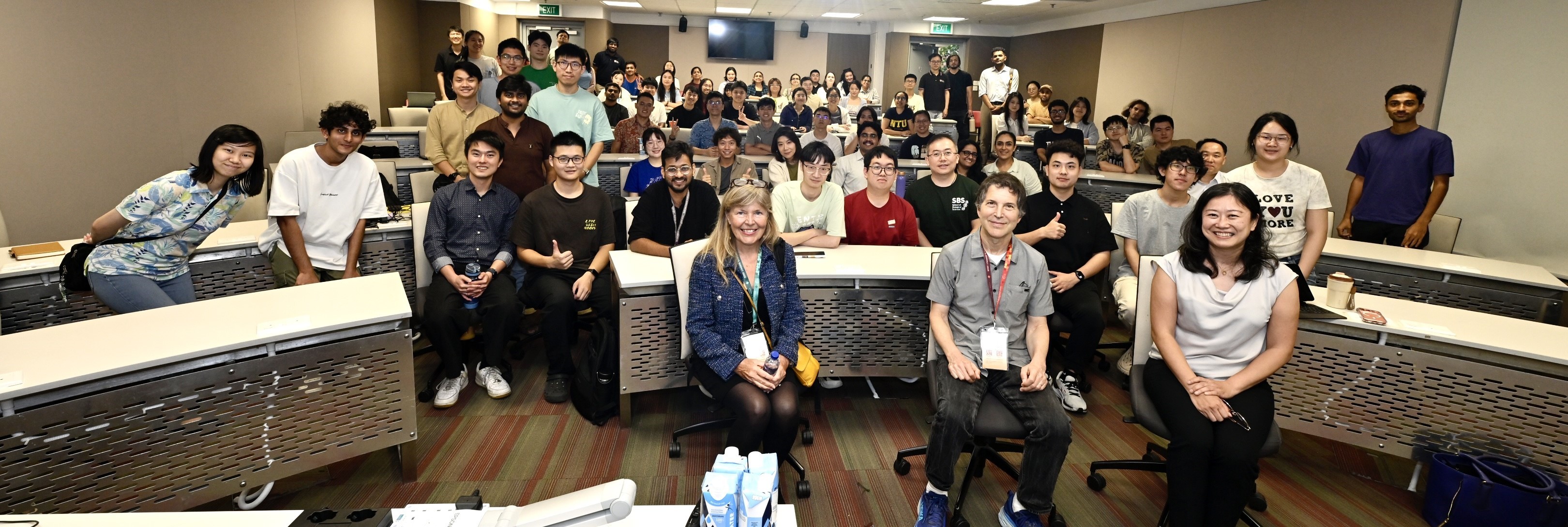
The Courage to Chart Your Own Paths to Impact
The session opened with the first question from a PhD student. When asked whether protein design had always been his goal, Prof Baker surprised many in the room. As an undergraduate, “I wasn’t even studying science,” he admitted. He was drawn to social science and philosophy because the topics felt “about very important issues,” but he grew frustrated that “it didn’t seem to really go anywhere.” In his last year, almost by chance, he took a biology class:
“There were all these discoveries being made. And it was really cool. It was clear that stuff was happening, and so it just seemed kind of exciting.”
Even as a graduate student, he said, “I didn’t have a long term plan. In fact, I never have long term plans. I don’t believe in long term plans, because things change all the time, and the world is changing fast.” For students who often feel pressure to map out careers early, this was a striking message: it is possible to deliver impactful innovation at the Nobel stage without a 20‑year roadmap, provided one keeps following genuine curiosity and the courage to double down on value creation.
If Prof Baker’s path challenges the myth of linear scientific careers, Prof Ruohola‑Baker’s story challenges the myth that great scientists come only from elite environments. Later in the session, when asked how she “got to where you are now,” she described herself simply as “a farm girl” who grew up in a very small village in Finland “where nobody ever knew anything about being a professor.” What changed her trajectory were teachers and professors who did not simply answer her questions but said: “Come to my lab and find out.”
Her message to us was inspiring: your origins do not dictate your scientific potential. What matters is the courage to pursue questions, your grit and perseverance.
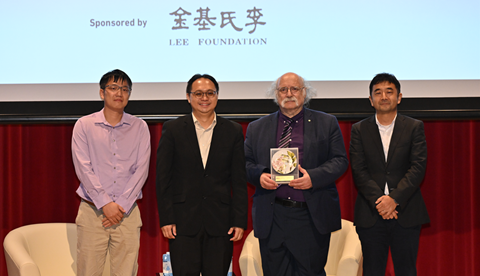
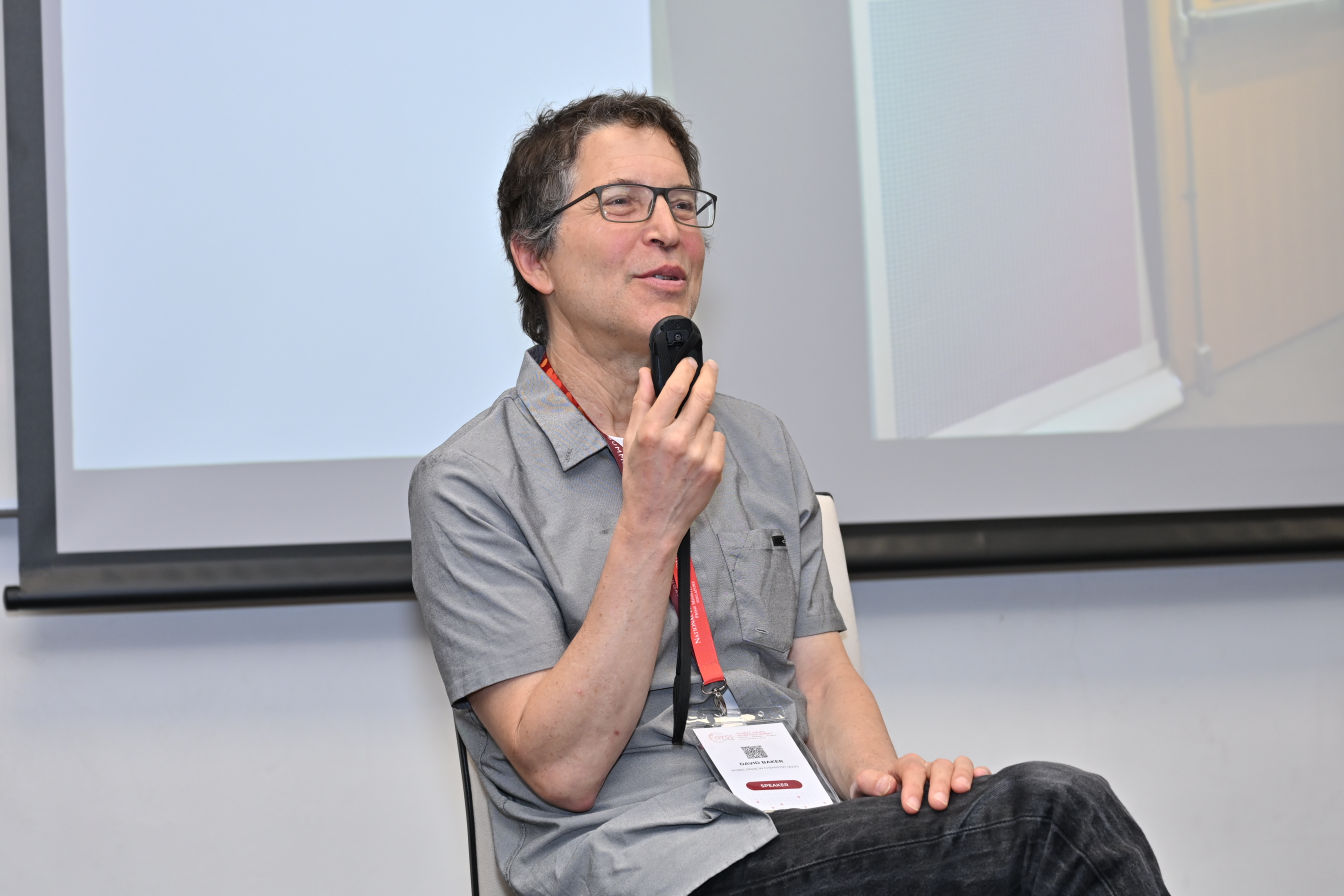 Prof Baker shares how curiosity and courage can shape impactful science beyond rigid long-term plans.
When AlphaFold shook the old world
For most of his early career, Prof Baker's lab built Rosetta—a painstaking, physics-based software that modeled proteins atom by atom, hydrogen bond by hydrogen bond, in collaboration with labs worldwide. Then AlphaFold arrived and changed everything.
When a graduate student asked how he adapted to deep learning, Prof Baker's answer revealed both the intellectual upheaval and the human cost. His team had spent "many, many, many years optimising Rosetta," perfecting every energy function and angle. Then DeepMind's breakthrough made it clear: "We weren't really doing much deep learning. We had to figure out what deep learning was."
Within months, his lab pivoted—and the results were undeniable. "It didn't take very long before we could clearly do better with deep learning than we could with Rosetta."
Rather than resist, Prof Baker embraced the disruption. "Secretly, I think I was a little bored," he admitted. "So for me, it was kind of fun to say, 'Okay, I'm going to throw that all away and start over, and understanding something new.'"
But for senior students and postdocs who'd spent years mastering Rosetta, the shift was jarring. Suddenly, "all these new people in the lab are able to design proteins at least as well as you can, and it was a little bit traumatic. It was kind of like during the Industrial Revolution." Yet they adapted, discovering that new methods let them "do better things more quickly."
The message resonated quietly with the room full of early-career researchers: in fast-moving fields, keep staying agile and versatile. What endures are the problems you're trying to solve and the principles that guide you.
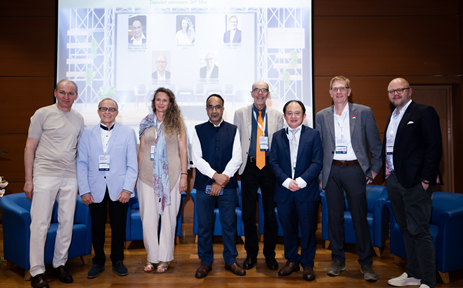
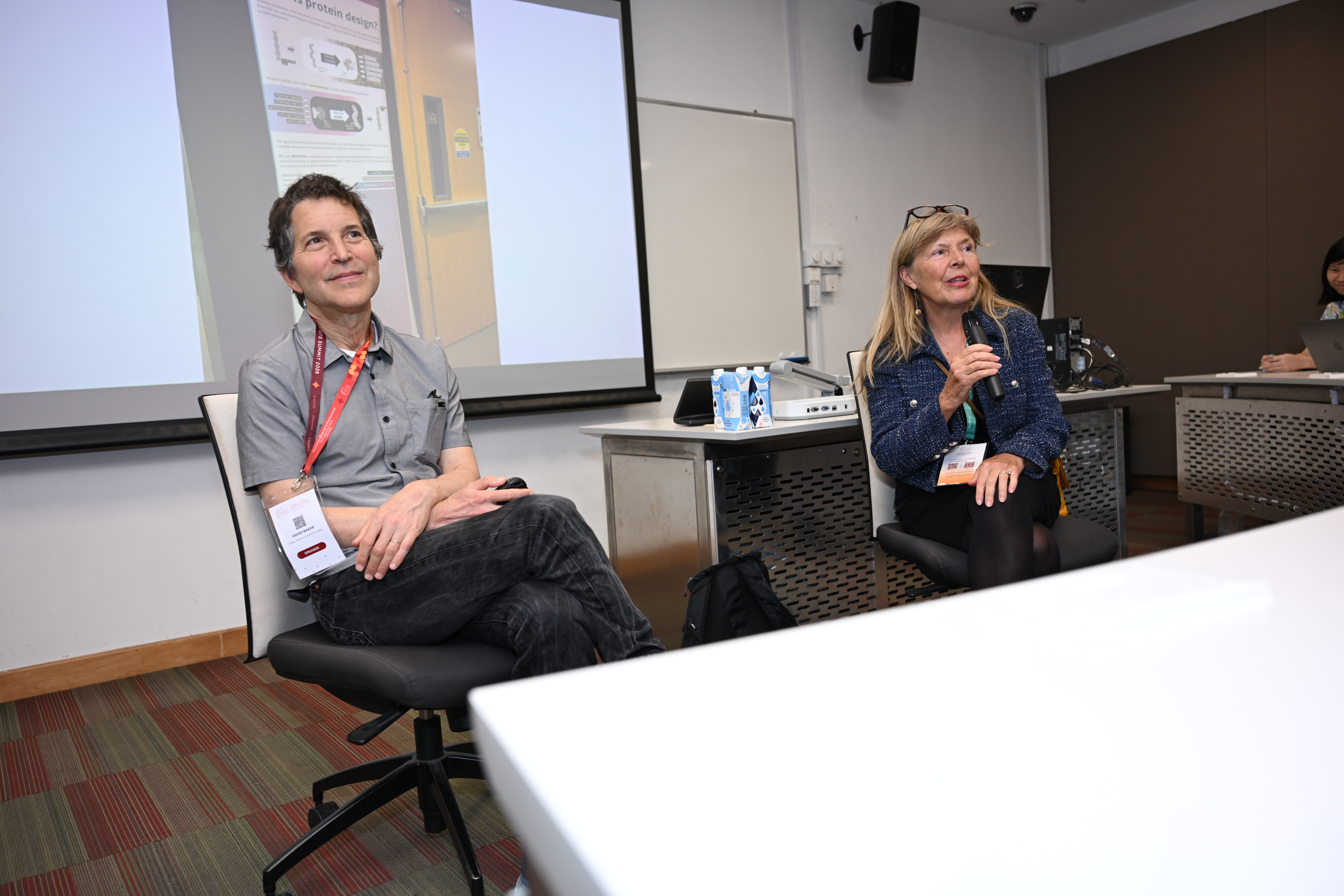 Profs Baker and Ruohola-Baker discuss how AI-driven protein design reshapes biology, from computational breakthroughs to regenerative medicine for aging.
Protein Design Meets Stem Cells and Aging
When Prof Ruohola-Baker joined the conversation, she addressed a longstanding challenge in stem cell research. Traditional growth factors can guide induced pluripotent stem cells (iPSCs) partway, but they often stall: "You can get to the fetal stage, but you can't get further. It's very, very hard to make mature cells like you have in your body."
Designed proteins are beginning to solve this. "When they are made for purpose, they can help the stem cells do the right thing"—providing the precise signals natural ligands cannot.
For Singapore, where aging is a growing concern, this work feels especially relevant. Prof Ruohola-Baker's regenerative medicine lab explores four aging-related conditions: diabetes, stroke, sarcopenia (muscle loss), and tooth enamel degradation.
She made sarcopenia relatable with a gentle example: "You guys are all young. You don't have problems yet, but you might be the one who opens your mother's water bottle sometime, because muscles lose strength as we age. We need to work on keeping them stronger before the disease happens, not after."
Tooth enamel—lost in over 90% of elderly people and currently non-regenerable—is another focus. "Now protein design can help us actually do it," she noted.
Both speakers see this as more than progress—it's an emergent synergy driving the frontiers of biomedicine. When AI-driven protein design meets stem cell biology, it creates possibilities neither field could achieve alone: computationally designed molecules now guide cells with precision nature never evolved, while regenerative medicine gains tools to break through decades-old barriers. In NTU where AI, bioengineering, and clinical translation already intersect, this interdisciplinary fusion charts a direct path from discovery to therapies once thought impossible.
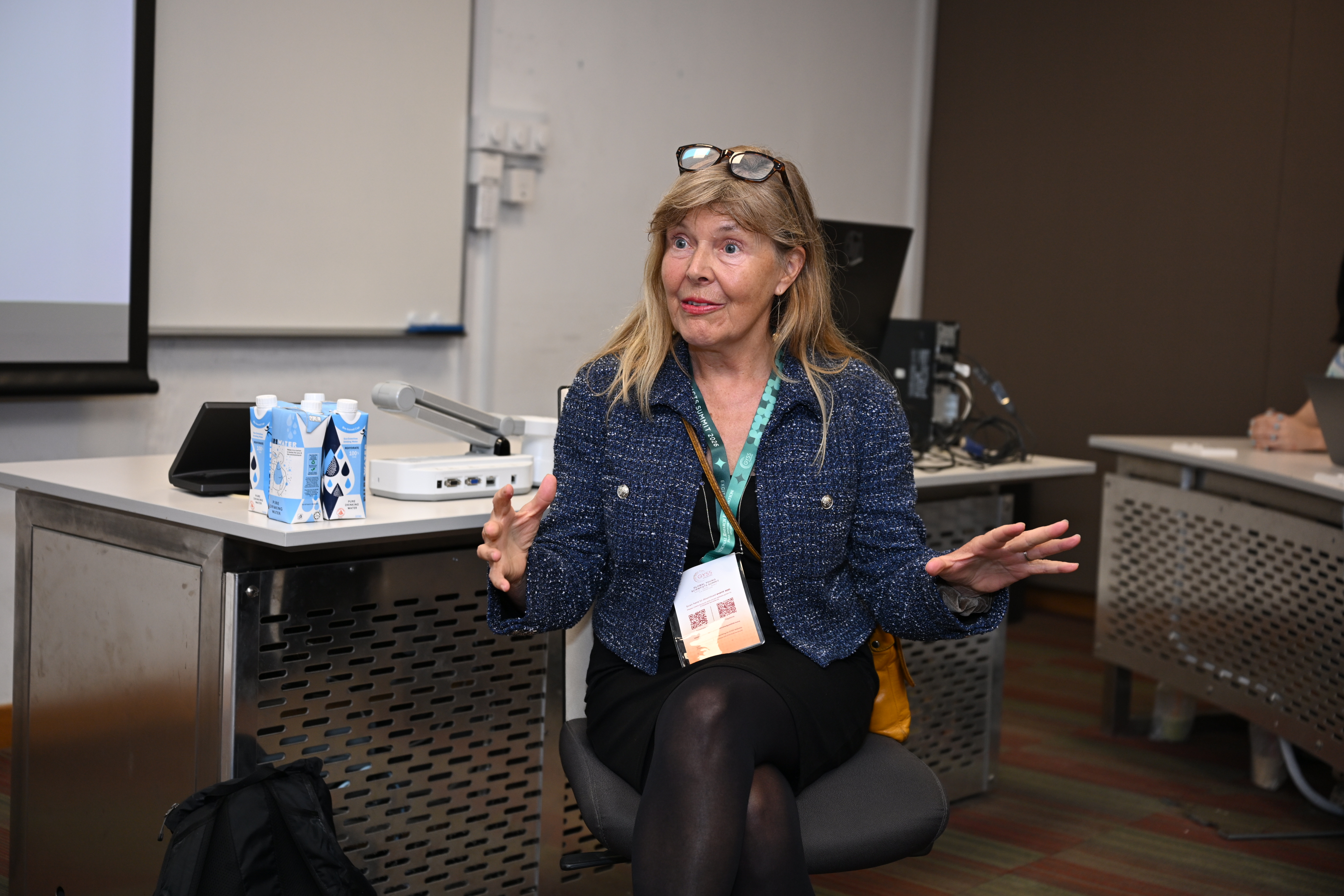 Prof Ruohola-Baker explains how designed proteins guide stem cells toward mature regenerative solutions for aging-related diseases.
Choosing Problems, Pivoting Wisely, and Collaborating Globally
Beyond the science, students seek clarity for practical career advice. A soon-to-defend PhD candidate asked Prof Baker about research habits. His guidance was clear: "Choose problems that are unsolved but can be solved in the next couple of years. You don't want a problem that's too easy, or too hard." More importantly, "do what you're most excited about. Don't do things just because you think that's what you should do."
When another student asked how to know when to pivot from a struggling project, Prof Baker was candid: "That's always a hard question." His advice? Seek multiple perspectives—fellow students, your advisor, other professors—and develop intuition over time. "Everyone makes mistakes," he acknowledged, suggesting researchers pursue risky projects while "trying other things on the side."
On choosing which problems to tackle—from plastic degradation to snake venom—Prof Baker described a wonderfully open pipeline: colleague emails, chance conversations, and "most importantly, Hannele tells me what I should do sometimes—that's the top priority."
For Singapore, this collaborative model matters. The aging-related challenges Prof Ruohola-Baker highlighted—diabetes, stroke, muscle loss, enamel degradation—directly affect Singapore's population. And the democratisation of many open source tools enables innovation to be accelerated. "Anybody can download that program," the moderator noted. Computational protein design is no longer confined to costly infrastructure. With Singapore's AI and bioengineering strengths, it now boils down to the generation of ideas and design to address global health and sustainability needs—bridging global science with regional impact.
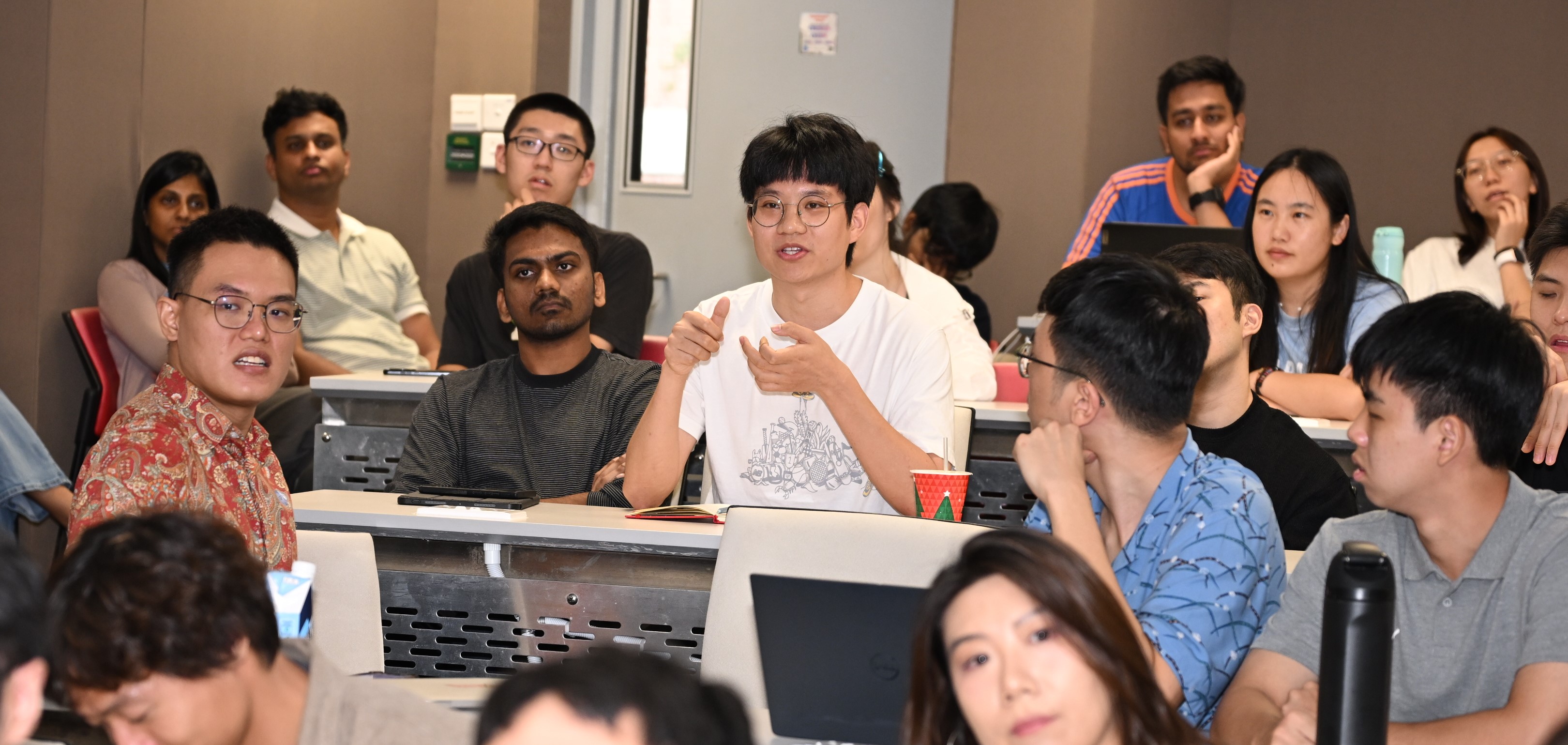 A PhD student poses a question during the Q&A session sparking discussion on emerging challenges in research.
Brains, Black Boxes, and AI in Medicine
For students navigating AI and biology—a flourishing space at NTU—one question touched a nerve many researchers quietly share. A PhD student in computational biology voiced what others were thinking: "We're building and applying models that we cannot really explain," especially in medicine, where lives are at stake. How do we reconcile using black-box systems for decisions that "directly impact human health"?
Prof Baker's response was unexpectedly reassuring. He didn't dismiss the concern—interpretability matters—but he offered a different lens:
"Humans are not foreign to using very complex and large neural networks, and we have no idea how they work. We are fully capable of using them without feeling anxious about it. And that's your brain. We don't know how the brain works, but every time you do anything, you're using your brain."
The analogy landed gently. We trust our own minds—massively complex, deeply opaque—without demanding full transparency of every synapse. That trust isn't reckless; it's built on validation through lived experience. Similarly, AI in medicine doesn't require perfect interpretability to be responsibly deployed. What it requires is rigorous testing, careful clinical integration, and the to iterate as we learn.
For Singapore's researchers, advancing AI-driven diagnostics and therapies in an aging society, this perspective offers permission to move forward thoughtfully—not paralysed by the unknown, but guided by evidence and care. Science has always meant venturing into mysteries we don't yet fully grasp. The courage lies not in knowing everything, but in building systems we can trust through disciplined inquiry, validation, and a willingness to engage deeply with complexity. That balance—between bold exploration and grounded rigor—is where breakthroughs live.
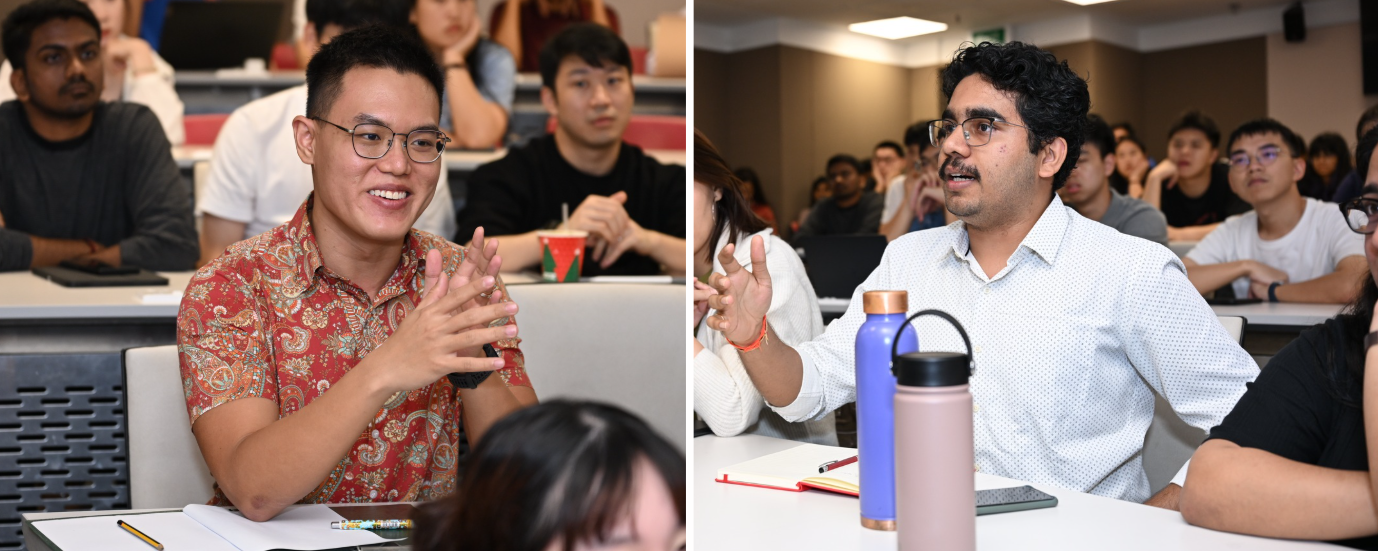 Students raise questions on trusting AI models in medicine, probing interpretability and responsibility in real-world clinical decisions.
Life Beyond the Lab: Exercise, Peace, and Creativity
Perhaps the most disarming moment came near the end, when someone simply asked: "What are your daily schedules?" – prompting both the speakers and audiences to chuckle. Prof Baker, self-described as "a little bit of an exercise fanatic," keeps it straightforward: run up a hill a few times, coffee, email, then a full day talking with students and postdoctoral candidates. Evenings might mean more exercise, then making dinner.
Prof Ruohola-Baker walks an hour to work each morning, with her backpack on. But for her, well-being reaches beyond the physical: "I want to know that my kids are okay, my environment is okay, the kids in my lab are okay. It's very important to feel at peace—not only yourself, but your surroundings. Keep your family in peace, your neighbors happy. That, I think, is one of the medicines for good creativity."
Weekends? Kayaking, skiing, hiking. Prof Baker never goes to the lab. For both of them, rest isn't optional—it's foundational to doing creative work.
Sustained excellence, they suggested, doesn't come from the relentless grind. It comes from rhythms of deep work and deep rest, anchored in relationships and a quiet sense of peace with the world around you.
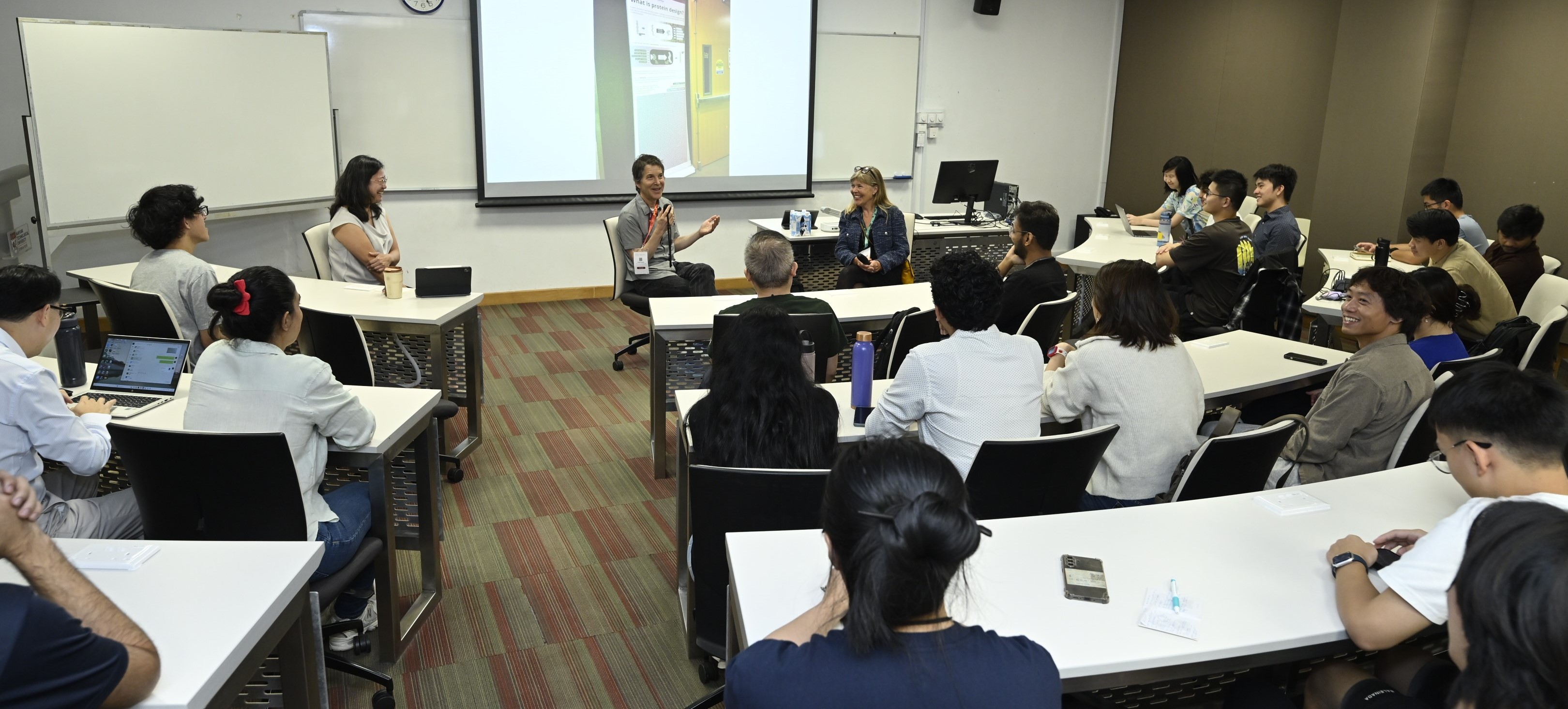 From curiosity to impact, Prof Baker and Prof Ruohola-Baker show courage, non-linear paths, and science driven by genuine discovery.
In closing
This tea session revealed something more valuable than polished presentations: behind the Nobel Prize, clinical breakthroughs, and AI-driven regenerative medicine stand two deeply curious, profoundly human scientists willing to reinvent themselves in pursuit of enhancing the human condition. For NTU's students and researchers, their message was both generous and urgent— be agile and open to these novel tools, these global challenges are yours to tackle, and the path to transformative impact begins not with a perfect roadmap, but with a single question you care about enough to chase relentlessly. The world is truly your oyster.