NTU Quantum Industry Day 2025: From Quantum Computing to Financial Service
Goh Si Qi | PhD Student, College of Computing and Data Science
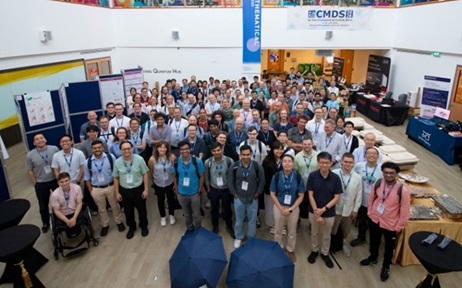
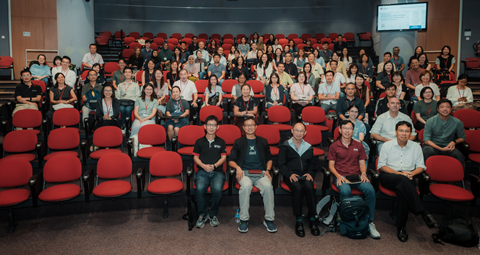
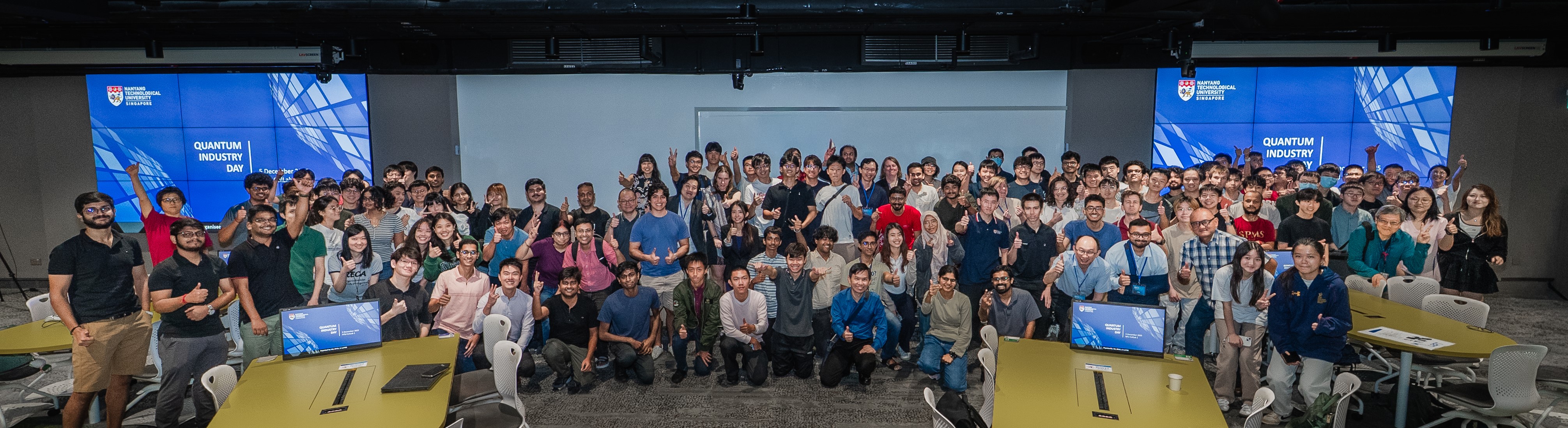
On 5 December 2025, Nanyang Technological University hosted the fourth edition of Quantum Industry Day 2025 at the Experimental Medicine Building (EMB), bringing together leaders from academia, industry, finance, and venture capital to examine the evolving landscape of quantum technologies.
The event was jointly organised by the Institute of Advanced Studies (IAS), the Institute for Pedagogical Innovation, Research & Excellence (InsPIRE), the School of Physical and Mathematical Sciences (SPMS) and the College of Computing and Data Science (CCDS). The full-day event convened representatives from Quantinuum, IBM, OCBC, HSBC, RAQS Quantum, and QAI Ventures, offering a multifaceted perspective on how quantum research is transitioning from foundational science toward industrial deployment and economic impact.
Strengthening Foundations in Quantum Research
The event opened with an overview of NTU’s quantum research ecosystem by Assoc Prof Gu Mile from the School of Physical and Mathematical Sciences. He outlined the university’s longstanding strengths in areas such as single-photon interference, quantum measurement, and quantum information theory, situating these efforts within Singapore’s broader national quantum strategy. By tracing how fundamental principles continue to underpin emerging applications, the opening address set the tone for a programme that emphasised both scientific depth and translational relevance.
From Quantum Infrastructure to Enterprise Readiness
Industry perspectives were introduced through a series of keynote sessions. Dr Jennifer Strabley, Vice President & General Manager from Quantinuum presented her strategic roadmap for Singapore, highlighting the role of software infrastructure in accelerating quantum adoption. She presented an overview of their quantum computing hardware, software ecosystem, roadmap, and recent scientific demonstrations, with a strong emphasis on their latest system, Helios, and its relevance to Singapore. Then, the sharing continued with Senior Applications Engineer, Mr Irfan Khan, introducing Nexus, a unified programming and development platform designed to improve user access and enable more efficient utilisation of quantum hardware through dynamic qubit allocation. Beyond performance considerations, the discussion also touched on operational reliability and system resilience, reflecting the growing expectation that quantum platforms must meet enterprise-level standards as they mature.
.jpg?sfvrsn=4ab56f59_1)
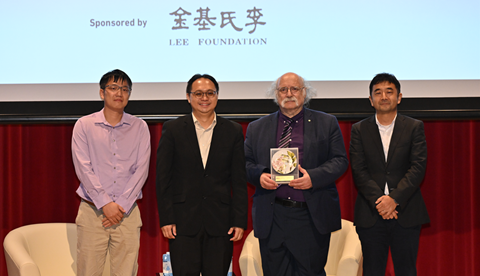
Fron left: Assoc Prof Gu Mile (SPMS NTU); Dr Jennifer Strabley (Quantinuum); Mr Irfan Khan (Nexus).
Venture Building and the Path to Quantum Commercialisation
Entrepreneurship and venture creation formed another key theme of the programme. QAI Ventures, a quantum-focused venture builder originating from Switzerland and expanding into the Asia-Pacific region, shared insights into what it takes to translate quantum research into viable startups. The speaker, Dr Angeline Frank, Head of Science and Technology APAC from QAI Ventures, emphasised the importance of global networks, interdisciplinary teams, and a clear value proposition, noting that technical sophistication alone is insufficient without a compelling vision for real-world impact. She further explained that investment decisions are guided by considerations such as the founders’ background and long-term vision, as well as the scale of value and wealth creation potential. These perspectives resonate strongly with NTU’s broader deep-tech commercialisation efforts and innovation agenda.
Global Markets, Regional Growth, and Security Imperatives
Shifting from platform development to market realities, RAQS Quantum provided a global business perspective on the quantum economy. Mr Raghunath Koduvayur, the CEO of RAQS Quantum, outlined projections for near-term economic value and examined the competitive dynamics shaping the hardware and services landscape. Particular attention was given to developments within the ASEAN region, including emerging activity in Johor Bahru, and to the strategic shift away from hardware-centric competition toward application-driven and vertically integrated solutions. Mr Koduvayur also underscored the urgency of preparing for “Q-day,” emphasising the security implications of quantum-enabled cryptanalysis and the need for proactive cryptographic transition.
3504cff3-ae68-4b90-a669-4043e32e24a6.jpg?sfvrsn=da824b82_1) From left: Dr Angeline Frank (QAI Ventures); Mr Raghunath Koduvayur (RAQS Quantum).
From left: Dr Angeline Frank (QAI Ventures); Mr Raghunath Koduvayur (RAQS Quantum).
Charting the Quantum Industry's Next Decade
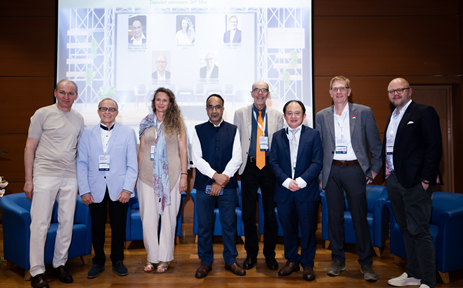
The panel discussion on “The Quantum Industry in the Next 5–10 Years” brought together perspectives from Quantinuum, OCBC, HSBC, RAQS Quantum, QAI Ventures, and IBM to examine the readiness of quantum technologies for real-world deployment. Panelists emphasised that “Quantum advantage must be demonstrated in a way that is clear, verifiable, and meaningful to industry,” particularly for practical applications such as fraud detection. From the financial sector, HSBC highlighted the balance between quantum defence and quantum offense, stressing the urgency of protecting long-term cryptographic assets. Discussions also touched on international collaboration, including emerging synergies between Singapore and Sweden in maritime applications, as well as Singapore’s strategic positioning in areas such as neutral-atom qubit platforms. The panel noted that broader industry adoption will depend on ecosystem maturity, cost, and integration with existing systems, with national investments playing a key role. Hybrid approaches combining quantum techniques with classical AI were seen as a promising near-term direction, while ongoing challenges in quantum error correction and the continued strength of classical models underscore the importance of careful, evidence-based evaluation of quantum adoption. The conversation also examined whether the plateauing performance of classical AI and machine learning systems may eventually justify broader adoption of quantum approaches, reinforcing the importance of interdisciplinary collaboration at the intersection of AI and quantum technologies.
applied skills, directly responding to the growing demand for quantum-literate professionals across industry and research sectors.
Hands-On IBM Qiskit Learning for a Quantum-Ready Workforce
Complementing the strategic discussions, Mr Vishal Bajpe from IBM conducted a series of hands-on workshops throughout the day, introducing participants to quantum computing using the Qiskit framework. Beginning with fundamental concepts and progressing toward more advanced circuit and algorithm design, the sessions provided participants with practical exposure to quantum programming. These workshops highlighted the role of industry-academia partnerships in building a quantum-ready workforce and lowering the barrier to entry for emerging practitioners.
.jpg?sfvrsn=f5899bb2_1) Clockwise from top: Panel discussion on the readiness of quantum technologies for real-world deployment; presentation on quantum workforce development by Dr Koh Teck Seng (SPMS NTU); and Mr Vishal Bajpe (IBM) conducting a hands-on workshop with the participants.
Clockwise from top: Panel discussion on the readiness of quantum technologies for real-world deployment; presentation on quantum workforce development by Dr Koh Teck Seng (SPMS NTU); and Mr Vishal Bajpe (IBM) conducting a hands-on workshop with the participants.
Building a Sustainable Quantum Future
Taken together, Quantum Industry Day 2025 painted a picture of a field in transition. While significant technical challenges remain, particularly in scalability and error correction, the discussions throughout the day reflected a growing confidence that quantum technologies are moving beyond laboratory prototypes toward enterprise and societal relevance. Hybrid approaches combining quantum methods with classical AI, expanding educational pipelines, and closer collaboration between academia, industry, and investors emerged as recurring themes.