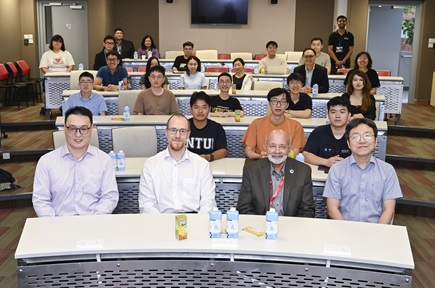
Lee Kong Chian Distinguished Professor Public Lecture by Prof Jayant Baliga and Prof Torsten Hoefler
Written by Goh Si Qi | PhD student, College of Computing and Data Science NTU
On 7 January 2026, the Institute of Advanced Studies (IAS) at Nanyang Technological University (NTU) hosted the Lee Kong Chian Distinguished Professor Public Lecture, featuring two eminent speakers: Prof Bantval Jayant Baliga (Millennium Technology Prize 2024) and Prof Torsten Hoefler (ACM Prize in Computing 2024). The public lecture was sponsored by the Lee Foundation, in partnership with the Global Young Scientist Summit (GYSS) and the National Research Foundation in Singapore.
The lecture brought together leading experts from power electronics, semiconductor technology, and computational climate science to examine how foundational research can translate into real-world impact, particularly in the context of sustainable energy systems and climate resilience. The event highlighted the convergence of materials science, power electronics, high-performance computing (HPC), and artificial intelligence (AI) as key enablers for addressing global energy and climate challenges.
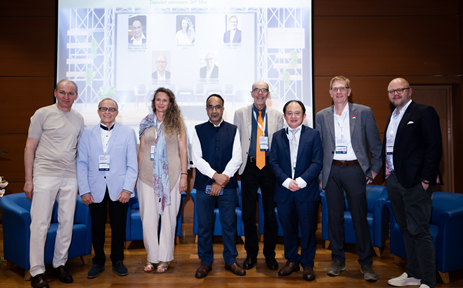
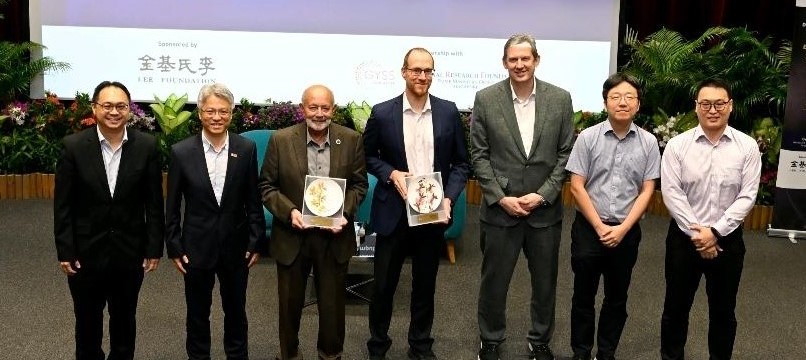 From left: Prof Sum Tze Chien (Director, IAS NTU), Prof Wen Yonggang (Associate Provost (Graduate Education) and Dean Graduate College, NTU), Prof Jayant Baliga, Prof Torsten Hoefler, Prof Christian Wolfrum (Deputy Provost, NTU), Assoc Prof Kim Munho (EEE, NTU) and Asst Prof Wang Jingyu (NIE, NTU).
The lecture commenced with a welcome address by Prof Sum Tze Chien, who emphasised the importance of engaging across disciplines and bridging foundational scientific research with societal applications. He noted that scientific breakthroughs increasingly emerge at the intersection of domains, underscoring the need for collaborative ecosystems that connect academia, industry, and policy.
This was followed by opening remarks from Prof Wen Yonggang, who framed the discussion around the urgent need to build a sustainable energy future. He highlighted the role of advanced energy technologies and systems-level innovation in meeting growing global energy demands while reducing environmental impact.
.jpg?sfvrsn=938aa00_1) Opening addresses by Prof Sum Tze Chien and Prof Wen Yonggang set the stage for cross-disciplinary collaboration and a sustainable energy future.
Opening addresses by Prof Sum Tze Chien and Prof Wen Yonggang set the stage for cross-disciplinary collaboration and a sustainable energy future.
The first lecture, "Enabling Green and Renewable Energy Solutions with Power Semiconductor Technology" by Prof Bantval Jayant Baliga (2024 Millennium Technology Prize), the inventor of insulated gate bipolar transistor (IGBT) technology, focused on the transformative role of power electronics. His lecture traced the evolution of high-efficiency, low-power semiconductor switches and their widespread adoption across energy, transportation, and industrial systems.
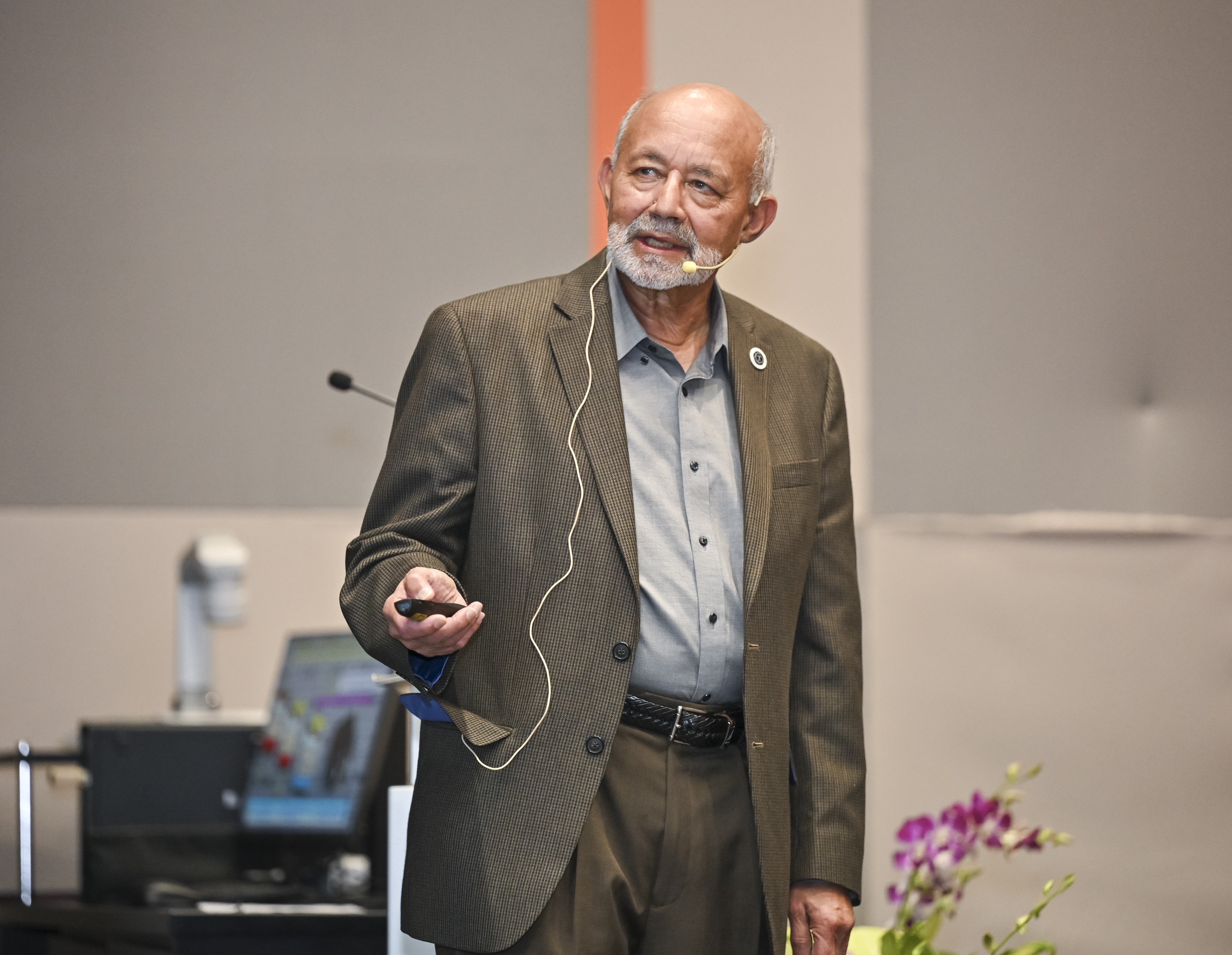 Prof Jayant Baliga delivering a visionary lecture on power electronics, from IGBT innovations to wide-bandgap materials shaping sustainable energy systems.
IGBT-based power inverters, now central to efficient DC-to-AC power conversion, were highlighted as a cornerstone technology for renewable energy integration and electrification. Improvements in waveform control and switching efficiency have enabled substantial reductions in fuel consumption and emissions. It was noted that electronic ignition systems alone have contributed to an estimated 2.1 trillion gallons of gasoline savings since the mid-1990s, alongside significant cumulative reductions in CO₂ emissions.
Looking ahead, the discussion explored the limits of silicon-based devices and the transition towards wide-bandgap materials. Silicon carbide (SiC) was identified as a key material capable of supporting higher voltages (up to 10–20 kV), improved efficiency, and greater thermal resilience—making it critical for next-generation grids, microgrids, and high-power applications. While such technologies are technically viable, speakers emphasised that large-scale industrial adoption requires time, manufacturing maturity, and confidence across the supply chain.
The subsequent discussion addressed the pathway from laboratory innovation to industrial deployment. Experiences from engagements with industry and government illustrated both the opportunities and practical challenges of introducing new power electronic devices at scale. Adoption barriers included material readiness, reliability concerns, and integration with existing infrastructure.
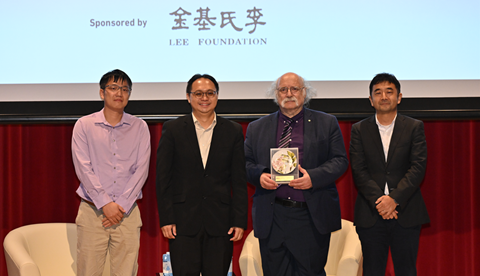
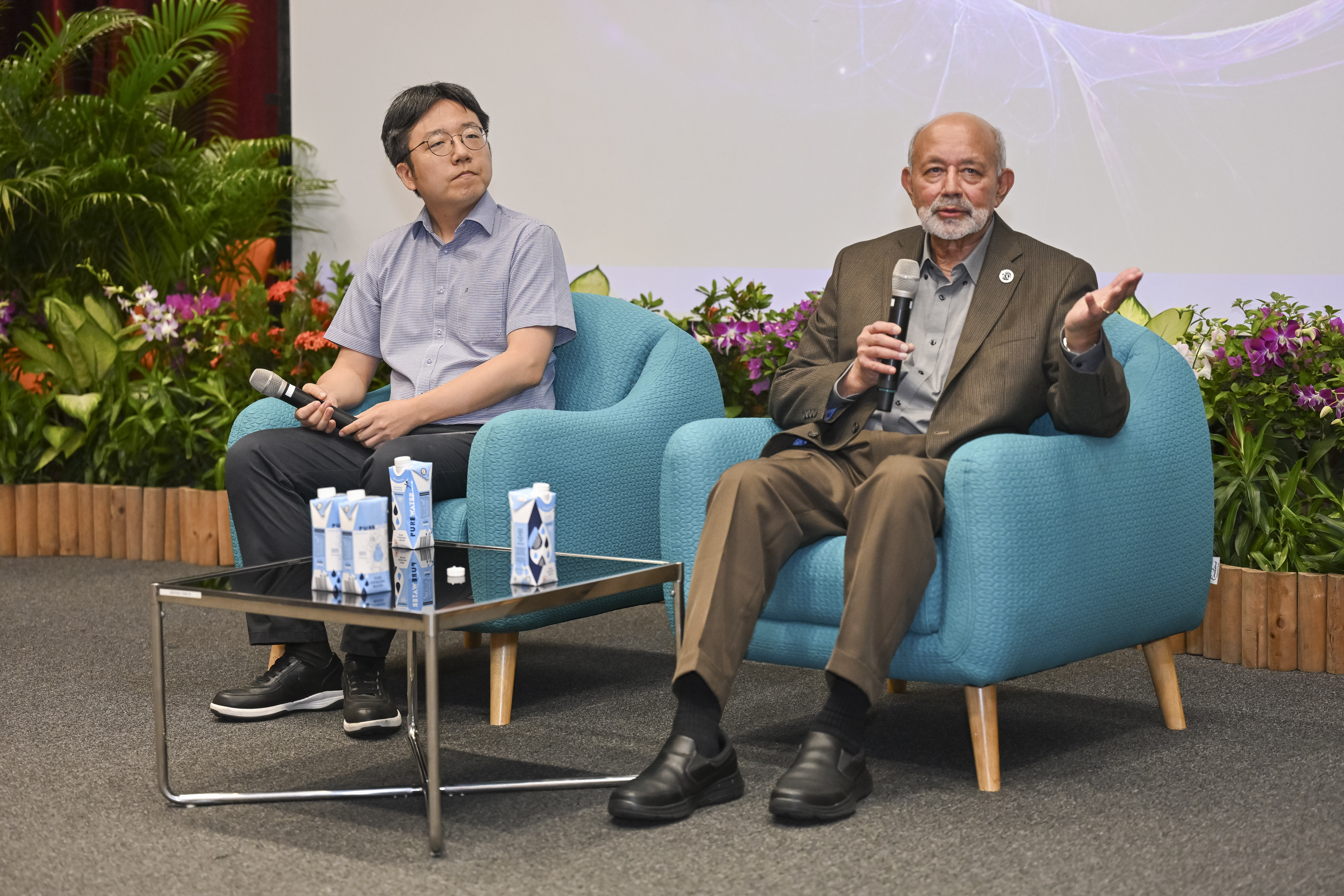 In his Q&A session moderated by Assoc Prof Kim Munho, Prof Baliga engages the audience in a dynamic Q&A following his lecture, exploring power electronics’ role in AI data centers, policy, and sustainable energy solutions.
From a policy perspective, the role of power electronics in supporting emerging energy-intensive infrastructures such as AI data centres (AIDCs) was examined. Efficient power supply, conversion, and management were identified as critical enablers for sustaining the rapid growth of AI compute. Prof Baliga stressed that education, industry leadership, and coordinated policy frameworks are essential to ensure that power electronics solutions can be deployed without significant systemic obstacles.
The second lecture, "Can We Build an AI Climate Scientist?" presented by Prof Torsten Hoefler (2024 ACM Prize in Computing) from ETH Zurich shifted focus to climate science and computation. Moving beyond retrospective research, he outlined a forward-looking vision for Earth system modelling in an era defined by computation.
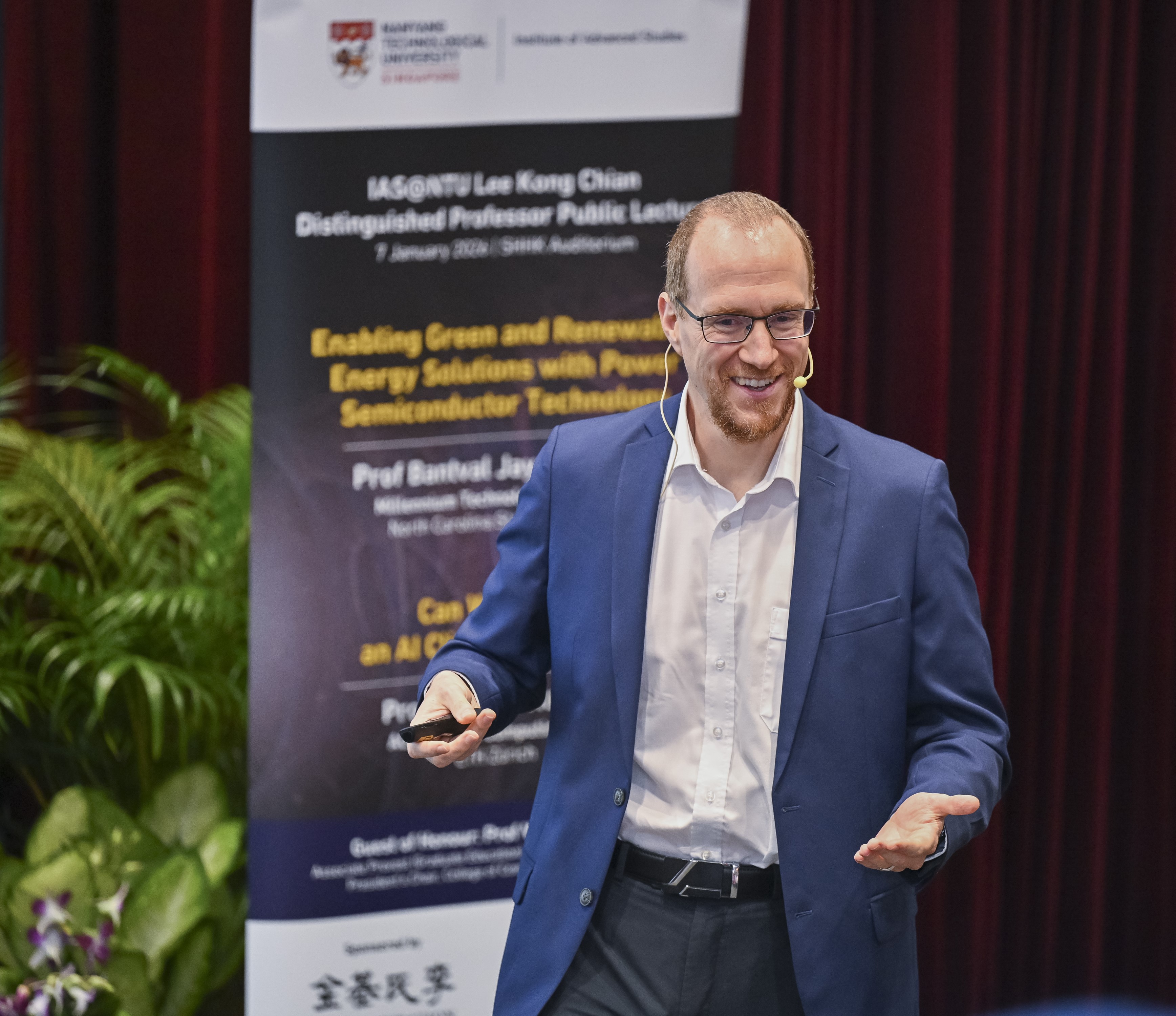 Prof Torsten Hoefler explores climate prediction, AI, and supercomputing, challenging students to rethink the evolving role of human intelligence.
Turning to climate science, climate prediction was described as one of the most computationally demanding scientific challenges, requiring the integration of vast, high-resolution datasets across spatial and temporal scales. Current global climate models typically operate at resolutions of tens to hundreds of kilometres, while meaningful local predictions may require resolutions down to hundreds of metres, pushing the limits of even the world’s most powerful supercomputers.
AI-based approaches offer promise but also raise fundamental challenges. Prof Hoefler started with the observation on the Industrial Revolution, where physical strength became irrelevant by the end of the era as machines replaced human labour at scale. He suggested that society is now undergoing a comparable shift, noting that we are exceeding the data age and entering the age of computation. This transition, he argued, raises deeper questions about the evolving role of human intelligence. “When will human creativity be irrelevant?” he asked, posing the question not as a prediction, but as a provocation for reflection. While machine learning models have demonstrated strong performance in certain forecasting tasks, they often fail to resolve critical physical processes such as cloud formation and vertical wind dynamics. The lecture highlighted the need to converge data-driven models with physics-based simulations, leveraging HPC to achieve both accuracy and interpretability.
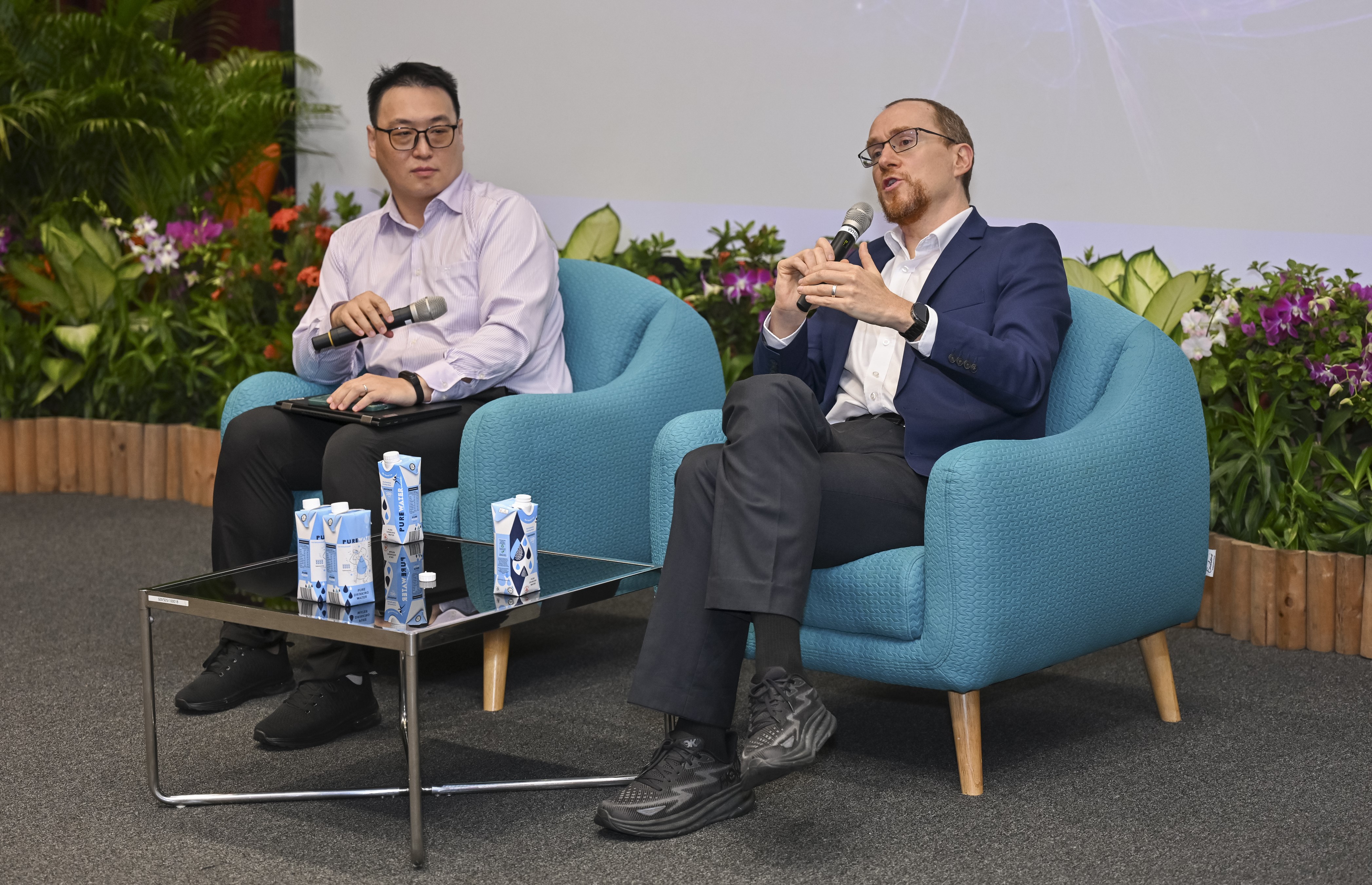 In his Q&A session moderated by Prof Wang Jingyu, Prof Torsten Hoefler stresses careful AI use in climate forecasting, highlighting data limits and the need for rigorous validation.
A key message was the growing tension between data availability, computational cost, and model trustworthiness. Some statistics showed that we could run out of data to train AI by 2026, what then? Prof Hoefler emphasised that long-term climate forecasting is especially sensitive to bias and distributional shifts, noting that more data alone is not enough, we need better models, better physics, and better understanding of where errors come from. With climate and satellite systems producing terabytes to exabytes of data daily, advances in data management, statistically lossless compression, and scalable architectures are becoming as important as algorithmic innovation.
In the concluding segments of his lecture, Prof Hoefler cautioned against uncritical reliance on AI models for long-term climate projections. Biases in training data, distributional shifts over time, and the difficulty of validating century-scale forecasts pose serious risks. Techniques such as ablation studies, hybrid modelling, and error attribution were discussed as necessary tools for understanding and controlling model behaviour.
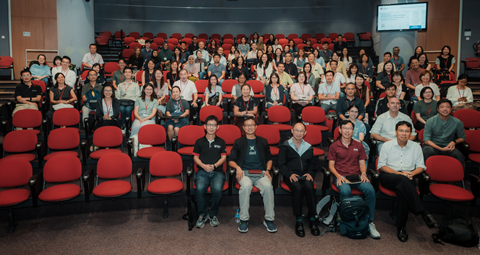
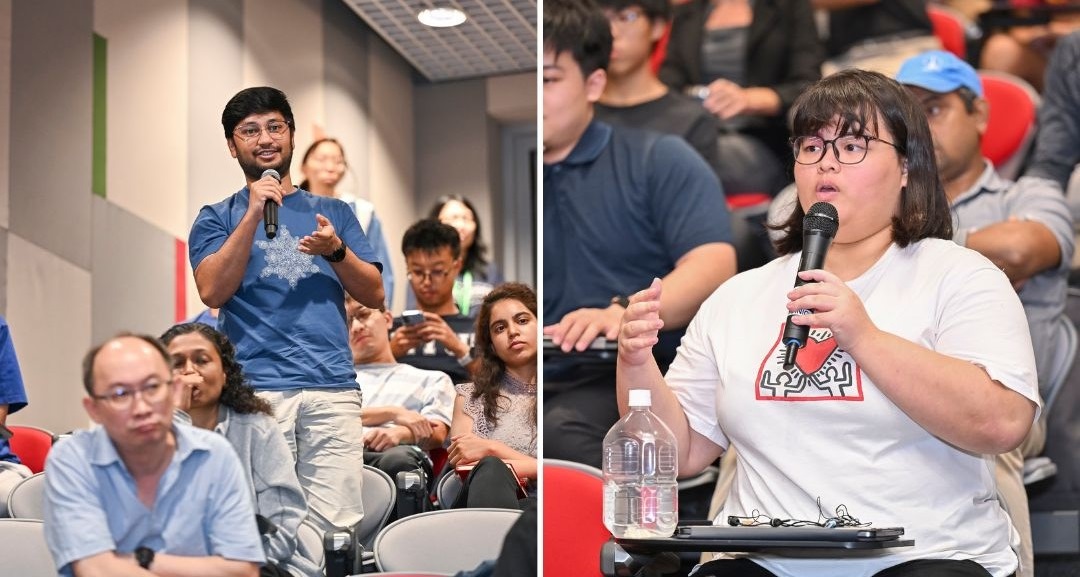 Students engage Prof Torsten Hoefler in a lively Q&A, discussing AI’s energy impact and its role in tackling climate change.
The discussion also addressed the apparent paradox between AI’s growing energy footprint and its potential role in mitigating climate change. While data centres currently account for a modest but rising share of global energy consumption, continued innovation in materials, power electronics, and system efficiency could ensure that the societal benefits of AI outweigh its environmental costs.
Overall the public lectures underscored that addressing energy sustainability and climate resilience will require tightly coupled advances across power electronics, materials science, computation, and AI. From next-generation semiconductor devices to Earth-scale digital twins, the talks highlighted both the immense promise and the profound responsibility associated with deploying these technologies. Ultimately, progress will depend not only on technical breakthroughs, but also on interdisciplinary collaboration, informed policy, and a commitment to understanding and managing the risks inherent in complex, data-driven systems.
In conjunction with the public lecture, the professors also sat down with our NTU students over a tea session discussing failures and curiosities in research, and the impact of power energy and AI. Read the article here.
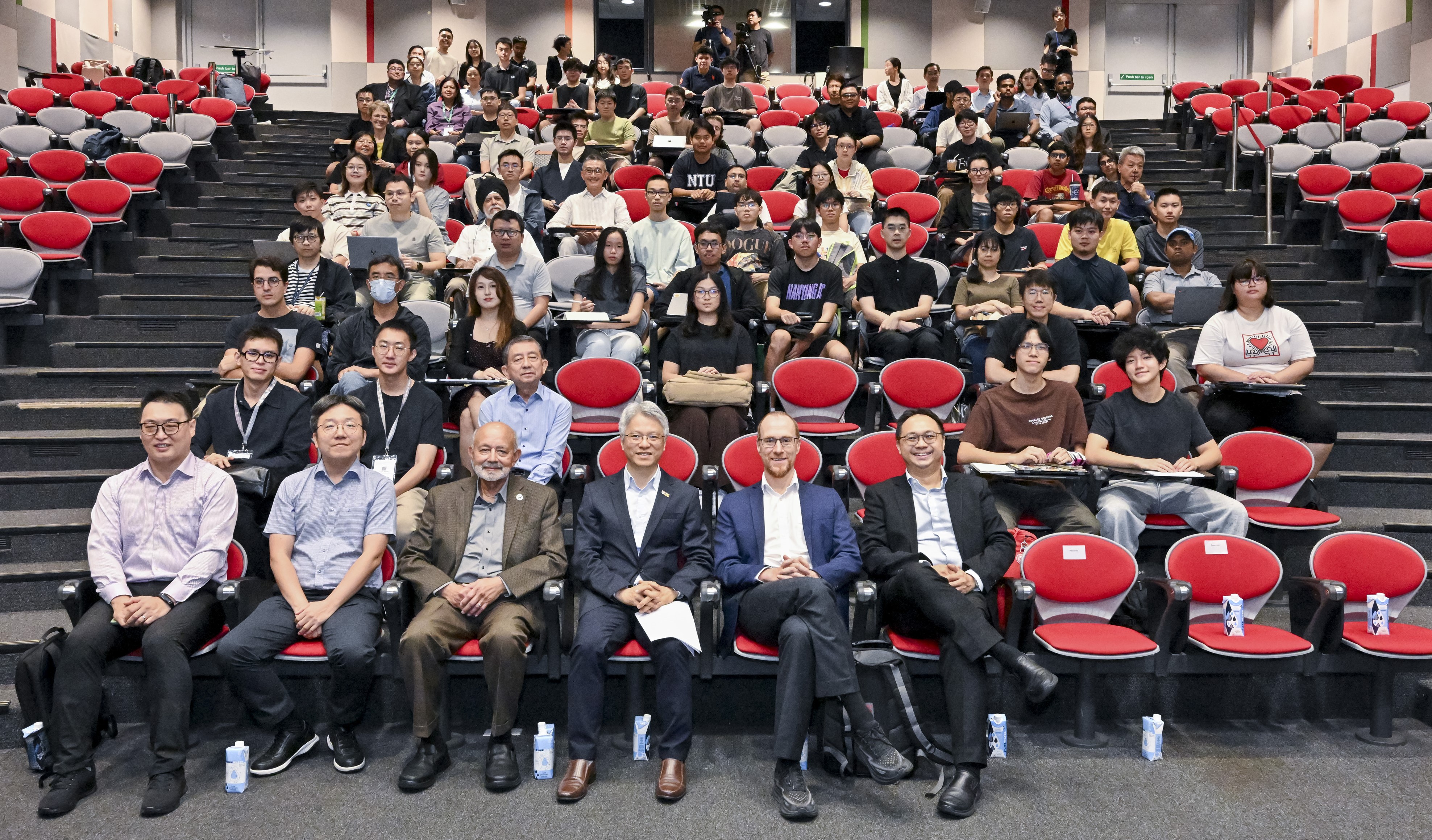
"I enjoyed the breadth and easy understandability of the talks" - Pethe Shreyas Dinesh (PhD student, MSE)
"Learning how questions are raised and addressed through Prof Baliga's experiences" - Zhuang Yihao (PhD student, IGP)