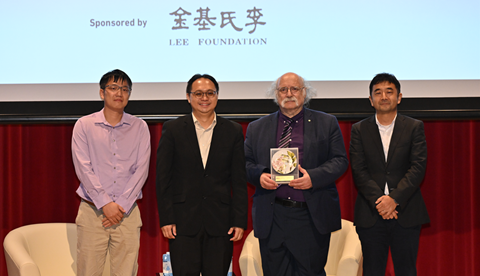
Science, Failures and Ideas that Endure: Tea Session with Chemistry Nobel Laureate Prof Sir Gregory Winter
Written by Kestrel Teng Jia Han | Undergraduate student, CCEB NTU
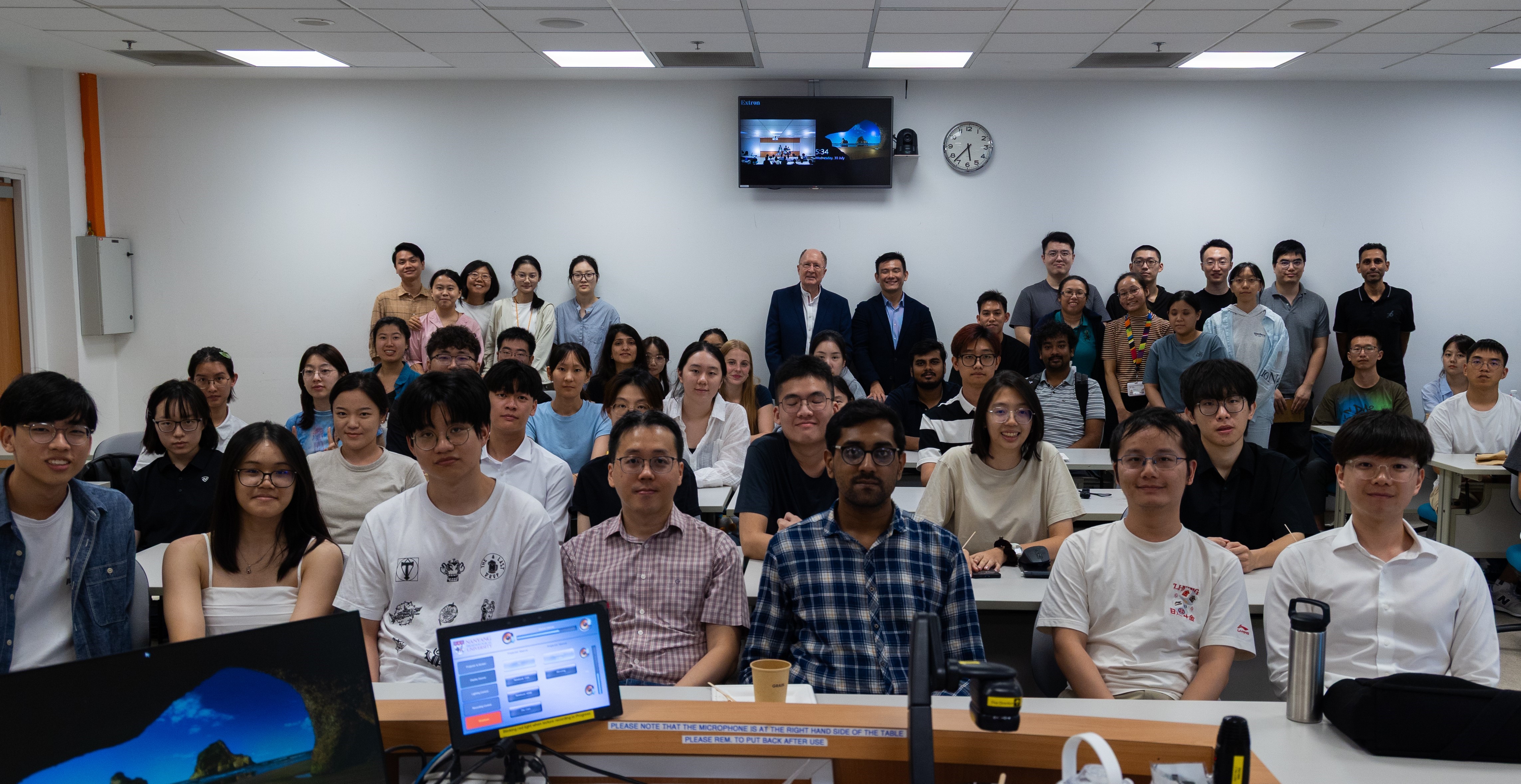
On 30 July 2025, after his lecture at the IAS 20th Anniversary Symposium at Nanyang Technological University (NTU), Prof Sir Gregory Winter (Nobel Prize in Chemistry 2018) joined NTU students and scholars for an informal tea session, sharing insights on his scientific journey, challenges, and lasting innovations.
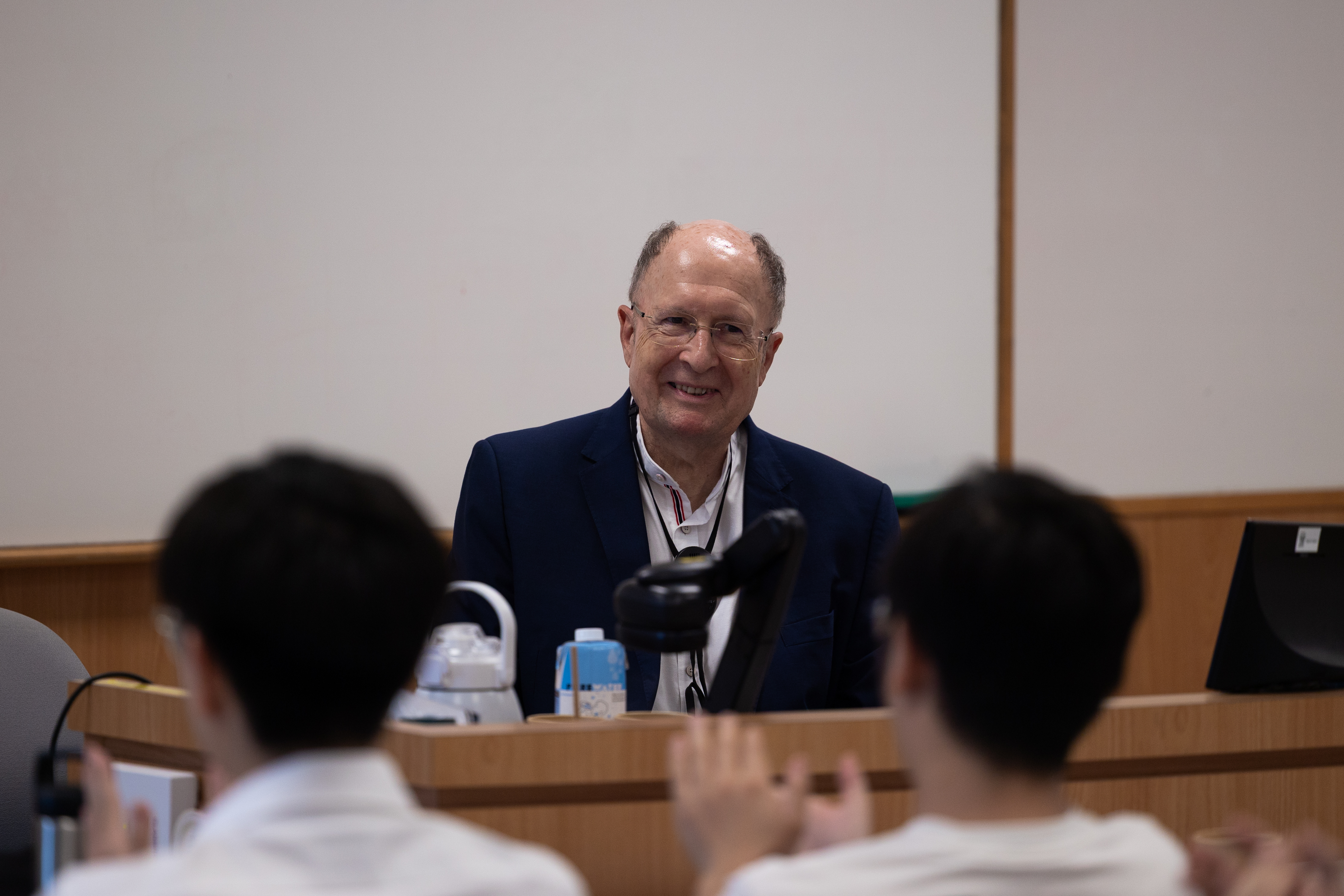 NTU students engage with Nobel Laureate Prof Sir Gregory Winter on his scientific motivations.
This tea session was an exclusive opportunity for NTU undergraduates and PhD students to engage in a conversation with one of the most notable recent figures in Chemistry. The session revolved around Prof Sir Gregory’s pursuit of making inventions accessible to everyone as well as the various motivations that kept him going in his influential scientific journey.
Prof Leonard Ng from the School of Materials Science and Engineering, helped moderate the tea session. Prof Ng started by inviting Prof Sir Gregory to introduce himself, his motivations in science as well as the path the led to his Nobel Prize.
Prof Sir Winter's eyes lit up at the mention of his childhood in West Africa and the Savana. He reminisced the times he interacted with scientists from nearby universities. Being exposed to radioactive counters and large marine creatures led to many funny situations that piqued his interest in science. He summed up his childhood, “No television, afternoons were unending boredoms. You just try things yourself".
Prof Sir Winter referenced books from famous authors, “Jim Watson” and “Melvin Calvin” – both Nobel Laureates. These sparked his interest in the origin of life, kickstarting his journey in science. He likened his early days to that of a medieval apprentice. “What I could do back then, I did'’, said Prof Sir Winter. As he recounted how he tried many different things, starting out from learning about protein chemistry before eventually focusing on enzymes.
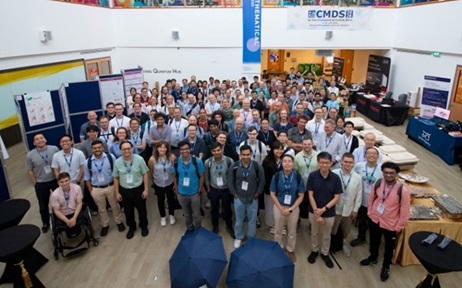
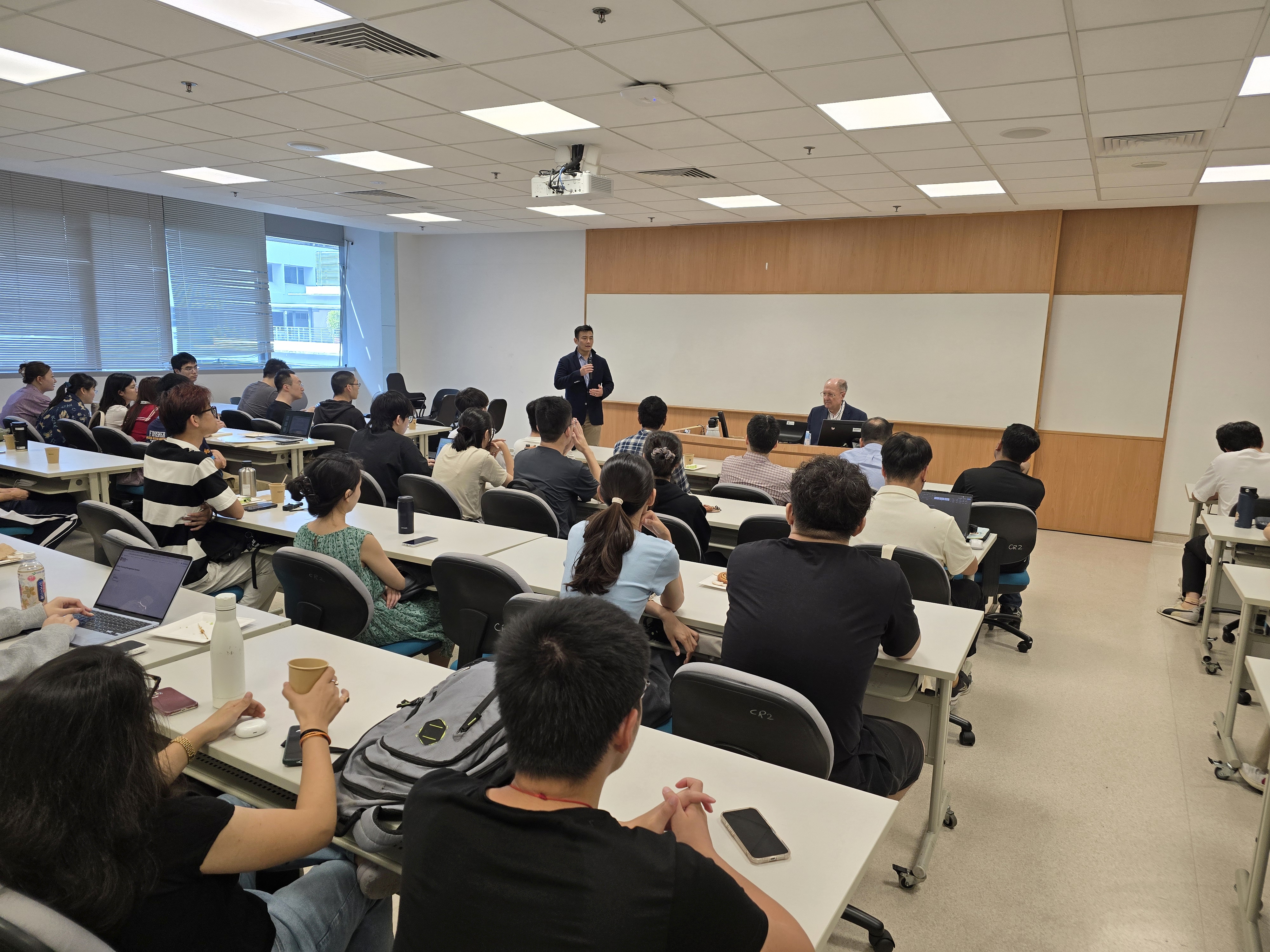 Prof Sir Winter shares childhood curiosities and inspirations that sparked his lifelong journey in science.
Prof Sir Winter chuckled at the first question posed by a PhD student from MSE. The student wanted to know if there was any unintended or even damaging effects of receiving the Nobel Prize. Prof Sir Winter mentioned that he received the Nobel Prize quite late in his research journey, and that meant he wasn’t affected by “Nobel-itis”. He did not allow the fame and attention change who he was as a scientist fundamentally as if would have if he received the prize at a younger age. While it was not a damaging effect, he was surprised to have people asking him to weigh in on political issues. He paused, before calmly replying “I have some sort of authority and say in my area of expertise, not so much outside that”. A humble yet realistic approach to political matters.
Following that, a research fellow from NTU SPMS wanted to seek advice on the key strategies in translating academic research to industry. Prof Sir Winter, who too fought a very tough battle in making a place for antibodies in therapeutic drugs, responded with no hesitation. He gave two options, either take it as far as you can before finding someone to fund and take over the research, or start your own company. Leaving many deep in thought, he added that the biggest motivation when trying to patent and commercialise phage display came from the element of competition. A competing company in the US motivated him and his team to be the first and best in the field.
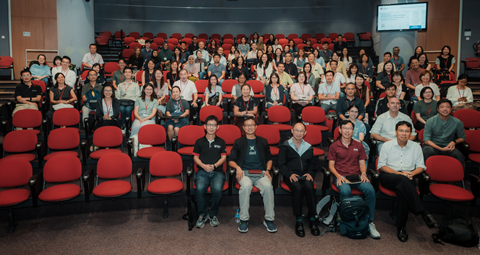
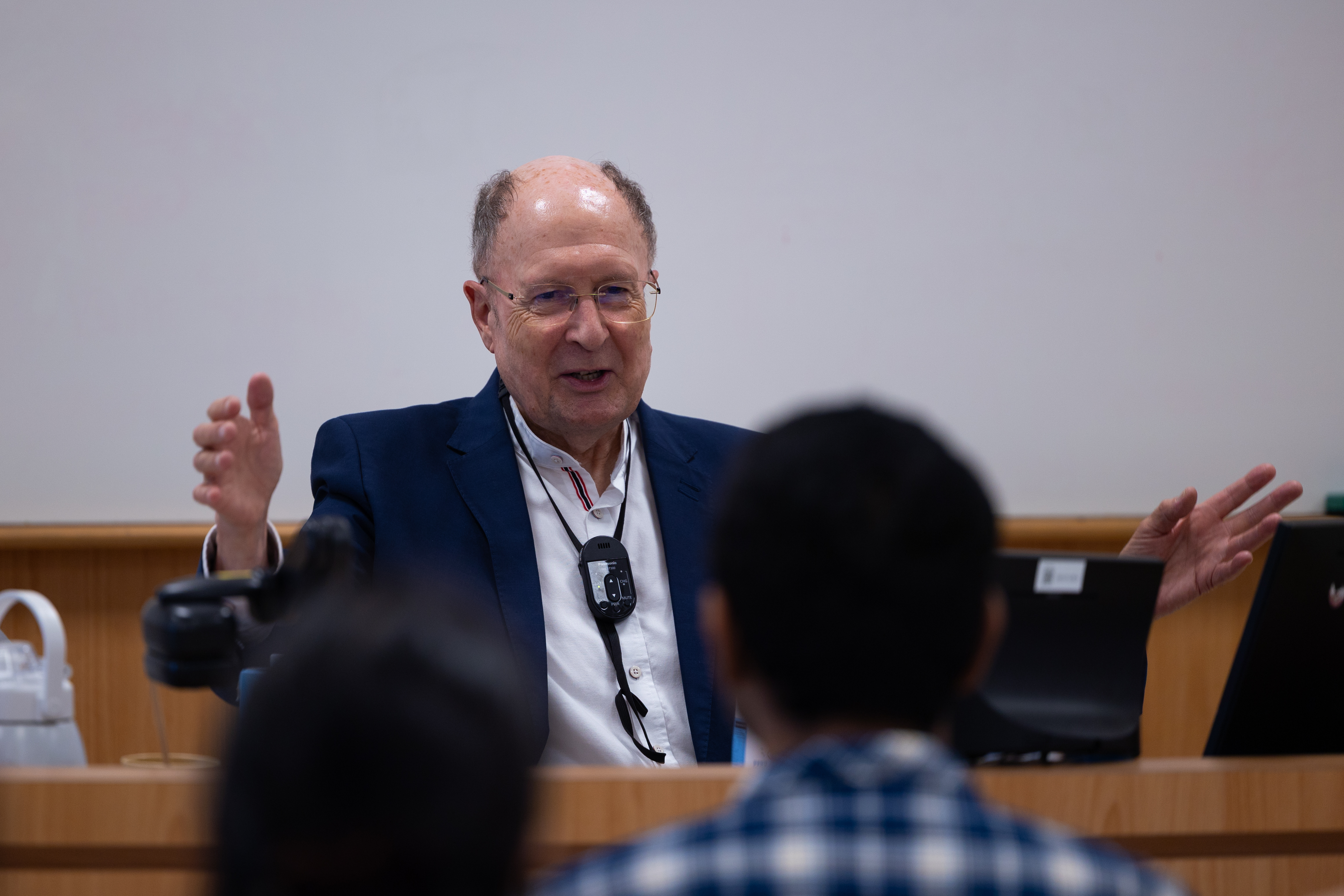 Students listen to valuable insights on translating research to industry, entrepreneurship and the drive of healthy competition.
A pivotal question that prompted deep reflection from Prof Sir Winter came from a PhD student at NTU’s Lee Kong Chian School of Medicine. The student asked whether he had ever experienced failure during his long career, and how he had responded to it. “It was a big discovery—one that stalled the momentum in my group for three to four years,” Prof Sir Winter recalled, referring to the time his team identified a bright red protein in E. coli. Ultimately, the finding led nowhere, and he eventually decided to set the research aside and move on. The room grew more tense with the sudden shift in tone brought about by both the question and his candid response.
The final question however rounded things up and ended the session on a wholesome note. Given that patenting rights has always been something Prof Sir Winter has championed for, he seemed delighted when a PhD student from NTU CCEB asked how one could distinguish real scientific innovation from one that was just simply a combination of existing tools. Prof Sir Gregory surprisingly started by stating that one can’t really distinguish between innovation and combination. It would, however, be a pretty good gauge if one could file a patent for it. “If you can file a patent, then there is something novel to your research and you got a good idea going”, Prof Sir Gregory added.
Prof Sir Winter concluded with remarks that struck a chord with everyone. “Maybe you have a good idea, but maybe for a different time and place. You must make it fit for the time and place in the world now”. Given that change is the only constant, it was refreshing to hear such a practical approach to academia in this present day of massive technological advancement.
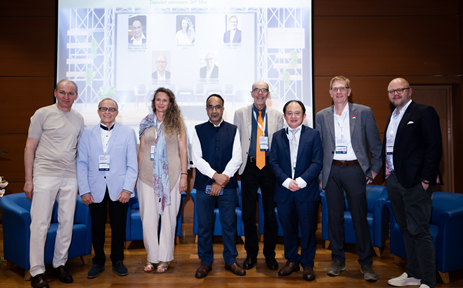
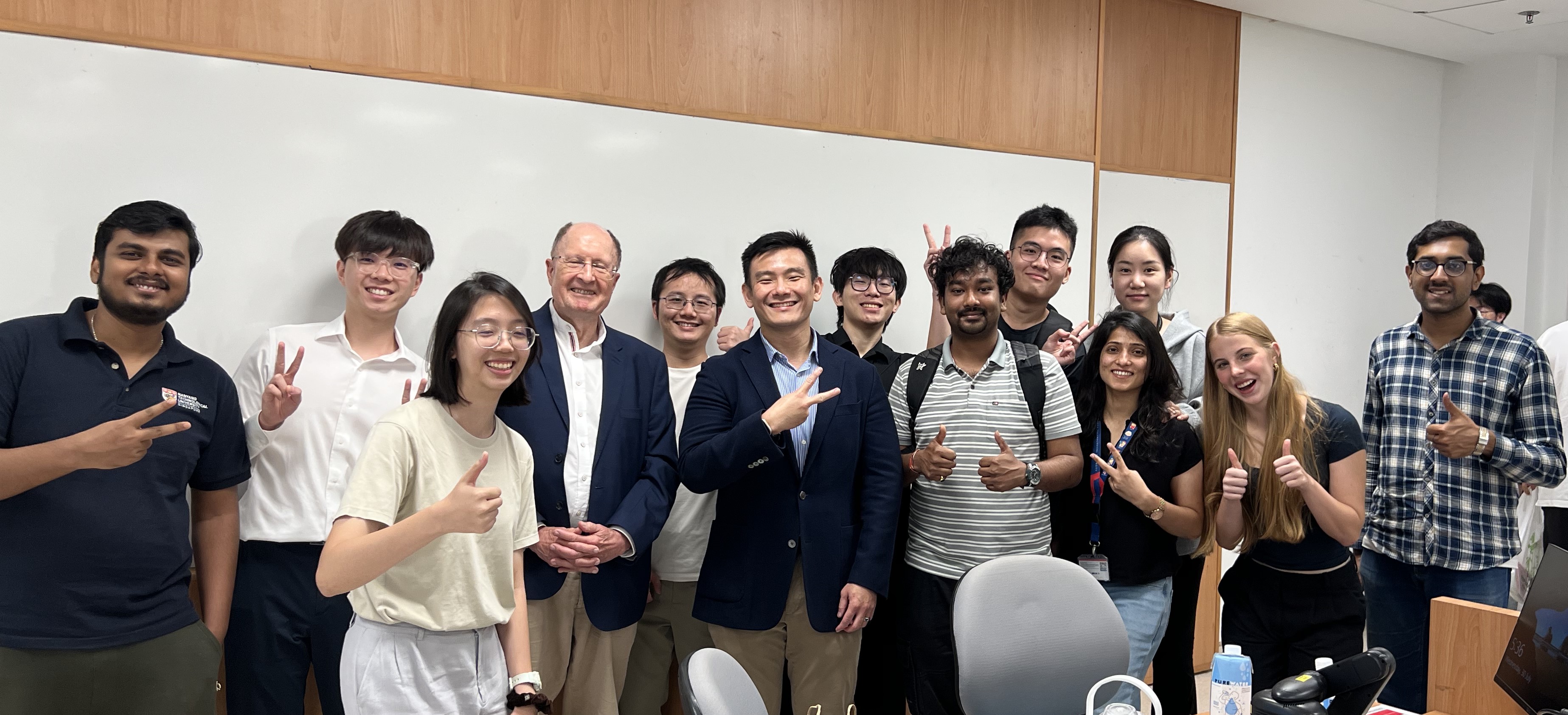 A relaxing tea session turns into a journey of self-discovery, with heartfelt lessons shared over laughter and applause.
As the session moderator Prof Ng officially concluded the interaction, the applause that erupted from the audience was palpable. Many would assume that a conversation with a Nobel Laureate would be one of great technicalities, but Prof Sir Winter brought us on a trip of self-discovery and deeper understanding to what a scientist truly experiences. His dedication to science and to educating our next generation is one to admire for years to come.